
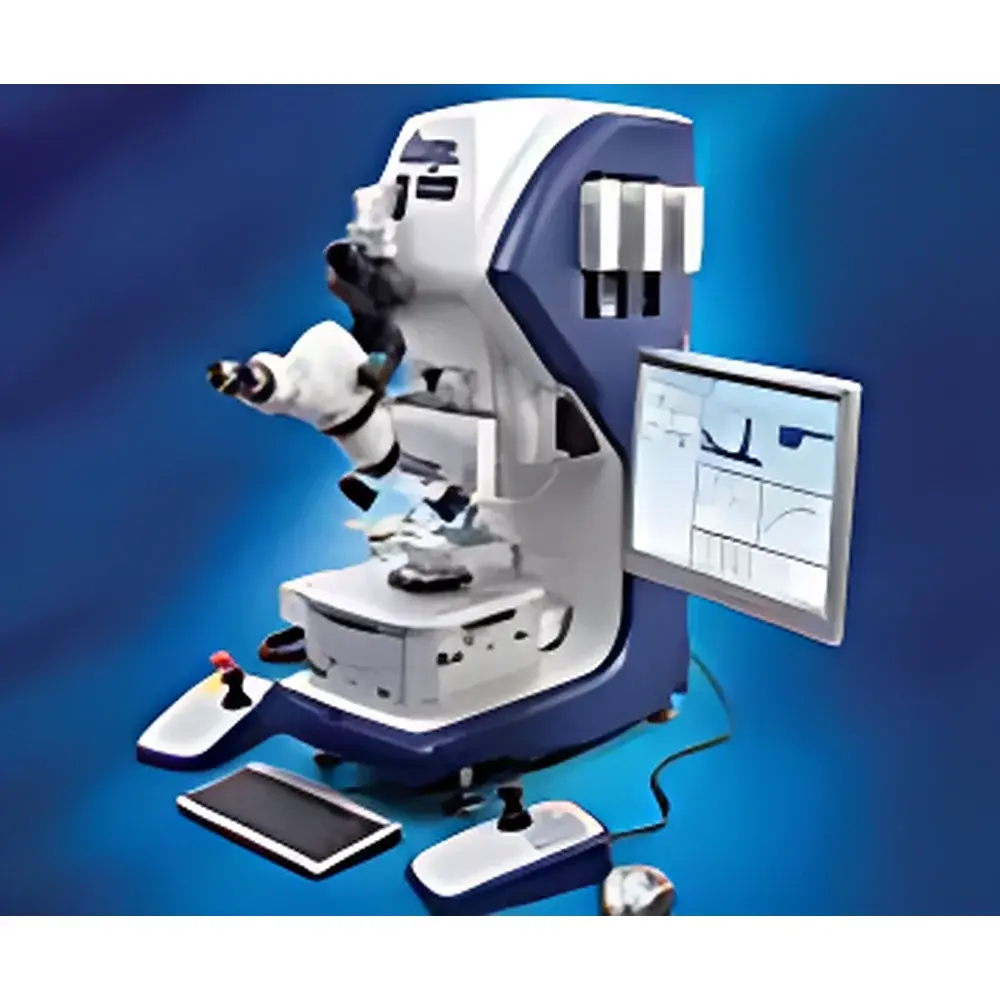
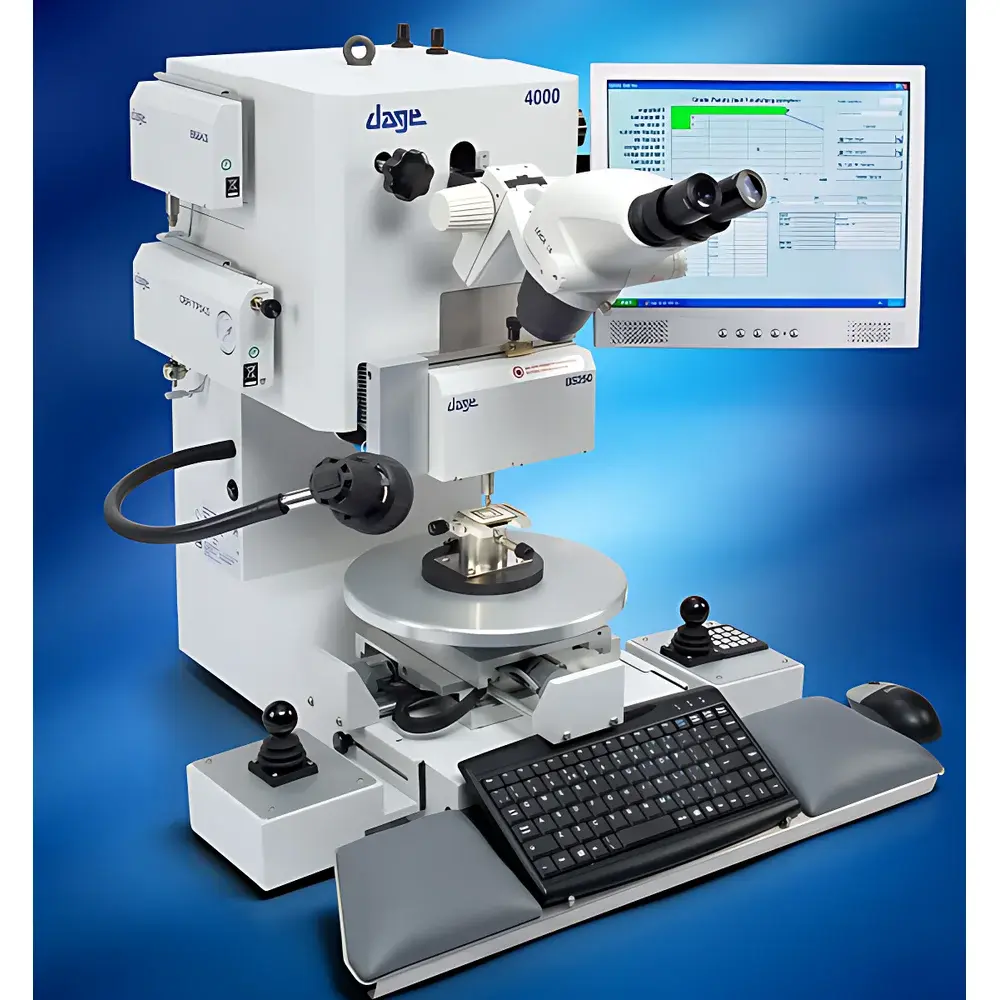
Nordson DAGE 4000 PLUS Bond Strength Tester
| Brand | Nordson Dage |
|---|---|
| Origin | United Kingdom |
| Model | DAGE4000 PLUS |
| Maximum Tensile Force | 100 kgf |
| Maximum Push Force | 50 kgf |
| Standard XY Stage Travel | 160 mm |
Overview
The Nordson DAGE 4000 PLUS Bond Strength Tester is a precision-engineered mechanical test system designed for quantitative evaluation of interconnect integrity in microelectronic packaging. Operating on the principle of controlled force application with real-time load-displacement feedback, it delivers traceable, repeatable measurements of bond strength across wire bonds, solder bumps, die attach interfaces, and advanced interposers. Unlike generic tensile testers, the 4000 PLUS integrates metrology-grade motion control, calibrated load cells (traceable to NPL/UKAS standards), and synchronized high-magnification imaging—enabling direct correlation between mechanical failure mode and physical bond geometry. Its architecture supports both destructive and non-destructive test protocols under ambient or thermally conditioned environments, making it essential for reliability qualification in semiconductor assembly, automotive electronics, and aerospace-grade packaging.
Key Features
- High-capacity dual-mode actuation: 100 kgf tensile and 50 kgf push-force capability—validated per ISO 7500-1 Class 0.5 accuracy—supports testing of large-area die attach, thick-copper wire bonds, and high-strength Cu pillar interconnects.
- Integrated coaxial imaging system: 5-megapixel CMOS camera mounted directly adjacent to the test head provides sub-10 µm resolution imaging without parallax error, enabling rapid tool alignment and post-failure morphology analysis.
- Motorized XYZ stage with 160 mm × 160 mm travel range and ±0.5 µm repeatability—fully programmable via G-code or graphical interface; optional extended-range stages available for wafer-level or panel-scale substrates.
- Modular tooling platform: Interchangeable tool holders accommodate JEDEC-standard pull hooks (e.g., 100–500 µm), shear blades (10–200 µm edge radius), tweezer tips, and vector-load fixtures—all calibrated and certified per ASTM E4 and ISO 9513.
- Thermal compatibility: Optional heated chuck (−40 °C to +250 °C) and environmental chamber integration enable temperature-dependent bond strength profiling per JEDEC JESD22-A104 and A110.
Sample Compatibility & Compliance
The 4000 PLUS accommodates substrates from bare dies (≥0.2 mm thickness) to populated PCBs (up to 300 mm × 300 mm), including ceramic packages, flex circuits, and glass substrates. Tooling configurations support Au/Al/Cu wire diameters from 15 µm to 500 µm, SnPb and lead-free solder bumps (25–200 µm pitch), and Ni/Au-plated copper pillars. All test methods align with industry-recognized standards: JEDEC JESD22-B116 (ball shear), JESD22-B117 (wire pull), MIL-STD-883H Method 2011.1 (die shear), IPC-9701A (reliability testing), and ISO/IEC 17025-accredited calibration procedures. The system’s audit trail functionality satisfies FDA 21 CFR Part 11 requirements for electronic records and signatures when used in regulated manufacturing environments.
Software & Data Management
DAGE’s proprietary BondMaster™ v6.2 software provides full test method scripting, multi-axis motion sequencing, and real-time force–displacement curve acquisition at up to 1 kHz sampling rate. Built-in statistical process control (SPC) modules calculate Cp/Cpk, Weibull distribution parameters, and failure mode histograms. Raw data exports to CSV, XML, and HDF5 formats; integrated API supports direct linkage with MES platforms (e.g., Siemens Opcenter, Rockwell FactoryTalk). All user actions—including method edits, calibration events, and result approvals—are logged with time-stamped, tamper-evident audit trails compliant with GLP/GMP documentation requirements.
Applications
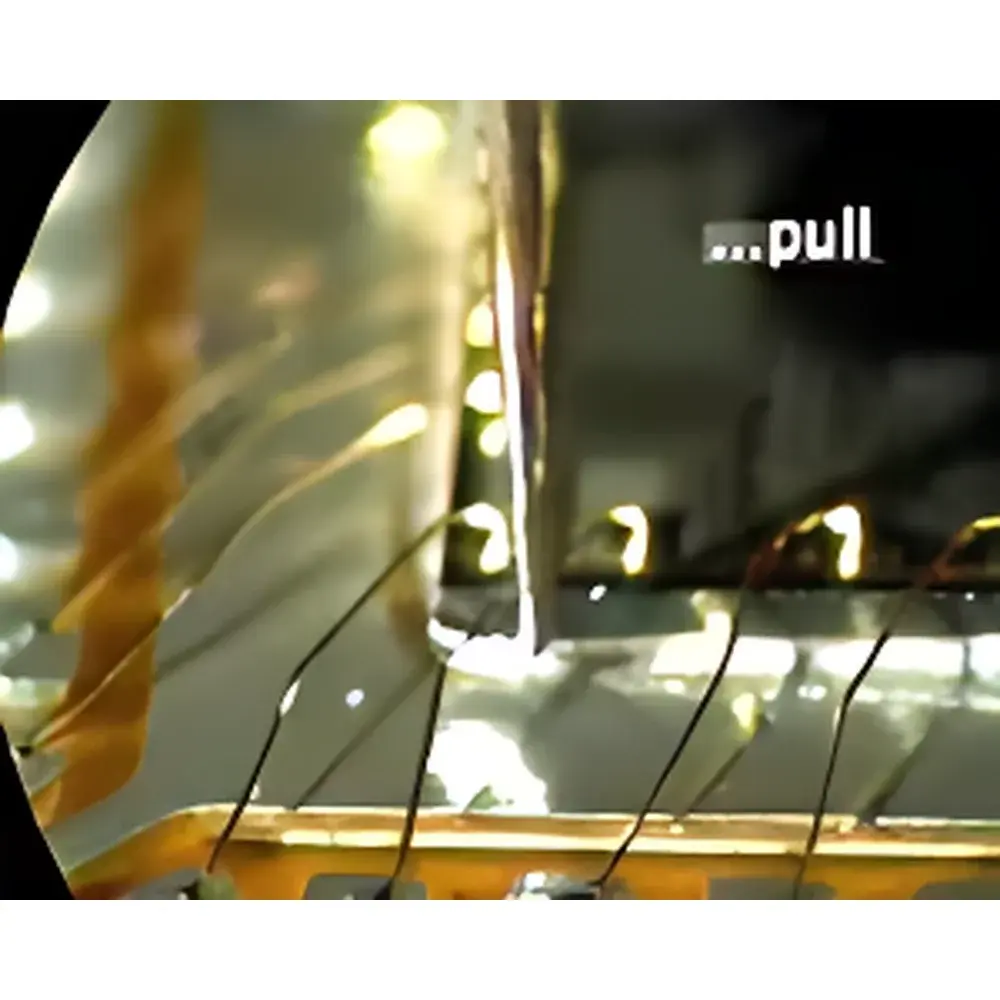
- Wire bond pull testing: Quantitative assessment of Au, Al, and Cu wedge/wedge or ball/wedge bonds using standardized hook geometries per MIL-STD-883H.
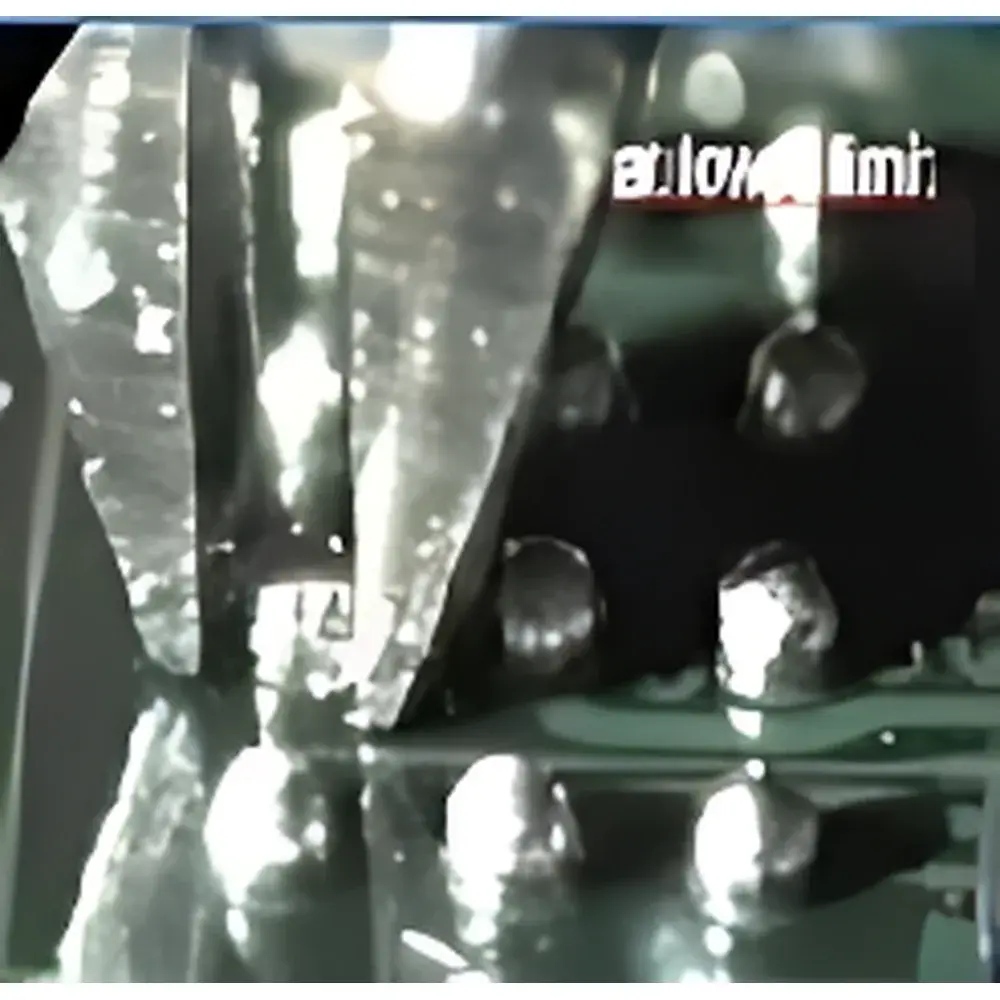
- Solder bump and micro-bump shear: High-precision shear testing of SnAgCu, In-based, and eutectic solder joints—even through passivation layers—using low-profile shear blades and adaptive load ramping.
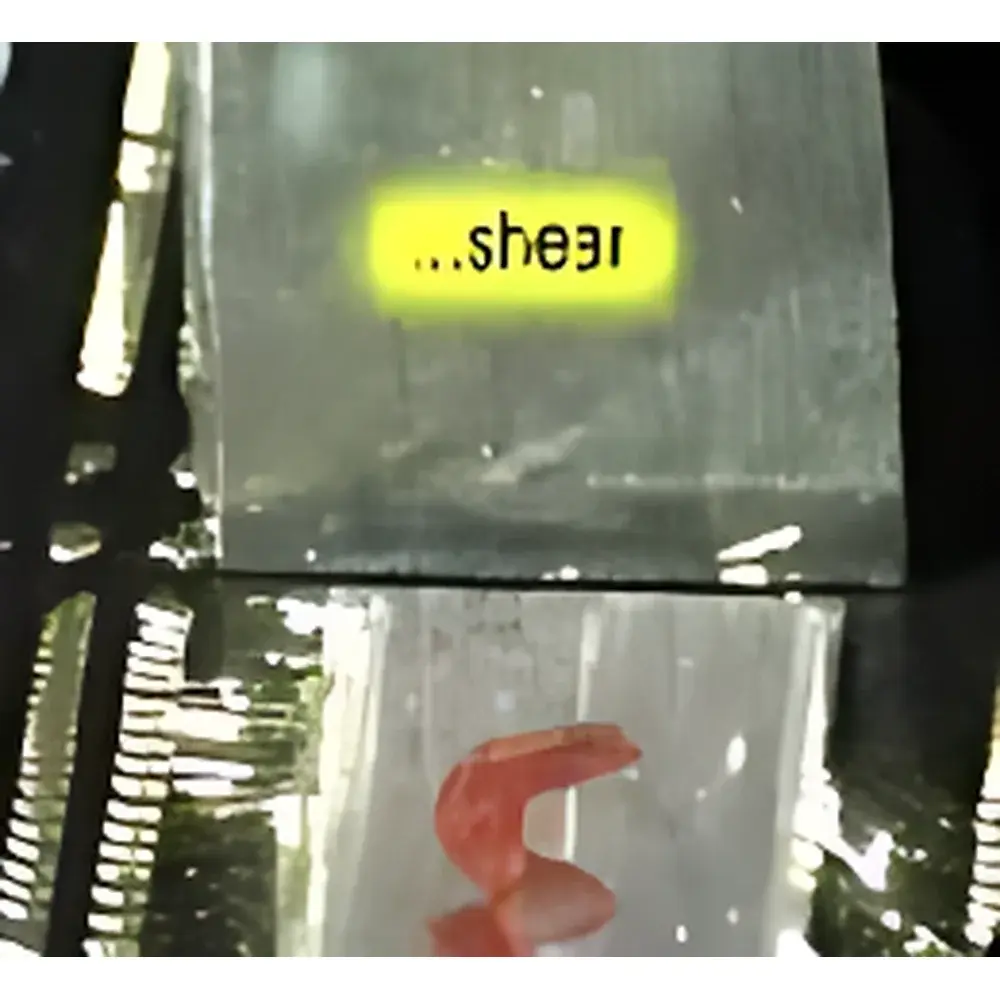
- Die attach shear and peel: Evaluation of epoxy, silver sinter, and transient liquid phase bonding strength on Si, GaN, and SiC die stacks.
- Fatigue testing: Programmable cyclic loading (tensile or shear) for accelerated life modeling of interconnects under thermal-mechanical stress (e.g., TC0/TC1000 profiles).
- Vector pull and tweezer pull: Directionally controlled detachment forces for stacked-die configurations, fan-out wafer-level packages (FOWLP), and heterogeneous integration structures.
FAQ
What standards does the DAGE 4000 PLUS comply with for calibration and testing?
It adheres to ISO 7500-1 (load cell accuracy), ISO 9513 (extensometer calibration), JEDEC JESD22-B116/B117, MIL-STD-883H Method 2011, and IPC-9701A. Calibration certificates are UKAS-accredited.
Can the system perform automated batch testing across multiple sites on a single die?
Yes—via coordinate-based pattern programming and vision-guided auto-alignment, supporting up to 1,024 test locations per substrate with positional repeatability < ±1 µm.
Is fatigue testing supported out-of-the-box?
Yes—the BondMaster™ software includes pre-validated fatigue test templates for both tensile and shear modes, with configurable cycle count, dwell time, and load amplitude profiles.
How is tool wear compensated during long-term production use?
Each tool is assigned a unique ID and wear log; software applies dynamic offset correction based on periodic verification runs against NIST-traceable reference samples.
Does the system support remote diagnostics and firmware updates?
Yes—secure TLS 1.2-enabled remote access allows OEM engineers to monitor system health, analyze error logs, and deploy validated firmware patches without onsite intervention.



