
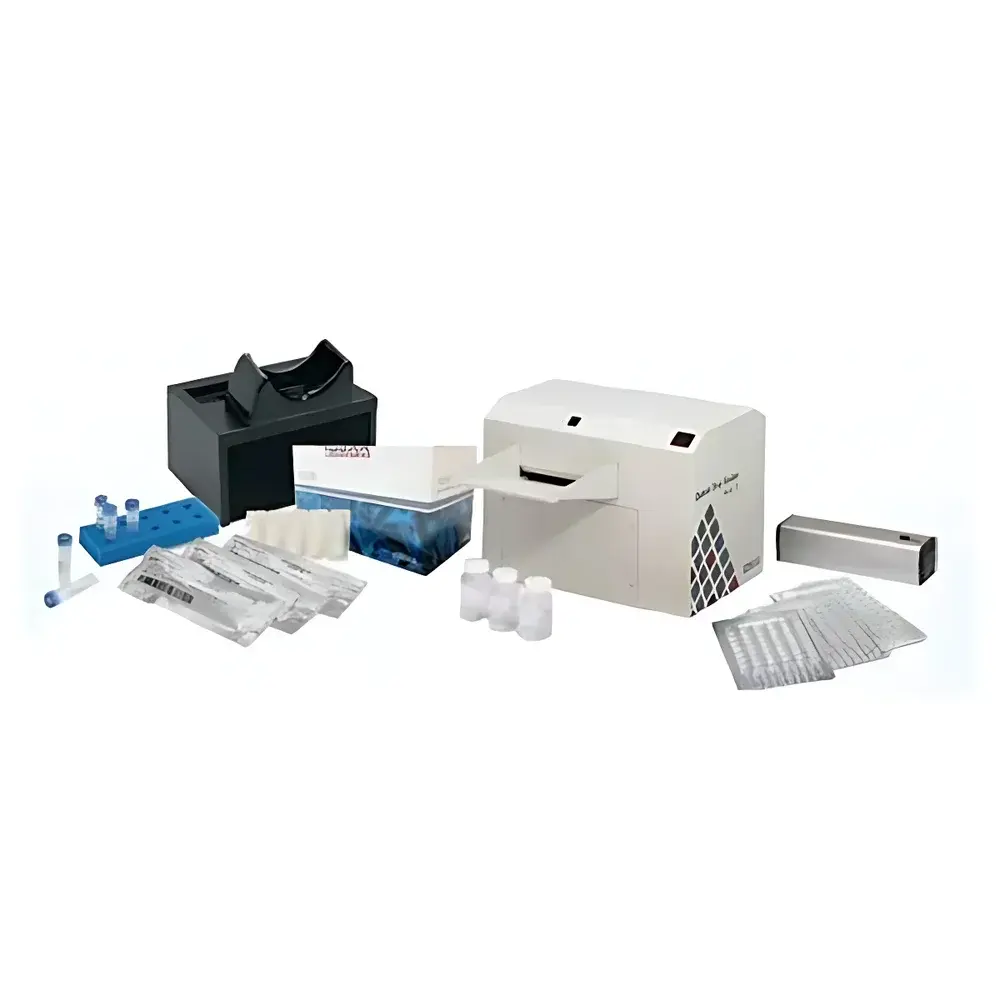
IDEXX DST Coliform Detection System with Quanti-Tray Sealer Plus
| Origin | USA |
|---|---|
| Manufacturer Type | Authorized Distributor |
| Origin Category | Imported |
| Model | CHQC-20 |
| Price Range | USD 7,000 – 14,000 |
| Detection Range | Adjustable (1–2,419 MPN/100 mL) |
| Detection Time | 24–28 h |
| Throughput | Adjustable via 51-well or 97-well Quanti-Tray formats |
| Sampling Frequency | Configurable per lab workflow |
Overview
The IDEXX DST Coliform Detection System with Quanti-Tray Sealer Plus is a fully integrated, standardized platform for the quantitative detection of total coliforms, Escherichia coli, and fecal (thermotolerant) coliforms in water samples using the Defined Substrate Technology (DST) enzyme substrate method. Based on the statistical Most Probable Number (MPN) principle, this system automates sample partitioning and sealing into either 51-well or 97-well Quanti-Tray disposable trays—enabling reproducible, culture-based enumeration without membrane filtration or colony isolation. The method relies on enzymatic hydrolysis of chromogenic and fluorogenic substrates (e.g., ortho-nitrophenyl-β-D-galactopyranoside [ONPG] and 4-methylumbelliferyl-β-D-glucuronide [MUG]) to produce colorimetric (yellow) and fluorescent (blue under 366 nm UV) signals specific to β-galactosidase and β-glucuronidase activities—biomarkers for total coliforms and E. coli, respectively. Designed for compliance with international regulatory frameworks—including HJ 1001–2018 (China), GB/T 5750.12–2006 (China), and CJ/T 51–2018—the system delivers results within 24–28 hours of incubation at 35 ± 0.5 °C, eliminating subjective interpretation and reducing hands-on time to under 60 seconds per sample.
Key Features
- Automated sealing of Quanti-Tray 51-well and 97-well trays in ≤17 seconds with temperature-controlled heated rollers (inner roller: 200 ± 10 °C; outer surface: 180 ± 2 °C)
- Dual-tray compatibility with pre-installed, imported rubber gasket inserts optimized for leak-free sealing integrity
- Integrated counter function and programmable stop logic for consistent tray positioning and seal uniformity
- CE-certified architecture with thermal safety cutoff, low-noise operation (<50 dB(A)), and ambient operating range of −10 to 50 °C
- Robust mechanical design: 16 kg unit weight, compact footprint (30 × 39 × 27 cm), and validated durability for ≥40,000 consecutive sealing cycles
- Preheat time <15 minutes; external housing surface temperature maintained below 40 °C during continuous operation
- Compliance-ready configuration supporting audit trails and procedural documentation for GLP/GMP environments
Sample Compatibility & Compliance
The system accommodates raw, treated, and reclaimed water matrices—including drinking water, wastewater, recreational water, and environmental surface water—without requirement for sterile hood handling. All reagents—including Colilert®-18/Quanti-Tray®-2000-compatible DST media (e.g., WP200I formulation)—are manufactured to meet stringent quality control specifications aligned with ISO/IEC 17025 reference material requirements. The methodology is formally referenced in China’s *Construction Standard for Centers for Disease Control and Prevention* and satisfies the technical criteria of HJ 1001–2018 (detection of total coliforms, fecal coliforms, and E. coli in water), GB/T 5750.12–2006 (Standard Methods for Examination of Drinking Water), and CJ/T 51–2018 (Urban Wastewater Testing Standards). Positive controls (MIC-DWCOL and MIC-WWCOL) are supplied with documented recovery rates and shelf-life validation (18 months refrigerated), ensuring traceable performance verification per batch.
Software & Data Management
While the Sealer Plus hardware operates as a standalone electromechanical instrument without embedded firmware or cloud connectivity, its operational parameters—including cycle count, seal duration, and tray type selection—are logged via mechanical counters and user-recorded logbooks. For full digital traceability, laboratories integrate the system into LIMS or ELN platforms using manual entry of MPN values derived from visual or UV-assisted well scoring (per ASTM D6162–22 guidelines). The 97-well Quanti-Tray format enables direct MPN calculation using standardized lookup tables compliant with ISO 8199:2018 Annex B and US EPA Method 1604. All consumables—including sterile 120 mL sampling bottles with sodium thiosulfate neutralizer (WV120SBST-200), UV lamps (WEA160F, 366 nm), and UV viewing cabinets (WCM10)—are calibrated and certified to support data integrity under FDA 21 CFR Part 11–aligned workflows when paired with appropriate electronic record controls.
Applications
- Routine compliance monitoring of municipal drinking water supplies per national regulatory mandates
- Emergency response testing during waterborne disease outbreaks or post-disaster infrastructure assessment
- Environmental surveillance of rivers, lakes, and coastal waters for fecal contamination indicators
- Validation of point-of-use (POU) and point-of-entry (POE) water treatment systems
- Process control in bottled water and beverage manufacturing facilities
- Research applications requiring high-throughput, statistically robust enumeration of indicator organisms
FAQ
What detection standards does the IDEXX DST system comply with?
The system meets HJ 1001–2018, GB/T 5750.12–2006, and CJ/T 51–2018 for water quality testing in China, and aligns with ASTM D6162 and US EPA Method 1604 for international equivalence.
How is quantification performed after incubation?
Positive wells are counted manually or with UV visualization; MPN values are determined using standardized statistical tables provided in the Quanti-Tray instruction manual and referenced in ISO 8199:2018.
Can the Sealer Plus process both 51-well and 97-well trays interchangeably?
Yes—equipped with dual-position rubber gasket inserts and auto-sensing stop logic, it supports seamless switching between Quanti-Tray and Quanti-Tray 2000 formats.
Is the system suitable for field deployment?
With its compact size, low power demand (220 V ±10%), and minimal maintenance requirements—including a dedicated cleaning access port—it is routinely deployed in mobile labs and emergency response units.
What is the expected service life of the sealing mechanism?
Validated for ≥40,000 sealing cycles under routine QC conditions, with periodic roller cleaning recommended per manufacturer maintenance schedule.




