
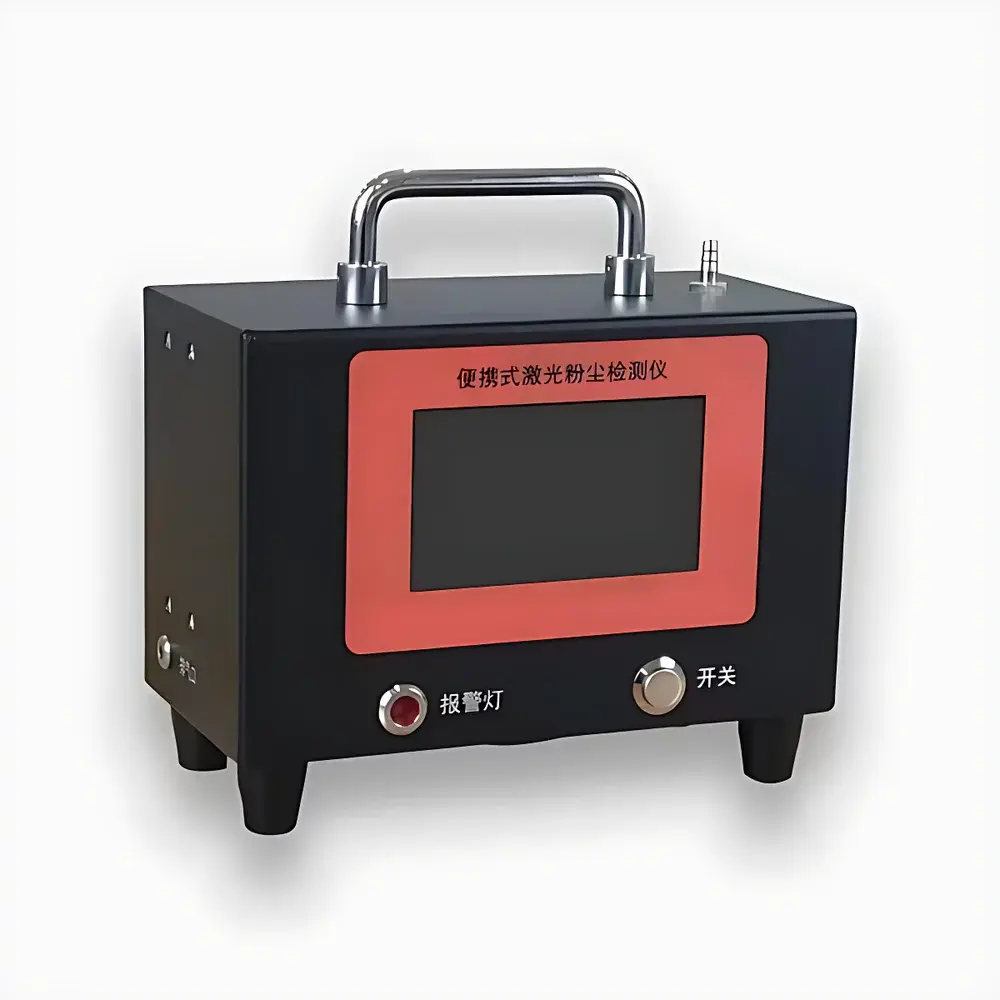
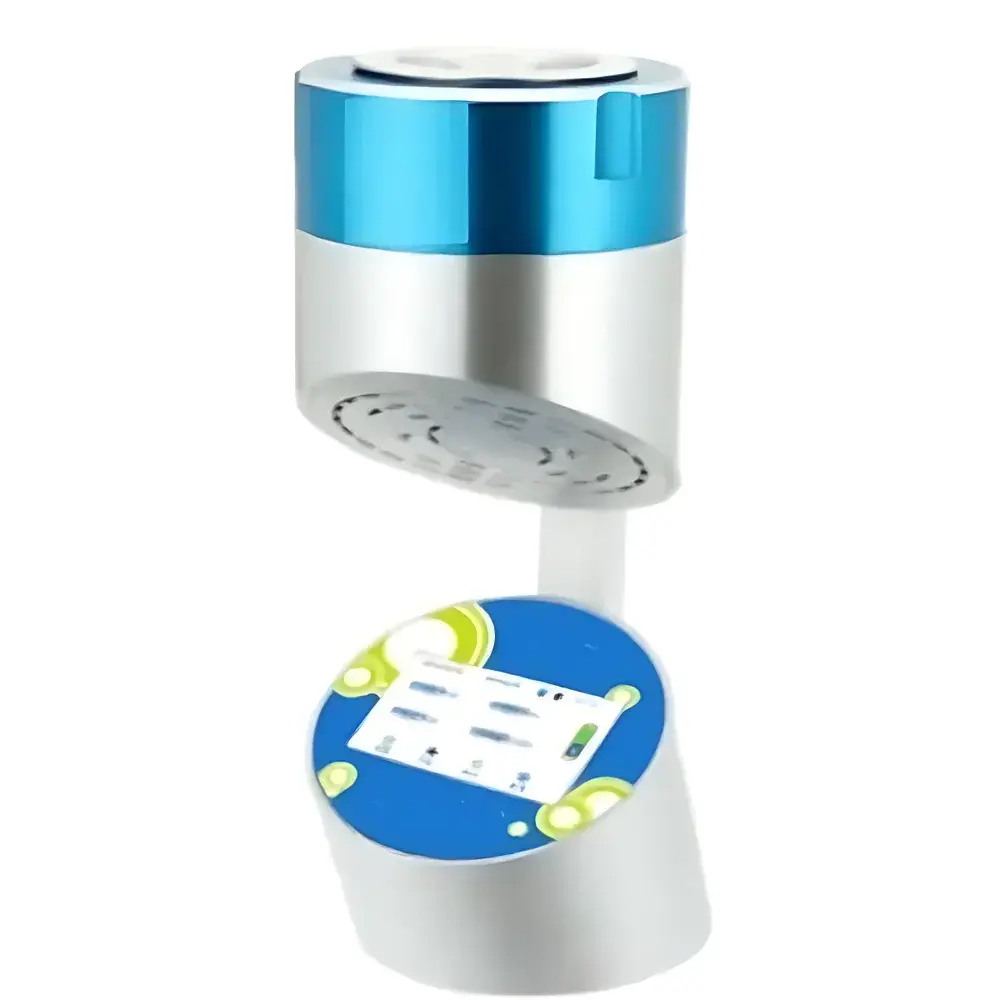
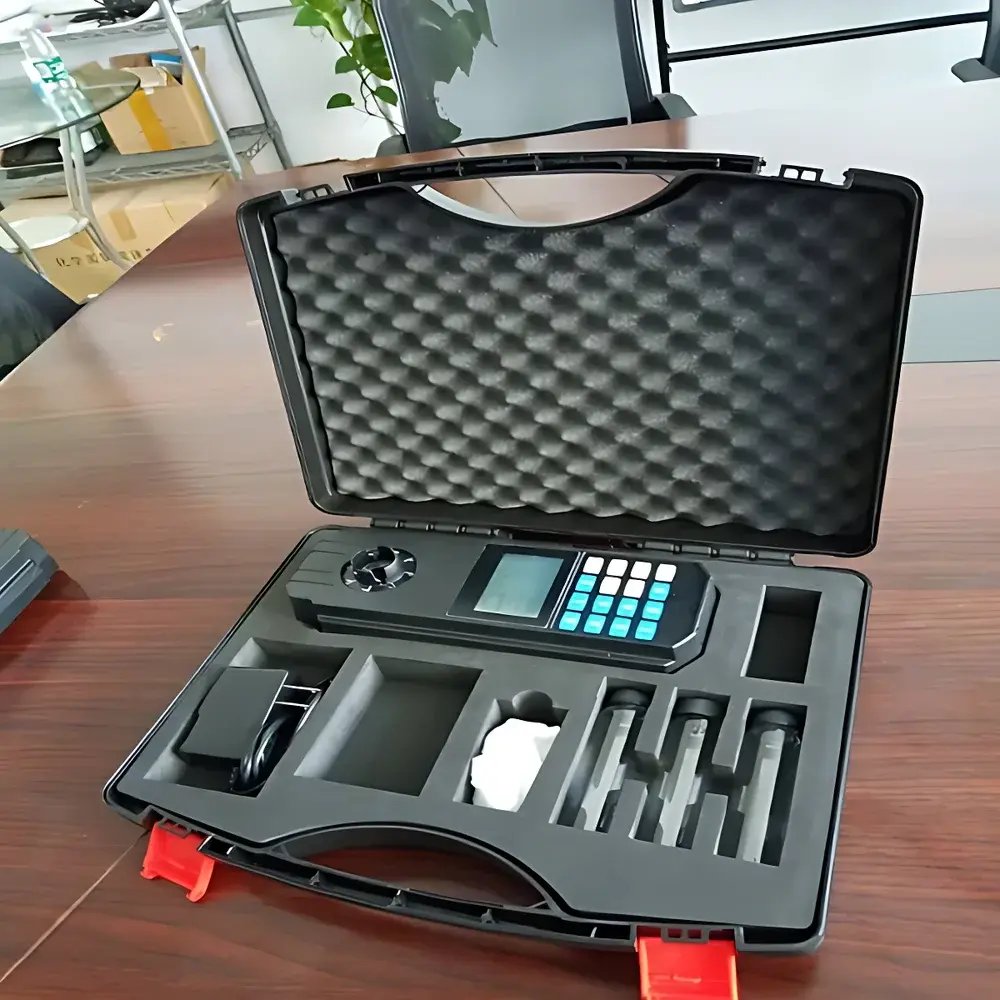
Hengao De HAD-E9E Laser Scattering Particulate Matter Analyzer
| Brand | Hengao De |
|---|---|
| Origin | Beijing, China |
| Manufacturer Type | Authorized Distributor |
| Country of Origin | China |
| Model | HAD-E9E |
| Price | USD 42.50 (FOB) |
| Sampling Flow Rate | 1.0 L/min ±2.5% |
| PM2.5 Range | 0–30,000 µg/m³, Resolution: 1 µg/m³, Accuracy: ±10 µg/m³ (≤100 µg/m³), ±10% (100–30,000 µg/m³) |
| PM10 Range | 0–30,000 µg/m³, Resolution: 1 µg/m³, Accuracy: ±15 µg/m³ (≤100 µg/m³), ±15% (100–30,000 µg/m³) |
| TSP Range | 0–30,000 µg/m³, Resolution: 1 µg/m³, Accuracy: ±20 µg/m³ (≤100 µg/m³), ±20% (100–30,000 µg/m³) |
| Atmospheric Pressure Range | 60–120 kPa, Resolution: 0.1 kPa, Accuracy: ±0.5 kPa |
| Operating Temperature | −20 to +80 °C |
| Operating Humidity | 0–95% RH (non-condensing) |
| Battery Life | >8 h (7.4 V, 7.8 Ah Li-ion) |
| Dimensions | 210 × 100 × 190 mm |
| Weight | 1.8 kg |
Overview
The Hengao De HAD-E9E Laser Scattering Particulate Matter Analyzer is a portable, real-time aerosol monitoring instrument engineered for precision measurement of airborne particulate mass concentrations using the principle of light scattering photometry. It employs a calibrated 650 nm laser diode and a high-sensitivity photodetector to quantify scattered light intensity proportional to particle number and size distribution in the sampled air stream. The device complies with the fundamental optical detection methodology referenced in ISO 29463-3:2017 (High-efficiency filters — Part 3: Test methods) and aligns with the physical basis of PM2.5/PM10 quantification as defined in EPA Method PS-1 and EN 12341:2014. Designed for field-deployable operation, it delivers traceable, repeatable measurements across indoor air quality (IAQ), occupational hygiene, environmental compliance, and HVAC performance validation applications—without requiring laboratory-grade infrastructure.
Key Features
- Simultaneous real-time display of PM2.5, PM10, and TSP concentrations in µg/m³ or mg/m³ units, with user-selectable unit switching
- Integrated electronic mass flow controller ensuring stable sampling at 1.0 L/min (±2.5% accuracy), minimizing flow-induced uncertainty
- Dual alarm modes: time-weighted average (TWA) concentration alert and instantaneous peak threshold notification, configurable per regulatory exposure limits (e.g., OSHA PEL, ACGIH TLV)
- USB-based firmware update capability for seamless compliance with evolving calibration and data logging standards
- Optional 4G cellular module enabling secure, encrypted telemetry to centralized environmental monitoring platforms—including national-level air quality networks compliant with China’s HJ 653-2013 and EU Air Quality Directive 2008/50/EC frameworks
- Robust mechanical architecture: IP54-rated enclosure, reinforced internal thermal management, and shock-absorbing mounting for transport and mobile deployment
Sample Compatibility & Compliance
The HAD-E9E is validated for use with ambient air, recirculated HVAC exhaust, industrial process exhaust streams, and cleanroom environments where non-hazardous particulates dominate (e.g., dust, pollen, combustion soot, and polymer fumes). It does not require filter collection or gravimetric post-processing, enabling immediate decision support during source identification or remediation verification. Instrument calibration adheres to traceable NIST-traceable reference aerosols (e.g., Arizona Test Dust, PSL spheres) and conforms to QA/QC protocols outlined in ISO/IEC 17025:2017. Data integrity meets GLP and GMP documentation requirements through timestamped, tamper-evident internal storage (≥500 sample records), with optional audit trail functionality when integrated into validated software ecosystems.
Software & Data Management
Raw and processed concentration data are stored internally with full metadata: date/time stamp, flow rate, temperature, pressure, battery voltage, and alarm status flags. Export is supported via USB mass storage mode (CSV format) or optional Bluetooth 5.0 interface for direct synchronization with Hengao De’s proprietary desktop application—compatible with Windows 10/11 and macOS 12+. The software enables statistical analysis (mean, SD, min/max), trend charting over user-defined intervals, and report generation compliant with ISO 14644-1 cleanroom certification templates. When deployed with 4G connectivity, remote firmware updates and over-the-air configuration changes are authenticated via TLS 1.2 encryption, satisfying data security provisions under FDA 21 CFR Part 11 for regulated environments.
Applications
- Occupational health surveillance in manufacturing, mining, construction, and pharmaceutical production facilities per OSHA 29 CFR 1910.1000 and EU Directive 2017/2398
- Rapid response assessment during wildfire smoke events, dust storms, or post-renovation indoor air evaluations
- Performance validation of HEPA and ULPA filtration systems in cleanrooms, hospitals, and biosafety laboratories (ISO 14644-3 Annex B)
- Field validation of air purifier CADR ratings per AHAM AC-1-2020 test protocol
- Long-term ambient air monitoring at fixed sites or mobile monitoring vans equipped with GPS geotagging
- Educational use in university environmental science and industrial hygiene curricula
FAQ
Does the HAD-E9E require annual recalibration?
Yes. For continued metrological traceability, we recommend factory recalibration every 12 months or after 2,000 operating hours—whichever occurs first—using NIST-traceable polydisperse aerosol standards.
Can the instrument measure particles smaller than 0.3 µm?
While optimized for PM2.5/PM10 classification, its optical design detects particles ≥0.1 µm; however, mass concentration accuracy below 0.3 µm is limited by Mie scattering assumptions and requires supplementary CPC validation per ISO 27891:2019.
Is the device certified for use in explosion-hazardous areas?
No. The HAD-E9E is not intrinsically safe or ATEX/IECEx certified. It must be operated outside Zone 0/1 classified locations.
What is the minimum detectable concentration?
The lower limit of quantitation (LOQ) is 1 µg/m³ for PM2.5, determined per ISO 11843-1:1997 based on signal-to-noise ratio ≥10:1 under controlled lab conditions.
How is humidity compensated during measurement?
Relative humidity is monitored in real time (0–95% RH, ±3% RH accuracy); no active compensation is applied to PM readings, as hygroscopic growth effects are considered outside the scope of regulatory PM mass standards (e.g., EPA 40 CFR Part 53).



