
Hengao De BD-II-507 Driver Visual Attention Allocation and Sustained Attention Assessment Instrument
| Brand | Hengao De |
|---|---|
| Origin | Beijing, China |
| Manufacturer Type | Authorized Distributor |
| Country of Origin | China |
| Model | BD-II-507 |
| Price | USD 92 (FOB) |
Overview
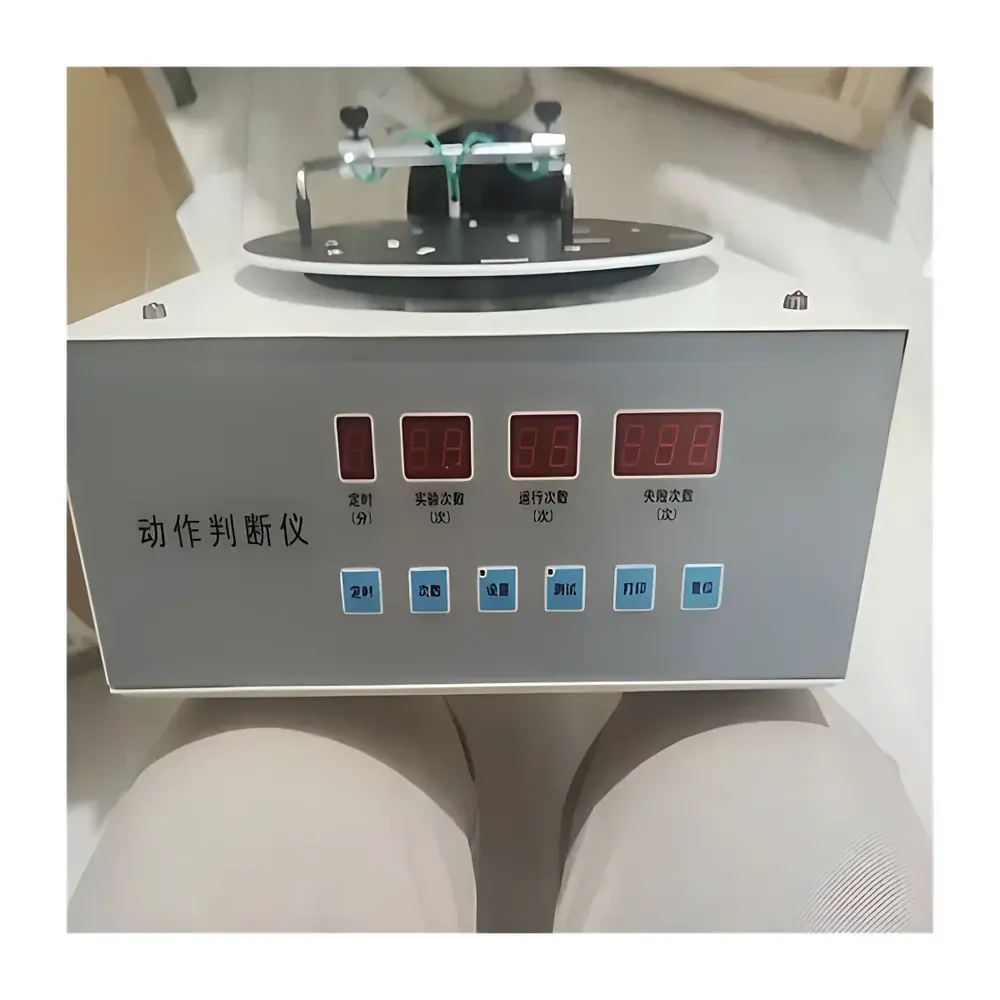
The Hengao De BD-II-507 Driver Visual Attention Allocation and Sustained Attention Assessment Instrument is a psychophysiological testing apparatus engineered for standardized evaluation of visual attention distribution and maintenance under simulated dual-task conditions. It operates on the principle of controlled visual-motor response inhibition and selective attention tracking, using a rotating stimulus disc with spatially distributed geometric targets to elicit time-critical detection and avoidance behaviors. Designed in accordance with established human factors research protocols for transportation safety assessment, the system quantifies attentional resource allocation by measuring reaction latency, target omission rates, and lateralized response asymmetry — metrics directly relevant to driver cognitive workload modeling and fatigue risk prediction. The instrument supports both laboratory-based psychometric validation studies and applied training evaluations in driving simulation environments.
Key Features
- Stimulus disc with precise rotational control: 280 mm diameter, motor-driven at fixed speed of 4.5 rpm ±0.1 rpm, ensuring temporal consistency across trials
- Configurable target array: 10 rectangular targets, 10 circular targets, and 1 peripheral reference target arranged radially to support spatial attention mapping
- Dual independent detection heads: Left and right units mounted on adjustable linear guides; inter-head spacing manually settable from 65 mm (standard interpupillary distance range)
- Linear actuation mechanism: Each detection head traverses 135 mm along the horizontal midline of the rotating disc via ergonomic handwheel, enabling manual evasive movement synchronized with target presentation
- Programmable experimental protocol: Supports continuous operation or inter-trial rest intervals; experiment duration configurable from 1 to 9 minutes; up to 19 repeated trials per session
- Error quantification: Cumulative failure count tracked separately for left and right responses, with maximum summation limit of 999 errors per session
- Data export interface: RS-232 serial output compliant with standard ASCII formatting for integration with external data acquisition systems or custom analysis software
Sample Compatibility & Compliance
The BD-II-507 is validated for use with adult human subjects aged 18–65 years in controlled laboratory settings. It complies with ISO 9241-110 (Ergonomics of human-system interaction — Part 110: Interaction principles) regarding physical interface design and operator feedback clarity. While not a medical device, its measurement paradigm aligns with methodologies referenced in ASTM E2913 (Standard Practice for Measuring Visual Attention Using Eye Tracking and Behavioral Response Measures) and supports data collection suitable for GLP-compliant cognitive assessment protocols when paired with documented SOPs. No biological samples or consumables are required; calibration verification is performed via mechanical alignment check and timing accuracy validation using calibrated digital stopwatch traceable to NIST standards.
Software & Data Management
The instrument operates as a standalone hardware platform without embedded firmware or proprietary software. All experimental parameters are configured manually via front-panel controls. Raw output consists of ASCII-encoded text strings transmitted via RS-232 at 9600 baud, 8N1 format, containing timestamped event codes for each detection head activation, error flagging (miss/hit/anticipation), trial number, and cumulative error totals. Users may log data directly into spreadsheet applications or import into MATLAB, Python (e.g., pandas + pySerial), or LabVIEW environments for statistical analysis. Audit trail integrity is maintained through sequential file naming and manual session metadata annotation; no electronic signature or 21 CFR Part 11 compliance features are included, consistent with its classification as a non-regulated research tool.
Applications
- Driver fitness-for-duty assessment in commercial transport and public transit organizations
- Cognitive load evaluation during advanced driver assistance system (ADAS) interface usability testing
- Longitudinal monitoring of attentional decline in occupational health surveillance programs
- Neuropsychological baseline testing for high-risk professions requiring sustained vigilance (e.g., air traffic control, rail operations)
- Academic research in visual cognition, selective attention, and cross-modal interference paradigms
- Validation of computational models of attentional resource allocation under time pressure
FAQ
Is the BD-II-507 compatible with modern USB-to-serial adapters?
Yes — standard FTDI- or CH340-based USB-RS232 converters operating at 9600 baud are fully interoperable. Ensure driver installation and COM port assignment prior to data capture.
Can the rotation speed be adjusted beyond 4.5 rpm?
No — the motor controller is fixed-frequency and non-variable. This ensures strict adherence to published test protocols referenced in Chinese national driving aptitude standards.
What is the recommended calibration frequency?
Mechanical alignment and timing accuracy should be verified before each daily usage session using a certified digital stopwatch and vernier caliper; formal recalibration is not required unless physical impact or environmental shock occurs.
Does the instrument meet IEC 61000-4 electromagnetic compatibility requirements?
It conforms to IEC 61000-4-2 (ESD immunity) and IEC 61000-4-3 (radiated RF immunity) at Level 2 (4 kV contact discharge, 3 V/m field strength), as verified during factory acceptance testing.
Is technical documentation available in English?
A bilingual (Chinese/English) user manual, mechanical drawings, and RS-232 communication protocol specification are provided upon request with purchase confirmation.





