
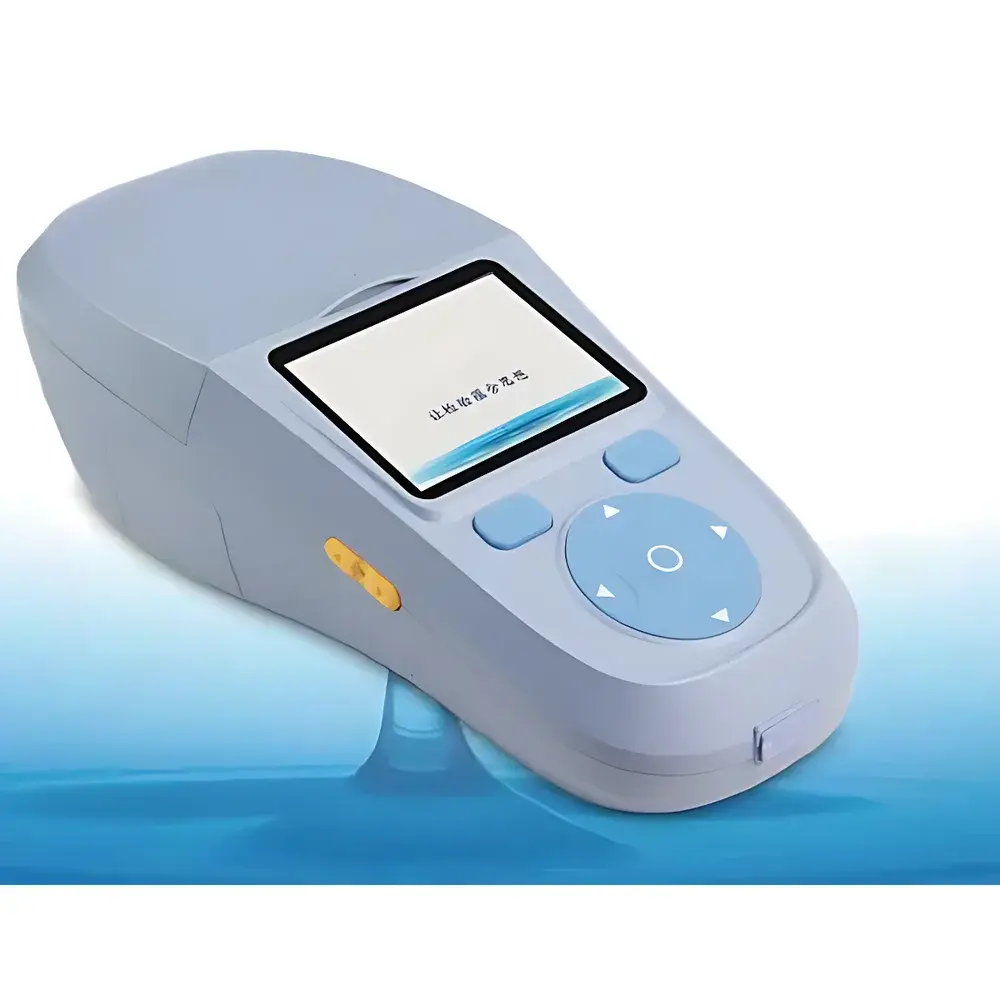
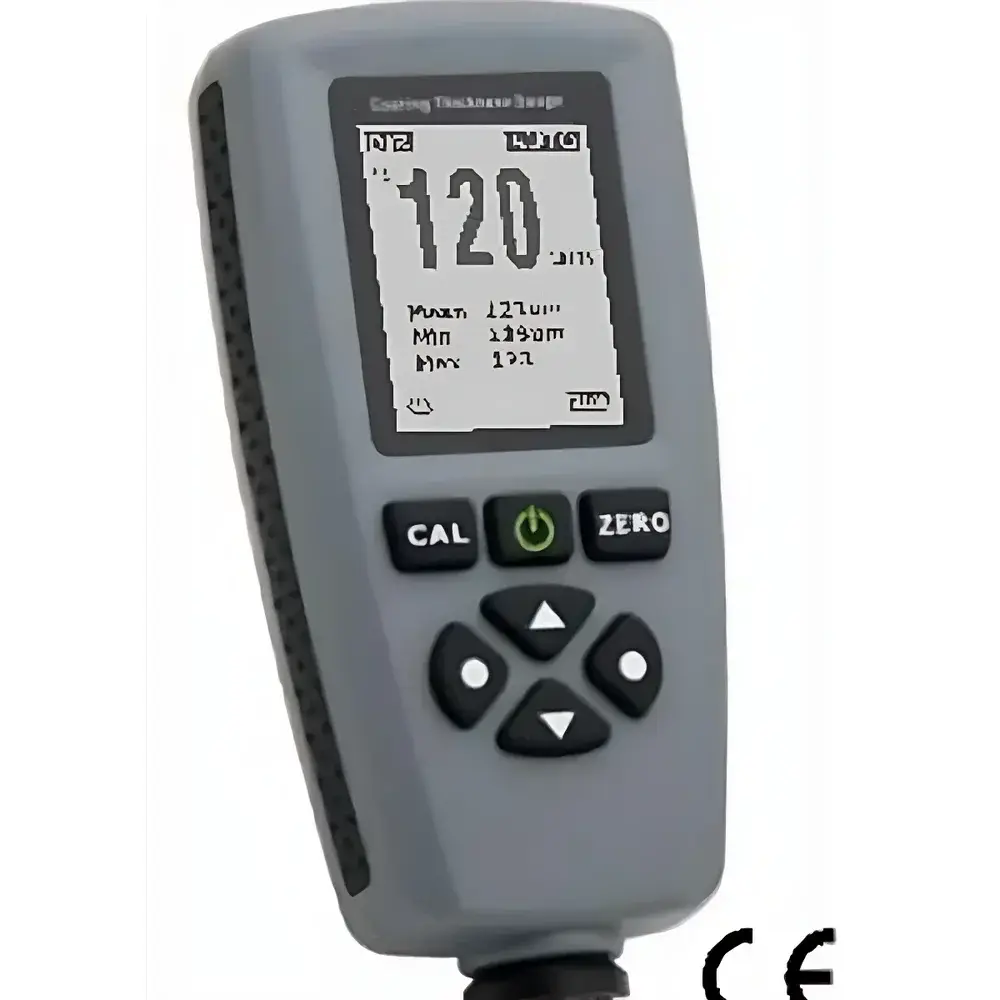
HengaoDe HAD-TCP30 Multi-Parameter Water & Food Chlorate Analyzer with DPD/TMB Colorimetric Detection
| Brand | HengaoDe |
|---|---|
| Origin | Beijing, China |
| Manufacturer Type | Authorized Distributor |
| Country of Origin | China |
| Model | HAD-TCP30 |
| Price | USD 28.50 (FOB) |
| Power Supply | 4×AA alkaline batteries or USB 5V DC |
| Operating Environment | 0–50°C |
| Optical System | Dual-wavelength LED cold light source (470 nm & 520 nm, auto-switching) |
| Absorbance Accuracy | ±3% FS |
| Measurement Ranges | Residual Chlorine (DPD method): 0.01–5.00 mg/L |
| Chlorine Dioxide (DPD method) | 0.02–10.00 mg/L |
| Chlorate (TMB colorimetric method) | 0.02–1.00 mg/L |
| Data Storage | 1000 measurements |
| Dimensions | 265 × 121 × 75 mm (L×W×H) |
Overview
The HengaoDe HAD-TCP30 Multi-Parameter Water & Food Chlorate Analyzer is a field-deployable, portable photometric instrument engineered for rapid, on-site quantification of three critical oxidant species in drinking water, wastewater, food processing effluents, and dairy/beverage production lines: residual chlorine, chlorine dioxide, and chlorate ion. It operates on standardized colorimetric principles—DPD (N,N-diethyl-p-phenylenediamine) for free chlorine and ClO₂, and TMB (3,3′,5,5′-tetramethylbenzidine) for chlorate—ensuring methodological alignment with EPA Method 300.1, ISO 7393-2, and APHA Standard Methods 4500-Cl G and 4500-ClO₂ B. The device employs dual-wavelength LED photometry with automatic wavelength selection to minimize interferences from turbidity, colored organics, or nitrite—a common challenge in complex matrices such as whey-based beverages or post-disinfection distribution systems. Its optical path design incorporates fixed-pathlength cuvette geometry and temperature-compensated photodiode detection, delivering reproducible absorbance readings under variable ambient conditions without recalibration between assays.
Key Features
- Triple-analyte capability in a single handheld platform: simultaneous measurement of residual chlorine, chlorine dioxide, and chlorate using validated colorimetric chemistries
- Dual-wavelength LED optical engine (470 nm and 520 nm) with automatic spectral switching to optimize sensitivity and selectivity per analyte
- Integrated data logging: stores up to 1000 timestamped measurements with sample ID tagging, accessible via USB interface
- Field-rugged construction: IP54-rated enclosure with chemical-resistant housing and sealed optical chamber for operation in humid or dusty environments
- Flexible power architecture: supports both disposable AA alkaline batteries (≥200 tests per set) and USB 5V DC input for lab bench use or continuous monitoring setups
- Calibration traceability: compatible with NIST-traceable DPD and TMB standard solutions; supports user-defined calibration curves for matrix-matched validation
Sample Compatibility & Compliance
The HAD-TCP30 is validated for aqueous samples with turbidity ≤5 NTU and total suspended solids <10 mg/L. It accommodates clarified filtrates from milk, juice, bottled water, and municipal tap water without pretreatment. For chlorate analysis in high-chloride matrices (e.g., seawater-influenced brines), dilution or chloride masking with mercuric thiocyanate is recommended per ISO 10304-4 guidance. The analyzer meets the functional requirements of ISO/IEC 17025:2017 for in-house verification of routine testing methods and supports GLP-compliant documentation when paired with HengaoDe’s optional PC software (v3.2+), which provides audit trails, electronic signatures, and CFR Part 11–compliant data export (CSV/PDF). All reagent kits are supplied with CoA referencing certified reference materials (CRM) from LGC Standards or AccuStandard.
Software & Data Management
The companion Windows-based PC software enables full lifecycle data governance: import of raw absorbance and concentration values, batch-wise statistical analysis (mean, SD, CV%), outlier detection via Grubbs’ test, and automated report generation compliant with ISO/IEC 17025 clause 7.8.2. Data files include embedded metadata—operator ID, location tag, ambient temperature/humidity, and reagent lot numbers—enabling traceability across multi-site QA/QC programs. Export formats include CSV (for LIMS integration), PDF (with digital signature), and XML (for ELN ingestion). Firmware updates are delivered via secure HTTPS channel with SHA-256 hash verification. The software enforces role-based access control (RBAC) with four permission tiers: Administrator, Supervisor, Technician, and Viewer.
Applications
- Regulatory compliance monitoring for chlorate limits in bottled water (EU Directive 2020/2184: max 0.7 mg/L) and infant formula (Codex Stan 72-1981)
- Validation of chlorine dioxide disinfection efficacy in beverage filling lines and CIP rinse validation
- Process control of electrochemical chlorine generation units where chlorate is a known byproduct
- Research into chlorate formation kinetics during UV/chloramine advanced oxidation processes
- Third-party certification labs performing ISO/IEC 17025-accredited water testing (Scope ID: WTR-CHL-001)
FAQ
Is the HAD-TCP30 suitable for regulatory reporting under EU Drinking Water Directive requirements?
Yes—when operated per manufacturer SOP HAD-TCP30-OP-01 and calibrated against CRM-certified standards, its measurement uncertainty (k=2) for chlorate is ≤0.03 mg/L at 0.5 mg/L level, meeting Annex II compliance thresholds.
Can the instrument differentiate chlorite from chlorate in the same sample?
No—the TMB method is specific for chlorate but does not resolve chlorite; orthogonal confirmation via IC-MS is required for speciation.
What is the shelf life of unopened TMB reagent vials?
18 months when stored at 2–8°C in opaque packaging; discard if color develops prior to use.
Does the device support ASTM D1253-22 for residual chlorine?
Yes—its DPD methodology conforms to Section 7.2 of ASTM D1253-22 for field-use spectrophotometers.
How often must the optical system be cleaned or serviced?
Quarterly cleaning of the cuvette holder and LED lens with lint-free isopropyl alcohol swabs is sufficient; no factory recalibration is needed within 12 months of initial verification.






