
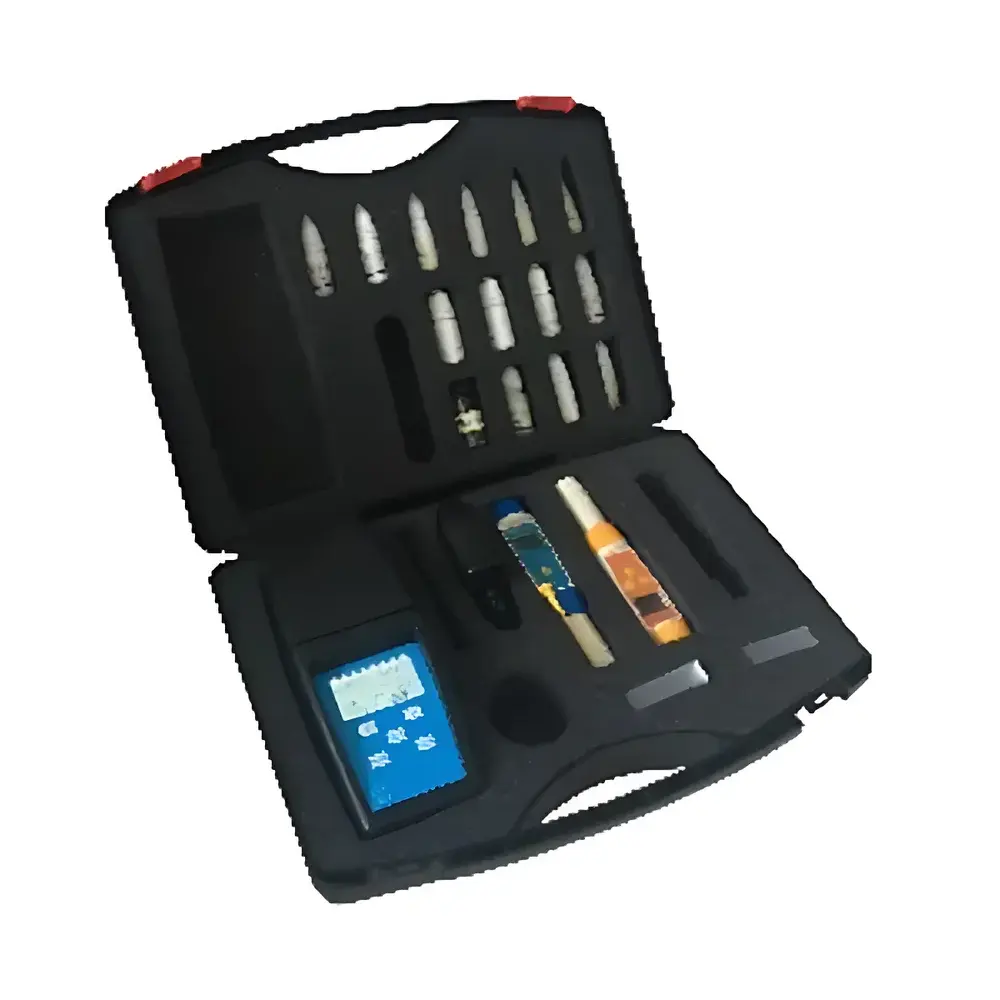
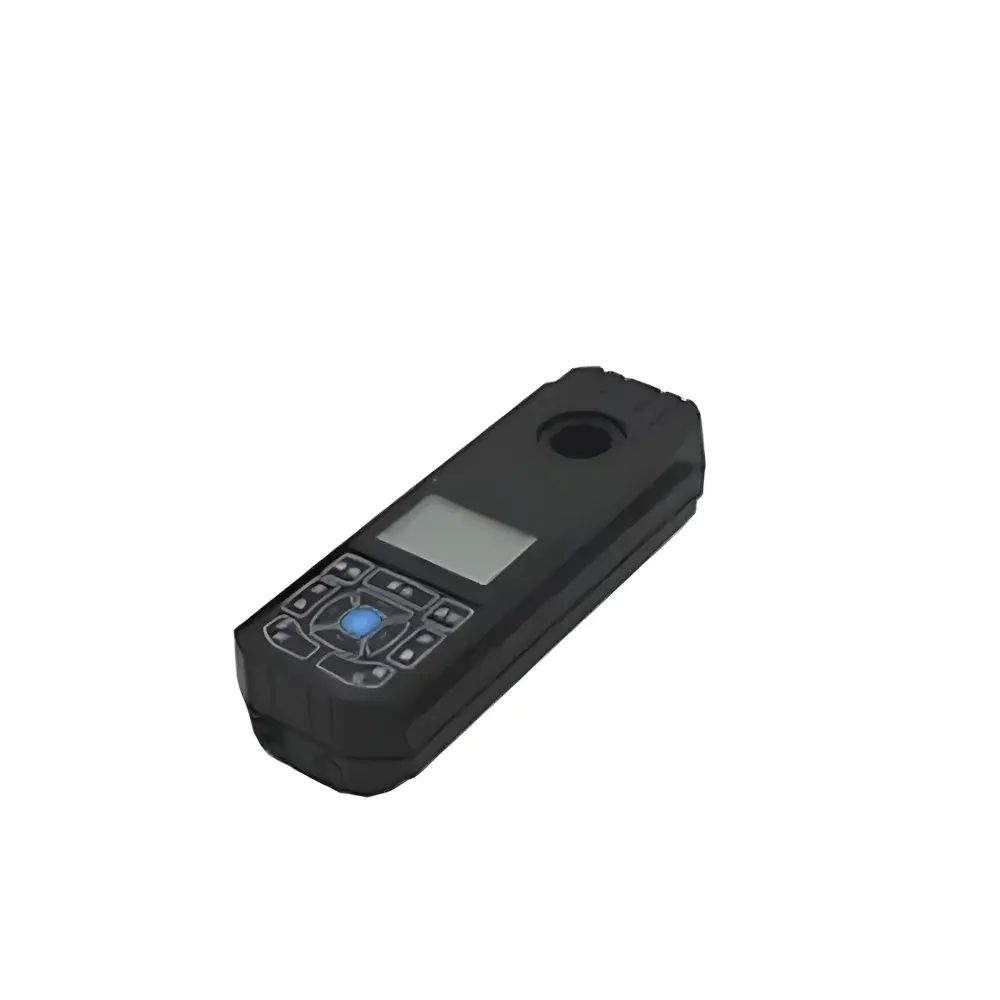
HengaoDe HAD-DZB Multiparameter Water Quality Analyzer for Aquaculture (Chlorine, Ammonia-N, Nitrite, Dissolved Oxygen, Sulfide, Salinity, pH, Temperature)
| Brand | HengaoDe |
|---|---|
| Origin | Beijing, China |
| Manufacturer Type | Authorized Distributor |
| Country of Origin | China |
| Model | HAD-DZB |
| Price | USD 27.50 (based on ¥198 at 7.2 CNY/USD) |
| Measurement Range | Free Chlorine 0–2.5 mg/L |
| Resolution | 0.001 mg/L (for analytes), 0.1 ppt / 0.1 pH unit / 0.1 °C |
| Repeatability | ≤2% |
| Accuracy | ±5% FS |
| Power | 4×1.5 V button cells or optional rechargeable Li-ion battery (2 h charge → 4 h continuous operation) |
| Enclosure Rating | IP65 |
| Data Storage | Internal memory with timestamped history |
| Connectivity | Optional Bluetooth thermal printer interface |
Overview
The HengaoDe HAD-DZB Multiparameter Water Quality Analyzer is a field-deployable, microprocessor-controlled instrument engineered for routine, quantitative assessment of critical water quality parameters in aquaculture operations, hatcheries, and environmental monitoring laboratories. It employs standardized colorimetric methodologies compliant with APHA Standard Methods for the Examination of Water and Wastewater (e.g., Method 4500-Cl G for free chlorine, 4500-NH₃ F for ammonia, 4500-NO₂ B for nitrite, and 4500-S²⁻ B for sulfide), coupled with electrochemical sensing for dissolved oxygen and potentiometric measurement for pH. The optical system utilizes a long-life semiconductor light source (rated >20,000 hours), eliminating the drift and short service life associated with tungsten-filament lamps. Its dual-power architecture—supporting both disposable alkaline cells and a rechargeable lithium-ion pack—ensures operational continuity across remote pond-side locations where AC infrastructure is unavailable.
Key Features
- Simultaneous quantification of eight core aquaculture parameters: free chlorine, ammonia-nitrogen, nitrite, dissolved oxygen, sulfide, salinity, pH, and temperature—all within a single handheld platform.
- Full中文 menu interface with tactile membrane keypad; intuitive navigation reduces operator training time and minimizes procedural errors.
- IP65-rated waterproof enclosure with integrated portable carrying case, enabling reliable use in high-humidity, splash-prone environments including pond banks, wet labs, and transport vehicles.
- Auto-zero function and 1–5 point calibration capability for each parameter channel, supporting traceable adjustment using NIST-traceable standard solutions.
- High-precision optical cuvette path (standard 10-mm quartz or optical glass cells) ensures inter-instrument comparability and method reproducibility across multi-site deployments.
- Onboard data logging with timestamped records (capacity: ≥500 entries); export via USB 2.0 or real-time transmission via optional Bluetooth module to external printers or LIMS-compatible software.
Sample Compatibility & Compliance
The HAD-DZB is validated for use with freshwater, brackish, and low-salinity marine effluents typical of recirculating aquaculture systems (RAS), flow-through ponds, and nursery tanks. Sample matrix interference is mitigated through built-in compensation algorithms for turbidity (up to 50 NTU) and common ion effects (e.g., chloride masking in nitrite analysis). Instrument performance adheres to ISO 5667-3:2018 (water sampling — guidance on preservation and handling of samples) and supports GLP-compliant documentation workflows. Calibration verification and system suitability checks align with EPA Method 1600 series requirements for field-portable analyzers used in regulatory monitoring contexts.
Software & Data Management
Data acquisition and reporting are managed via embedded firmware supporting configurable auto-save intervals, user-defined test protocols, and pass/fail flagging based on pre-set threshold limits (e.g., NO₂⁻ > 0.1 mg/L triggers alert). Raw absorbance and sensor output values are retained alongside calculated concentrations. The USB interface enables direct connection to Windows-based PCs for batch export in CSV format—compatible with Excel, LabArchives, and electronic lab notebook (ELN) platforms. Audit trail functionality meets FDA 21 CFR Part 11 foundational requirements for electronic records, including operator ID tagging and immutable timestamping of all calibration and measurement events.
Applications
- Routine health monitoring of juvenile fish and shrimp stocks during sensitive developmental stages (e.g., post-larval metamorphosis).
- Daily verification of biofilter efficiency in nitrifying RAS units by tracking ammonia-to-nitrite-to-nitrate conversion kinetics.
- Emergency response screening following algal blooms or feed overstocking events, where rapid sulfide or hypoxia detection is critical.
- Pre-release water quality certification for stocked fingerlings in government-regulated aquaculture zones.
- Educational use in university aquaculture programs for teaching analytical method validation and water chemistry fundamentals.
FAQ
Is the HAD-DZB compliant with ISO/IEC 17025 requirements for testing laboratories?
While the instrument itself is not accredited, its measurement procedures—including calibration traceability, documented uncertainty budgets, and interlaboratory validation data—support implementation within ISO/IEC 17025-accredited facilities when operated under controlled SOPs.
Can the device measure seawater samples without dilution?
Yes—the salinity channel (0–50 ppt) and pH electrode are calibrated for full-strength seawater; however, sulfide and nitrite assays require matrix-matched standards prepared in artificial seawater to correct for ionic strength effects.
What maintenance is required between measurements?
Rinse the optical cell and pH/DO probes with deionized water after each sample; store electrodes in recommended storage solution. Perform blank verification every 10 analyses or at start-of-shift.
Does the analyzer support custom calibration curves?
Yes—up to 30 user-defined calibration curves can be stored onboard, allowing adaptation to proprietary reagent kits or non-standard assay chemistries per laboratory protocol.
How is temperature compensation applied across parameters?
Automatic temperature compensation (ATC) is applied in real time using the integrated thermistor; coefficients follow ASTM D1293 (pH) and ISO 5814 (DO) standards, with configurable offset for site-specific thermal gradients.
Related Products





