
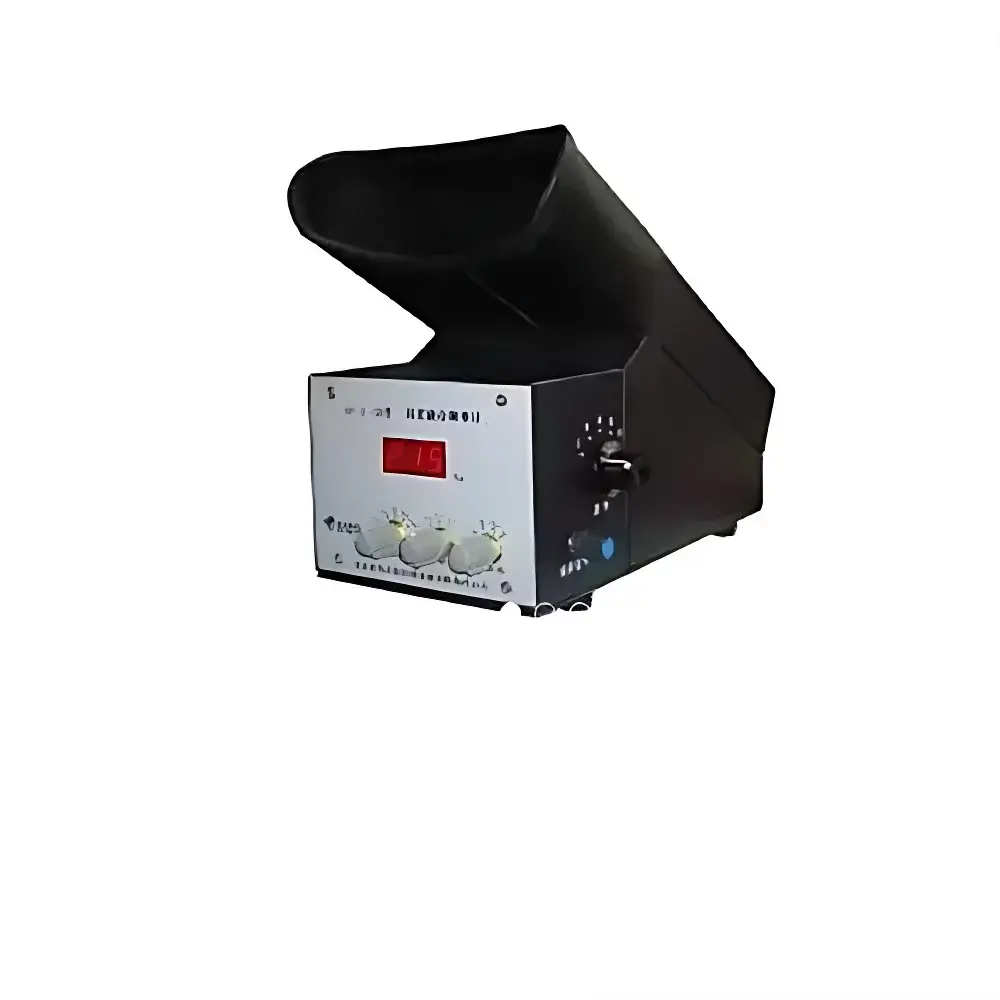
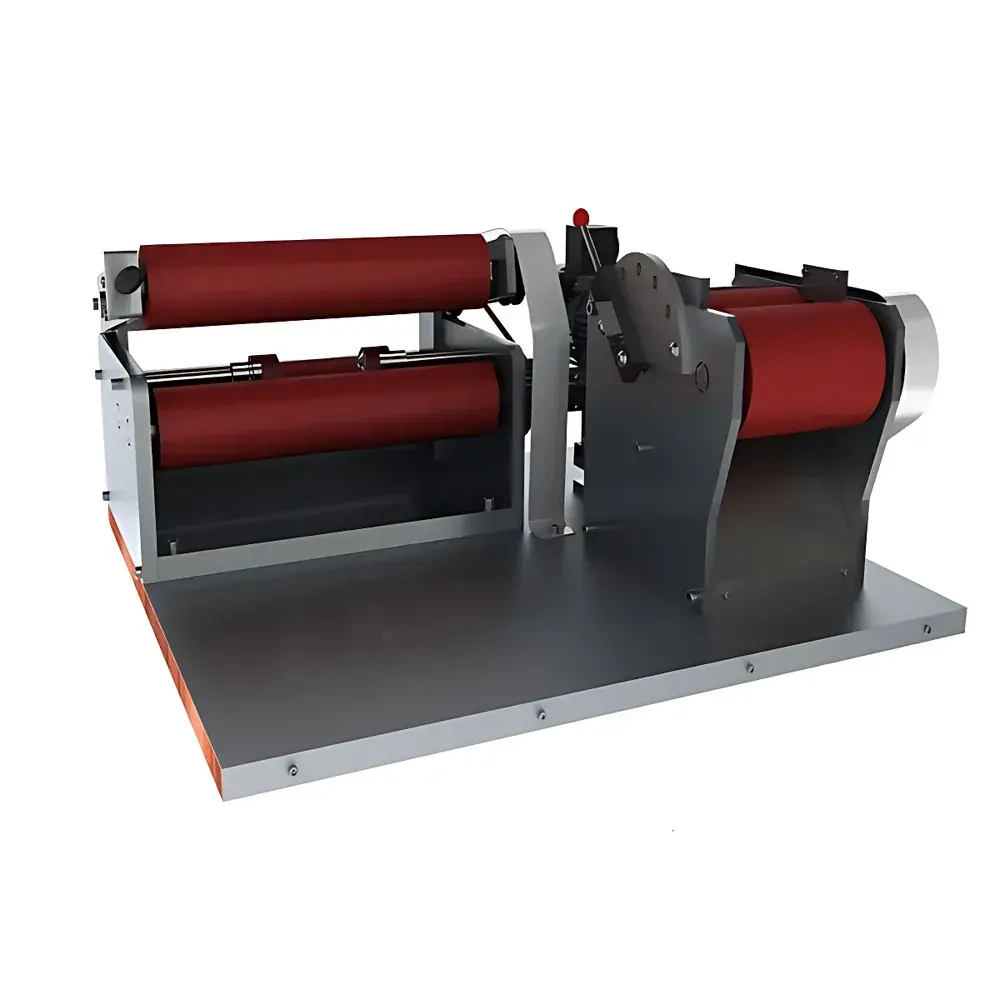
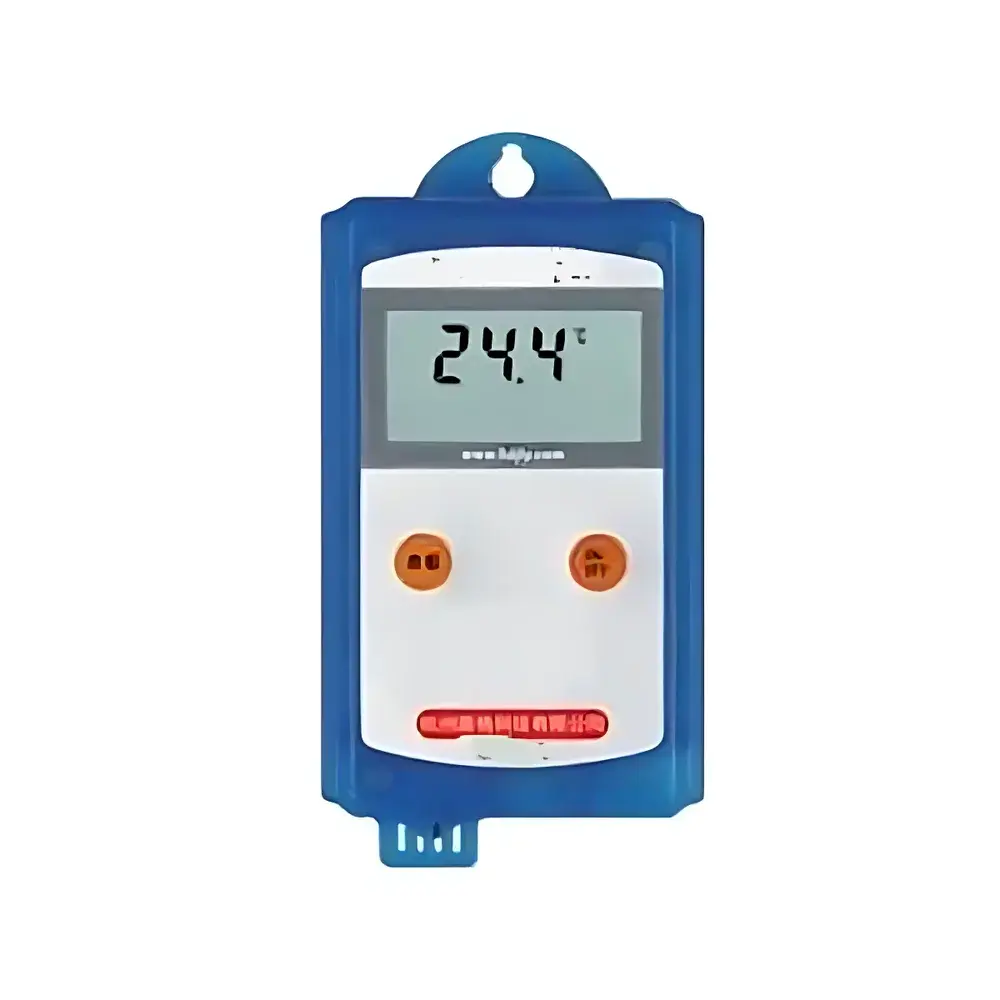
HengaoDe HA/BD-II-118 Critical Flicker Fusion Frequency Analyzer
| Brand | HengaoDe |
|---|---|
| Origin | Beijing, China |
| Manufacturer Type | Authorized Distributor |
| Country of Origin | China |
| Model | HA/BD-II-118 |
| Price | USD 28.50 (FOB) |
| Flicker Frequency Range | 4.0–60.0 Hz, 0.1 Hz step |
| Display | 3-digit LED, ±0.1 Hz accuracy |
| Light Spot Diameter | φ2 mm |
| Viewing Distance | ~500 mm |
| Light Colors | Red, Yellow, Green, Blue, White |
| Background Illumination | 4-level adjustable white light (Full, 1/4, 1/16, Off) |
| Duty Cycle Options | 1:3, 1:1, 3:1 |
| Light Intensity Levels | 7-step attenuation (1 to 1/64) |
| Waveform | Square |
| Dimensions | 300 × 150 × 250 mm |
| Power Supply | AC 220 V ±10%, 50 Hz ±1 Hz |
| Power Consumption | 5 W |
| Operating Humidity | ≤85% RH |
Overview
The HengaoDe HA/BD-II-118 Critical Flicker Fusion Frequency Analyzer is a precision psychophysical instrument engineered for objective quantification of human visual temporal resolution. It operates on the well-established principle of critical flicker fusion (CFF), wherein a discontinuous light stimulus—modulated at increasing frequencies—transitions from perceptible flicker to a subjectively continuous luminance when the retinal and cortical processing limits are exceeded. The CFF threshold—the arithmetic mean between the highest frequency eliciting flicker perception and the lowest frequency producing fusion—is a validated neurophysiological biomarker correlated with central nervous system arousal, cognitive load, and fatigue state. This device enables rigorous, repeatable measurement under controlled photometric conditions, supporting standardized protocols in ergonomics research, occupational health screening, neuropsychological assessment, and human factors validation. Its microprocessor-controlled frequency generation ensures high stability and minimal drift over extended test sessions, meeting foundational requirements for GLP-compliant data collection in academic and industrial laboratories.
Key Features
- High-resolution flicker frequency control (4.0–60.0 Hz, 0.1 Hz increments) with digital potentiometer adjustment and real-time 3-digit LED readout (±0.1 Hz accuracy)
- Five selectable monochromatic spot colors (red, yellow, green, blue, white) to evaluate chromatic contributions to temporal sensitivity
- Seven-step intensity attenuation (1 to 1/64) and three configurable亮:black duty cycles (1:3, 1:1, 3:1) for systematic study of contrast and luminance effects
- Four-level background illumination control enabling controlled adaptation state management per ISO 9241-305 and CIE S 014/E:2006 standards
- Fixed 2 mm diameter circular light spot at standardized 500 mm viewing distance, ensuring consistent retinal irradiance geometry
- Compact, integrated benchtop design (300 × 150 × 250 mm) with low power consumption (5 W) and universal AC input compatibility (220 V ±10%, 50 Hz)
Sample Compatibility & Compliance
The HA/BD-II-118 is designed exclusively for human subject testing in controlled laboratory environments. It complies with core requirements of ISO 8596:2017 (Ophthalmology — Visual acuity testing — Standard conditions) for luminance uniformity and temporal waveform fidelity. While not a medical device under FDA 21 CFR Part 820 or EU MDR, its output parameters align with research-grade instrumentation referenced in ASTM E3083-21 (Standard Guide for Psychophysical Testing of Visual Performance) and IEC 62471 (Photobiological safety of lamps). All optical components meet RoHS Directive 2011/65/EU material restrictions. No calibration certificate is supplied by default; users are advised to perform annual verification using traceable photometric standards (e.g., NIST-traceable photodiode + oscilloscope synchronization).
Software & Data Management
This is a hardware-only analog-digital hybrid instrument with no embedded software, network interface, or data logging capability. All parameter adjustments are executed manually via front-panel rotary controls, and measurements are recorded externally by the operator. This architecture eliminates firmware-related validation overhead, making it suitable for regulated environments where software lifecycle management (per FDA 21 CFR Part 11 Annex 11 or ISO/IEC 17025:2017 Clause 7.7.1) would otherwise impose compliance burdens. Experimental protocols—including stimulus duration, inter-trial intervals, and response recording methodology—must be defined and documented separately per institutional review board (IRB) or ethics committee requirements.
Applications
- Quantitative fatigue monitoring in shift-work personnel, pilots, and control room operators (per ISO 10075-3:2021 ergonomic principles for mental workload assessment)
- Baseline CFF profiling in clinical trials evaluating stimulant or sedative pharmacokinetics
- Ergonomic validation of display technologies (e.g., VR headsets, automotive HUDs) where flicker perception thresholds impact user acceptance
- Neurodevelopmental studies assessing maturation of magnocellular pathway function in pediatric populations
- Vision science research on age-related decline in temporal contrast sensitivity (e.g., correlating CFF with Pelli-Robson chart results)
- Occupational selection for roles requiring sustained visual vigilance (e.g., air traffic controllers, quality inspectors)
FAQ
Is this device CE-marked or FDA-cleared?
No. It is classified as a non-medical research instrument and bears no regulatory certification for clinical diagnosis or therapeutic use.
Can the device be calibrated traceably to national standards?
Yes—users may perform periodic verification using a calibrated photodetector and digital storage oscilloscope to confirm frequency accuracy, duty cycle fidelity, and intensity linearity against NIST-traceable references.
What is the recommended maintenance interval?
No scheduled maintenance is required. Clean optical surfaces with lint-free lens tissue and isopropyl alcohol biannually; inspect rotary encoder contacts annually for oxidation.
Does it support automated stimulus sequencing or reaction time recording?
No. Stimulus presentation and subject response timing must be managed externally using third-party hardware (e.g., Cedrus RB-840, PsychoPy, or MATLAB Psychtoolbox).
Is the light source compliant with IEC 62471 photobiological safety limits?
Yes—maximum radiance at 500 mm falls within Exempt Group limits for all five color channels under steady-state operation per IEC 62471:2006 Edition 2.




