
HengaoDe H2766-1 Microbial Aerosol Generator
| Brand | HengaoDe |
|---|---|
| Origin | Beijing, China |
| Manufacturer Type | Authorized Distributor |
| Country of Origin | China |
| Model | H2766-1 |
| Price | USD 28.50 (FOB) |
| Liquid Capacity | 20 mL |
| Nebulization Rate | 3.3 mL/min |
| Aerosol Particle Size (MMAD) | 3.2 µm |
| Power Supply | AC 220 V, 50 Hz |
| Input Power | 100 VA |
Overview
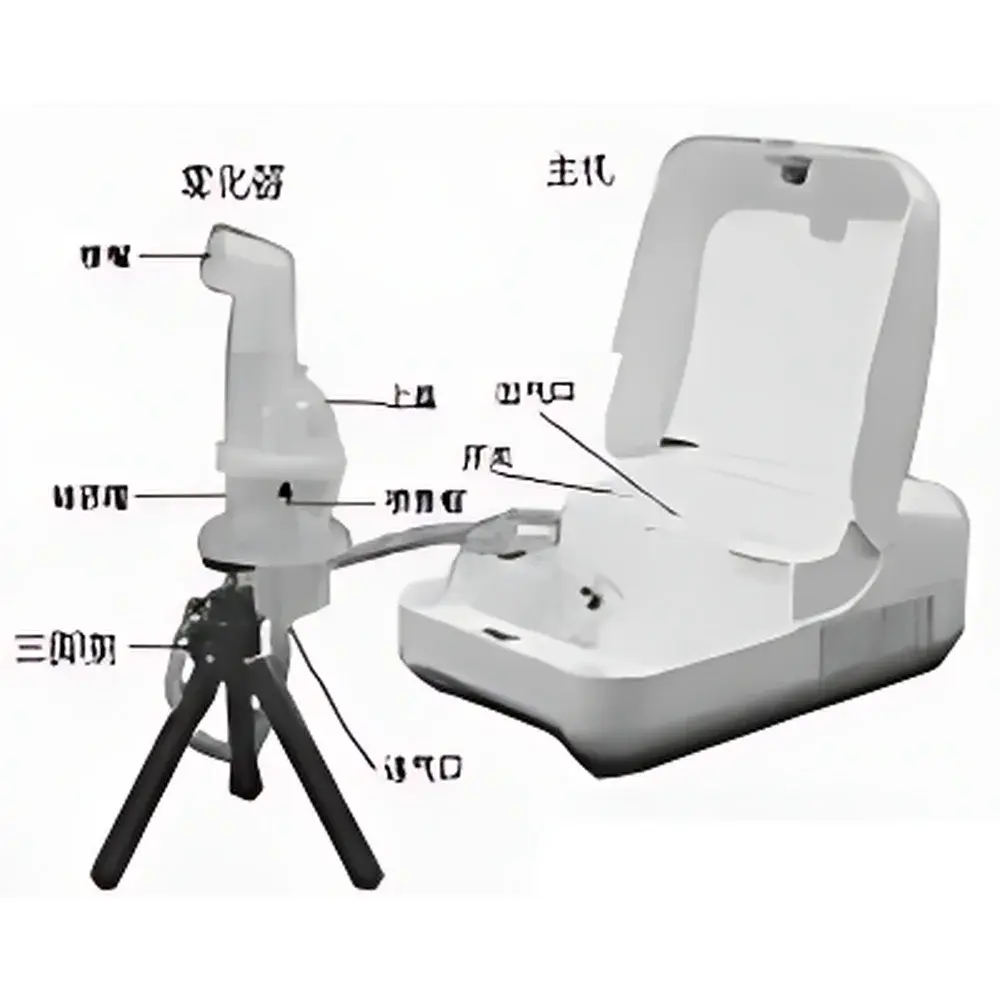
The HengaoDe H2766-1 Microbial Aerosol Generator is a precision-engineered device designed for controlled generation of bioaerosols in laboratory and biosafety environments. It operates on the principle of jet nebulization—where compressed air passes through a micro-orifice at high velocity, inducing pressure differential that draws liquid suspension from the reservoir and atomizes it into a stable, reproducible aerosol cloud. This mechanism ensures consistent particle size distribution (mass median aerodynamic diameter of 3.2 µm), enabling reliable delivery of viable microorganisms—including bacteria, spores, and viral surrogates—into inhalation exposure systems, environmental chambers, or filter challenge setups. The generator is not intended for clinical use or human exposure; rather, it serves as a standardized tool for aerosol science under GLP-compliant experimental protocols.
Key Features
- Stainless steel and chemically resistant PTFE wetted components ensure compatibility with microbial suspensions, disinfectants, and tracer dyes.
- Integrated fog chamber with removable spray cap and precision-machined nozzle enables rapid cleaning and cross-contamination mitigation between runs.
- Adjustable airflow inlet allows fine-tuning of aerosol output density without altering suspension concentration—critical for dose-controlled infection studies.
- Compact benchtop design (335 × 320 × 145 mm) with stable triangular support base minimizes vibration-induced droplet coalescence.
- No internal heating or ultrasonic elements—preserves viability of thermosensitive biological agents during nebulization.
- Compliant with ISO 21501-4 for aerosol particle sizing validation methodology when used with cascade impactors or optical particle sizers.
Sample Compatibility & Compliance
The H2766-1 supports aqueous suspensions of Gram-positive/negative bacteria (e.g., Bacillus atrophaeus, Pseudomonas aeruginosa), fungal spores (Aspergillus niger), and non-enveloped virus surrogates (e.g., MS2 bacteriophage). It is validated for use with saline, peptone water, and low-viscosity culture broths (≤5 cP). The system conforms to ASTM E1717–22 (Standard Practice for Generation of Bioaerosols for Use in Aerosol Research) and aligns with WHO Laboratory Biosafety Manual (4th ed.) requirements for aerosol containment during challenge testing. All materials meet USP Class VI biocompatibility standards. No CE marking or FDA 510(k) clearance applies, as this is a research-grade instrument—not a medical device.
Software & Data Management
This is a standalone mechanical generator with no embedded firmware or digital control interface. Aerosol generation parameters are manually set via external compressed air source (regulated to 20–30 psi) and calibrated flowmeter. For traceability in regulated environments, users are advised to log operational metadata—including suspension lot number, viability titer pre/post-nebulization, airflow pressure, ambient temperature/humidity, and collection efficiency (via impingers or filters)—in accordance with 21 CFR Part 11–compliant electronic lab notebooks (ELN). Optional integration with third-party data acquisition systems (e.g., LabVIEW, MATLAB) is achievable via analog pressure sensor output (0–5 V) upon request.
Applications
- Aerosolized pathogen challenge studies for respiratory infection modeling in animal models (e.g., guinea pigs, ferrets).
- Evaluation of air disinfection technologies—including UV-C irradiation, photocatalytic oxidation, and dry hydrogen peroxide fumigation—using quantitative microbial recovery assays.
- Performance validation of HEPA/ULPA filters, respirators (NIOSH N95/N99), and HVAC filtration media per ISO 16890 and EN 1822.
- Calibration of real-time bioaerosol monitors (e.g., fluorescence-based detectors) using standardized biological tracers.
- Development and verification of decontamination protocols for BSL-2/BSL-3 facilities per CDC/NIH guidelines.
FAQ
What microorganisms are compatible with the H2766-1?
The generator is validated for vegetative bacteria, bacterial spores, yeasts, and non-enveloped viruses. Enveloped viruses require prior viability assessment due to shear sensitivity during nebulization.
Can the device be sterilized between uses?
Yes—disassemble the雾化 chamber, spray cap, and tubing; autoclave at 121°C for 15 min or soak in 70% ethanol for 30 min followed by sterile PBS rinse.
Is calibration required before each experiment?
While no routine recalibration is needed, users must verify airflow rate with a NIST-traceable rotameter prior to each test series and document nebulization time versus delivered volume.
Does the unit include a built-in air compressor?
No—it requires an external oil-free, particle-filtered compressed air supply (cleanliness Class 2 per ISO 8573-1) to prevent contamination of biological samples.
What safety precautions apply during operation?
All aerosol generation must occur inside certified Class II BSCs or negative-pressure containment enclosures. Operators must wear appropriate PPE including N95 respirators, gloves, and gowns per institutional biosafety committee (IBC) approval.







