
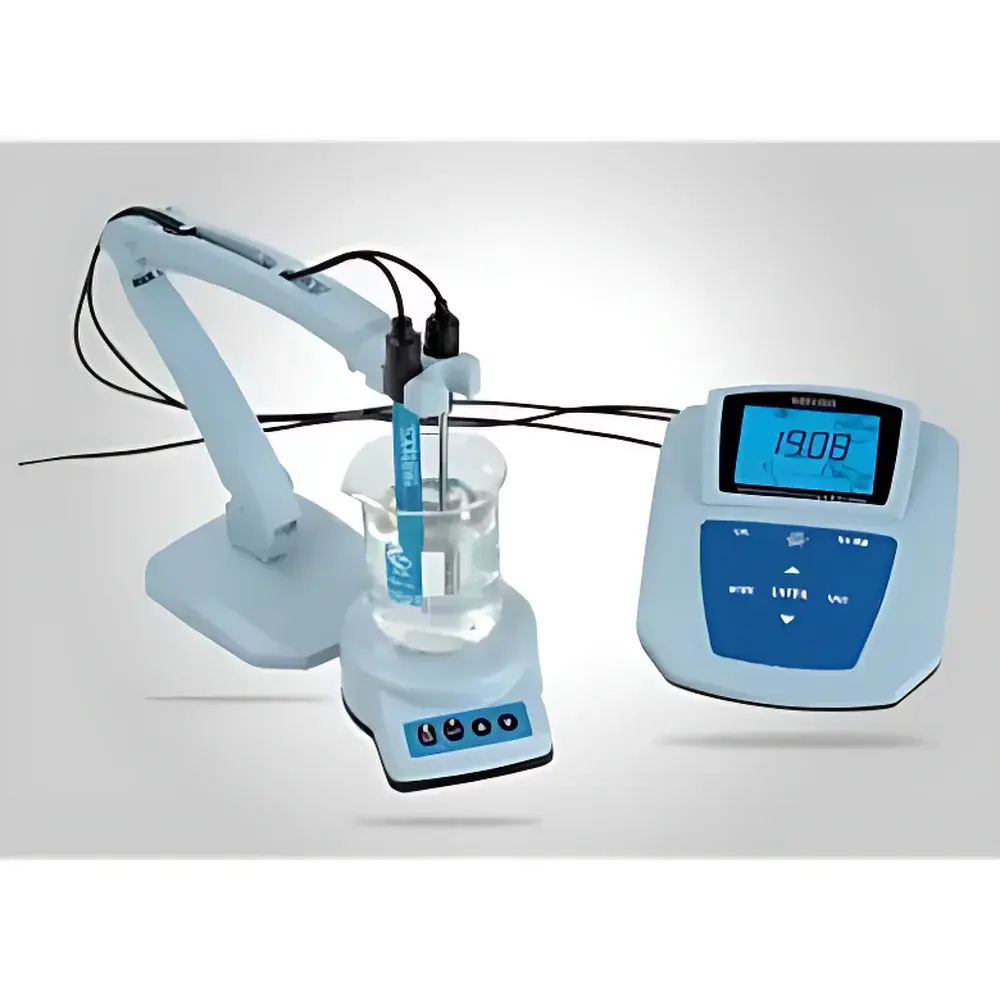
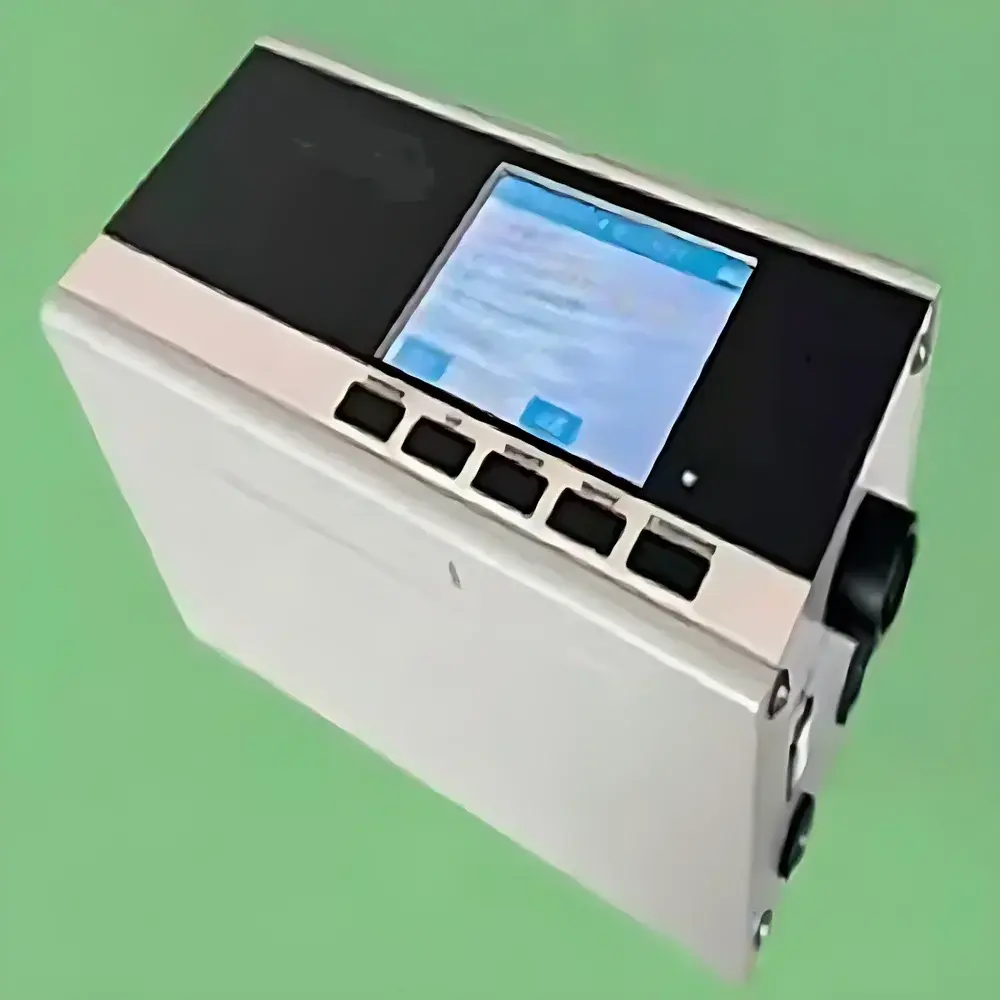
HengaoDe HAD-MP523-03 Calcium Ion Concentration Meter with Integrated pH/mV/Temperature Measurement
| Brand | HengaoDe |
|---|---|
| Origin | Beijing, China |
| Model | HAD-MP523-03 |
| Measurement Range (Ca²⁺) | 0.00–9.00 pCa (instrument) |
| Units | pCa, mol/L, mg/L, ppm |
| Accuracy (Ca²⁺) | ±0.01 pCa |
| Temperature Compensation Range (Ca²⁺) | 0–50 °C |
| pH Range | −2.000–19.999 |
| pH Accuracy | ±0.002 |
| mV Range | ±1999.9 mV |
| mV Resolution | 0.1 mV |
| mV Accuracy | ±0.1% FS |
| Temperature Range | −10–110 °C |
| Temp Accuracy | ±0.5 °C (5–60 °C), ±1.0 °C (other) |
| Data Storage | 600 sets |
| Interface | RS232 |
| Power | DC 9 V / 300 mA |
| Dimensions | 160 × 190 × 70 mm |
| Weight | 880 g |
| IP Rating | IP54 |
| GLP Compliance | Yes |
Overview
The HengaoDe HAD-MP523-03 Calcium Ion Concentration Meter is a benchtop ion-selective electrode (ISE) analyzer engineered for precise, trace-level quantification of free calcium ions (Ca²⁺) in aqueous solutions. It operates on the potentiometric principle using a solid-state calcium-selective composite electrode, generating a Nernstian response proportional to the logarithmic activity of Ca²⁺ across a defined concentration range. In addition to dedicated calcium measurement, the instrument integrates high-accuracy pH, redox potential (mV), and temperature sensing — all calibrated and displayed simultaneously. Designed for routine quality control, environmental monitoring, and research applications in water treatment, food processing, pharmaceutical manufacturing, and clinical laboratories, the HAD-MP523-03 delivers reproducible results under variable thermal conditions via automatic temperature compensation (ATC) and supports full GLP documentation requirements including operator ID, calibration timestamps, and measurement history.
Key Features
- Multi-parameter capability: Simultaneous measurement and display of pCa, pH, mV, and temperature with independent calibration routines.
- Four selectable concentration units: pCa, mol/L, mg/L, and ppm — configurable per user preference without recalibration.
- Two-point custom calibration: User-defined standard solutions enable traceable calibration across application-specific ranges; supplied master stock solution allows dilution to required concentrations.
- Integrated intelligent magnetic stirrer: Ensures homogeneous sample mixing during measurement, minimizing boundary layer effects and enhancing signal stability.
- Robust GLP-compliant architecture: Automatic timestamping, operator identification fields, and audit-ready calibration logs meet regulatory expectations for data integrity.
- Dual-range temperature sensor: High-resolution thermistor (0.1 °C resolution) with extended operating range (−10 to 110 °C) supports both ambient and elevated-temperature sample analysis.
- IP54-rated enclosure: Dust-protected and splash-resistant housing suitable for shared lab environments and industrial QC benches.
Sample Compatibility & Compliance
The HAD-MP523-03 is validated for use with low-ionic-strength aqueous matrices typical of drinking water, wastewater effluents, dialysis solutions, nutrient media, and process rinse waters. It is not intended for non-aqueous solvents, highly viscous suspensions, or samples containing interfering cations (e.g., high Mg²⁺, Na⁺, or K⁺) without appropriate ionic strength adjustment or matrix-matched calibration. The instrument complies with Good Laboratory Practice (GLP) principles as defined by OECD Series on Principles of GLP and aligns with data integrity expectations referenced in FDA 21 CFR Part 11 for electronic records where RS232 output is integrated into validated LIMS workflows. While not certified to ISO/IEC 17025, its measurement uncertainty profile supports internal method validation per ISO/IEC 17025 Clause 7.7 for in-house testing procedures.
Software & Data Management
Data acquisition and reporting are managed via built-in firmware supporting RS232 serial communication at standard baud rates (9600 bps default). Up to 600 complete measurement records — each containing pCa value, corresponding pH, mV, temperature, date/time stamp, and calibration status — are stored onboard with non-volatile memory retention. Exported datasets are ASCII-formatted and compatible with spreadsheet software (e.g., Microsoft Excel) or laboratory information management systems (LIMS) without proprietary drivers. No cloud connectivity or remote access capability is provided; all data handling occurs locally to maintain network isolation in regulated environments. Audit trails include immutable calibration event logs with user-entered identifiers, enabling retrospective verification of measurement traceability.
Applications
- Drinking water quality assurance: Monitoring residual Ca²⁺ post-softening or remineralization processes per WHO Guidelines for Drinking-water Quality.
- Pharmaceutical water systems: Verifying calcium content in purified water (PW) and water for injection (WFI) per USP and EP 2.2.48.
- Food and beverage production: Quantifying calcium fortification levels in dairy alternatives, infant formula, and functional beverages.
- Clinical diagnostics support: Calibration verification for calcium ISE modules in automated analyzers used in core labs.
- Environmental compliance: Field-deployable verification of Ca²⁺ in surface water samples prior to EPA Method 3111B submission.
- Research electrochemistry: Characterizing ion exchange resins, chelation kinetics, and membrane selectivity in controlled batch experiments.
FAQ
Does the HAD-MP523-03 require annual recalibration by an accredited metrology lab?
No — it is designed for user-performed two-point calibration using traceable standard solutions. External recalibration is recommended only if performance drift exceeds ±0.01 pCa over consecutive verifications.
Can the instrument measure total calcium (bound + free) in serum or milk samples?
No — it measures only free, hydrated Ca²⁺ activity. Total calcium requires acid digestion or atomic absorption spectroscopy (AAS).
Is the composite calcium electrode replaceable, and what is its typical service life?
Yes — the electrode is field-replaceable (part number HAD-Ca-ISE-01). With proper storage in Ca²⁺-free buffer and weekly reconditioning, typical lifespan exceeds 18 months under daily use.
Does the device support ISO/IEC 17025 uncertainty budgeting for accredited testing?
It provides the foundational measurements required for uncertainty calculation (e.g., repeatability, calibration curve fit, temperature effect), but does not generate automated uncertainty reports. Users must apply GUM-compliant methods externally.
What is the minimum sample volume required for stable pCa reading?
Minimum effective volume is 30 mL in a standard 100-mL beaker with active stirring. Smaller volumes may yield unstable potentials due to junction potential variability.





