
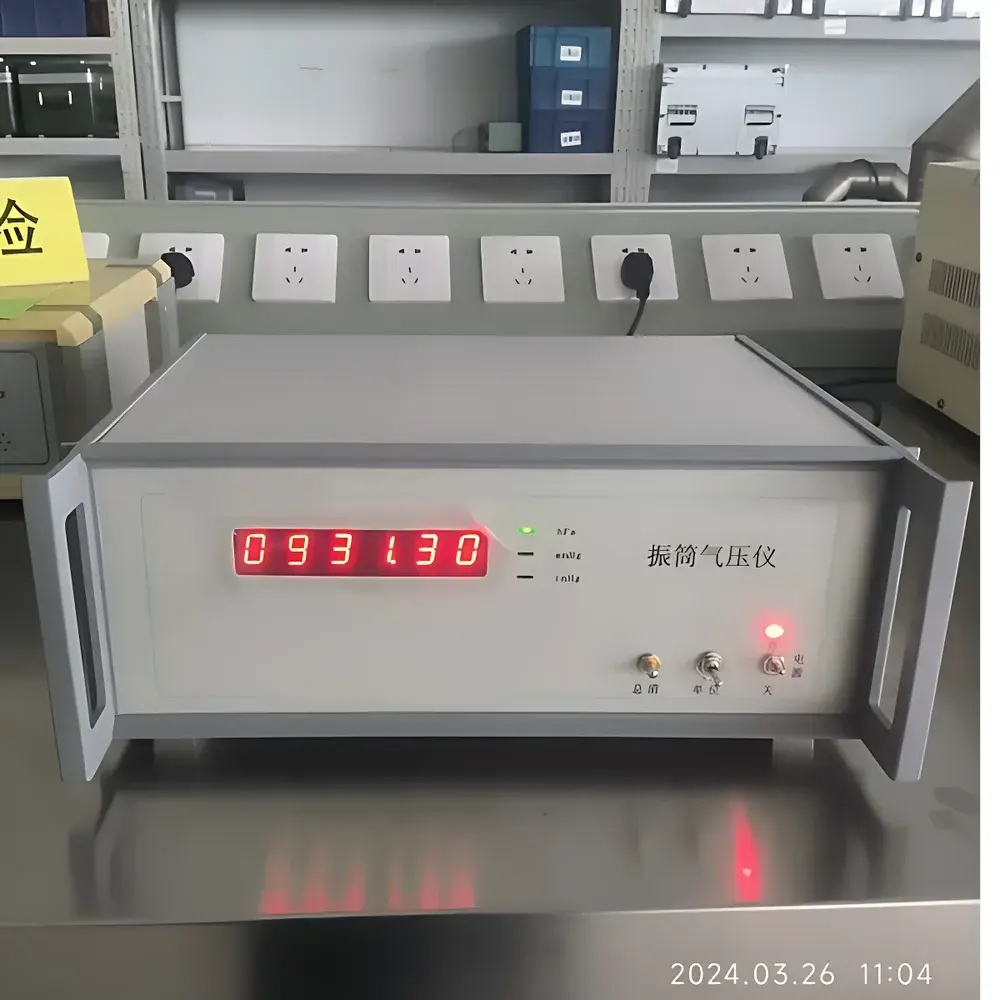
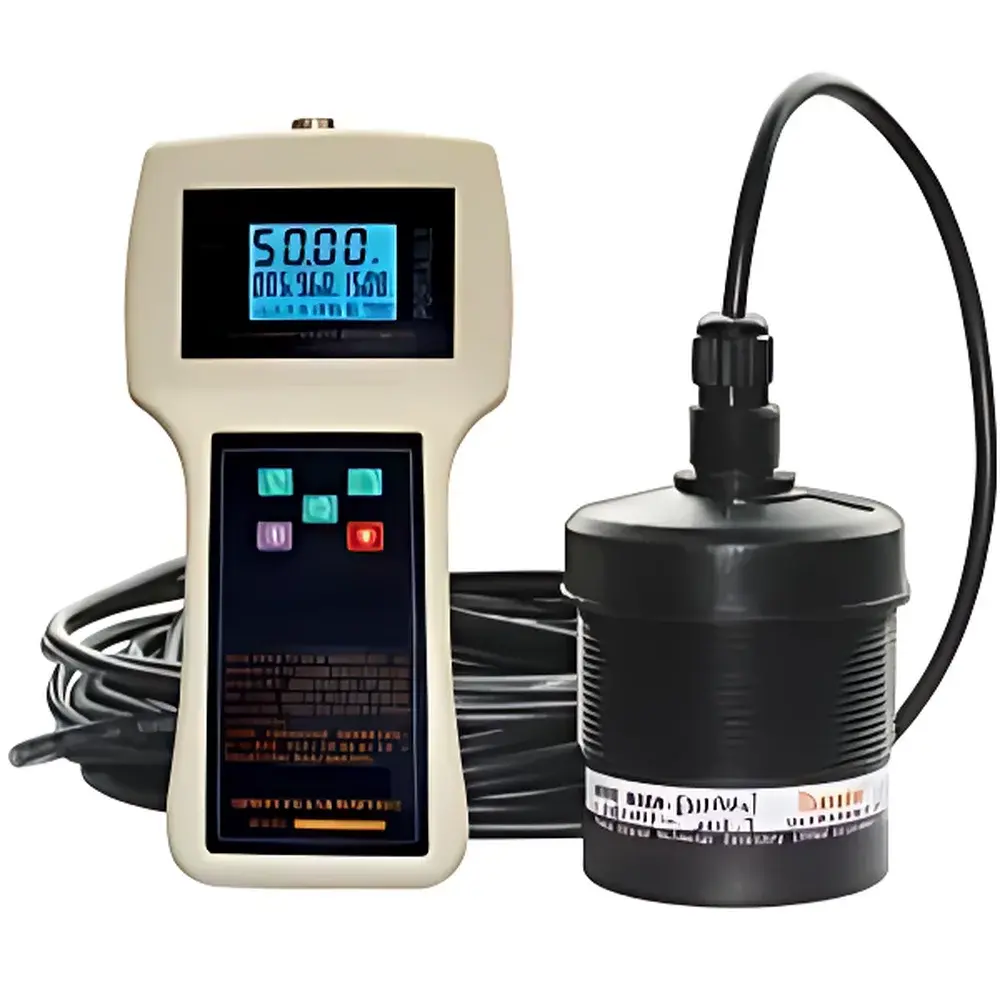
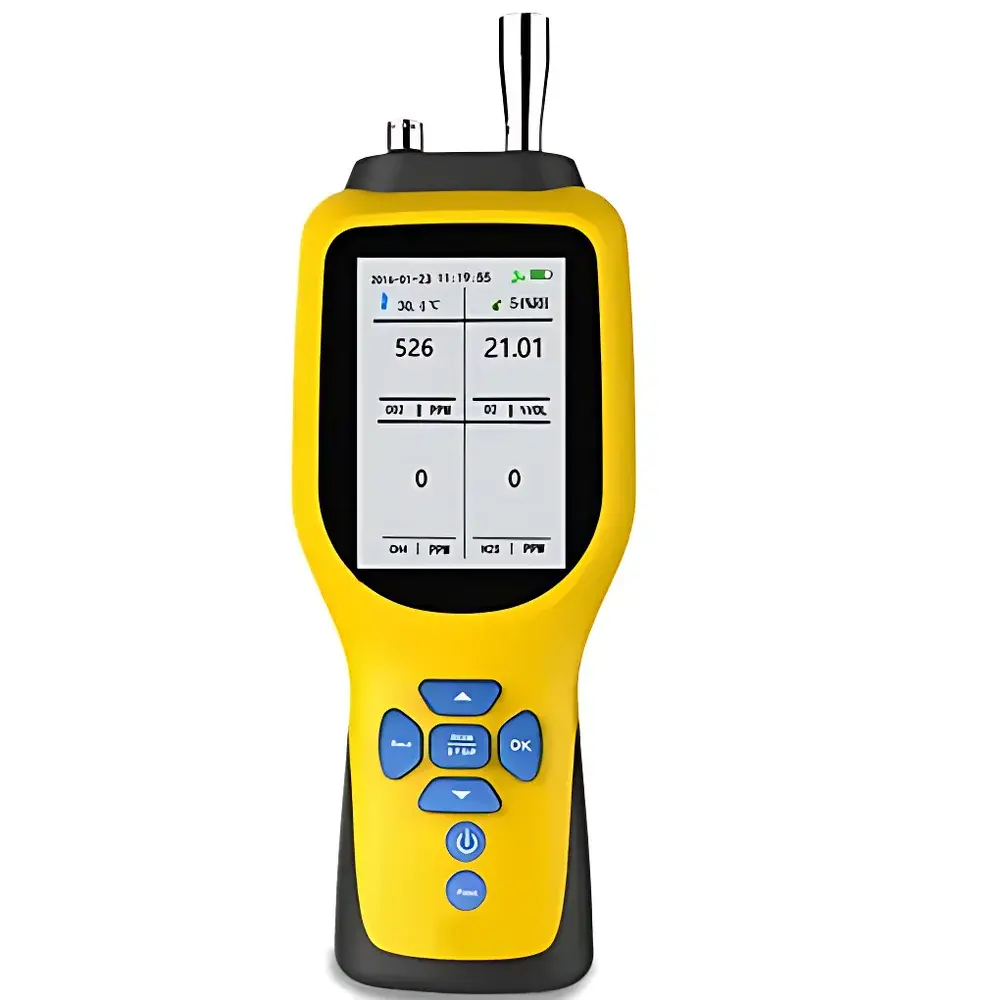
HengaoDe H30896 Digital Vibrating Cylinder Barometer with Microcomputer Control
| Brand | HengaoDe |
|---|---|
| Origin | Beijing, China |
| Manufacturer Type | Authorized Distributor |
| Product Origin | Domestic (China) |
| Model | H30896 |
| Pricing | Upon Request |
| Measurement Range | 520–1070 hPa (380–800 mmHg |
| Accuracy | ±0.4 hPa |
| Operating Temperature | 0–40 °C |
| Relative Humidity | ≤90% RH |
| Power Supply | AC 220 V ±10%, 50 Hz or DC +5 V/1 A and ±12 V/1 A |
| Interface | RS-232 serial port, 1200 baud rate |
| Overload Capacity | 400–1400 hPa |
| Power Consumption | ≤20 W |
Overview
The HengaoDe H30896 Digital Vibrating Cylinder Barometer is a precision atmospheric pressure measurement instrument engineered for meteorological observation, aviation support, environmental monitoring, and laboratory-grade calibration applications. It employs a high-stability vibrating cylinder pressure sensor—based on the resonant frequency shift principle—where changes in ambient air pressure alter the natural resonance frequency of a sealed, evacuated cylindrical quartz or metal resonator. This frequency shift is linearly correlated to absolute pressure and digitally processed via an embedded microcontroller to deliver real-time, high-fidelity pressure readings. Unlike traditional aneroid or mercury-based barometers, the vibrating cylinder architecture eliminates mechanical hysteresis, offers superior long-term stability, and requires no zero-point recalibration under normal operating conditions. Its compact footprint and low power consumption make it suitable for permanent installation at remote weather stations, mobile platforms (e.g., airport ground support units), and educational laboratories where traceable, maintenance-light pressure data are critical.
Key Features
- High-accuracy vibrating cylinder transducer with ±0.4 hPa absolute accuracy across the full 520–1070 hPa range
- Dual power input compatibility: AC mains (220 V ±10%, 50 Hz) and regulated DC supplies (+5 V/1 A and ±12 V/1 A)
- RS-232 serial interface compliant with standard asynchronous communication protocols (1200 baud, 8N1)
- Robust overload tolerance: operational integrity maintained up to 1400 hPa (400 hPa over-range)
- Low-power design with ≤20 W total consumption, supporting continuous operation in energy-constrained environments
- Environmental resilience: validated performance at temperatures from 0 to 40 °C and relative humidity ≤90% RH (non-condensing)
- Compact, benchtop-ready housing optimized for integration into automated weather stations or QC workstations
Sample Compatibility & Compliance
The H30896 is designed exclusively for gaseous media—specifically dry or ambient air—and is not intended for use with corrosive, particulate-laden, or saturated vapor streams. Its sensor element is hermetically sealed and isolated from direct exposure to contaminants, ensuring long-term repeatability without routine cleaning or membrane replacement. The instrument complies with general requirements for meteorological instrumentation per WMO Guide to Instruments and Methods of Observation (CIMO Guide, Chapter 12). While not certified to IEC 61238 or EN 12372, its electrical safety design conforms to GB 4793.1–2007 (Chinese equivalent of IEC 61010-1), and its electromagnetic compatibility meets GB/T 18268.1–2010 (IEC 61326-1). For regulatory reporting in GLP or ISO/IEC 17025 environments, users must perform periodic verification using NIST-traceable reference barometers and document calibration intervals per internal SOPs.
Software & Data Management
The H30896 operates as a standalone digital display device but supports external data acquisition via its TTL-level RS-232 output. No proprietary software is bundled; however, the ASCII-formatted serial output (e.g., “P=1013.25 hParn”) is fully compatible with industry-standard DAQ platforms including LabVIEW, MATLAB, Python (pySerial), and SCADA systems. The protocol is fixed-length, non-encrypted, and does not implement handshaking—enabling plug-and-play integration into existing infrastructure. For audit-trail compliance under FDA 21 CFR Part 11 or ISO 17025, third-party middleware (e.g., EPICS IOC or custom OPC UA server) must be deployed to log timestamps, user IDs, and raw values with immutable storage. Firmware updates are not field-upgradable; calibration coefficients are factory-programmed and stored in non-volatile memory.
Applications
- Meteorological networks: Real-time pressure logging at national weather stations, mountain observatories, and coastal monitoring buoys
- Civil aviation: Pre-flight altimeter setting verification, tower airfield pressure reference, and aircraft maintenance hangar environmental monitoring
- Academic research: Atmospheric physics experiments, boundary layer studies, and student laboratory exercises on gas laws and thermodynamic state variables
- Industrial process control: Monitoring of cleanroom differential pressure, HVAC system static pressure feedback, and vacuum chamber base-pressure validation
- Calibration laboratories: Secondary standard transfer for portable barometers and digital manometers requiring traceable 0.1 hPa resolution
FAQ
Is the H30896 suitable for outdoor permanent installation?
Yes—provided it is housed in a WMO-compliant ventilated radiation shield (e.g., Gill-type) and protected from precipitation, direct solar loading, and mechanical vibration. Ambient temperature compensation is internal but does not correct for radiative heating errors.
Can this instrument measure pressure in gases other than air?
No. The sensor is factory-calibrated for dry air density and viscosity. Use with nitrogen, CO₂, or other gases introduces unquantified systematic error due to differing acoustic impedance and thermal conductivity.
Does the unit include NIST-traceable calibration documentation?
A factory calibration report (with uncertainty budget per GUM) is supplied. Full NIST traceability requires user-initiated calibration against a primary standard; the instrument itself is not shipped with a NIST certificate.
What is the recommended recalibration interval?
Annually for metrological applications; biannually for general meteorological use. Recalibration must be performed at two points: 850 hPa and 1013.25 hPa, using a dead-weight tester or reference barometer with ≤0.05 hPa expanded uncertainty.
Is USB connectivity available?
No. Only RS-232 serial output is provided. A USB-to-RS232 adapter (FTDI chipset recommended) is required for connection to modern laptops.




