
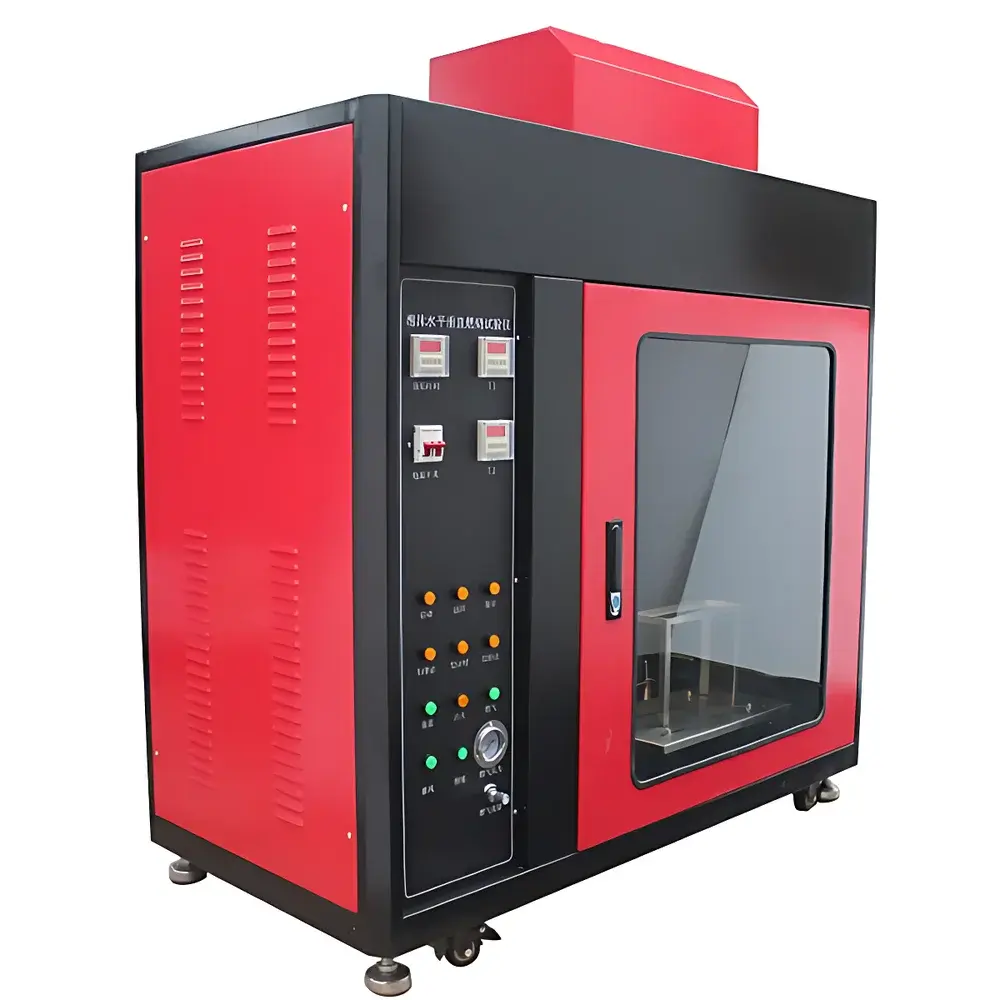
HengaoDe H14076R Gel Time Tester for Polyester and Epoxy Resins
| Brand | HengaoDe |
|---|---|
| Origin | Beijing, China |
| Manufacturer Type | Authorized Distributor |
| Product Origin | Domestic (China) |
| Model | H14076R |
| Price | USD 135 (FOB Beijing) |
Overview
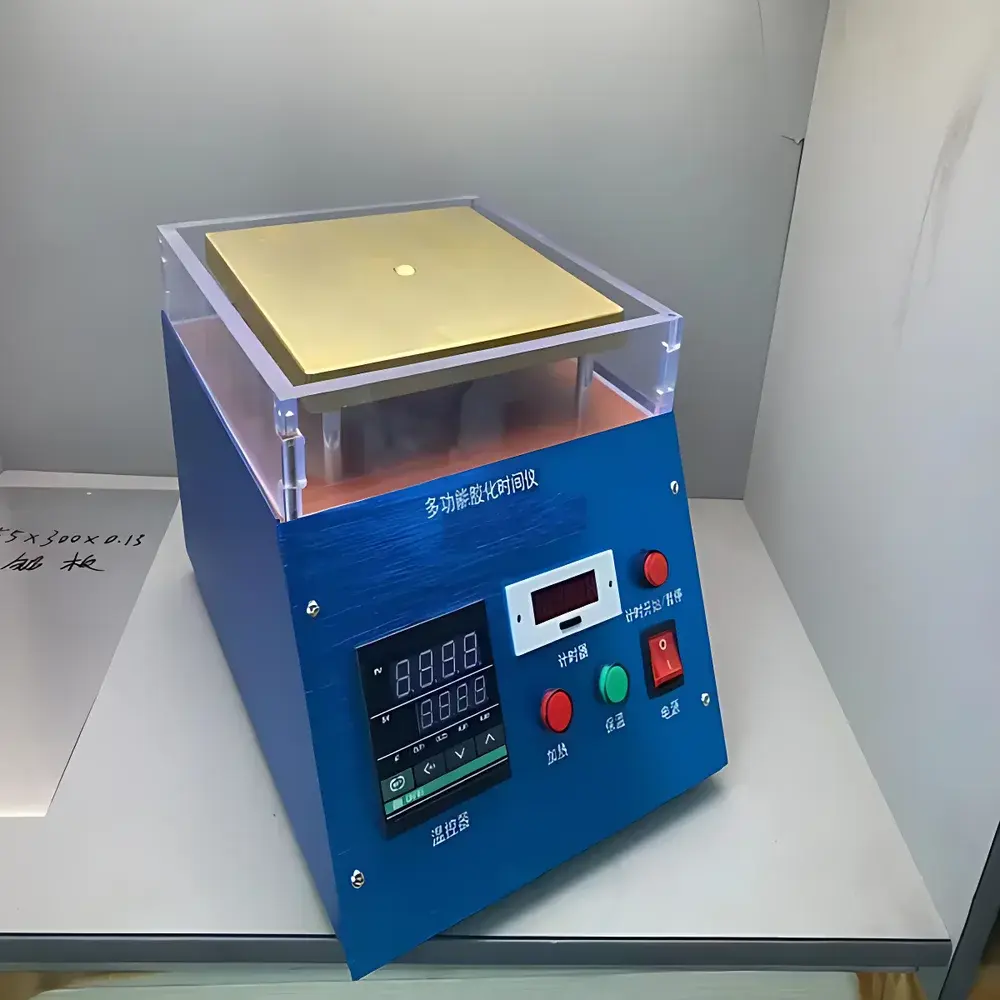
The HengaoDe H14076R Gel Time Tester is a precision thermal instrument engineered for the standardized determination of gelation time in thermosetting resins—specifically polyester and epoxy systems used in powder coatings, composites, and electrical insulation materials. It operates on the principle of controlled isothermal heating of a defined resin mass within a high-thermal-conductivity copper platform, enabling real-time observation of the sol–gel transition under ASTM D2471-18 and ISO 21292:2021 compliant conditions. The system employs PID-based closed-loop temperature control to maintain thermal stability within ±1 °C across its full operating range (ambient to 350 °C), ensuring reproducible onset detection of crosslinking via manual thread-breaking assessment—a method widely accepted in QC laboratories for raw material release and formulation validation.
Key Features
- High-purity copper heating platform (200 × 200 × 2 mm) with uniform thermal distribution and rapid heat-up (<10 min to 200 °C)
- Precision-machined sample well (16.0 ± 0.1 mm diameter) optimized for consistent resin volume (0.25 mL) and interfacial heat transfer
- Digital PID temperature controller with dual-display (PV = actual; SV = setpoint), intuitive key navigation (SET/R/S/↑/↓), and programmable setpoint retention
- Robust 800 W heating element rated for continuous operation at elevated temperatures, compatible with standard 220 V AC mains supply
- Ergonomic design with integrated indicator LED, non-stick surface preparation protocol (silicone-based mold release), and rapid post-test cleaning workflow
Sample Compatibility & Compliance
The H14076R is validated for use with unsaturated polyester resins, bisphenol-A and novolac-type epoxy formulations, and hybrid curing systems containing anhydride or amine hardeners. Its geometry and thermal response meet the dimensional and procedural requirements outlined in ASTM D2471 (Standard Test Method for Gel Time of Thermosetting Resins) and aligns with ISO 21292:2021 (Plastics — Determination of gel time of reactive resins). The instrument supports GLP-compliant documentation when paired with external stopwatch logging and manual data entry into LIMS or Excel-based QA records. While not equipped with automated endpoint detection, its repeatability (±3 s typical at 180 °C) satisfies internal QC thresholds for batch-to-batch consistency verification in coating and adhesive manufacturing.
Software & Data Management
The H14076R is a standalone benchtop instrument with no embedded software or digital data output. All operational parameters—including set temperature, ambient conditions, resin lot number, and measured gel time—are recorded manually by the operator. To support audit readiness, users are advised to integrate the device into documented SOPs that specify calibration frequency (recommended quarterly against NIST-traceable RTD probe), maintenance logs (copper surface polishing and heater resistance verification), and environmental monitoring (lab temperature/humidity logged per ISO/IEC 17025 clause 5.4.1). For digital traceability, third-party time-stamped video recording of the thread-break event is recommended for critical applications requiring 21 CFR Part 11–aligned evidence.
Applications
This tester serves core quality assurance functions across multiple industrial sectors: incoming inspection of resin raw materials in powder coating production; R&D screening of novel catalyst systems for accelerated cure kinetics; shelf-life evaluation of pre-mixed epoxy pastes; and process validation for oven-cured composite layups. It is routinely deployed in ISO 9001-certified facilities where gel time deviation beyond ±5% of nominal specification triggers material quarantine. In academic settings, it supports polymer science curricula focused on reaction kinetics, Arrhenius modeling of activation energy, and structure–property relationships in network-forming monomers.
FAQ
What sample volume is required for accurate gel time measurement?
A precisely measured 0.25 mL aliquot is recommended to ensure consistent thermal mass and reliable thread formation during stirring.
Can the H14076R be used for vinyl ester or phenolic resins?
Yes—provided the resin exhibits observable melt-phase viscosity development and thread-breaking behavior within the 350 °C upper limit; validation per ASTM D2471 is advised prior to routine use.
Is calibration traceable to national standards?
The unit itself does not include built-in calibration; however, external verification using a calibrated RTD or thermocouple (Class A, NIST-traceable) is required per ISO/IEC 17025 and should be documented in the lab’s equipment management system.
How frequently should the copper platform be cleaned?
After every test cycle—residual cured resin must be removed immediately with a stainless steel scraper while warm to prevent carbonization and thermal impedance buildup.
Does this instrument comply with CE or UL safety directives?
As a domestically certified Chinese-manufactured instrument, it carries CCC mark compliance; CE/UL certification is not included but can be arranged through third-party testing upon request for export markets.





