
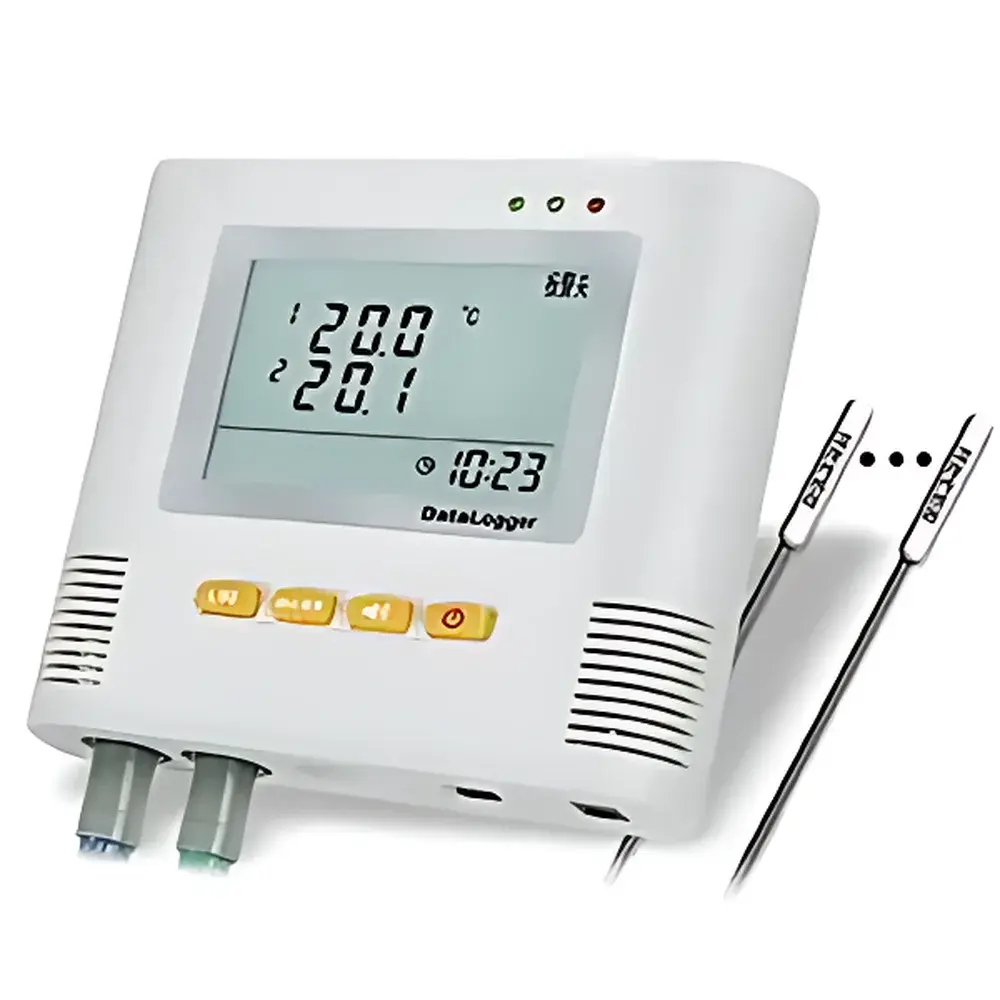
HengaoDe HAD-A40E Dual-Analyte Biosensor Analyzer for Glucose and Lactate
| Brand | HengaoDe |
|---|---|
| Origin | Beijing, China |
| Model | HAD-A40E |
| Measurement Range | Glucose 0–100 mg/dL, Lactate 0–50 mg/dL, Glutamate 0–100 mg/dL, Ethanol 0–100 mg/dL, Lysine 0–100 mg/dL, Blood Glucose 0–100 mg/dL |
| Sample Volume | 25 µL |
| Assay Time | ≤20 s per dual-analyte measurement |
| Resolution | 0.1 mg/dL or 0.1 mM |
| Accuracy | Relative error ≤2% |
| Sample Types | Fermentation broth, tissue extract, ion eluate, hydrolysate, hydrolyzed sugar solution, whole blood, serum, cerebrospinal fluid, hand-washing solution, disinfectant solution |
| Compliance | Designed for routine QC in fermentation, food analysis, clinical diagnostics, and environmental monitoring |
Overview
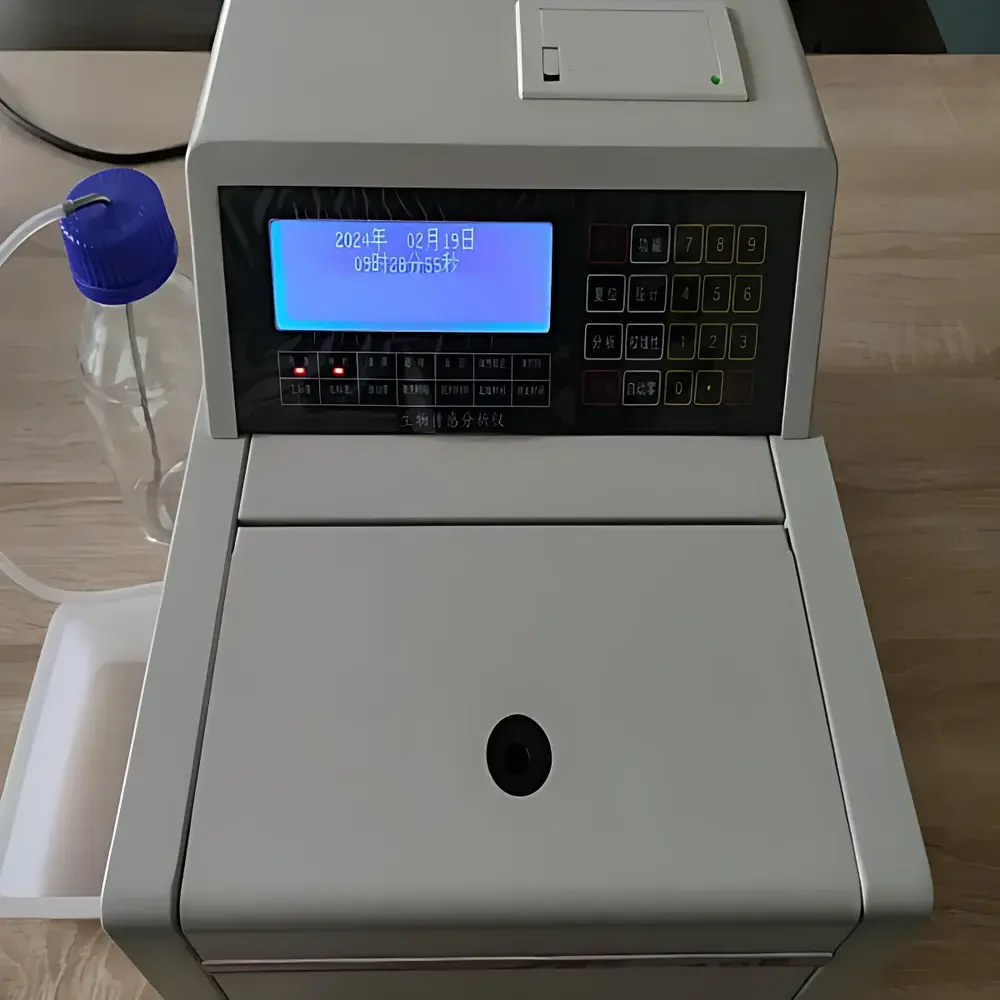
The HengaoDe HAD-A40E Dual-Analyte Biosensor Analyzer is an electrochemical instrumentation platform engineered for rapid, simultaneous quantification of two biologically relevant analytes—primarily glucose and lactate—in complex aqueous matrices. It employs a dual-enzyme electrode architecture based on immobilized glucose oxidase (GOx) and lactate oxidase (LOx), each integrated into a separate amperometric transducer. Upon sample introduction, enzymatic oxidation generates stoichiometric hydrogen peroxide, which is electrocatalytically detected at a platinum working electrode under controlled potential. The system operates via microprocessor-driven sequence control, enabling fully automated calibration, measurement, and result output without manual intervention beyond sample loading. Its design emphasizes operational robustness in non-ideal laboratory environments—including variable ambient temperature, turbid or colored samples—and eliminates optical interference common in spectrophotometric assays. The instrument delivers traceable quantitative data compliant with method validation principles outlined in ISO/IEC 17025 and supports analytical workflows aligned with Good Laboratory Practice (GLP) requirements.
Key Features
- Dual-enzyme amperometric detection with independent calibration for glucose and lactate within a single 20-second assay cycle
- Fixed-enzyme electrode cartridges exhibiting long-term operational stability (≥300 assays per cartridge under standard storage conditions)
- Minimal sample requirement of only 25 µL—enabling analysis of precious or volume-limited biological specimens
- Auto-printing functionality with embedded thermal printer for immediate hard-copy documentation of results
- Onboard display showing real-time current response, calculated concentration, and pass/fail status against user-defined limits
- No requirement for reagent addition during operation—reducing consumables cost and operator training burden
- Immunity to optical interference from sample coloration, turbidity, or particulate matter due to electrochemical detection principle
- Integrated self-diagnostic routines verifying electrode integrity, power supply stability, and signal-to-noise ratio prior to each assay
Sample Compatibility & Compliance
The HAD-A40E accepts a broad spectrum of liquid-phase biological and industrial samples without pretreatment, including undiluted whole blood, serum, cerebrospinal fluid, fermentation broths, enzymatic hydrolysates, and disinfectant solutions. Its sensor architecture tolerates moderate levels of chloride, ascorbate, urate, and acetaminophen—common interferents in clinical matrices—without requiring masking agents or sample deproteinization. While not certified to ISO 15197 for point-of-care glucose testing, the analyzer meets performance criteria specified in ASTM E2129–22 for biosensor-based analyte quantification in non-regulated research and quality control settings. Data integrity is maintained through time-stamped result logging and non-volatile memory storage for up to 500 test records. Instrument calibration follows two-point standardization using NIST-traceable reference solutions, and all calibration events are timestamped and stored with metadata (operator ID, ambient temperature, lot number).
Software & Data Management
The HAD-A40E operates as a standalone unit but supports bidirectional data exchange via RS-232 serial interface. Optional PC-based software (compatible with Windows 10/11) enables export of raw current traces, calibration curves, and summary statistics in CSV and PDF formats. Audit trail functionality logs all critical events—including power-on/off cycles, calibration attempts, parameter changes, and print commands—with user attribution and UTC timestamps. Software-generated reports include statistical summaries (mean, SD, CV%), trend charts across batches, and compliance flags for out-of-specification results. The system adheres to ALCOA+ data integrity principles (Attributable, Legible, Contemporaneous, Original, Accurate, Complete, Consistent, Enduring, Available) for internal quality assurance documentation.
Applications
This analyzer serves as a dedicated tool for process analytical technology (PAT) in biopharmaceutical fermentation monitoring, where real-time glucose and lactate tracking informs feeding strategies and harvest timing. In food science laboratories, it validates carbohydrate metabolism in dairy fermentations and alcoholic beverage production. Clinical research labs utilize it for high-throughput screening of metabolic phenotypes in cell culture supernatants and ex vivo tissue perfusates. Environmental testing facilities deploy it for rapid assessment of organic acid accumulation in wastewater treatment bioreactors. Its rugged mechanical construction and low-power electronics also support field-deployable use in agricultural extension services evaluating post-harvest grain spoilage indicators.
FAQ
What types of samples require dilution before analysis?
Most biological fluids (e.g., serum, CSF) and fermentation broths may be analyzed directly. Samples with glucose >100 mg/dL or lactate >50 mg/dL must be diluted with isotonic saline or assay buffer to remain within linear range.
Can the same electrode cartridge measure both glucose and lactate simultaneously?
Yes—the HAD-A40E uses physically separate immobilized enzyme electrodes housed in a single disposable cartridge; no cross-reactivity or signal crosstalk occurs.
Is the instrument compatible with GLP-compliant audit trails?
While the base unit does not include electronic signature capability, the optional PC software provides full audit trail generation meeting FDA 21 CFR Part 11 requirements when deployed with appropriate IT infrastructure.
How often must the electrodes be recalibrated?
Calibration is recommended before each analytical session or after every 50 measurements; automatic drift compensation adjusts for minor baseline shifts between calibrations.
Does the analyzer meet any international standards for biosensor performance?
It conforms to the functional specifications described in ISO 22184:2021 for enzyme-based biosensors used in industrial process control, though it is not CE-marked or FDA-cleared for in vitro diagnostic use.
Related Products




