
HengaoDe HAD-KI2 Portable Iodide/Iodate Analyzer for Salt
| Brand | HengaoDe |
|---|---|
| Origin | Beijing, China |
| Manufacturer Type | Distributor |
| Country of Origin | China |
| Model | HAD-KI2 |
| Price | USD 198 |
| Display | 4.3-inch color TFT touchscreen |
| Absorbance Range | 0.000–4.000 AU |
| Transmittance Range | 0.00–100.00% |
| Transmittance Resolution | 0.01% |
| Absorbance Resolution | 0.001 AU |
| Photometric Accuracy (Transmittance) | ±2.0% |
| Repeatability (Transmittance) | ≤0.2% |
| Stability (3 min) | ≤0.3% |
| LOD | 0.1 mg/kg |
| Measurement Range | 0–90 mg/kg |
| Interfaces | RS232, USB |
| Power Supply | AC 220 V |
Overview
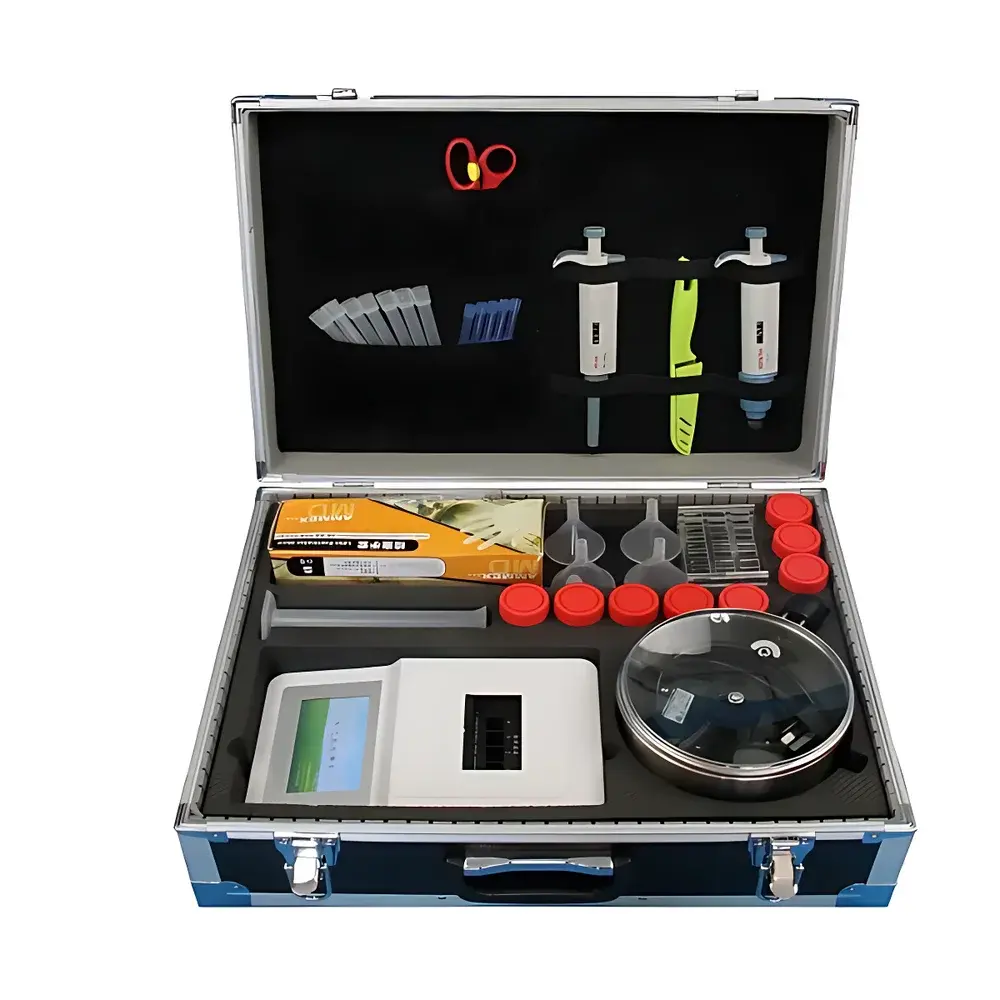
The HengaoDe HAD-KI2 Portable Iodide/Iodate Analyzer is a dedicated spectrophotometric instrument engineered for rapid, on-site quantification of potassium iodide (KI) and potassium iodate (KIO₃) in iodized salt matrices. It operates on the principle of visible-light absorbance spectroscopy, utilizing pre-optimized colorimetric reaction protocols aligned with national standard methods (e.g., GB/T 13025.7–2012 for salt iodine determination). The system integrates a stable tungsten-halogen light source, precision optical path design, and temperature-compensated photodetector array to deliver reproducible results under field or laboratory conditions. Designed for regulatory compliance and routine QC workflows, the HAD-KI2 supports trace-level detection down to 0.1 mg/kg — meeting minimum detectable iodine thresholds required by WHO/FAO and national food fortification programs. Its portable aluminum enclosure ensures mechanical robustness during transport between central labs, provincial quality control centers, and mobile inspection units.
Key Features
- Compact, ruggedized portable housing with integrated carry handle and shock-absorbing internal foam — optimized for field deployment in food safety surveillance vehicles and rural testing stations.
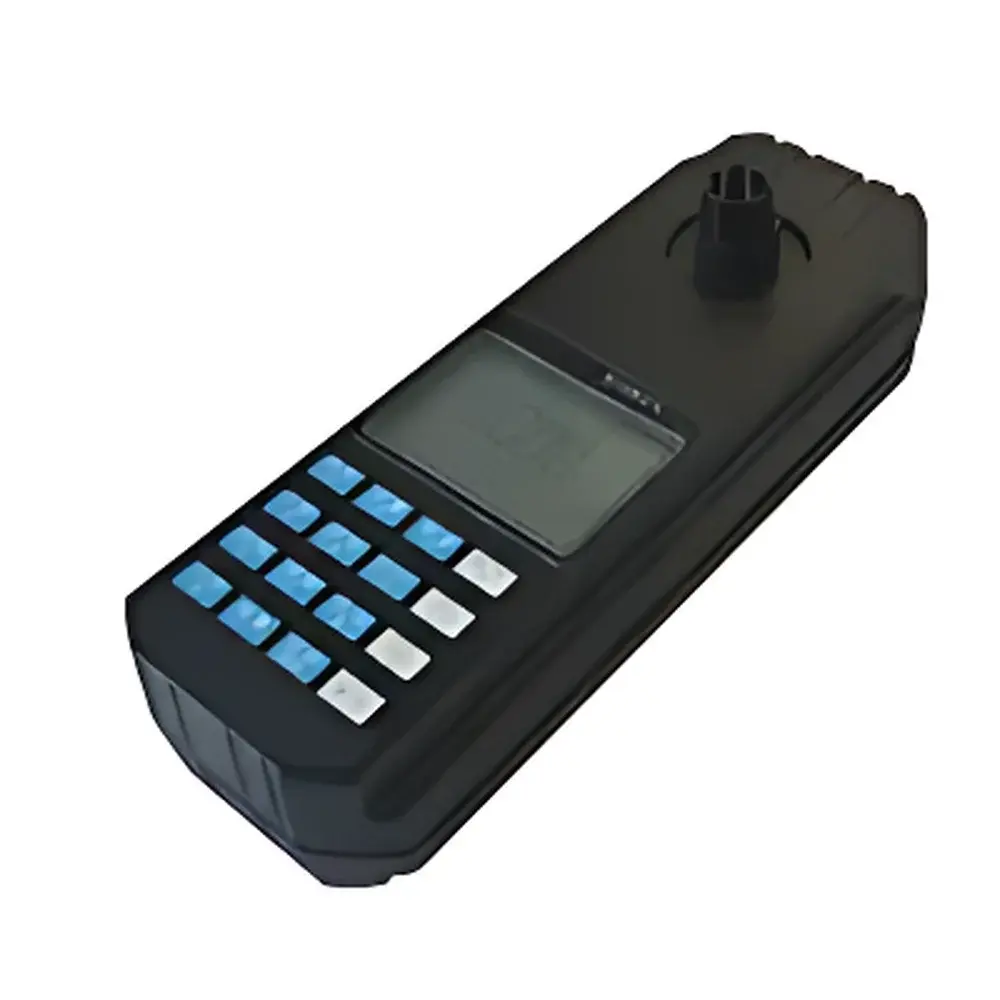
- 4.3-inch high-contrast color TFT touchscreen with intuitive icon-driven interface; no external PC required for operation or calibration.
- Dual-mode measurement capability: configurable for KI-only or KIO₃-selective assays via user-selectable reagent kits and wavelength presets (510 nm and 352 nm, respectively).
- Embedded microprocessor with real-time background correction and automatic zero-point drift compensation over 3-minute stabilization period.
- On-device data storage for ≥500 test records, each timestamped with year/month/day/hour/minute/second and annotated with sample ID, operator code, and calibration status.
- Compliant RS232 and USB 2.0 interfaces enable bidirectional communication with LIMS or Excel-based reporting systems; firmware upgradable via USB flash drive.
Sample Compatibility & Compliance
The HAD-KI2 is validated for use with refined table salt, low-sodium salt blends, and fortified sea salt samples. Sample preparation follows standardized wet-chemistry digestion (e.g., bromine water oxidation for KIO₃ conversion or arsenious acid reduction for KI-specific detection), ensuring compatibility with ISO 22000–compliant food testing laboratories. Instrument performance adheres to metrological requirements specified in JJG 973–2019 (Chinese National Verification Regulation for Spectrophotometers) and demonstrates linearity (R² ≥ 0.999) across the 0–90 mg/kg working range. While not certified to FDA 21 CFR Part 11 out-of-the-box, audit trails, electronic signatures, and data integrity safeguards can be implemented via optional software modules for GLP/GMP environments.
Software & Data Management
The onboard firmware supports multi-point calibration curve generation using up to six standard concentrations per assay type. Calibration data, raw absorbance values, and final concentration outputs are exportable as CSV files via USB mass storage mode. Optional PC software (HAD-DataLink v3.2) provides advanced features including batch report generation, statistical process control (SPC) charts, outlier detection using Grubbs’ test, and automated compliance flagging against Codex Alimentarius limits (20–40 mg/kg iodine in salt). All stored measurements include immutable metadata: instrument serial number, firmware version, ambient temperature/humidity at time of test, and operator-assigned lot ID — fulfilling traceability requirements for ISO/IEC 17025 accreditation.
Applications
- Routine monitoring of iodine content in national salt distribution networks to verify adherence to mandatory fortification policies.
- Verification testing in food import/export clearance labs for customs and quarantine authorities.
- Field validation of iodine stability during storage and transportation under varying humidity and temperature profiles.
- Method transfer support between reference laboratories and decentralized testing facilities in resource-limited settings.
- Educational use in food science curricula for teaching quantitative analytical chemistry principles and Good Laboratory Practice (GLP) documentation.
FAQ
Does the HAD-KI2 require daily recalibration?
No — the instrument maintains photometric stability ≤0.3% over 3 minutes and requires only initial calibration before first use and periodic verification (e.g., weekly) using certified iodine reference standards.
Can it differentiate between iodide and iodate in the same sample without manual reagent switching?
No — dual-species analysis requires sequential runs with appropriate reagent kits; however, assay parameters and calibration curves are saved separately per mode to prevent cross-contamination of method settings.
Is the device suitable for use in tropical field conditions with high ambient humidity?
Yes — the sealed optical chamber and conformal-coated PCBs meet IP54 ingress protection; operational humidity tolerance extends to 85% RH non-condensing, consistent with WHO Field Equipment Specifications for Food Safety Testing.
What consumables are required for long-term operation?
Primary consumables include certified iodine standard solutions (1000 mg/L KI and KIO₃), assay-specific reagent tablets (e.g., ceric ammonium sulfate for iodate), and cuvettes compatible with 10-mm pathlength geometry.
Does the manufacturer provide method validation documentation?
Yes — HengaoDe supplies a comprehensive Method Validation Report (MVR) compliant with ICH Q2(R2), including specificity, linearity, accuracy (recovery 98.2–101.7%), precision (RSD ≤1.8%), and robustness data across three independent laboratories.





