
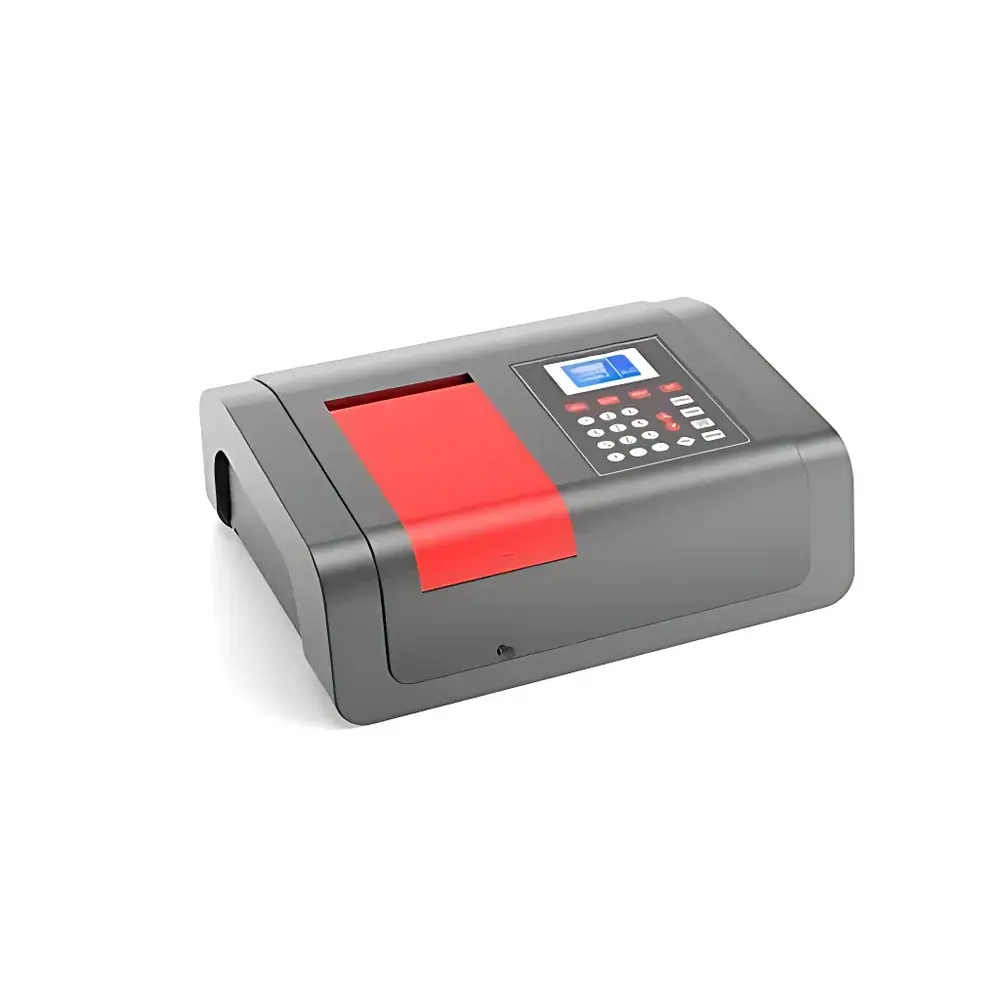
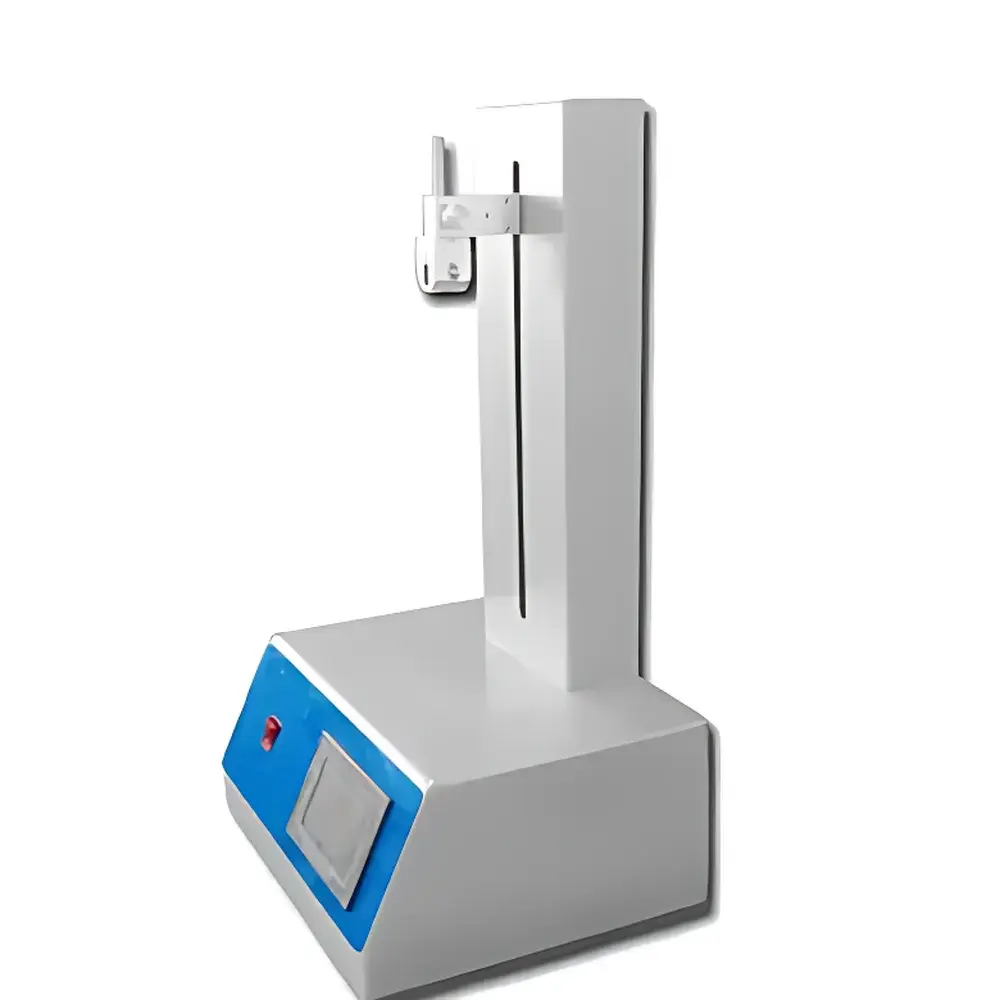
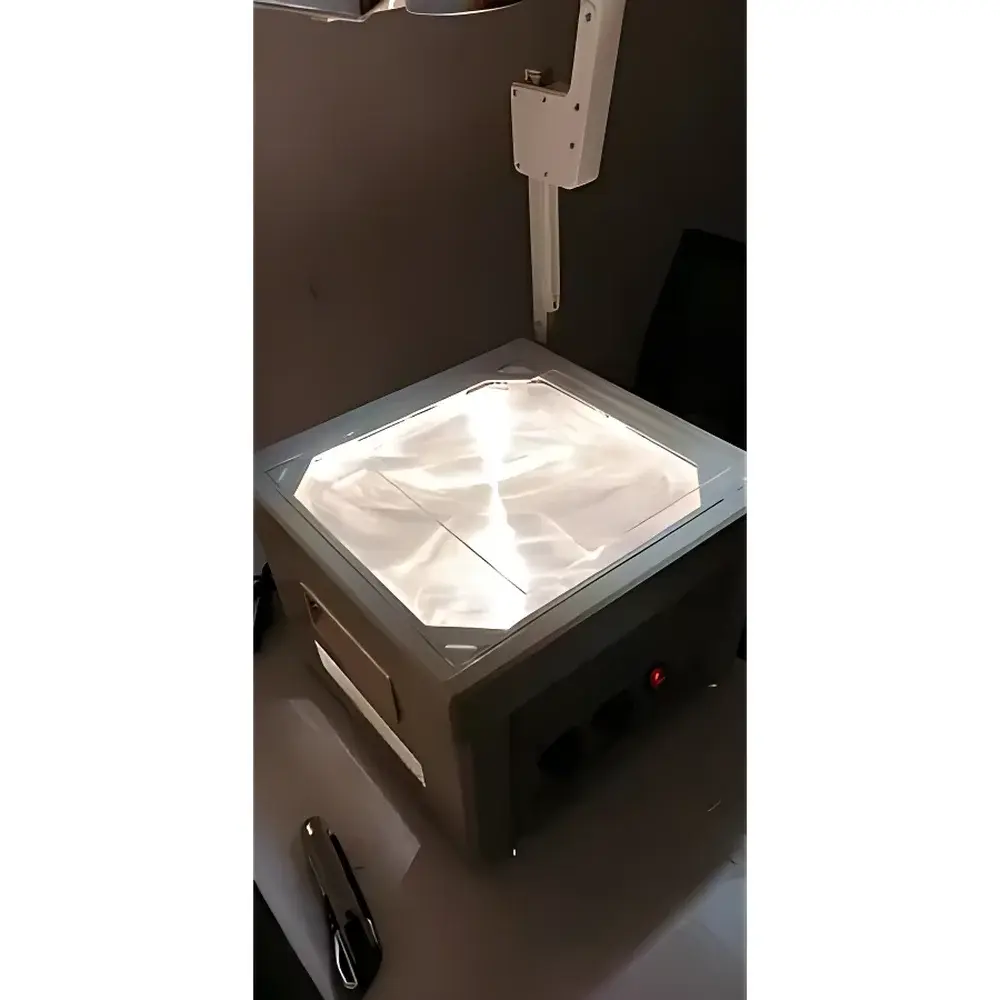
Hengaode HAD-V1500 Visible Spectrophotometer
| Brand | Hengaode |
|---|---|
| Origin | Beijing, China |
| Manufacturer Type | Authorized Distributor |
| Country of Origin | China |
| Model | HAD-V1500 |
| Price | Upon Request |
| Wavelength Range | 320–1100 nm |
| Spectral Bandwidth | 2 nm |
| Wavelength Accuracy | ±0.5 nm |
| Wavelength Repeatability | ≤0.2 nm |
| Transmittance Accuracy | ±0.5% τ |
| Transmittance Repeatability | 0.2% τ |
| Stray Light | ≤0.05% τ (at 340 nm, NaNO₂) |
| Baseline Stability | 0.001 A/30 min (at 500 nm, after warm-up) |
| Photometric Modes | Transmittance (%T), Absorbance (A), Concentration (C), Energy |
| Wavelength Adjustment | Motorized automatic |
| Photometric Range | –0.3 to 3.0 A |
| Display | 128 × 64 dot-matrix LCD |
| Detector | Silicon photodiode |
| Light Source | Tungsten halogen lamp |
| Power Supply | AC 220 V/50 Hz or 110 V/60 Hz |
| Power Consumption | 120 W |
| Dimensions (W × D × H) | 480 × 350 × 220 mm |
| Net Weight | 11 kg |
Overview
The Hengaode HAD-V1500 Visible Spectrophotometer is a precision optical instrument engineered for quantitative analysis in routine laboratory environments, including QC/QA labs, academic research, environmental monitoring, and industrial process control. It operates on the principle of Beer–Lambert law-based absorption spectroscopy in the visible-to-near-UV range (320–1100 nm), enabling accurate determination of analyte concentration through measurement of light attenuation at characteristic wavelengths. Designed with a fixed-slit monochromator and tungsten-halogen light source, the system delivers high photometric linearity and low stray light performance—critical for reliable quantitation across diverse sample matrices. Its robust mechanical architecture, combined with microprocessor-driven wavelength scanning and auto-calibration routines, ensures long-term operational consistency under standard laboratory conditions (15–25°C, RH ≤70%). The instrument complies with fundamental requirements outlined in ISO/IEC 17025 for analytical instrument verification and supports traceable calibration using NIST-traceable neutral density filters and certified reference standards.
Key Features
- Motorized wavelength drive with ±0.5 nm accuracy and ≤0.2 nm repeatability—enabling precise spectral acquisition for method transfer and regulatory compliance.
- Dual-mode photometric operation: simultaneous % transmittance and absorbance readouts, with optional concentration calculation via user-defined calibration curves.
- Integrated auto-zero and auto-100% functions eliminate manual baseline drift correction and reduce operator-induced variability.
- Expandable cuvette holder accommodating pathlengths from 0.5 mm to 100 mm—including standard 10 mm quartz or glass cells—supporting both high-sensitivity and high-concentration measurements.
- Onboard memory stores up to 1000 data points and 10 multi-point calibration curves, retaining settings and curve parameters after power interruption.
- USB interface enables bidirectional communication with Windows-based PC software for advanced data export, report generation, and remote instrument control (optional driver package required).
- Parallel printer port (Centronics) and micro-printer compatibility allow direct hardcopy output of spectra, calibration reports, and quantitative results—including curve coefficients, sample IDs, and timestamps.
Sample Compatibility & Compliance
The HAD-V1500 accommodates liquid, colloidal, and transparent solid samples in standard spectrophotometric cuvettes (10 mm pathlength recommended). It is routinely deployed for applications governed by ASTM E275 (standard practice for describing and measuring performance of ultraviolet and visible spectrophotometers), ISO 6425 (spectrophotometer performance specifications), and Chinese national standards GB/T 27404 (laboratory quality control guidelines). While not validated for GLP or GMP environments out-of-the-box, its stable baseline, low noise floor (<0.001 A drift over 30 min), and audit-ready data logging (when used with PC software) support alignment with FDA 21 CFR Part 11 requirements for electronic records—provided appropriate SOPs, user access controls, and electronic signature protocols are implemented at the institutional level. The instrument meets CE electromagnetic compatibility (EMC) directives and conforms to IEC 61010-1 safety standards for laboratory electrical equipment.
Software & Data Management
The HAD-V1500 supports optional Windows-compatible application software that provides full instrument control, spectral acquisition, kinetic scan mode, and quantitative analysis workflows. Data files are exported in CSV or TXT format for integration with LIMS platforms or statistical packages such as JMP or Minitab. Calibration curve management includes linear, quadratic, and polynomial regression options; all curve parameters—including slope (K), intercept (B), R², and residual plots—are stored with metadata (date/time, operator ID, instrument serial number). Audit trail functionality records all parameter changes, measurement events, and calibration actions—essential for laboratories operating under ISO/IEC 17025 or CAP accreditation. Firmware updates are delivered via USB stick and require no external service intervention.
Applications
- Quantitative analysis of transition metal ions (e.g., Fe²⁺/Fe³⁺, Cu²⁺, Cr⁶⁺) in water and wastewater per EPA Method 200.7 and ISO 11908.
- Enzyme kinetics assays (e.g., NADH/NADPH oxidation at 340 nm) and protein quantification via Bradford or Lowry methods.
- Pharmaceutical excipient purity testing and dissolution profile monitoring per USP and Ph. Eur. 2.2.25.
- Food and beverage quality control—including colorimetric determination of nitrite in cured meats (AOAC 973.32) and anthocyanin content in fruit extracts.
- Educational use in undergraduate chemistry and biochemistry labs for teaching spectroscopic principles and calibration methodology.
FAQ
Is the HAD-V1500 compliant with ISO/IEC 17025 calibration requirements?
Yes—when operated with documented calibration procedures using traceable standards (e.g., holmium oxide for wavelength verification, potassium dichromate for photometric accuracy), it satisfies Clause 6.4.10 of ISO/IEC 17025:2017 for equipment suitability.
Can the instrument measure absorbance below 320 nm?
No—the optical design uses a tungsten-halogen lamp and silica-based optics optimized for 320–1100 nm; UV measurements below 320 nm require deuterium lamp illumination and fused silica optics, which are not supported.
What is the recommended maintenance schedule?
Perform daily visual inspection of cuvette compartment cleanliness; monthly verification of wavelength and photometric accuracy using certified reference materials; annual lamp replacement (typical tungsten lamp lifetime: ~2000 hours).
Does the device support GLP-compliant electronic signatures?
Not natively—the embedded firmware lacks digital signature modules. However, when paired with validated third-party PC software implementing 21 CFR Part 11-compliant user authentication and electronic signature workflows, full GLP traceability can be achieved.
Is the USB interface compatible with modern Windows OS versions?
Yes—the included driver supports Windows 10 and 11 (64-bit); no legacy virtual COM port emulation is required.






