
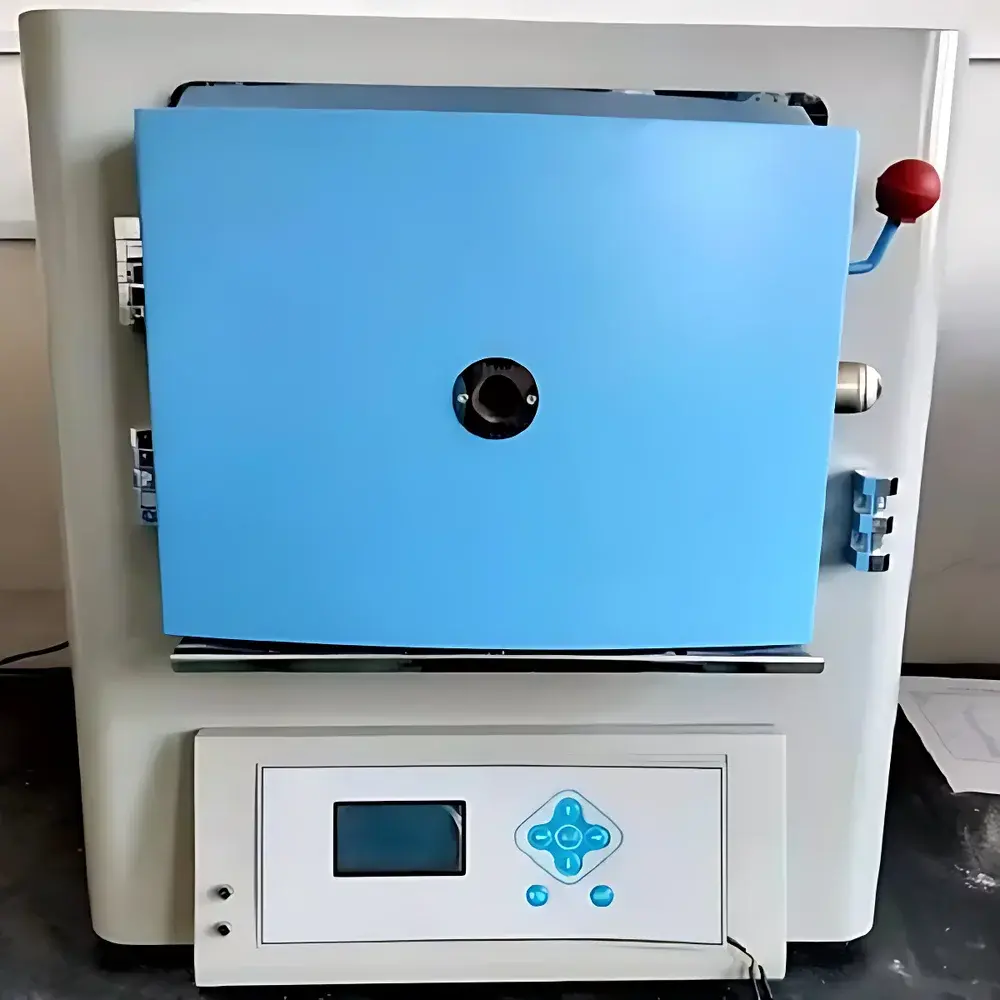
HengaoDe HAD-UV2 Dual-Wavelength UV-Ozone Cleaner
| Brand | HengaoDe |
|---|---|
| Origin | Beijing, China |
| Manufacturer Type | Authorized Distributor |
| Country of Origin | China |
| Model | HAD-UV2 |
| Price | USD 37 (FOB) |
| UV Wavelengths | 185 nm and 254 nm |
| Average Irradiance (3–5 mm from lamp) | 28–32 mW/cm² |
| Lamp Type | Dual low-pressure mercury lamp ×2 |
| Lamp Power | 300 W total |
| Illumination Area | 300 mm × 300 mm |
| Adjustable Sample-to-Lamp Distance | 5–60 mm |
| Timer Range | 0–99 min 99 s |
| Chamber Material | Stainless steel (corrosion- and acid-resistant) |
| Dimensions (w/o ozone neutralizer) | 430 × 380 × 320 mm (L×W×H) |
| Dimensions (with neutralizer) | 580 × 380 × 420 mm |
| Inlet/Outlet Ports | φ8 mm inlet, φ50 mm outlet |
Overview
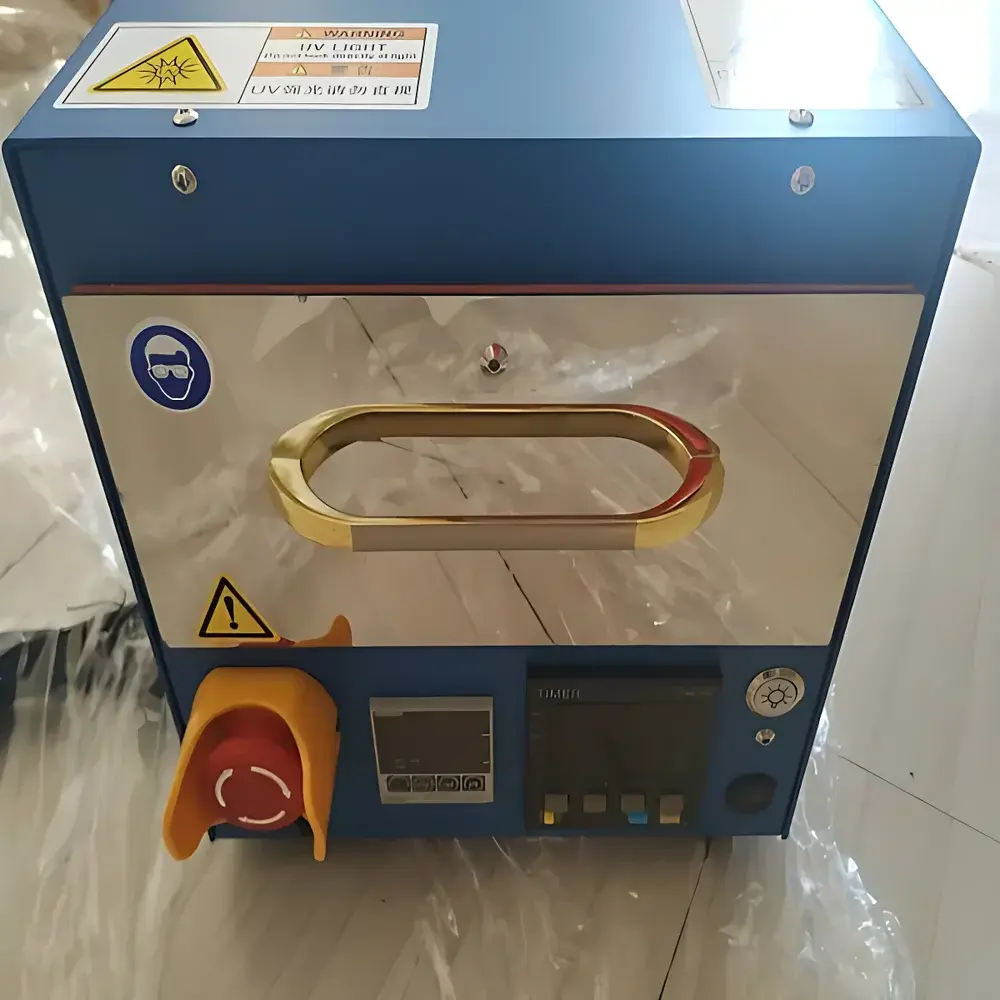
The HengaoDe HAD-UV2 Dual-Wavelength UV-Ozone Cleaner is a benchtop dry-processing instrument engineered for atomic-level surface decontamination of sensitive substrates without solvent use, mechanical abrasion, or chemical etching. It operates on the principle of photochemical oxidation: 185 nm ultraviolet radiation dissociates ambient O₂ to generate ozone (O₃), while 254 nm photons directly cleave C–C, C–H, and C–O bonds in organic contaminants—including photoresist residues, hydrocarbon films, and adventitious carbon layers. The synergistic action of ozone and direct UV photolysis enables rapid, residue-free cleaning of silicon wafers, quartz crystals, sapphire substrates, TEM/SEM grids, and polymer surfaces—preserving nanoscale topography and interfacial integrity. Unlike wet chemical methods, this process introduces no ionic contamination, avoids thermal stress, and eliminates rinse-dry cycles, making it compliant with cleanroom Class 100–1000 requirements and compatible with pre-deposition surface activation protocols in thin-film fabrication and microelectronics packaging.
Key Features
- Stainless-steel reaction chamber with electropolished interior—resistant to ozone corrosion, acids, and alkalis
- Interlocked drawer-style sample stage: UV lamps deactivate automatically upon drawer opening, ensuring operator safety per IEC 62471 (Photobiological Safety)
- Dual-wavelength low-pressure mercury lamp array (300 W total), delivering stable 185 nm and 254 nm irradiance (28–32 mW/cm² at 3–5 mm standoff)
- Precision digital timer with countdown display (0–99:99 format); manual termination permitted at any stage
- Modular gas interface: standard φ8 mm inlet for controlled atmosphere purging (e.g., N₂, O₂, synthetic air) to tailor oxidation kinetics
- Optional ozone neutralizer unit (activated carbon + catalyst) for safe exhaust management in non-ducted lab environments
- Adjustable lamp-to-sample distance (5–60 mm) enabling optimization of photon flux and ozone concentration gradients
Sample Compatibility & Compliance
The HAD-UV2 accommodates substrates up to 305 × 340 mm (standard tray size) and supports diverse material classes: single-crystal Si, GaAs, InP, fused silica, ITO-coated glass, PDMS, PET, and SU-8 photoresist. Its dry, non-contact methodology meets critical requirements for semiconductor front-end processing (SEMI F20), MEMS packaging, and analytical sample preparation (ASTM E1558 for SEM specimen cleaning). The system complies with CE electromagnetic compatibility directives (2014/30/EU) and incorporates safety interlocks certified to ISO 13857. For regulated environments, optional audit-trail-capable firmware (upgradeable) supports 21 CFR Part 11-compliant electronic records when integrated with validated LIMS platforms.
Software & Data Management
While the base HAD-UV2 operates via standalone hardware controls, optional firmware upgrade enables RS-232/USB connectivity for remote parameter logging and sequence automation. Time-stamped operation logs—including start/stop timestamps, set duration, lamp-on status, and door-open events—are exportable as CSV files. When paired with HengaoDe’s LabLink™ PC suite (v3.2+), users can define multi-step cleaning protocols (e.g., 5 min O₃-rich phase followed by 10 min 254 nm-only treatment), schedule batch runs, and generate GLP-compliant reports with digital signatures. All data storage adheres to ALCOA+ principles (Attributable, Legible, Contemporaneous, Original, Accurate, Complete, Consistent, Enduring, Available).
Applications
- Pre-sputtering and pre-CVD cleaning of wafer surfaces to enhance adhesion and reduce defect density
- Removal of photoresist scum and post-etch organic residues prior to metrology or inspection
- Surface hydrophilization of PDMS and PMMA for microfluidic bonding and cell culture assays
- Decarbonization of TEM grids to improve electron transparency and reduce charging artifacts
- UV activation of polymer surfaces (e.g., polyimide, PTFE) for subsequent metallization or biofunctionalization
- Restoration of optical component transmission (lenses, prisms) contaminated with volatile organic films
FAQ
What is the recommended maintenance interval for the UV lamps?
Lamp output should be verified quarterly using a calibrated UV radiometer; replacement is advised after 1,000 hours of cumulative operation or if irradiance drops below 25 mW/cm² at 5 mm distance.
Can the HAD-UV2 be used under inert atmosphere?
Yes—via the standard φ8 mm inlet port, users may purge the chamber with nitrogen or argon to suppress ozone generation and enable pure 254 nm photolysis for delicate organometallic or photosensitive samples.
Is ozone exposure monitoring required during operation?
Per OSHA PEL (0.1 ppm TWA), ambient ozone levels must remain below 0.1 ppm. When used with the optional neutralizer and proper ventilation (≥6 air changes/hour), workplace monitoring is not mandatory—but recommended for unventilated spaces.
How does lamp aging affect cleaning efficacy?
Gradual decline in 185 nm output reduces ozone yield more rapidly than 254 nm attenuation; therefore, periodic verification of both wavelengths—and recalibration of exposure time—is essential for process reproducibility.
Does the system support IQ/OQ documentation?
Factory-installed IQ/OQ protocols (per ASTM E2500) are available upon request, including temperature mapping, irradiance uniformity validation across the 300 × 300 mm field, and interlock response testing.





