
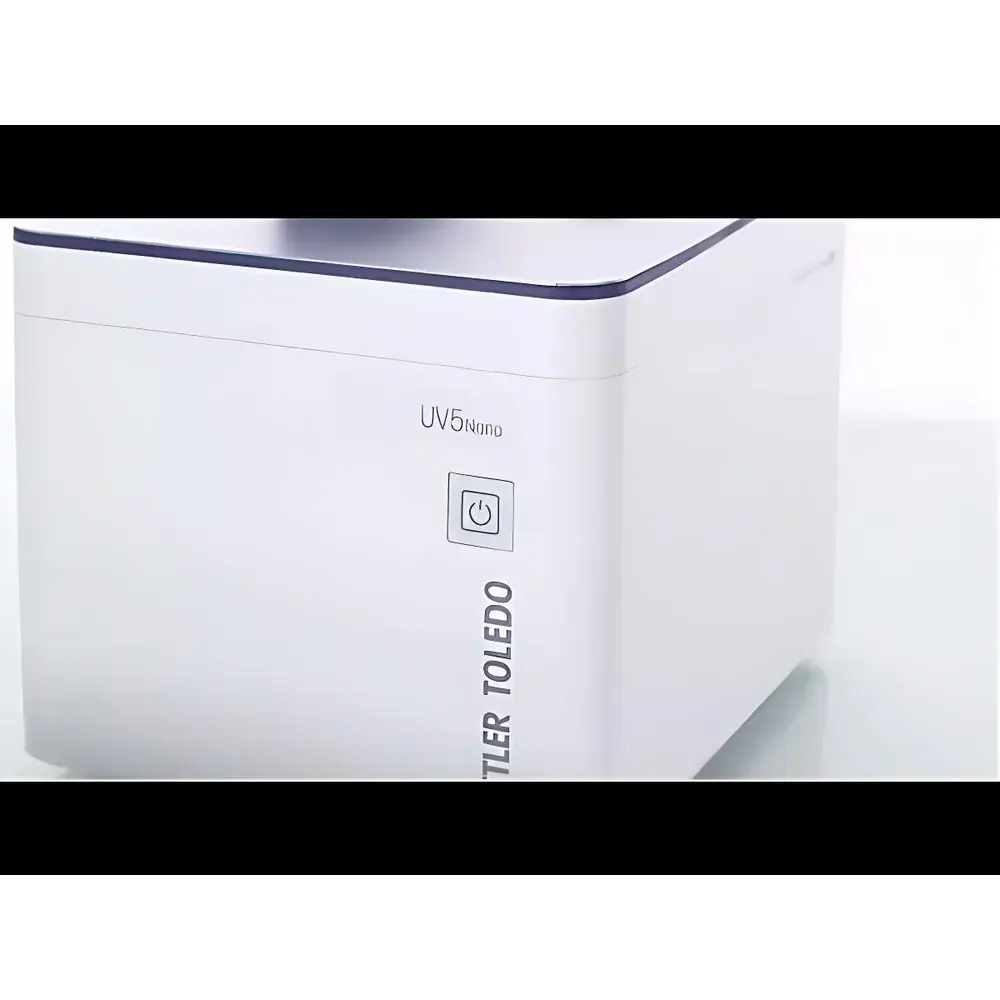
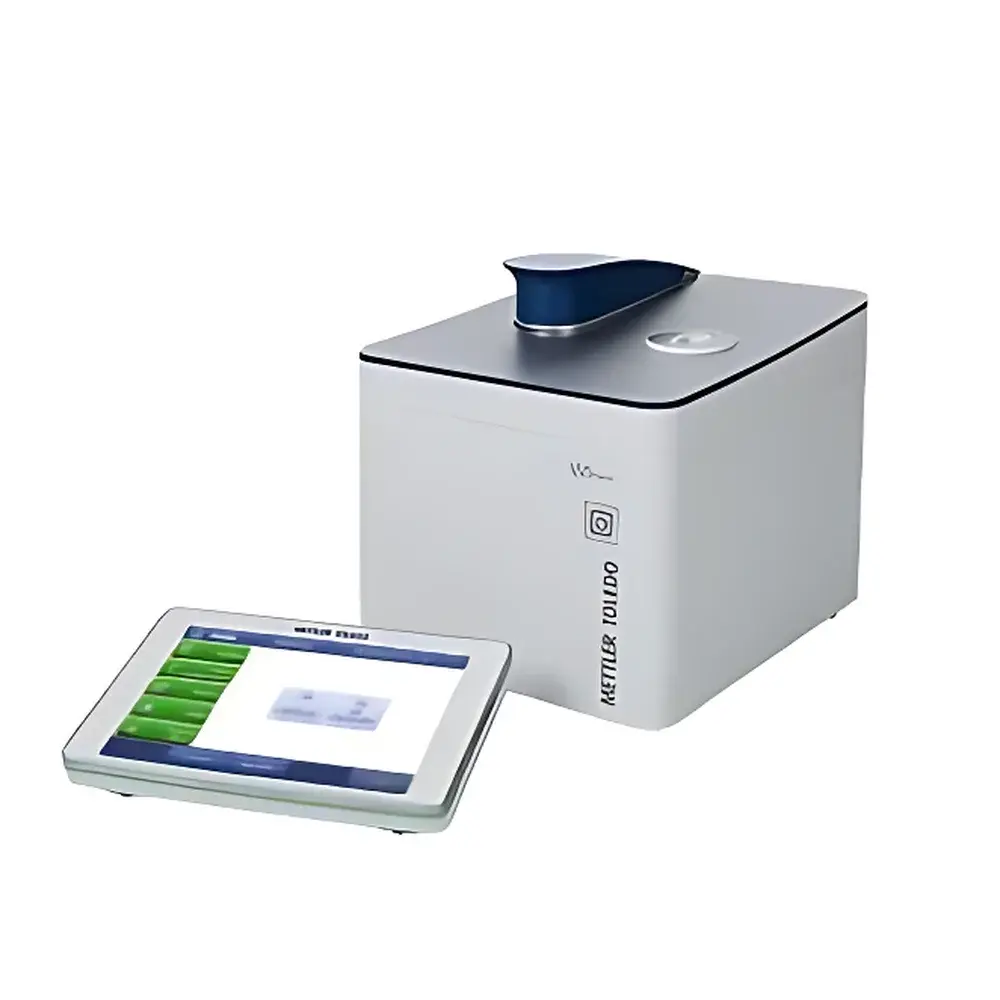
METTLER TOLEDO UV5Nano OneDrop Ultraviolet-Visible Spectrophotometer
| Brand | METTLER TOLEDO |
|---|---|
| Origin | Switzerland |
| Manufacturer Type | Authorized Distributor |
| Product Origin | Imported |
| Model | UV5Nano |
| Detector Type | CCD (Charge-Coupled Device) |
| Wavelength Range | 190 nm – 1,100 nm |
| Wavelength Automation | Automatic |
| Spectral Bandwidth | 1.5 nm |
| Wavelength Accuracy | ±0.9 nm |
| Stray Light | <0.03% T (at 220 nm, KI solution) |
Overview
The METTLER TOLEDO UV5Nano OneDrop UV-Vis spectrophotometer is an engineered solution for rapid, high-fidelity quantitative and qualitative analysis of microvolume biological samples. Based on single-beam optical architecture with a high-stability deuterium/tungsten-halogen light source and precision monochromator, the instrument delivers absorbance measurements across the full ultraviolet-to-near-infrared spectrum (190–1,100 nm). Its core innovation lies in the OneDrop measurement principle — a patented sample retention technology that eliminates the need for cuvettes and enables reproducible quantification using only 1 µL of undiluted sample. This design leverages fixed-pathlength optics combined with real-time pathlength calibration, ensuring accuracy independent of droplet geometry or surface tension variations. The UV5Nano is purpose-built for laboratories operating under stringent throughput and sample conservation requirements, including genomics, proteomics, and biopharmaceutical QC environments.
Key Features
- OneDrop microvolume platform: Measures 1 µL samples without capillary tubes or specialized cuvettes; integrated hydrophobic sample stage ensures consistent droplet formation and optical alignment.
- FastTrack™ optical system: Optimized optical train with high-efficiency CCD detector delivers full-spectrum scans in under 5 seconds with 1 nm data interval resolution.
- Automatic pathlength adjustment: Software-driven optical calibration dynamically compensates for minor variations in droplet height, maintaining traceable absorbance linearity per Beer-Lambert law.
- One Click™ intuitive interface: Touchscreen-based operation with preconfigured application workflows — no training required for routine nucleic acid or protein assays.
- Integrated RAININ pipette compatibility: Ergonomic mounting bracket and alignment guide ensure safe, contamination-free sample deposition aligned with optical axis.
- Robust thermal management: Peltier-stabilized optics compartment maintains wavelength calibration stability over extended operation cycles (±0.1 nm drift over 8 h at 25 °C ambient).
Sample Compatibility & Compliance
The UV5Nano supports native, unprocessed liquid samples including aqueous buffers, TE solutions, cell lysates, and purified biomolecules. It accommodates viscous or surfactant-containing samples (e.g., SDS-PAGE eluates, detergent-solubilized membrane proteins) through adaptive baseline correction algorithms. All measurement protocols adhere to ISO 6425:2018 (spectrophotometer performance verification) and are compatible with GLP/GMP documentation workflows. When paired with LabX software, the system supports 21 CFR Part 11-compliant electronic signatures, audit trails, and user-access controls — essential for regulated bioanalytical laboratories conducting QC release testing per USP , , or ICH Q5A guidelines.
Software & Data Management
LabX UV-Vis software provides centralized method deployment, instrument control, and raw-data archiving. It enables version-controlled method templates with embedded calculation rules (e.g., A260/A280 ratio with 320 nm background subtraction), automatic concentration derivation using user-defined extinction coefficients, and kinetic curve fitting (linear, exponential, Michaelis-Menten). Data export complies with ASTM E1382-21 (standard practice for spectral data exchange) and supports direct integration into LIMS via ODBC or RESTful API. All spectra and metadata are stored in vendor-neutral .jdx and .csv formats, ensuring long-term accessibility beyond proprietary software lifecycles.
Applications
- Nucleic acid quantification and purity assessment: Direct A260/A280 and A260/A230 reporting with built-in optical density correction at 320 nm to minimize scattering artifacts from particulates or residual phenol.
- Protein concentration determination: Preloaded Lowry, Bradford, Biuret, and BCA assay protocols with reagent-specific calibration curves and endpoint kinetics monitoring.
- Enzyme kinetics: Time-resolved absorbance acquisition at user-defined intervals (100 ms–60 s) for initial-rate analysis of NADH/NADPH oxidation or p-nitrophenyl substrate hydrolysis.
- Small-molecule characterization: Verification of dye labeling efficiency (e.g., Cy3/Cy5 conjugation ratios), oligonucleotide purity screening, and buffer component verification (e.g., DTT, EDTA, imidazole).
- Cell culture monitoring: Rapid estimation of viable cell density via turbidity measurements at 600 nm (OD600) with pathlength-normalized calibration.
FAQ
What is the minimum sample volume required for reliable measurement?
A single 1 µL droplet is sufficient for all standard applications; no dilution or transfer steps are needed.
Can the UV5Nano measure highly concentrated DNA samples without dilution?
Yes — automatic pathlength compensation enables accurate quantification from 2 ng/µL to 15,000 ng/µL dsDNA without manual intervention.
Is method validation support available for regulated environments?
METTLER TOLEDO provides IQ/OQ documentation packages, performance qualification protocols, and LabX 3Q validation kits compliant with ISO/IEC 17025 and FDA expectations.
How does the instrument handle bubbles or debris in the sample droplet?
Real-time image analysis of the sample interface triggers automatic rejection of invalid acquisitions; users receive immediate visual feedback and prompt for re-measurement.
Does the UV5Nano require annual recalibration by certified service engineers?
No — built-in wavelength and photometric self-checks (using internal holmium oxide and neutral density references) satisfy daily verification requirements per ASTM E275-22; formal calibration is recommended every 12 months or after major optical maintenance.





