
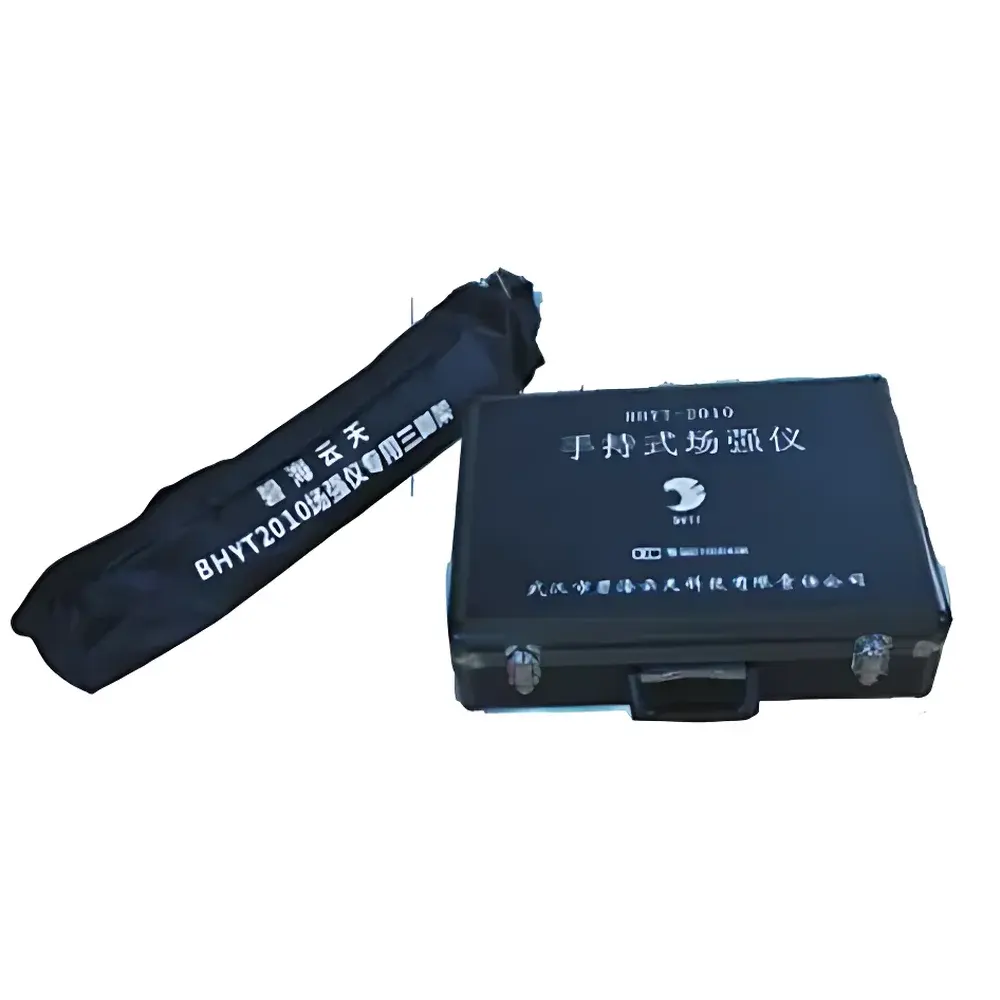
BHYT2010 Handheld Electromagnetic Field Strength Analyzer
| Origin | Fujian, China |
|---|---|
| Manufacturer Type | Authorized Distributor |
| Origin Category | Domestic (PRC) |
| Model | BHYT2010 |
| Price Range | USD 7,000–14,000 (FOB) |
| Frequency Range | 1 Hz–400 kHz & 100 kHz–10 GHz |
| Electric Field Accuracy | <5% @ 30 Hz–100 kHz, ≥1 V/m |
| Magnetic Field Accuracy | <5% @ 30 Hz–100 kHz, ≥200 nT |
| Electric Field Measurement Range | 1 Hz–400 kHz & 100 kHz–10 GHz |
Overview
The BHYT2010 Handheld Electromagnetic Field Strength Analyzer is a dual-band, triaxial broadband field measurement instrument engineered for compliance-driven electromagnetic environment assessment in occupational health, environmental monitoring, and regulatory enforcement contexts. It operates on the principle of isotropic electric and magnetic field sensing via orthogonal solid-state probe architectures—separately optimized for low-frequency (LF) and radiofrequency (RF) domains—and delivers simultaneous, decoupled X/Y/Z vector component acquisition without cross-axis interference. Its design conforms to the physical measurement paradigms defined in ISO/IEC 17025-accredited calibration protocols and supports traceable field quantification per IEC 61786-1:2013 (Measurement of DC and 1 Hz–100 kHz electromagnetic fields) and IEC 62232:2017 (Determination of RF field strength from wireless communication equipment). The instrument is not a general-purpose RF survey meter but a metrologically validated tool intended for structured monitoring programs aligned with national exposure limit frameworks.
Key Features
- Triaxial isotropic sensing architecture with ±0.5 dB amplitude uniformity across full frequency bands—enabling true spatial vector magnitude calculation (Etotal = √(Ex² + Ey² + Ez²), Htotal = √(Hx² + Hy² + Hz²)
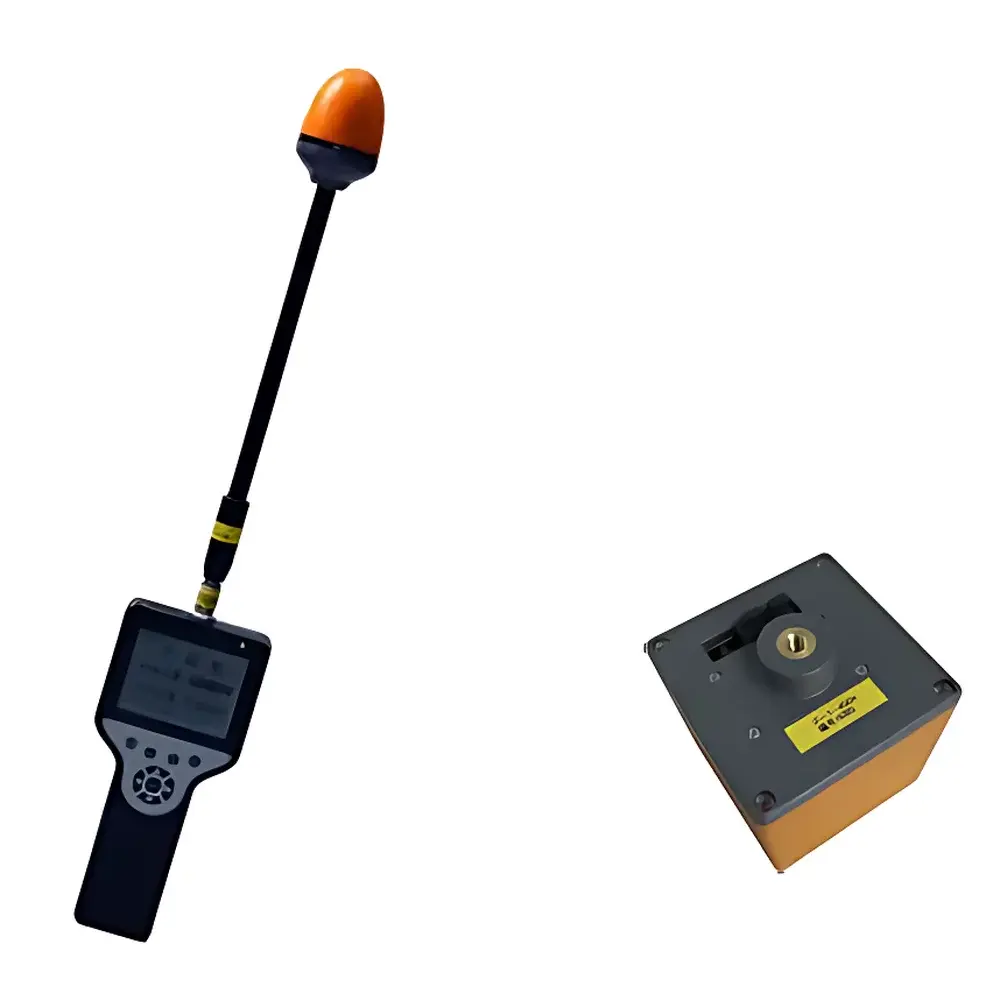
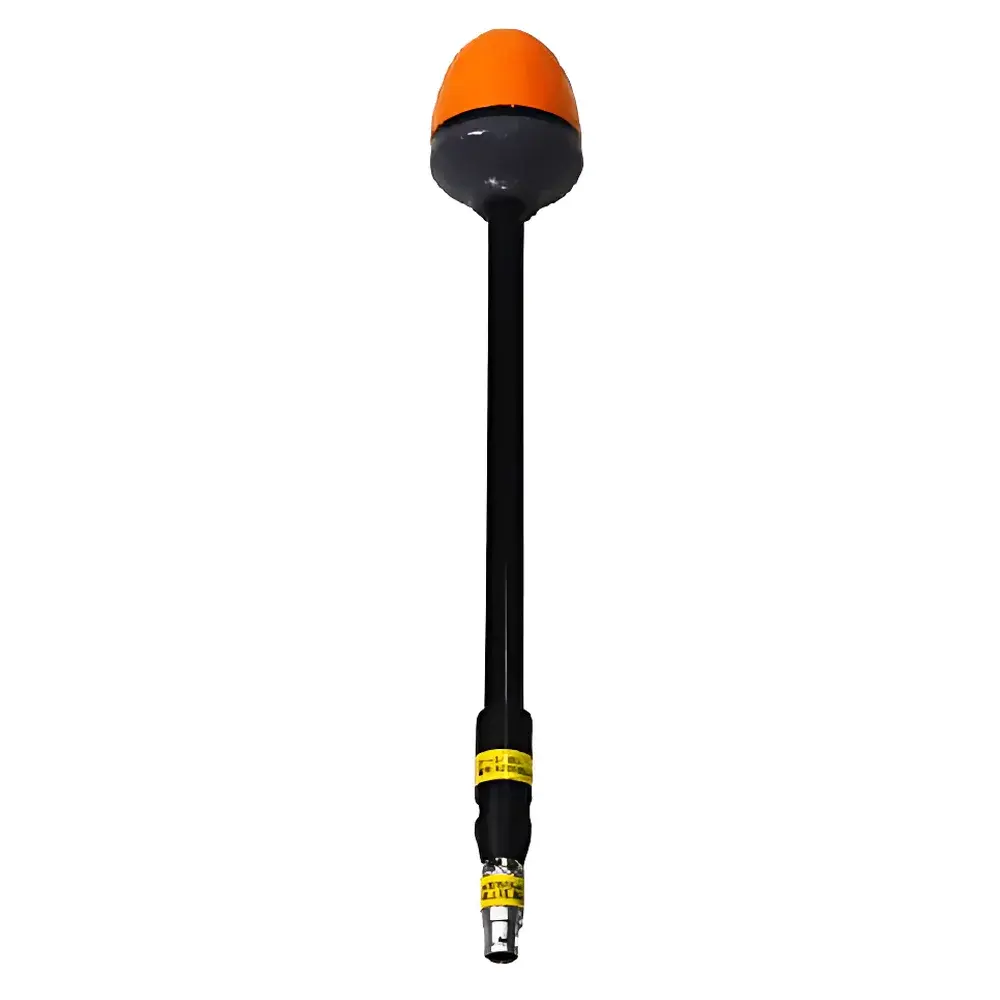
- Dual-probe system: Interchangeable LF probe (1 Hz–400 kHz) and RF probe (100 kHz–10 GHz), each auto-recognized by the host unit with embedded sensor ID and calibration coefficient tables
- Real-time environmental compensation: Integrated temperature and humidity sensors feed correction algorithms compliant with GBZ/T 189.3–2018 Annex C for low-frequency field measurement uncertainty reduction
- Multi-mode result presentation: RMS, arithmetic mean, peak hold, statistical field strength (P95, P99), and percentage-of-limit display relative to GB 8702–2014 reference levels
- High-fidelity data logging: Internal non-volatile memory stores >10,000 timestamped records (with UTC sync); export via USB 2.0 or optical fiber interface supports audit-ready CSV/ASCII formats
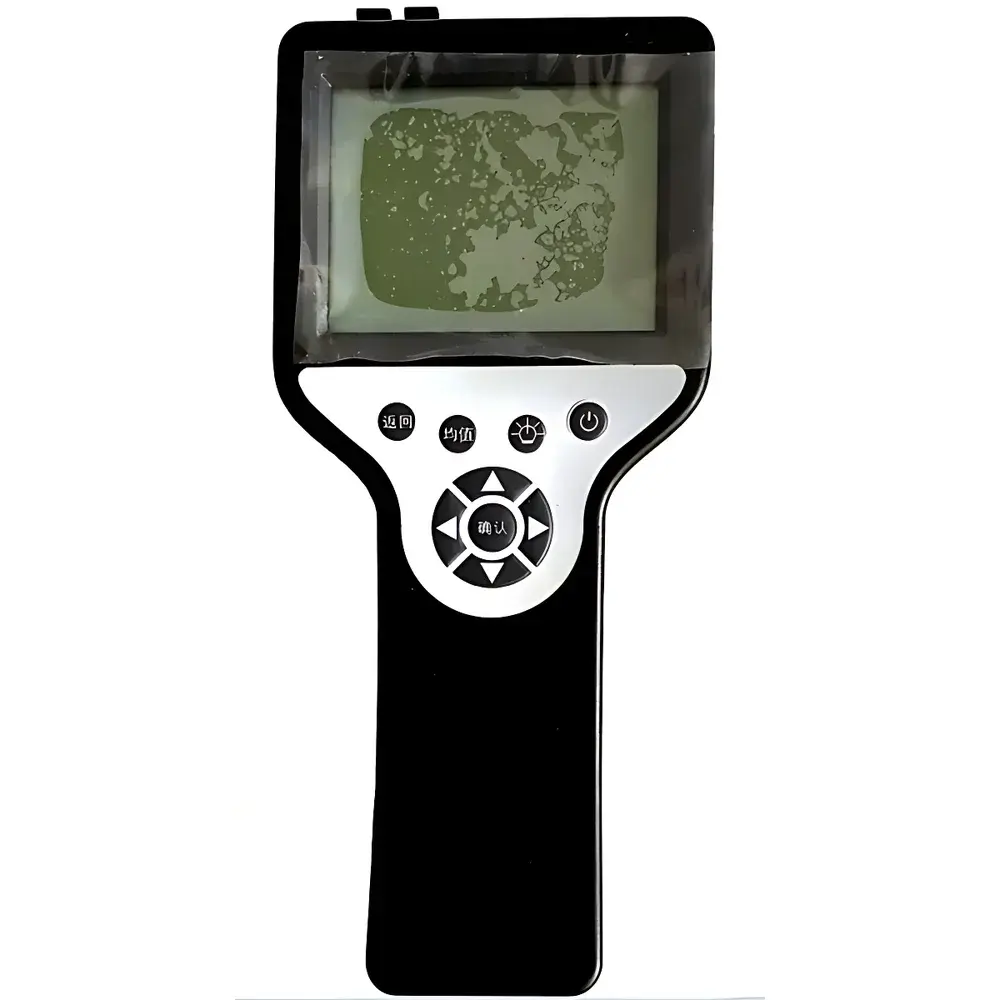
- IP55-rated enclosure with ergonomic handheld form factor (115 × 220 × 34.5 mm, <650 g), operational from –10 °C to +40 °C at up to 95% RH (non-condensing)
- Configurable display units: V/m, kV/m, A/m, mA/m, nT, µT, mT, W/m², mW/cm², µW/cm², with automatic range scaling and SI prefix selection
Sample Compatibility & Compliance
The BHYT2010 is validated for quantitative assessment of electromagnetic emissions from infrastructure and equipment covered under Chinese national standards including GB 8702–2014 (Environmental Control Limits for Electromagnetic Fields), HJ 972–2018 (Monitoring Methodology for Mobile Communication Base Stations), and HJ 681–2014 (Monitoring of AC Power Transmission Facilities). It meets the technical requirements for field instrumentation specified in HJ/T 10.2–1996 and HJ/T 10.3–1996 for environmental impact evaluation workflows. While not certified to EU CE RED Directive or FCC OET Bulletin 65, its measurement methodology and uncertainty budget are consistent with GLP-aligned field survey practices. Probe calibration certificates (traceable to NIM—National Institute of Metrology, PRC) are supplied with each unit, and annual recalibration intervals are recommended per ISO/IEC 17025 Clause 6.5.
Software & Data Management
Data retrieval and post-processing are supported through vendor-provided Windows-compatible desktop software (v3.2+), which enables spectral signature visualization, time-series trend analysis, geotagged reporting, and automated compliance flagging against user-defined limit thresholds. All logged datasets include embedded metadata: GPS coordinates (when external module attached), probe serial number, calibration expiry date, ambient T/RH, battery voltage, and operator ID. Audit trail functionality satisfies basic 21 CFR Part 11 read-only record integrity requirements; electronic signatures and role-based access control require integration with enterprise LIMS platforms. Firmware updates are delivered via signed binary packages with SHA-256 checksum verification.
Applications
- Ongoing surveillance of substation perimeters, HV/EHV transmission corridors, and traction power systems (railway electrification) per GBZ/T 189.3–2018
- Pre-commissioning and periodic monitoring of industrial RF heaters, dielectric sealers, and MRI auxiliary systems
- Base station site audits for 4G/LTE and 5G NR macrocells and small cells in urban and rural deployments
- Workplace exposure assessments in broadcast facilities, radar installations, and medical diathermy suites
- Verification of shielding effectiveness in laboratories, server rooms, and sensitive electronics manufacturing zones
- Academic research on low-frequency EMF bioeffects requiring high-dynamic-range (110 dB) field resolution down to 0.001 V/m
FAQ
Does the BHYT2010 comply with international standards such as ICNIRP or IEEE C95.1?
The instrument’s measurement functions align with the physical quantities and test methodologies referenced in ICNIRP 2010 and IEEE C95.1–2019, but it is not formally certified to those standards. Its calibration and uncertainty statements are issued per PRC national metrological regulations.
Can the device measure pulsed or modulated RF fields?
Yes—the RF probe employs true RMS detection with bandwidth-limited response (≤10 GHz) and supports peak-hold capture for transient emissions exceeding 100 µs duration, as required by HJ 972–2018 Annex B.
Is probe interchangeability supported without manual configuration?
Yes—each probe contains an EEPROM-stored identifier and factory calibration matrix; the host automatically loads appropriate scaling factors and frequency-weighting filters upon insertion.
What is the recommended recalibration interval?
Annual recalibration is advised under routine use conditions; more frequent verification is required after mechanical shock, extreme thermal cycling, or exposure to field intensities exceeding 80% of maximum rated range.
Does the instrument support remote triggering or networked operation?
No native Ethernet or Wi-Fi interface is provided; remote control is limited to USB-hosted command sets (SCPI-like syntax) or optical fiber-linked real-time streaming in OEM-configured deployments.
Related Products







