
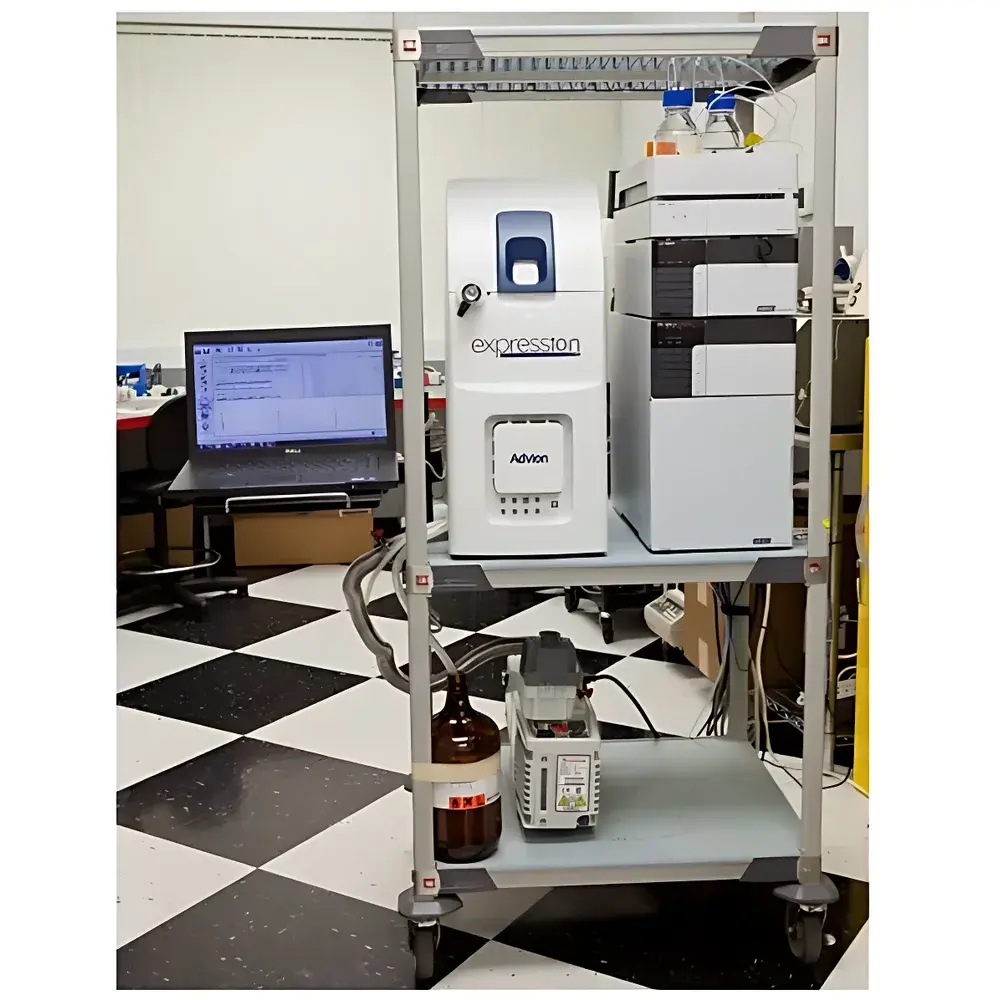
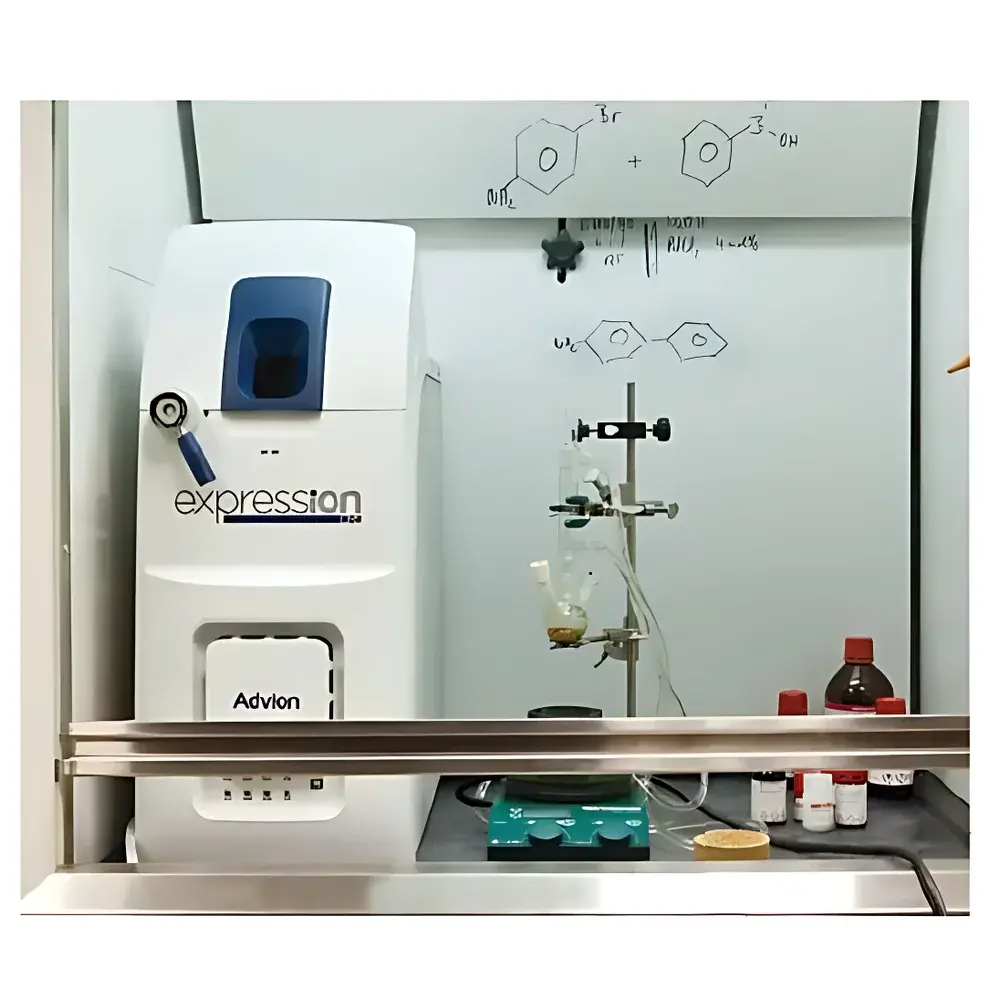
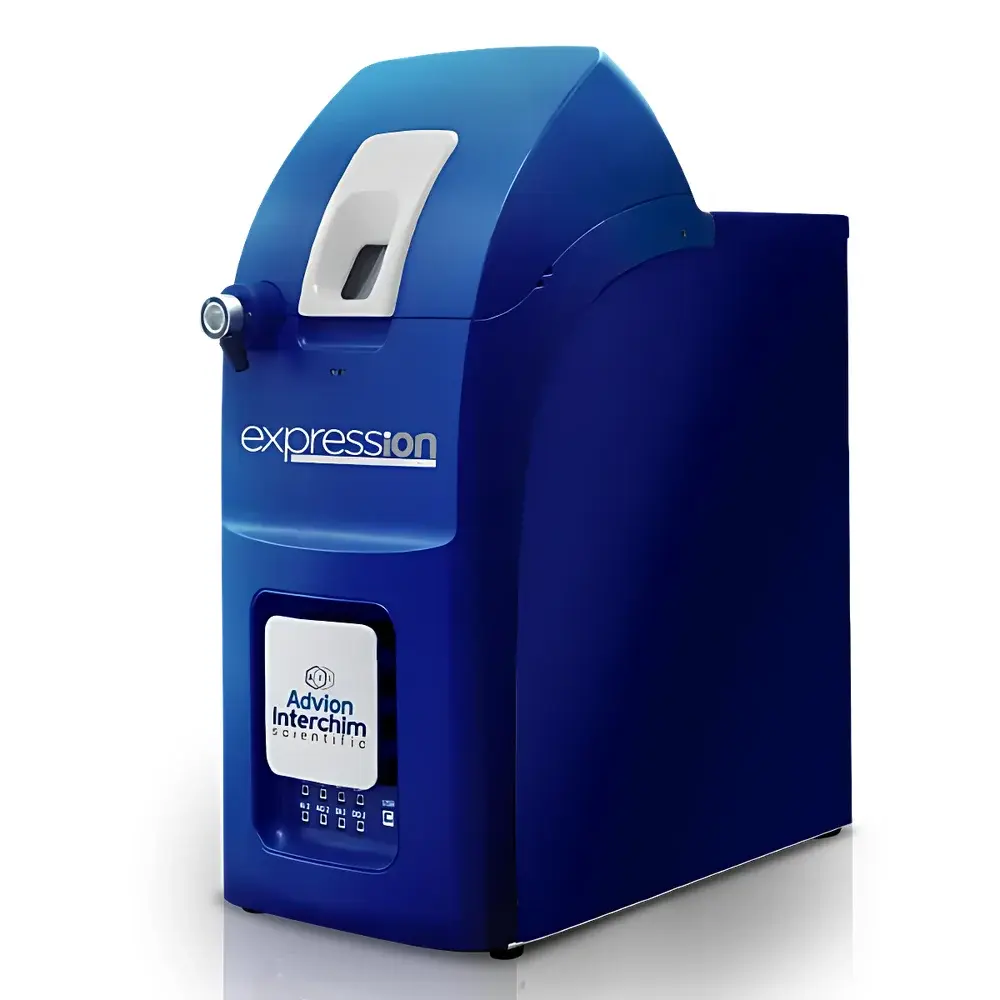
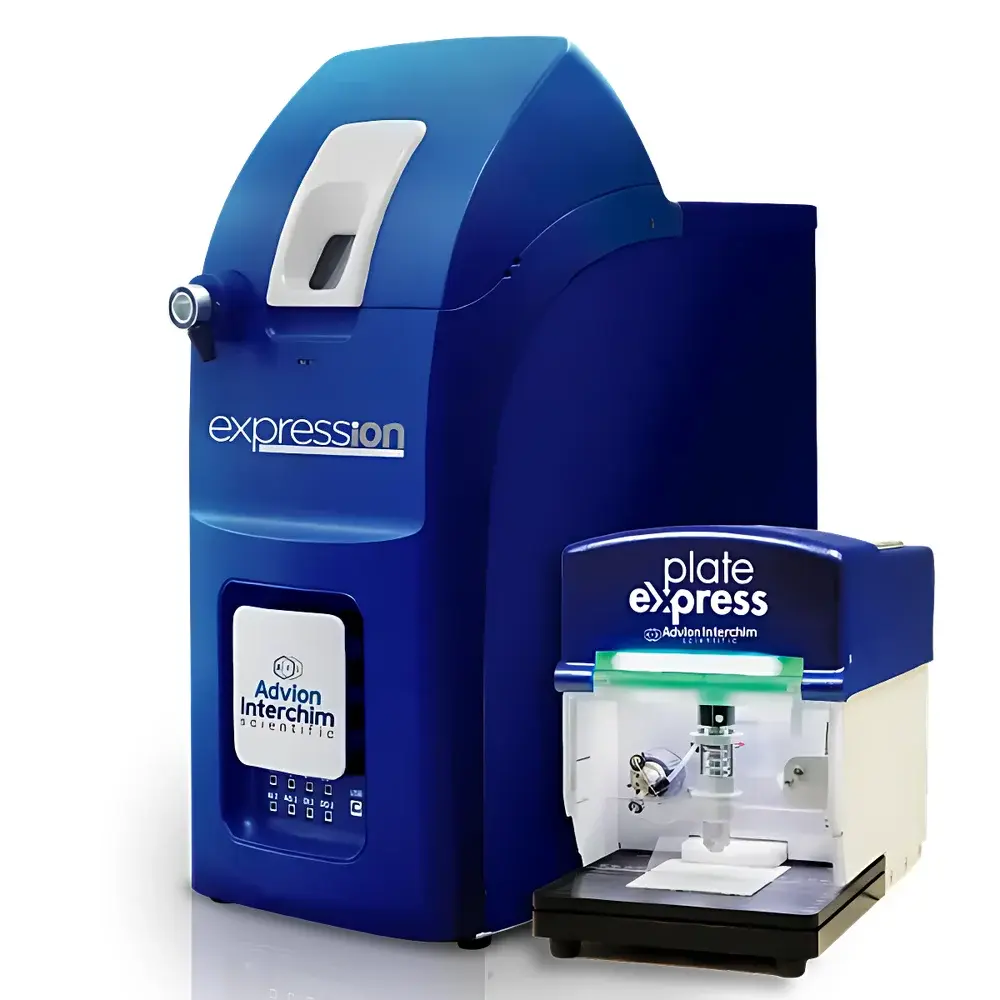
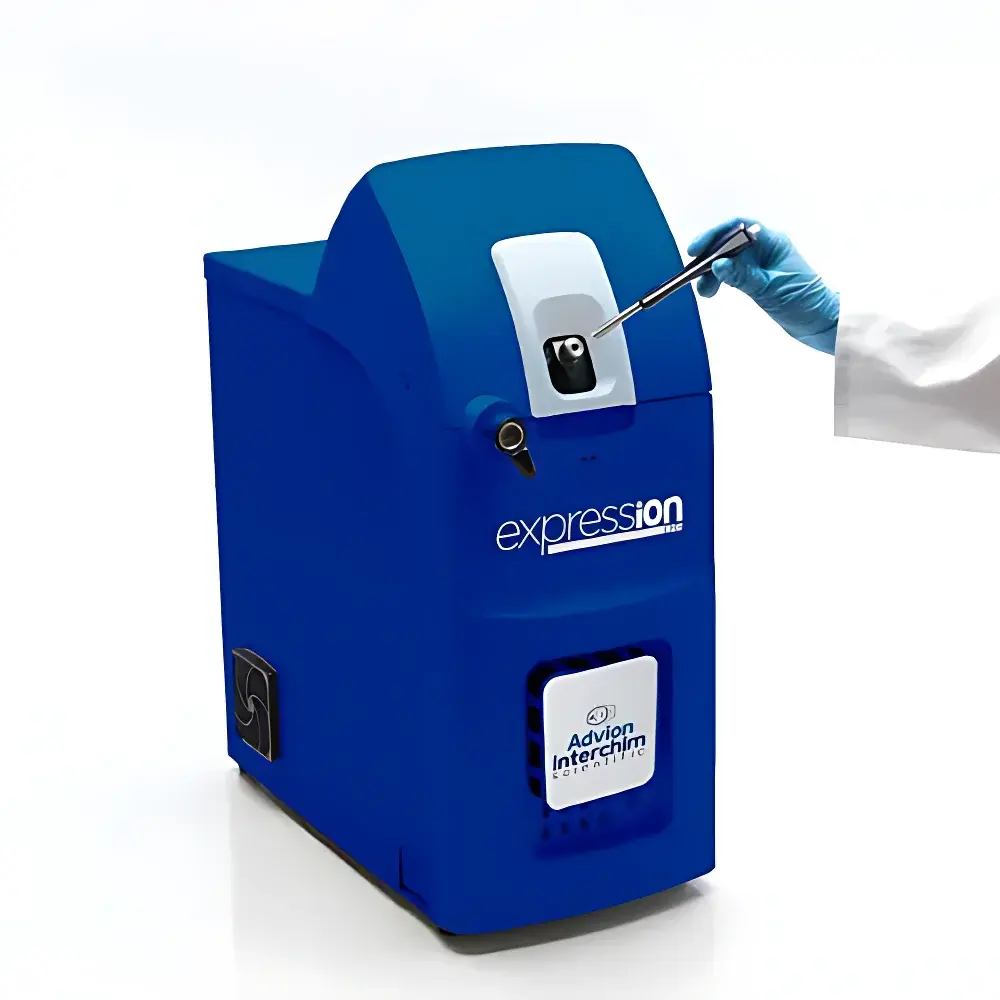
Advion Interchim Scientific expression CMS Benchtop Mass Spectrometer
| Brand | Advion Interchim Scientific |
|---|---|
| Origin | USA |
| Instrument Type | Single Quadrupole |
| Mass Range | m/z 10–2000 |
| Sensitivity | 100:1 (S/N) |
| Resolution | 0.5–0.85 Da (FWHM) |
| Mass Accuracy | ±0.1 Da |
| Ionization Sources | ESI, APCI, ASAP, OPSI, iASAP, vAPCI |
| Models | expression S (up to m/z 1200), expression L (up to m/z 2000) |
| Vacuum Recovery Time | <30 min after relocation |
| Compliance | Fully compatible with 21 CFR Part 11 via DataApex Clarity and DataExpress software |
Overview
The Advion Interchim Scientific expression CMS is a compact, benchtop single quadrupole mass spectrometer engineered for routine qualitative and semi-quantitative analysis in synthetic organic chemistry, pharmaceutical development, and analytical research laboratories. Operating on atmospheric pressure ionization (API) principles—primarily electrospray ionization (ESI) and atmospheric pressure chemical ionization (APCI)—the system delivers high reproducibility, rapid turnaround, and robust performance without requiring dedicated infrastructure. Unlike traditional floor-standing MS systems, the expression CMS integrates a sealed nitrogen-purged ion optics path, corrosion-resistant enclosure, and front-access maintenance architecture—enabling safe, stable operation inside standard laboratory fume hoods. Its modular ion source design supports six interchangeable API modalities (ESI, APCI, ASAP, OPSI, iASAP, vAPCI), allowing method-specific optimization across small-molecule analytes ranging from polar metabolites to moderately nonpolar intermediates.
Key Features
- Compact footprint (60 × 50 × 45 cm) designed for integration into synthetic chemistry workbenches or fume hood interiors
- Two model variants: expression S (m/z 10–1200) optimized for routine organic synthesis; expression L (m/z 10–2000) supporting higher-mass natural products and peptide fragments
- Multi-modal ion source compatibility—swap between ESI, APCI, ASAP, OPSI, iASAP, and vAPCI without hardware recalibration
- Sub-30-minute vacuum recovery post-relocation, enabled by a dual-stage turbomolecular pump and integrated N2-purged differential pumping interface
- Front-panel service access for electrode cleaning, capillary replacement, and calibration—no rear-panel disassembly required
- Dedicated I/O ports (RS-232, USB, Ethernet) for synchronized triggering and real-time data exchange with HPLC/UHPLC, Prep-LC, SFC, and FIA systems
- Corrosion-resistant anodized aluminum chassis and fully enclosed electronics meet ISO 14644-1 Class 8 cleanroom-compatible handling standards
Sample Compatibility & Compliance
The expression CMS accepts direct liquid and solid samples via capillary probe, TLC plate spotting, flow injection, or chromatographic eluent coupling—eliminating derivatization, solvent exchange, or offline fraction collection in most cases. It complies with GLP/GMP-aligned workflows through full 21 CFR Part 11 compliance when operated with DataApex Clarity Chromatography Data System (CDS) or Advion’s native DataExpress software. Both platforms support electronic signatures, audit trails, user role-based permissions, and secure data archiving. The instrument meets IEC 61010-1 safety requirements for laboratory electrical equipment and adheres to ASTM D7251 and USP guidelines for LC-MS system suitability testing when configured with HPLC/UHPLC interfaces.
Software & Data Management
DataExpress provides intuitive acquisition control, real-time spectral preview, and automated peak detection with isotopic pattern matching. For chromatographic workflows, DataApex Clarity CDS offers vendor-neutral driver support for >250 LC systems—including full Agilent ICF interoperability—and enables method transfer, sequence scheduling, and report generation compliant with FDA audit expectations. All raw data files (.raw, .cdf) are stored in open-format repositories, ensuring long-term readability and third-party processing compatibility (e.g., MassHunter, Compound Discoverer, XCMS Online). Batch processing scripts support reaction monitoring time-series analysis, enabling automatic compound identification across sequential injections with retention time alignment and mass tolerance windows (±0.1 Da).
Applications
- Reaction Monitoring: Real-time tracking of starting materials, intermediates, and products directly from crude reaction mixtures—no quenching or extraction required
- TLC-CMS Analysis: Direct desorption/ionization of silica-bound compounds using ambient ionization probes; supports rapid screening of column fractions and reaction progress
- Preparative LC-MS Fraction Collection: Integration with fraction collectors via TTL triggers for mass-directed purification of target compounds
- Food Safety & Environmental Screening: Detection of pesticides, mycotoxins, and emerging contaminants at regulatory action levels using validated MRM methods
- Clinical Research Support: Small-molecule biomarker profiling in urine, plasma, and tissue extracts under CLIA-equivalent validation protocols
- Academic Teaching: Modular curriculum modules—including hands-on ASAP, TLC-CMS, and LC-MS labs—developed in collaboration with Cornell University faculty for undergraduate and graduate instruction
FAQ
Can the expression CMS be used outside a dedicated MS lab?
Yes—the system operates safely inside standard fume hoods and requires only 110/220 V AC power and compressed air or nitrogen (optional); no chilled water or external vacuum pumps are needed.
Is method transfer possible between expression S and expression L models?
Yes—acquisition parameters, calibration files, and processing templates are fully cross-compatible; only mass range settings require adjustment.
Does the instrument support quantitative analysis?
It supports semi-quantitative analysis via internal standard normalization and relative response factor calibration; validated quantitative workflows require integration with Clarity CDS and 21 CFR Part 11-compliant audit trail configuration.
How is maintenance performed?
All consumables—including ion source components, capillaries, and detector assemblies—are front-accessible; routine cleaning takes <15 minutes and requires no specialized tools.
What level of IT support is required for network deployment?
The system uses standard TCP/IP networking; Clarity CDS deployment follows standard Windows Server Group Policy best practices and integrates with existing Active Directory authentication infrastructures.
Related Products





