METTLER TOLEDO LabX® Laboratory Software
| Brand | METTLER TOLEDO |
|---|---|
| Origin | Switzerland |
| Model | LabX® Software |
| Type | Laboratory Information Management System (LIMS) / Instrument Control & Data Management Platform |
| Regulatory Compliance Support | 21 CFR Part 11, Annex 11, GLP/GMP-ready |
| Deployment | Client-server or cloud-hosted architecture |
| Integration Capability | Native drivers for METTLER TOLEDO balances, titrators, pH meters, melting point apparatuses, thermal analyzers, and third-party instruments via OPC UA, ASCII, or TCP/IP protocols |
| User Management | Role-based access control (RBAC), electronic signatures, audit trail with immutable timestamped records |
| Reporting | Customizable PDF/Excel reports with metadata embedding and digital signature support |
Overview
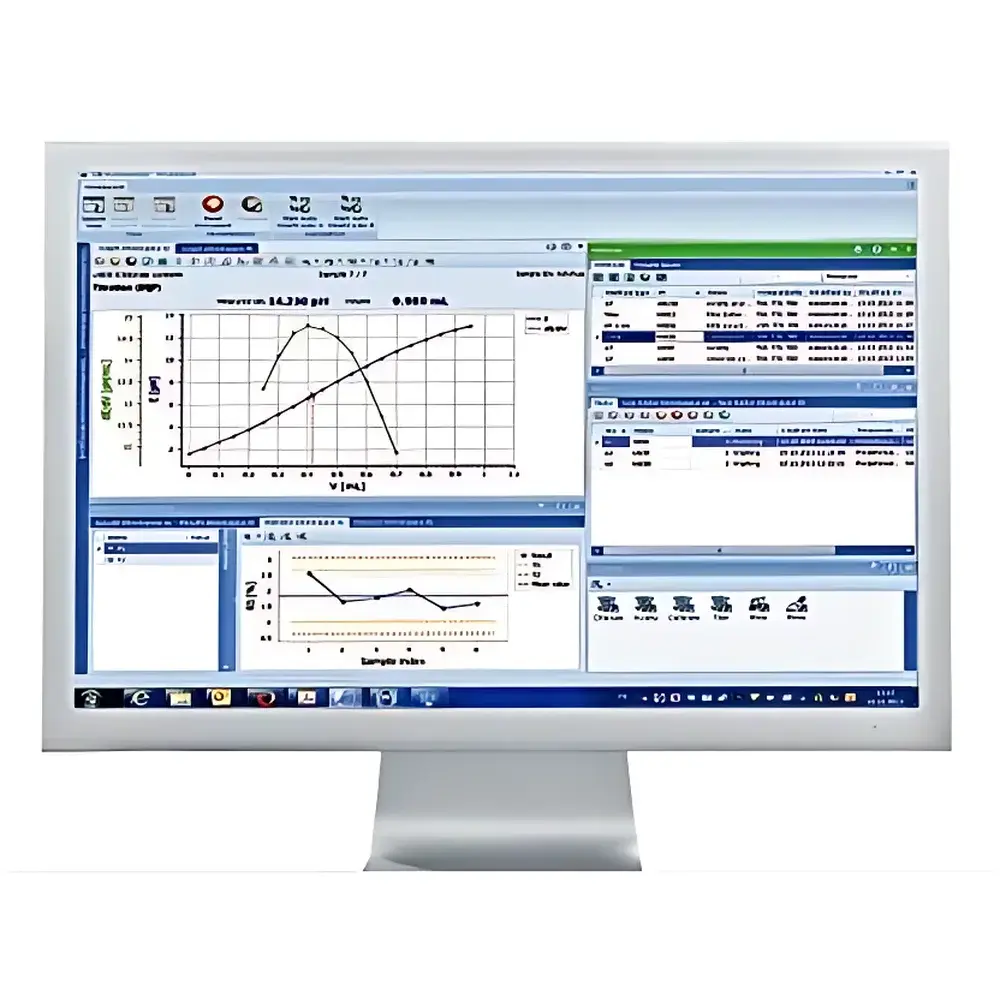
LabX® is a validated, enterprise-grade laboratory software platform developed by METTLER TOLEDO for centralized instrument control, automated data acquisition, and regulatory-compliant data management. Engineered for precision laboratories operating under stringent quality frameworks—including pharmaceutical QC, contract research organizations (CROs), and regulated industrial R&D—LabX functions as a unified middleware layer between analytical instrumentation and enterprise systems such as LIMS, ERP, and ELN. Its architecture adheres to the principles of ALCOA+ (Attributable, Legible, Contemporaneous, Original, Accurate, Complete, Consistent, Enduring, Available), ensuring data integrity across the entire analytical lifecycle. Unlike standalone instrument drivers or generic spreadsheet-based workflows, LabX implements deterministic process logic, enforcing method execution sequence, parameter validation, and real-time deviation detection—thereby transforming manual, error-prone operations into auditable, repeatable scientific processes.
Key Features
- Unified Instrument Control: Supports native integration with over 50 METTLER TOLEDO instrument families—including analytical balances, automatic titrators, pH/mV meters, density meters, thermal analyzers (TGA/DSC), and moisture analyzers—via embedded communication protocols (RS-232, USB, Ethernet) without requiring third-party middleware.
- Graphical Method Editor: Drag-and-drop workflow builder using modular instruction blocks (e.g., “Weigh Sample”, “Initiate Titration”, “Validate Result Range”) enables rapid SOP translation into executable methods without coding; supports conditional branching, loop structures, and dynamic parameter assignment.
- Fully Traceable Audit Trail: Immutable, time-stamped record of all user actions, instrument events, data modifications, and system configurations—stored separately from primary data and exportable in CSV or PDF-A format per FDA 21 CFR Part 11 and EU Annex 11 requirements.
- Electronic Signature Framework: Built-in digital signature engine compliant with ICH GCP and ISO/IEC 17025; supports multi-level signing (e.g., analyst + reviewer + approver), biometric integration, and signature justification fields.
- Automated Report Generation: Template-driven reporting engine allows creation of GxP-compliant certificates of analysis (CoA), raw data summaries, trend charts, and statistical summaries (e.g., %RSD, confidence intervals) with embedded metadata and digital signatures.
- Scalable Deployment Architecture: Supports on-premise client-server deployment, virtualized environments (VMware/Hyper-V), and validated cloud hosting options (AWS GovCloud, Azure Government) with TLS 1.2+ encryption and FIPS 140-2 validated cryptographic modules.
Sample Compatibility & Compliance
LabX does not directly interact with physical samples but governs the digital chain of custody for sample-related metadata—including sample ID, batch number, storage conditions, analyst assignment, and test sequence. It enforces sample lifecycle rules (e.g., mandatory retest triggers upon out-of-specification results) and integrates with barcode/RFID sample tracking systems. The software is pre-validated against key regulatory standards: FDA 21 CFR Part 11 (electronic records and signatures), EU Annex 11 (computerized systems), ISO/IEC 17025:2017 (clause 7.7 on result reporting), and ICH Q7 (GMP for APIs). Validation documentation—including IQ/OQ/PQ protocols, risk assessments (per ISO 14971), and change control logs—is provided as part of the standard delivery package.
Software & Data Management
LabX employs a relational database backend (Microsoft SQL Server or Oracle) with ACID-compliant transaction handling and daily encrypted backups. All raw instrument data—including timestamps, sensor readings, calibration logs, and environmental parameters (e.g., temperature, humidity from connected sensors)—are ingested in native format and preserved without loss of resolution. Data retention policies are configurable per project or regulatory domain (e.g., 15 years for pharmaceutical stability studies). Role-based access control (RBAC) enforces granular permissions down to field level (e.g., “view only” vs. “edit and approve”). Integration with enterprise directories (LDAP/Active Directory) ensures synchronized user provisioning and deprovisioning. API endpoints (RESTful JSON) enable bidirectional synchronization with LIMS (e.g., Thermo Fisher SampleManager, LabWare LIMS) and ELN platforms (e.g., Benchling, Dotmatics).
Applications
- Pharmaceutical quality control labs performing USP , , and compliance testing
- Contract manufacturing organizations (CMOs) managing multi-client assay workflows under shared infrastructure
- Academic core facilities requiring standardized data capture across heterogeneous instrumentation
- Food & beverage QA/QC labs executing AOAC or ISO 5725-2 traceability requirements
- Chemical R&D labs implementing Design of Experiments (DoE) with automated parameter logging and multivariate analysis pipelines
- Environmental testing labs adhering to EPA Method 8000-series data submission standards
FAQ
Is LabX compatible with non-METTLER TOLEDO instruments?
Yes—through standardized communication protocols including OPC UA, Modbus TCP, ASCII over TCP/IP, and vendor-specific SDKs. Integration requires protocol documentation and may involve custom driver development validated per GAMP 5 guidelines.
Does LabX support 21 CFR Part 11 compliance out of the box?
Yes—electronic signature workflows, audit trail configuration, and system security settings meet baseline Part 11 requirements. Full compliance depends on customer-specific validation activities, documented in the LabX Validation Guide.
Can LabX be deployed in a hybrid cloud environment?
Yes—validated configurations exist for AWS and Azure private subnets with on-premise instrument gateways, enabling secure data flow while maintaining local instrument control latency requirements.
How frequently is the audit trail archived?
Audit trail entries are written synchronously with each event and retained online for 90 days; older records are automatically migrated to long-term WORM (Write Once Read Many) storage with SHA-256 hash verification.
What training and support resources are available?
METTLER TOLEDO offers role-based instructor-led training (analyst, administrator, validator), online knowledge base with video tutorials, and 24/7 global technical support with SLA-backed response times for critical incidents.
Related Products