
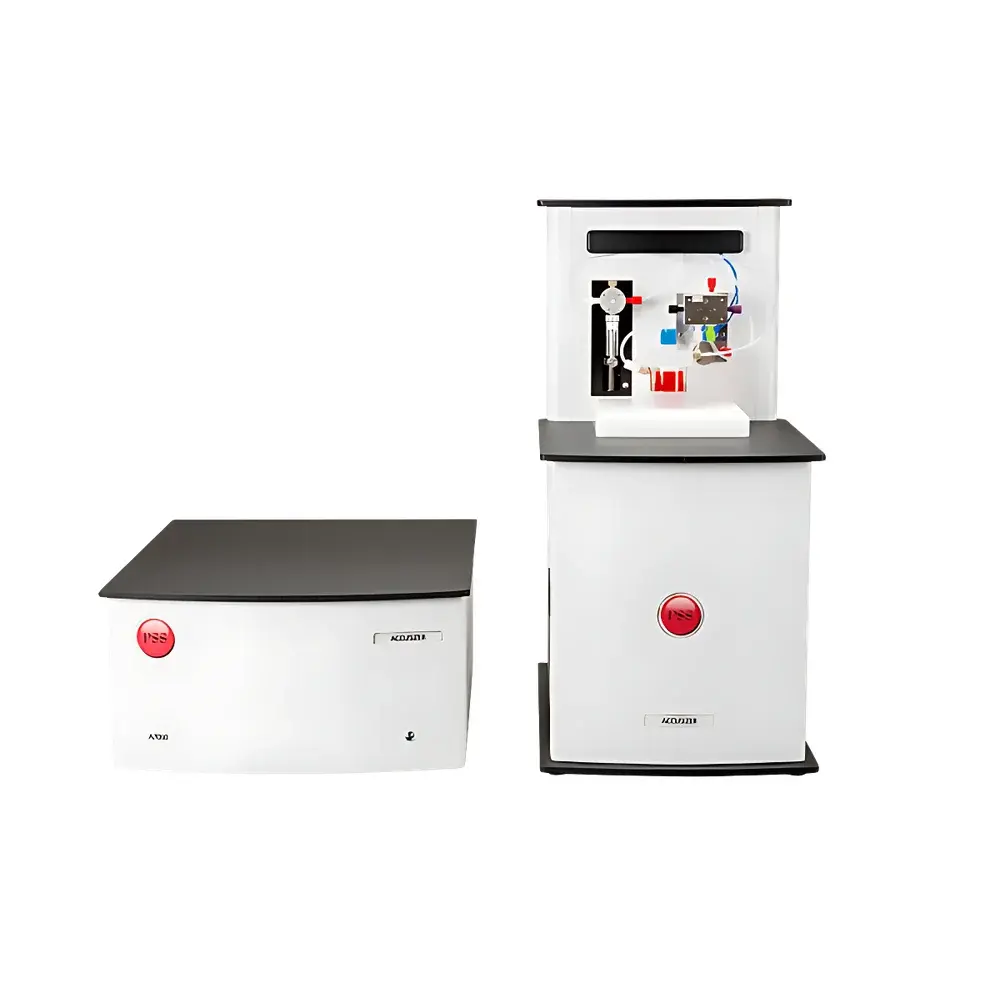
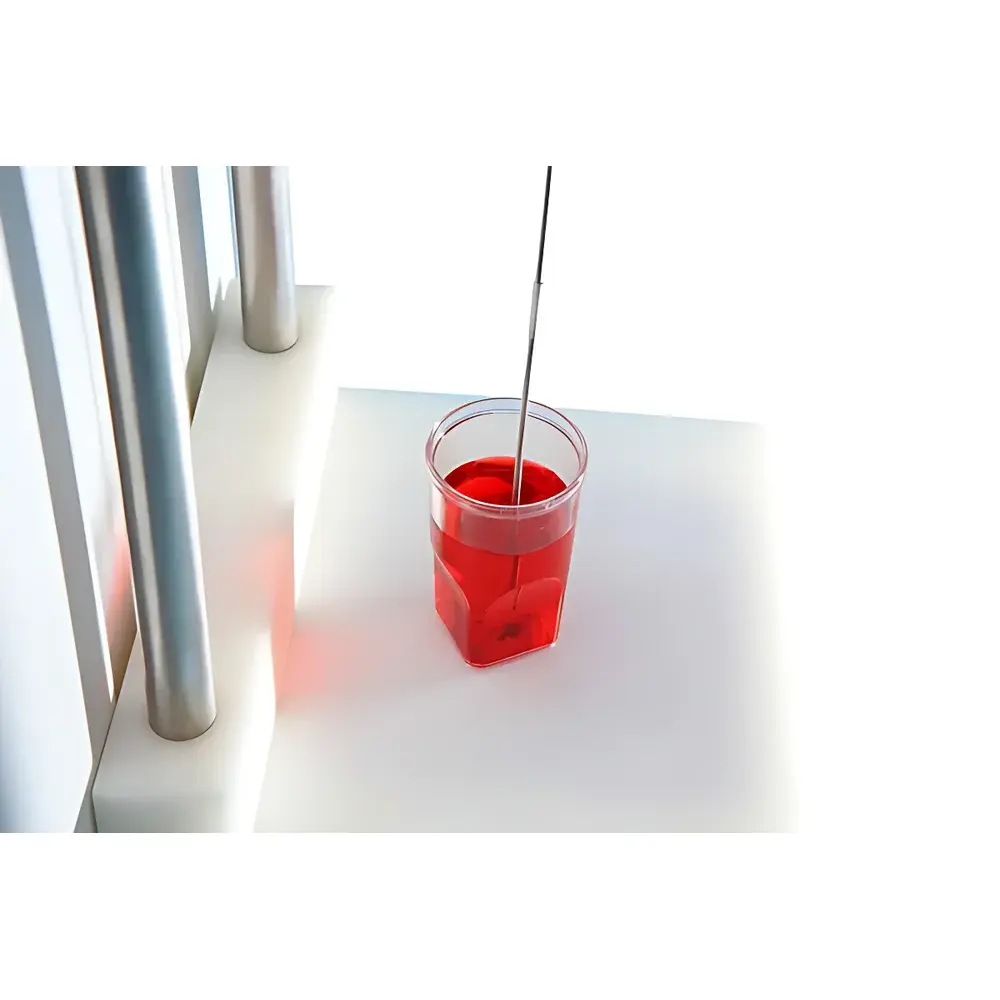
PSS AccuSizer A7000 APS Automated Particle Counter
| Brand | Particle Sizing Systems (PSS), USA |
|---|---|
| Origin | USA |
| Model | PSS AccuSizer A7000 APS |
| Detection Principle | Single Particle Optical Sensing (SPOS) / Light Obscuration |
| Measurement Range | 0.5–400 µm |
| Maximum Sample Concentration | 1×10¹¹ particles/mL |
| Data Channels | 1024 |
| Dilution Capability | Fully Automated Two-Step Dilution |
| Sample Introduction | Quantitative Loop Injection |
| Compliance | FDA 21 CFR Part 11, USP <729>, ISO 21501-4, ASTM F3252 |
| Software | AccuSizer v8.x with Audit Trail, Electronic Signatures, Role-Based Access Control |
| Power Supply | 100–120 VAC / 60 Hz or 220–240 VAC / 50 Hz |
| Dimensions (Processor) | 48 × 36 × 19 cm |
| Weight | ~41 kg |
Overview
The PSS AccuSizer A7000 APS is an automated, high-resolution particle counter engineered for quantitative analysis of particle size distribution (PSD) and concentration in liquid suspensions using Single Particle Optical Sensing (SPOS) technology—also known as light obscuration. Unlike ensemble-based methods such as laser diffraction, SPOS detects and sizes individual particles as they pass through a focused optical sensing zone, generating true number-weighted distributions with exceptional sensitivity to tail-end outliers. This principle enables precise quantification of large particles (>5 µm) in pharmaceutical emulsions (e.g., PFAT5 per USP ), submicron contaminants in semiconductor CMP slurries, and critical particulates in battery electrode dispersions. The A7000 APS extends the capabilities of the AccuSizer platform with a fully integrated two-step dilution module, allowing direct analysis of samples up to 1×10¹¹ particles/mL without manual intervention—eliminating operator-induced variability and enabling robust, reproducible data under GMP/GLP conditions.
Key Features
- Patented two-step automated dilution system (US Patents 4,794,806; 6,211,956; EP0278520B1; JP2016065874A) for accurate restoration of original particle concentration across extreme dynamic ranges.
- 1024-channel high-resolution detection architecture delivering ≥0.01 µm bin resolution—enabling clear separation of multimodal standards (e.g., 0.8 µm, 2 µm, 5 µm peaks) and eliminating ensemble averaging artifacts.
- Quantitative loop injection with selectable volumes (0.5 mL, 1 mL, 3 mL, 5 mL) ensuring precise, repeatable sample introduction independent of viscosity or surface tension.
- Modular sensor design supporting interchangeable LE, FX, and FXo optical modules—allowing optimization for submicron sensitivity (LE), high-concentration slurry stability (FX), or ultra-low-volume analysis (FXo).
- Closed-loop, inert detection chamber with ultrapure water rinse protocol—minimizing carryover and cross-contamination between high-risk samples (e.g., cytotoxic APIs, abrasive slurries).
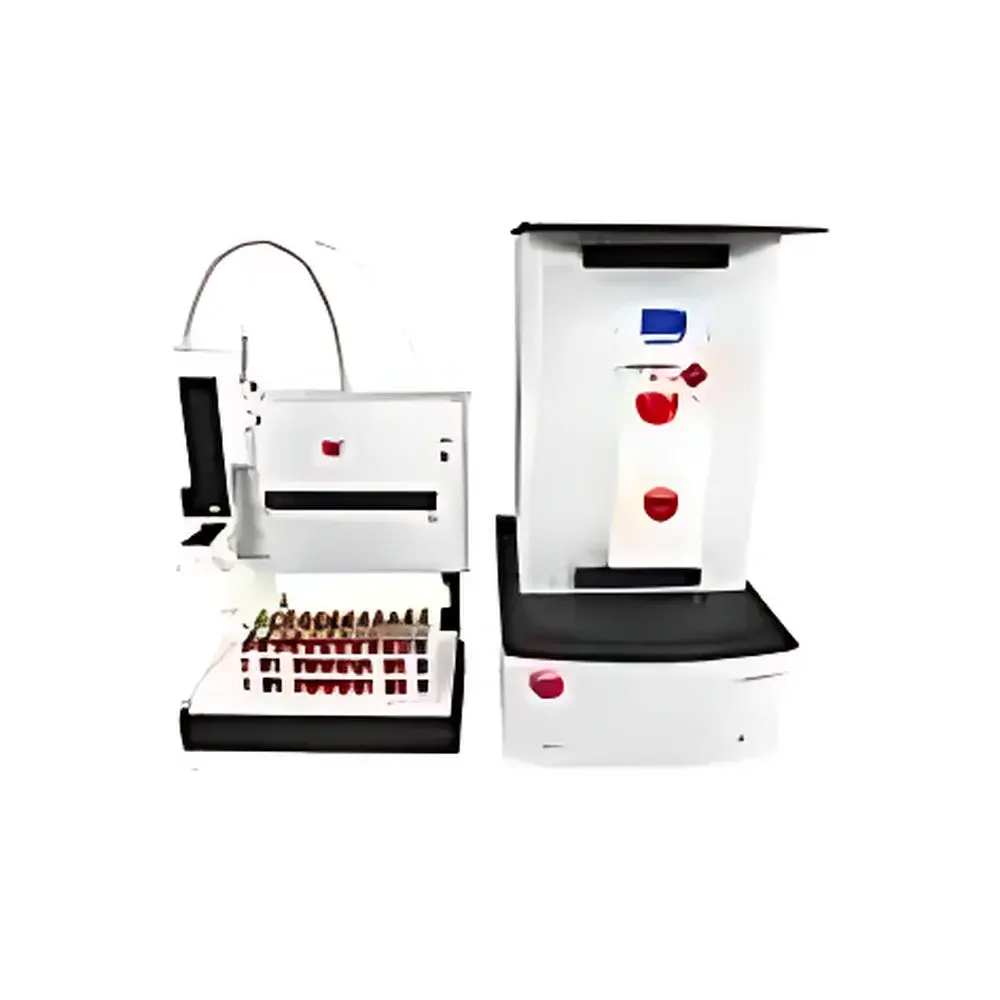
- Integrated CETAC-compatible autosampler supporting up to 90 samples per run (6×15 positions, 13 mm tubes), programmable by tube diameter, volume, and rinse cycle.
Sample Compatibility & Compliance
The A7000 APS accommodates both aqueous and organic-phase dispersions—including ethanol, IPA, DMSO, and low-polarity solvents—without optical interference or sensor fouling. Its flow path is chemically resistant to common process acids (HNO₃, H₂SO₄) and bases used in CMP slurry conditioning. Instrument validation meets ISO 21501-4 (determination of particle size distribution by single particle counting methods) and ASTM F3252 (standard guide for evaluation of particle counters). For regulated environments, the system complies with FDA 21 CFR Part 11 requirements via built-in audit trail, electronic signatures, role-based permissions (22 granular access levels), and immutable data storage. All reports are exportable in PDF/A or CSV formats with embedded metadata—including method ID, operator, timestamp, instrument firmware version, and calibration history—for full traceability during regulatory inspections (e.g., FDA pre-approval, EMA GMP audits).
Software & Data Management
AccuSizer v8.x software provides full lifecycle data governance: from method development and instrument control to statistical reporting and compliance archiving. It supports real-time PSD visualization in number-, volume-, and surface-area-weighted modes—with toggleable logarithmic/linear axes and customizable channel grouping. Regulatory features include automatic report generation against USP , Ph. Eur. 2.9.19, and ISO 13322-2 templates; pass/fail auto-assessment based on user-defined thresholds; and scheduled LIMS integration via ODBC or HL7. Data backups occur automatically at user-specified intervals (e.g., every 15 minutes) to local NAS or cloud endpoints. Audit logs record all user actions—including login/logout, parameter edits, data deletions (soft-deleted entries remain recoverable in database), and recalculations—with searchable filters by date range, operator ID, or event type. All electronic signatures conform to ICH E6(R3) and Annex 11 expectations.
Applications
- Pharmaceutical Quality Control: Quantification of >5 µm particles in lipid emulsions (PFAT5), liposomes, microspheres, and contrast agent microbubbles per USP and ChP 2020 requirements.
- Semiconductor Manufacturing: LPC (Large Particle Count) monitoring in SiO₂, CeO₂, and Al₂O₃ CMP slurries—detecting pump-induced agglomeration and validating filtration integrity over 40+ hours of recirculation.
- Advanced Materials R&D: Stability assessment of conductive inks, cathode/anode slurries for Li-ion batteries, and nanocellulose dispersions where trace oversized particles compromise film uniformity or electrochemical performance.
- Medical Device Testing: Extractable particulate analysis from silicone tubing, IV connectors, and drug-eluting stent coatings per ISO 10993-12 and USP .
- Environmental & Industrial Hygiene: Quantitative characterization of airborne particle analogs in liquid suspension for inhalation toxicology studies.
FAQ
How does SPOS differ from laser diffraction for detecting oversized particles?
SPOS counts and sizes each particle individually, providing absolute number concentrations and resolving tail-end populations down to 0.5 µm with no theoretical assumptions about shape or refractive index. Laser diffraction infers PSD from ensemble scattering patterns, inherently masking rare large particles within dominant small-particle signals—often requiring >6000× higher concentration to reveal the same tail behavior.
Can the A7000 APS analyze viscous samples like undiluted CMP slurries?
Yes—the FX/FXo sensor variants coupled with programmable shear-controlled dilution enable stable measurement of slurries up to 60 cP without clogging. Magnetic stirring in the 30 mL mixing chamber ensures homogeneity prior to loop aspiration.
Is method transfer possible between A7000 APS and legacy AccuSizer models?
All AccuSizer instruments share identical SPOS physics and calibration traceability to NIST-traceable PSL standards. Method parameters (flow rate, gain, threshold) migrate seamlessly; only dilution logic and autosampler configuration require revalidation.
What validation documentation is supplied with the system?
Each unit ships with Factory Acceptance Test (FAT) report, IQ/OQ protocols compliant with ASTM E2500, and a Certificate of Conformance referencing ISO/IEC 17025-accredited calibration of the optical sensor and volumetric loop.
Does the software support multi-user environments with departmental data segregation?
Yes—via hierarchical permission groups, database-level schema isolation, and configurable report visibility rules that enforce data sovereignty across QA, R&D, and manufacturing teams.



