
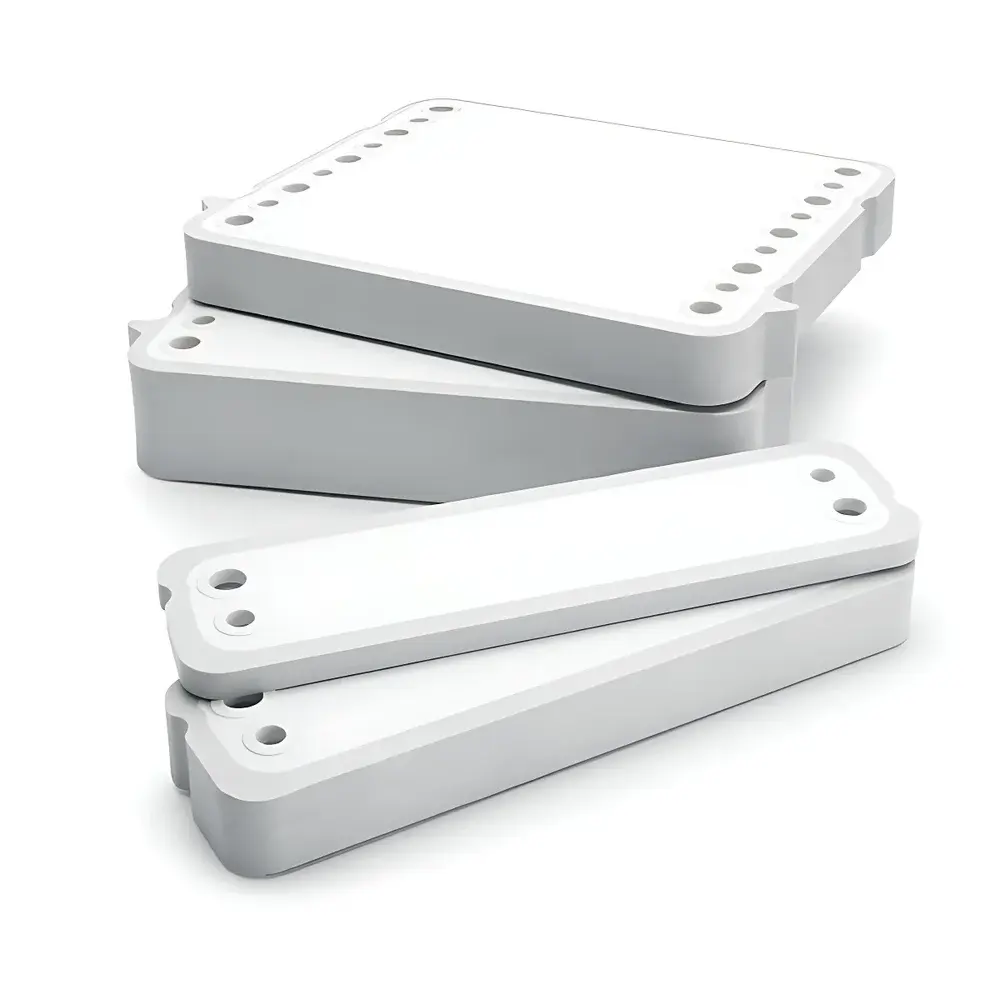
Merck Pellicon 3 Cassette Ultrafiltration System
| Brand | Merck |
|---|---|
| Origin | USA |
| Manufacturer Type | Authorized Distributor |
| Product Origin | Imported |
| Model | Pellicon 3 |
| Price Range | USD 1,400 – 14,200 |
Overview
The Merck Pellicon 3 Cassette Ultrafiltration System is an engineered crossflow ultrafiltration (UF) platform designed for scalable, robust, and reproducible biomolecule concentration and buffer exchange in biopharmaceutical process development and manufacturing. Based on tangential flow filtration (TFF) principles, the system utilizes a flat-sheet, stacked cassette architecture with precisely engineered flow channels to minimize concentration polarization and fouling—critical for processing high-titer monoclonal antibody (mAb) harvests, viscous viral vector feeds, and shear-sensitive proteins. Unlike hollow-fiber or centrifugal UF devices, the Pellicon 3 design maintains consistent hydraulic resistance and uniform transmembrane pressure distribution across the entire membrane surface, enabling predictable flux behavior and high product recovery (>95% typical for IgG under optimized conditions). Its modular configuration supports seamless transition from bench-scale process characterization (0.1–0.5 m²) to clinical- and commercial-scale production (up to 10 m² per stack), aligning with ICH Q5A and Q5D guidance on process consistency and comparability.
Key Features
- Robust polyethersulfone (PES) or regenerated cellulose (RC) membranes with low protein binding and validated retention performance for MWCOs ranging from 3 kDa to 500 kDa
- Patented “OptiFlux” screen geometry that enhances mass transfer efficiency and sustains >20% higher normalized flux versus prior-generation cassettes under identical operating conditions
- Integrated gasket design eliminates alignment errors during cassette stacking and ensures leak-free operation at pressures up to 4 bar (58 psi)
- Thermal stability certified from −20 °C to +60 °C; compatible with NaOH sanitization (0.1–1.0 M, ≤60 min) and steam-in-place (SIP) protocols per ASME BPE 2023 guidelines
- Pre-sterilized options available (gamma irradiation or E-beam) with full bioburden and endotoxin test documentation compliant with USP and
- Scalable cassette formats: 0.1 m² (lab), 0.5 m² (pilot), 2.5 m² and 5.0 m² (production); all share identical hydraulic characteristics and membrane chemistry
Sample Compatibility & Compliance
The Pellicon 3 system accommodates feed streams with viscosities up to 25 cP and total suspended solids (TSS) ≤0.5%, including clarified CHO cell culture harvests, insect cell lysates, mRNA-LNP formulations, and AAV/ lentiviral vector concentrates. It meets ISO 9001:2015 manufacturing standards and conforms to FDA 21 CFR Part 11 requirements when integrated with validated TFF control systems (e.g., Merck’s Sartorius Biostat® controllers). All membrane lots undergo rigorous lot-release testing—including bubble point, diffusion test, and sodium chloride rejection assay—per ASTM F838-22 and USP . Certificates of Analysis (CoA) and Certificates of Conformance (CoC) are provided with each shipment.
Software & Data Management
While the Pellicon 3 cassette itself is a passive hardware component, its integration into automated TFF skids enables full digital traceability. When used with compliant process control software (e.g., DeltaV, SIMATIC PCS 7, or Sartorius Process Explorer), operational parameters—including TMP, flux, retentate conductivity, and diafiltration volume—are logged with electronic signatures, audit trails, and time-stamped metadata. This supports ALCOA+ data integrity principles and facilitates regulatory submissions under ICH M4 and EMA Annex 11. Raw data export (CSV, PDF, XML) is supported for statistical process control (SPC) and multivariate analysis (MVA) workflows.
Applications
- Concentration and diafiltration of therapeutic antibodies, Fc-fusion proteins, and bispecifics during downstream purification
- Buffer exchange and formulation of viral vectors (AAV, LV) prior to chromatography or final fill
- Clarification and concentration of plasmid DNA and mRNA intermediates in non-viral gene therapy processes
- Process validation studies requiring bracketed scale-down models (e.g., 0.1 m² → 5.0 m²) with identical membrane surface chemistry and pore structure
- Accelerated stability assessment of biologics under forced degradation conditions (e.g., elevated temperature, alkaline exposure)
FAQ
What is the maximum recommended operating pressure for Pellicon 3 cassettes?
The absolute maximum operating pressure is 4 bar (58 psi) at 25 °C; however, optimal long-term performance is achieved at ≤2.5 bar for most bioprocess applications.
Can Pellicon 3 cassettes be reused after cleaning-in-place (CIP)?
Yes—when validated per your internal SOP and aligned with Merck’s CIP protocol (e.g., 0.5 M NaOH, 30 min, 25 °C), reuse for up to 10 cycles is documented for mAb processes meeting purity and yield specifications.
Is pre-rinsing required before first use?
Yes—standard practice includes 30 minutes of deionized water recirculation at 1 bar to remove glycerol preservative and stabilize membrane hydration state prior to process fluid introduction.
How does Pellicon 3 ensure scalability between lab and manufacturing scales?
Through geometric similarity, constant specific surface area (m²/m³ retentate volume), and identical Reynolds number ranges—enabling direct translation of shear rate, residence time, and TMP profiles without empirical re-optimization.




