
English Product Name
| Brand | TESTech |
|---|---|
| Origin | Jiangsu, China |
| Manufacturer Type | Direct Manufacturer |
| Country of Origin | China |
| Model | TTech-ass1 |
| Airflow Capacity | 5000 m³/h |
| Power Consumption | 5.5 kW |
| Tower Dimensions | 1800 mm (L) × 1200 mm (W) × 3500 mm (H) |
| Installation Space Requirement | 2500 mm (L) × 2000 mm (W) × 4000 mm (H) |
| Construction Material | Polypropylene (PP) |
| Liquid Recirculation Pump | Integrated |
| Activated Carbon Adsorption Chamber | Standard |
| Exhaust Monitoring Port | Equipped |
| Compliance | Designed for compliance with GB 16297–1996 (Emission Standards of Air Pollutants for Industrial Furnaces and Boilers) and compatible with ISO 14001 environmental management system frameworks |
Overview
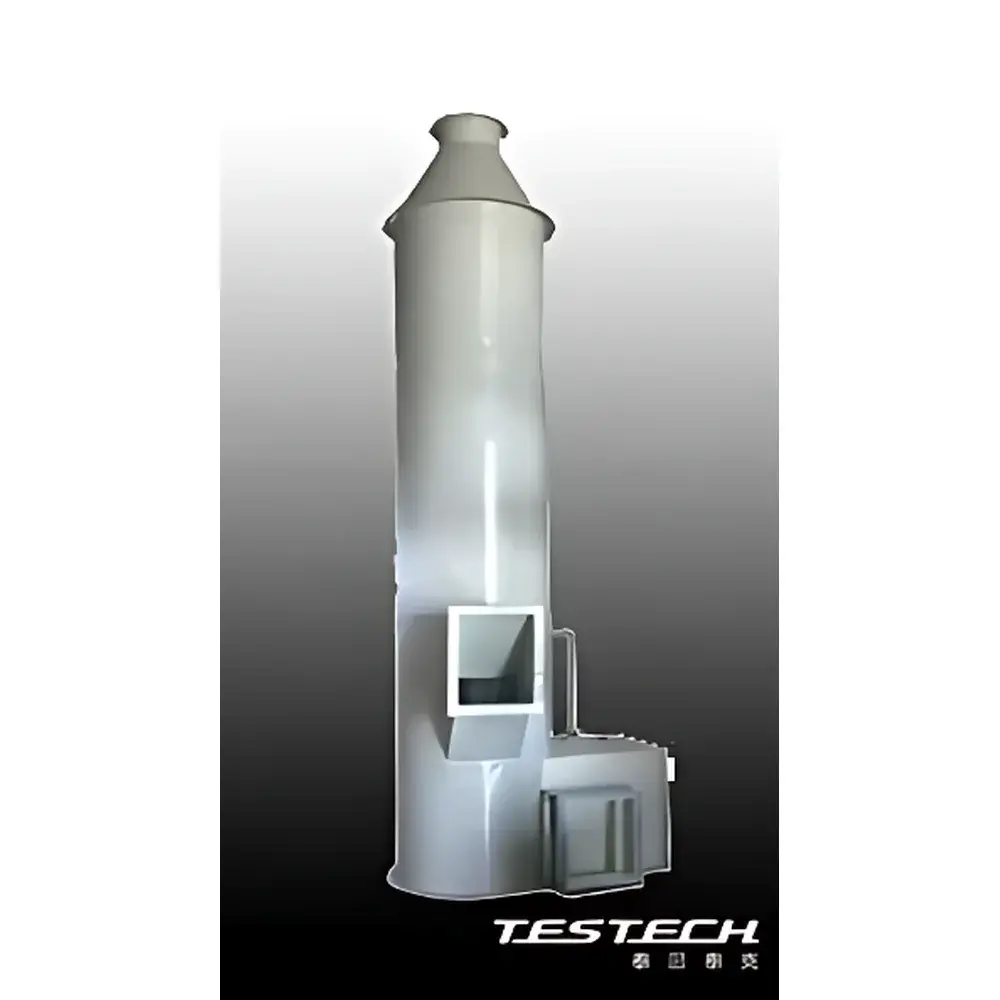
The TESTech TTech-ass1 Wet Scrubber Air Pollution Control System is an engineered solution for continuous removal of acidic, corrosive, and particulate-laden flue gases generated during combustion testing, thermal decomposition, or industrial process validation. Based on counter-current packed-bed scrubbing principles, the system treats exhaust streams containing H2O, CO2, CO, HCl, NOx, SOx, and HCN by simultaneous physical absorption and chemical neutralization in a controlled aqueous phase. Its fully non-metallic construction—entirely fabricated from high-purity polypropylene (PP)—ensures long-term operational integrity under aggressive chemical exposure, eliminating galvanic corrosion and leaching risks common in stainless-steel or FRP alternatives. Designed for laboratory-scale emission simulation and QA/QC validation in fire testing labs, material combustion analysis facilities, and R&D centers, the TTech-ass1 supports reproducible, auditable air pollution control performance under variable load conditions.
Key Features
- Fully PP-constructed wet scrubber tower with zero metallic components—provides exceptional resistance to hydrochloric acid, sulfuric acid, nitric acid, and other combustion-derived corrosives.
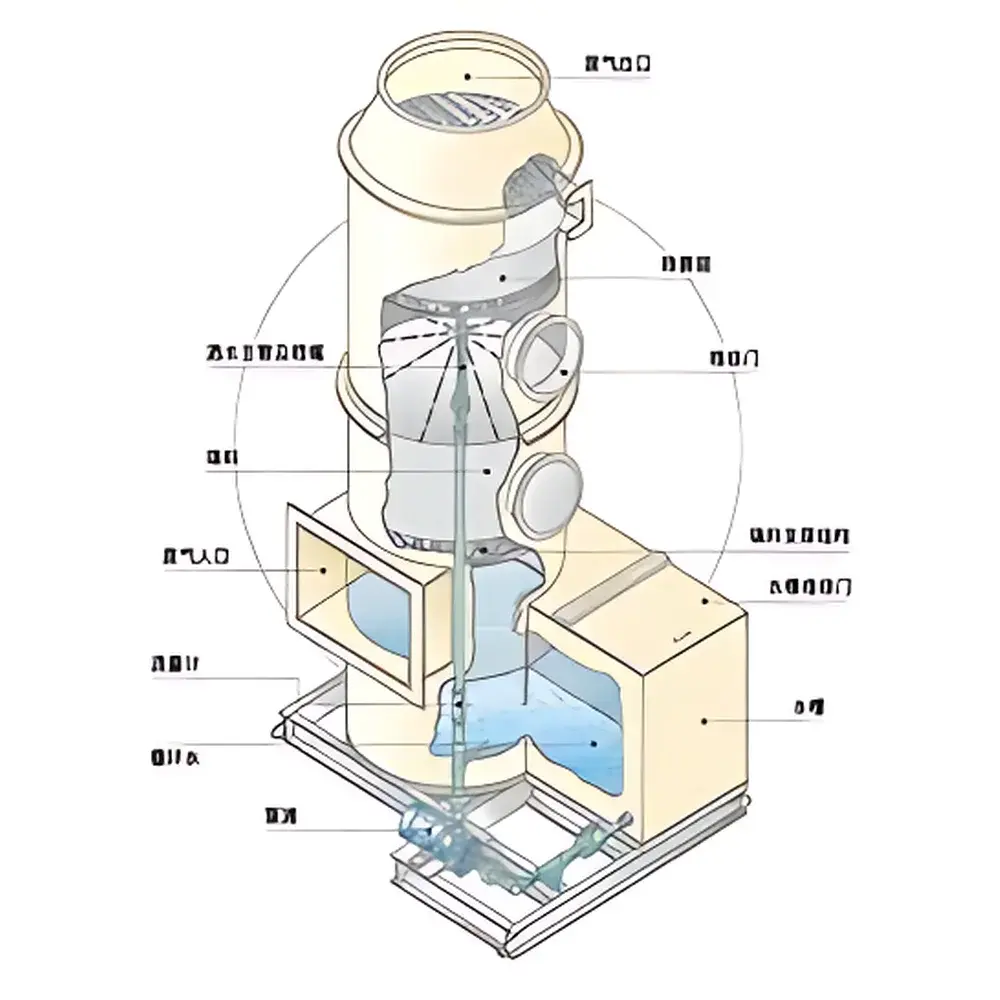
- Multi-stage gas treatment architecture: inlet air chamber → PP “sea-urchin” structured packing layer (TELLERTT-shaped multi-toothed PP beads) → high-coverage 120° rotating PP spray nozzles (95% cross-sectional coverage) → demister pad → activated carbon adsorption chamber → monitored exhaust outlet.
- Integrated recirculating liquid pump enables closed-loop operation using tap water or pH-adjusted scrubbing solutions (e.g., NaOH or Ca(OH)2 slurry), minimizing water consumption and chemical usage.
- Transparent inspection windows at packing layer and spray zone allow real-time visual verification of packing integrity, nozzle alignment, and liquid distribution uniformity—critical for GLP-compliant maintenance logs.
- Exhaust monitoring port located downstream of the activated carbon stage facilitates standardized stack sampling per GB/T 16157 or ISO 10873 protocols, supporting third-party verification and regulatory reporting.
Sample Compatibility & Compliance
The TTech-ass1 is validated for continuous-duty operation with flue gas streams up to 5000 m³/h and inlet temperatures ≤60 °C. It accommodates variable pollutant concentrations typical of polymer combustion (e.g., PVC, PU, ABS), wood-based fuels, and composite material thermal degradation studies. All wetted surfaces comply with ASTM D543-20 (Resistance of Plastics to Chemical Reagents) and meet requirements for Class I chemical resistance per NACE MR0175/ISO 15156. The system’s design aligns with ISO 14001 environmental management system integration and supports traceable calibration records required under GLP (Good Laboratory Practice) environments. While not certified to UL 723 or EN 13501-1 directly, its performance data may be incorporated into fire safety engineering reports compliant with NFPA 92 or CEN/TR 15377-2.
Software & Data Management
The TTech-ass1 operates as a standalone mechanical system without embedded firmware or digital controllers. However, its modular interface supports integration with external data acquisition systems via analog 4–20 mA outputs (optional add-on) for monitoring liquid flow rate, sump pH, and differential pressure across packing layers. All operational parameters—including pump runtime, refill intervals, and carbon bed replacement cycles—are documented in accordance with ISO/IEC 17025 clause 7.7 (Control of Records). Audit trails for maintenance, calibration, and emissions verification are maintained manually or through LIMS-compatible templates, ensuring readiness for FDA 21 CFR Part 11–aligned review where electronic records are implemented.
Applications
- Combustion toxicity testing per ISO 13344, ASTM E1354, and GB/T 20284 for building materials and cables.
- Smoke density and gas emission profiling in cone calorimeter and SBI (Single Burning Item) test setups.
- Pre-treatment of exhaust prior to FTIR or GC-MS analysis to prevent instrument contamination.
- QA/QC validation of flame-retardant formulations in polymer R&D laboratories.
- Environmental compliance verification for small-scale incineration simulators and pyrolysis reactors.
FAQ
What types of scrubbing liquids are compatible with the TTech-ass1?
Tap water, sodium hydroxide (NaOH) solutions (0.5–5% w/w), calcium hydroxide slurries, and proprietary neutralizing agents formulated for halogenated acid gas capture are all compatible. Compatibility must be verified against PP chemical resistance charts prior to use.
Is the activated carbon chamber replaceable and serviceable?
Yes—the carbon chamber is designed for tool-free access and accommodates standard 4×8×16 inch granular activated carbon (GAC) cartridges or loose-phase media. Replacement frequency depends on inlet HCl/SO2 loading and is typically 200–500 operational hours under continuous testing conditions.
Can the system handle particulate-laden exhaust?
The demister pad captures liquid droplets and coarse aerosols; however, upstream cyclonic or electrostatic pre-filtration is recommended for exhaust streams exceeding 5 mg/m³ total suspended particulates (TSP) to prevent packing fouling.
Does the TTech-ass1 require a dedicated drainage system?
Yes—a gravity-fed drain line with pH-neutralization capability (e.g., limestone bed or inline neutralizer) is required for spent scrubbing liquor disposal, per local wastewater discharge regulations.
How is system performance validated over time?
Performance is verified through periodic stack sampling (using the integrated exhaust port), sump pH trending, pressure drop measurement across the packing layer, and visual inspection of nozzle spray patterns and packing bed integrity.



