
TESTech TTech-UL9540A-rsx Battery Failure Initiation System
| Brand | TESTech |
|---|---|
| Origin | Jiangsu, China |
| Manufacturer Type | OEM Manufacturer |
| Country of Origin | China |
| Model | TTech-UL9540A-rsx |
| Price Range | USD 0.14 – 0.28 (per unit, FOB basis) |
Overview
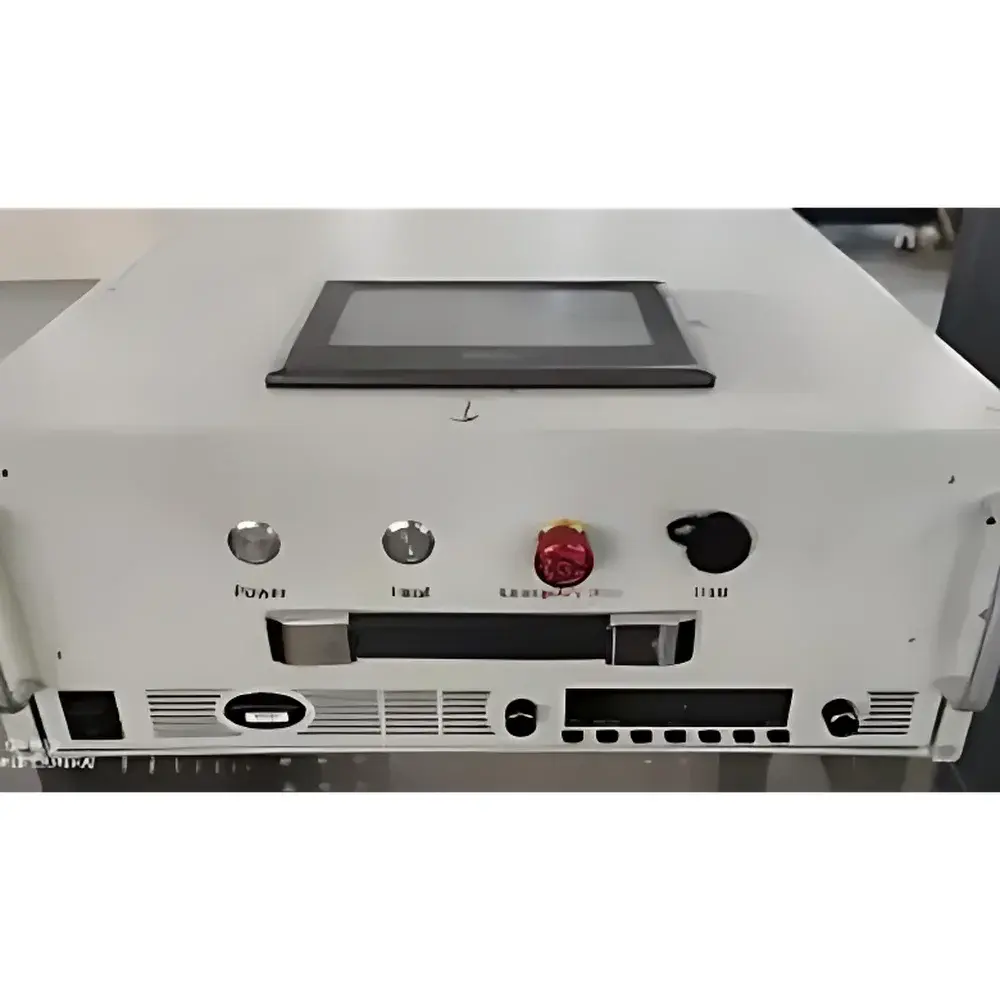
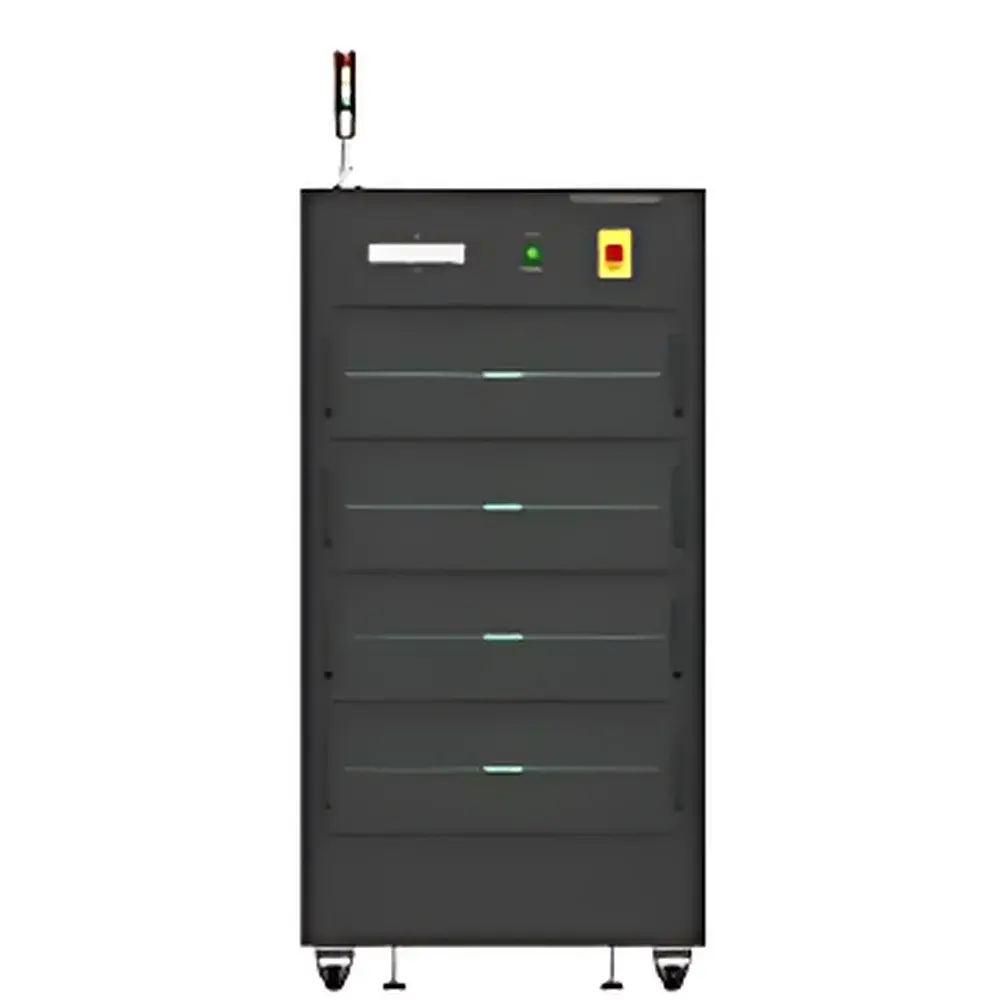
The TESTech TTech-UL9540A-rsx Battery Failure Initiation System is an integrated, multi-modal safety test platform engineered for controlled induction and real-time monitoring of thermal runaway and failure mechanisms in lithium-ion and lithium-metal battery cells and modules. Designed in alignment with UL 9540A, IEEE 1625/1725, and GB/T 36276 test frameworks, the system enables reproducible simulation of four primary abuse conditions: external heating, mechanical penetration (nail penetration), electrical overcharge, and localized laser-induced thermal stress. Each subsystem operates under closed-loop feedback control—leveraging PID-regulated power delivery, high-fidelity thermocouple arrays (Type K, ±0.5 °C accuracy), and synchronized data acquisition at ≥10 Hz—to ensure traceable, auditable, and GLP-compliant test execution. The architecture supports both single-cell (prismatic, pouch, cylindrical) and small-module (≤24 V, ≤50 Ah) configurations, with mechanical and electrical interfaces compliant with IEC 62660-2 mounting standards.
Key Features
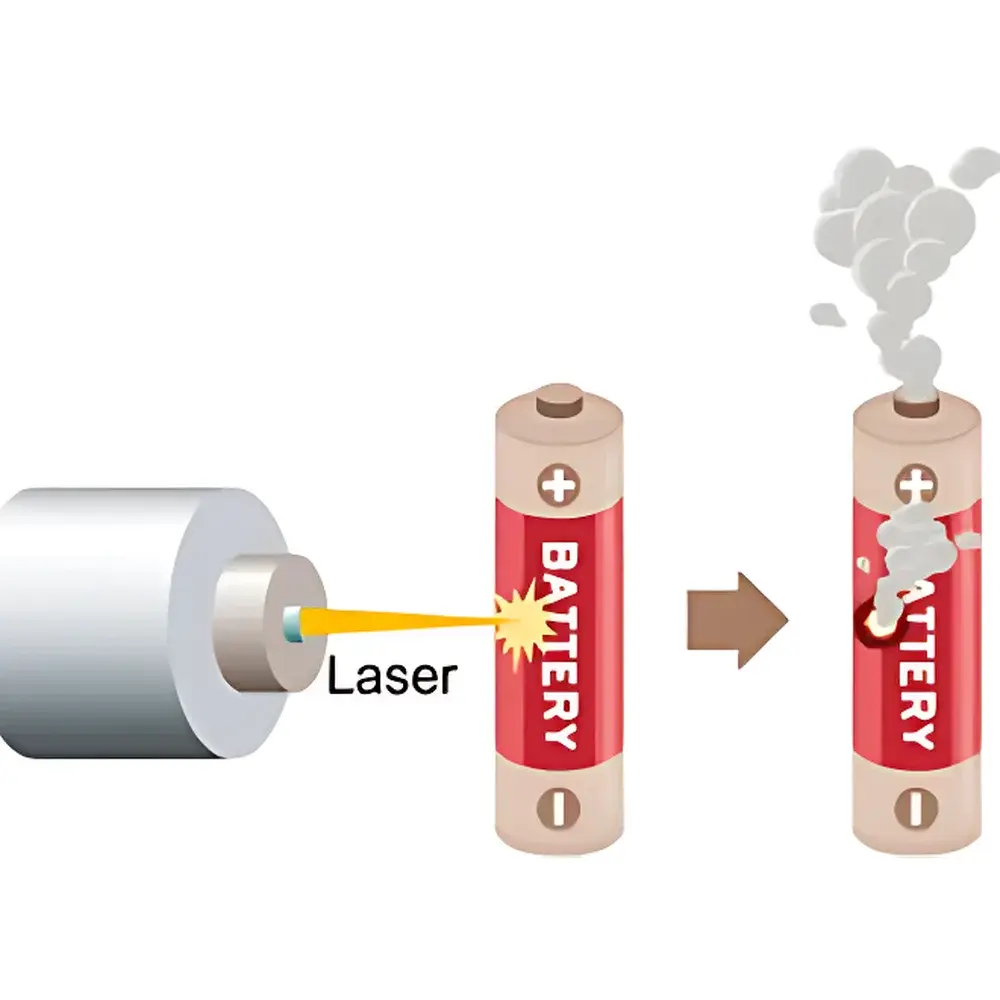
- Modular abuse simulation suite: Four independent yet interoperable test modules—thermal ramp heater, servo-controlled nail penetration actuator, programmable DC overcharge source (0–100 V / 0–50 A), and Class 4 diode-pumped solid-state (DPSS) laser subsystem (1064 nm, adjustable pulse energy 0.1–5 J)—all housed within a single EMI-shielded, ventilated enclosure.
- Real-time closed-loop control: PLC-based master controller (Siemens S7-1200) executes dual-input PID algorithms using temperature feedback from up to 12 embedded thermocouples and voltage/current telemetry from isolated shunt sensors; enables precise slope-controlled heating (0.1–10 °C/min) or constant-power modes (1–500 W).
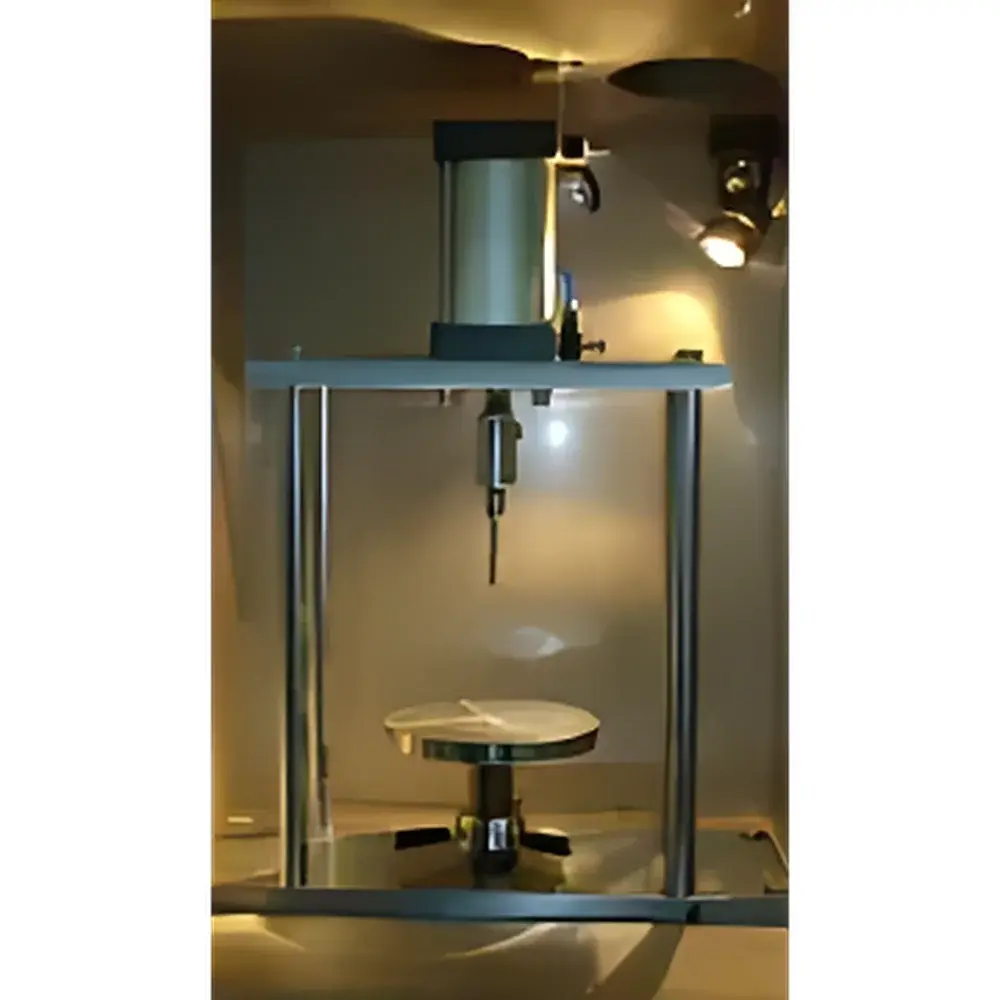
- Safety-integrated mechanical design: Needle penetration module features CNC-machined stainless-steel guide rails, pneumatic pre-load compensation (0–200 N), and optical position encoding (±5 µm resolution); needle geometry conforms to UL 9540A specifications (φ2.0–3.0 mm, hardened steel, tip angle 30°±2°).
- Overcharge protocol compliance: Programmable current/voltage profiles support CC-CV, stepped CV, and time-limited overvoltage tests per UN 38.3 §38.3.2 and UL 1642 Annex B; includes automatic cutoff on ΔV/Δt > 10 mV/s or surface temperature > 120 °C.
- Laser subsystem calibrated to ISO 11551:2012; beam delivery incorporates motorized focus adjustment, real-time pyrometric surface temperature monitoring (0.1–1000 °C), and interlocked shutter control synchronized with thermal event detection.
Sample Compatibility & Compliance
The TTech-UL9540A-rsx accommodates standard lithium battery formats including 18650, 21700, 32650 cylindrical cells; 50–150 mm wide pouch cells; and prismatic cells up to 200 × 150 × 20 mm. Fixturing complies with ASTM D7267-16 dimensional tolerances and includes non-conductive ceramic clamping plates and low-thermal-mass copper busbar interfaces. All test protocols are structured to satisfy reporting requirements of UL 9540A Section 8 (cell-level), IEC 62619 Annex C (industrial batteries), and China’s GB 38031-2020 Clause 7.4. Data logs include full timestamped metadata (UTC sync via NTP), instrument calibration IDs, operator credentials, and environmental chamber ambient readings—supporting FDA 21 CFR Part 11 audit trails when integrated with optional TESTech LIMS Connect software.
Software & Data Management
The system ships with TESTech TestSuite v3.2—a Windows-based, CE/FCC-certified application supporting role-based access control (RBAC), configurable test templates, and automated report generation in PDF/XLSX/PDF/A-2b format. Raw sensor streams (temperature, voltage, current, displacement, laser power) are acquired at 100 Hz and stored in HDF5 format with embedded SI-unit annotations and provenance tags. Export modules include direct integration with MATLAB, Python (via PyHDF), and LabVIEW through TCP/IP socket API. Optional 21 CFR Part 11 compliance package adds electronic signatures, audit log retention (>10 years), and change-control workflows validated per GAMP 5 Category 3 guidelines.
Applications
- Cell-level safety validation for EV battery pack qualification (OEM Tier-1 supplier testing per VW 80300 or GMW16899)
- Electrolyte and separator formulation screening under controlled thermal-mechanical-electrical stress
- Thermal propagation barrier efficacy assessment in module-level configurations
- Development and verification of BMS thermal runaway prediction algorithms
- Regulatory submission support for UL, TÜV, CNAS, and MIIT certification dossiers
- Root-cause analysis of field return incidents using forensic replication of failure initiation sequences
FAQ
Does the system meet UL 9540A Section 8 requirements for cell-level testing?
Yes—the thermal ramp, nail penetration, overcharge, and laser modules have been independently verified against UL 9540A Annex A test matrices and include documented uncertainty budgets per ISO/IEC 17025.
Can the laser subsystem be used with non-lithium chemistries (e.g., Na-ion or solid-state)?
Yes—beam parameters and thermal boundary conditions are user-configurable; fixture adapters support alternative cell geometries and thermal interface materials.
Is remote operation supported for hazardous testing environments?
All modules feature Ethernet/IP and Modbus TCP interfaces; optional explosion-proof enclosure variant (ATEX Zone 2 / IECEx nA) is available upon request.
What calibration documentation is provided?
Each unit ships with NIST-traceable calibration certificates for thermocouples, shunt resistors, laser power meter, and displacement encoder—all valid for 12 months from shipment date.
How is data integrity ensured during long-duration overcharge tests?
Dual-storage redundancy (SSD + network-attached storage), cyclic checksum verification (SHA-256), and automatic gap-filling for transient network interruptions ensure zero data loss across multi-hour test campaigns.





