
METTLER TOLEDO UV5/UV7/UV5Bio Ultraviolet-Visible Spectrophotometer
| Brand | METTLER TOLEDO |
|---|---|
| Origin | Switzerland |
| Model | UV5 / UV7 / UV5Bio |
| Detector Type | CCD (Charge-Coupled Device) |
| Wavelength Range | 190–1100 nm |
| Wavelength Accuracy | ±0.9 nm |
| Spectral Bandwidth | 1 nm |
| Stray Light | <0.03% T (at 220 nm, KI solution) |
| Automation Level | Automatic Wavelength Selection |
| Lamp Type | Xenon Flash Lamp |
| Warm-up Time | None |
| Dimensions | Compact footprint (~A4 size) |
Overview
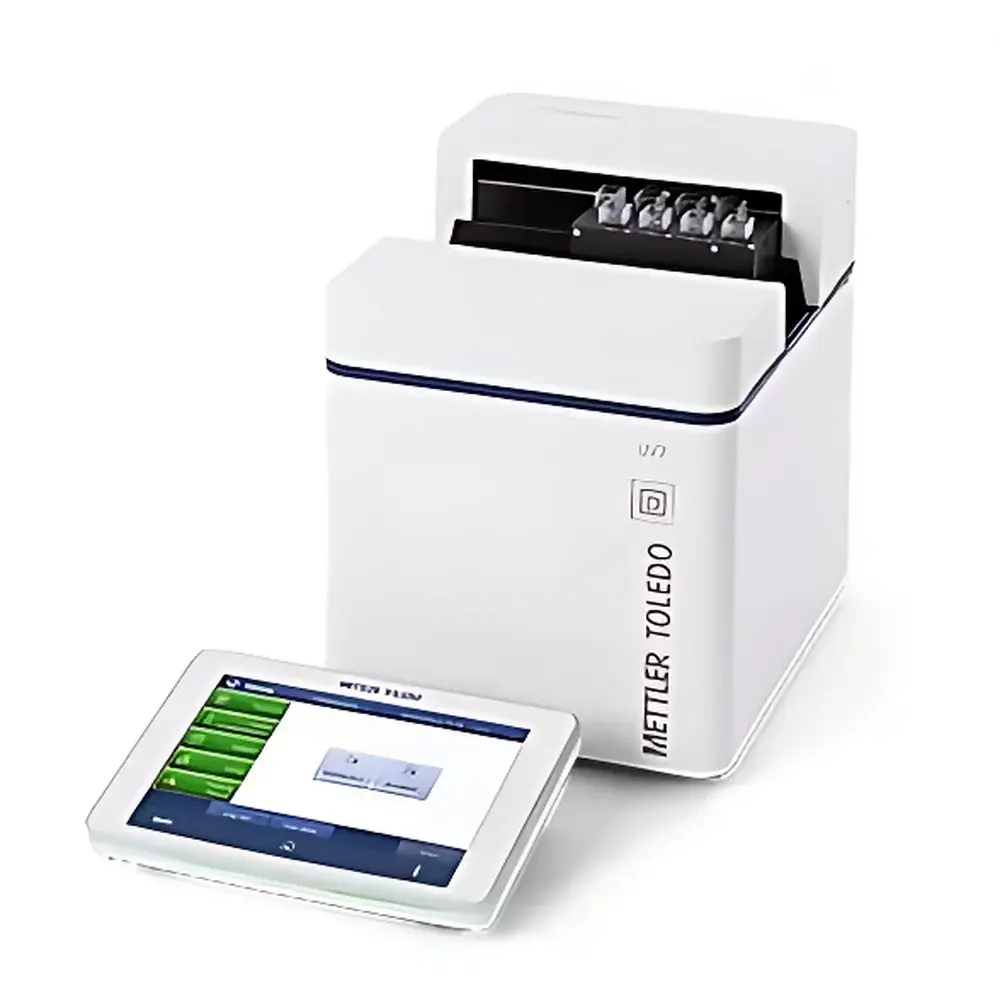
The METTLER TOLEDO UV5, UV7, and UV5Bio are high-performance ultraviolet-visible (UV-Vis) spectrophotometers engineered for precision, speed, and regulatory compliance in modern analytical laboratories. Based on single-beam optical architecture with a pulsed xenon lamp and CCD array detector, these instruments eliminate mechanical wavelength scanning—enabling full-spectrum acquisition (190–1100 nm) in under one second. Unlike traditional monochromator-based systems requiring warm-up periods and moving gratings, the UV5/UV7 series employs solid-state optics and flash-lamp excitation to deliver immediate readiness, exceptional photometric stability, and long-term repeatability. The absence of motorized components enhances mechanical robustness and reduces maintenance requirements—critical for high-throughput QC environments and GLP-compliant research settings.
Key Features
- One-second full-spectrum acquisition across 190–1100 nm—no wavelength scanning delay or slit adjustment required
- Xenon flash lamp technology ensures consistent intensity over >10⁹ flashes, eliminating drift and enabling stable baseline performance without warm-up time
- CCD-based detection provides simultaneous multi-wavelength measurement, improving data integrity and reducing noise from sequential scanning artifacts
- Zero-movement optical design: no moving parts in the light path—enhancing reliability and minimizing alignment drift over time
- One Click™ intuitive interface with customizable home-screen shortcuts, step-by-step guided workflows, and context-sensitive safety prompts
- Open sample compartment with tactile feedback lid detection prevents erroneous measurements due to incomplete closure—reducing operator-induced variability
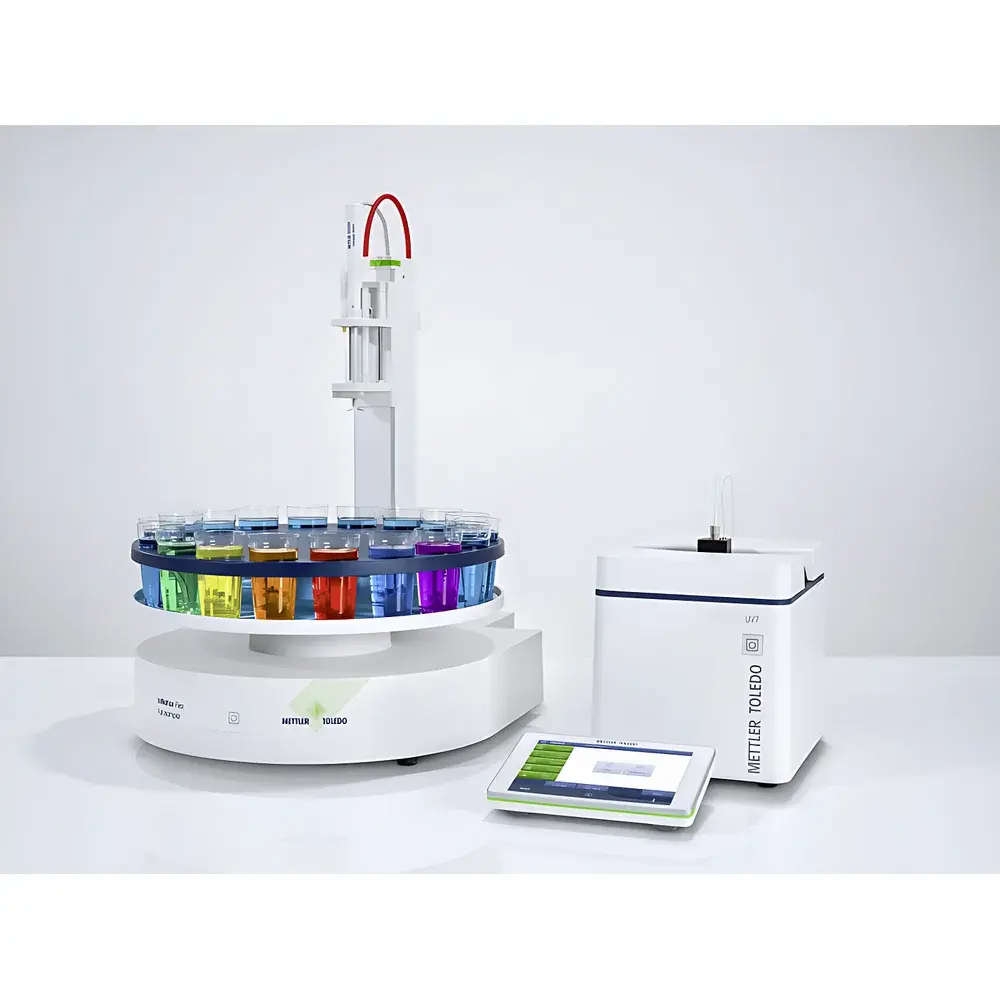
- Modular hardware compatibility: supports cuvette holders, micro-volume adapters (e.g., NanoCuvette™), temperature-controlled cells, and fiber-optic probes without recalibration
Sample Compatibility & Compliance
The UV5/UV7 platforms accommodate standard 10-mm pathlength cuvettes (glass, quartz, plastic), semi-micro and micro-volume cells, and flow-through configurations. The UV5Bio variant includes dedicated biological measurement templates aligned with common assays (e.g., protein A280, DNA A260/A280 ratio, Bradford, BCA). All models comply with ISO 9001 manufacturing standards and support full audit trails, electronic signatures, and role-based access control when operated via LabX software—meeting FDA 21 CFR Part 11 and EU Annex 11 requirements for regulated environments. Instrument qualification documentation (IQ/OQ/PQ protocols) is available per GMP/GLP guidelines.
Software & Data Management
LabX UV-Vis software serves as the central hub for method development, instrument control, and secure data governance. It features a graphical spectrum editor for peak identification, derivative analysis, multi-component quantification, and custom calibration curve generation. All raw spectra, metadata (operator ID, timestamp, instrument serial number), and processing parameters are stored immutably in the centralized LabX database. Automated report generation supports PDF, CSV, and XML export formats; integration with LIMS and ERP systems is enabled via ODBC and RESTful API interfaces. Electronic records include full revision history and user-action logging—ensuring traceability for internal audits and regulatory inspections.
Applications
These spectrophotometers are routinely deployed in pharmaceutical quality control (e.g., assay validation per USP , dissolution testing, excipient purity), biotechnology (protein concentration, oligonucleotide quantification, enzyme kinetics), environmental monitoring (nitrate, phosphate, COD analysis), food & beverage (colorimetric additives, antioxidant capacity), and academic research (kinetic studies, ligand-binding assays, nanomaterial characterization). The UV5Bio model is optimized for life science labs performing routine nucleic acid and protein work, while the UV7 adds advanced features such as multi-cell changers and extended spectral evaluation tools for method development labs.
FAQ
Does the instrument require warm-up time before measurement?
No—xenon flash lamp technology enables immediate operation with no stabilization delay.
Can I perform quantitative analysis without connecting to a PC?
Yes—the standalone touchscreen interface supports direct absorbance, concentration, and %T measurements using preloaded or user-defined methods.
Is the system compliant with FDA 21 CFR Part 11?
Full compliance is achieved only when used with LabX UV-Vis software configured with audit trail, electronic signature, and permission management modules.
What is the spectral resolution and how is it maintained?
Fixed 1 nm spectral bandwidth is ensured by optical design—not adjustable—and remains invariant across the full wavelength range due to static grating and CCD pixel mapping.
How does stray light performance impact low-transmittance measurements?
Stray light <0.03% T at 220 nm (KI reference) ensures accurate quantification of highly absorbing samples, particularly critical in nucleic acid and dye-based assays where signal fidelity at low %T is essential.
Related Products






