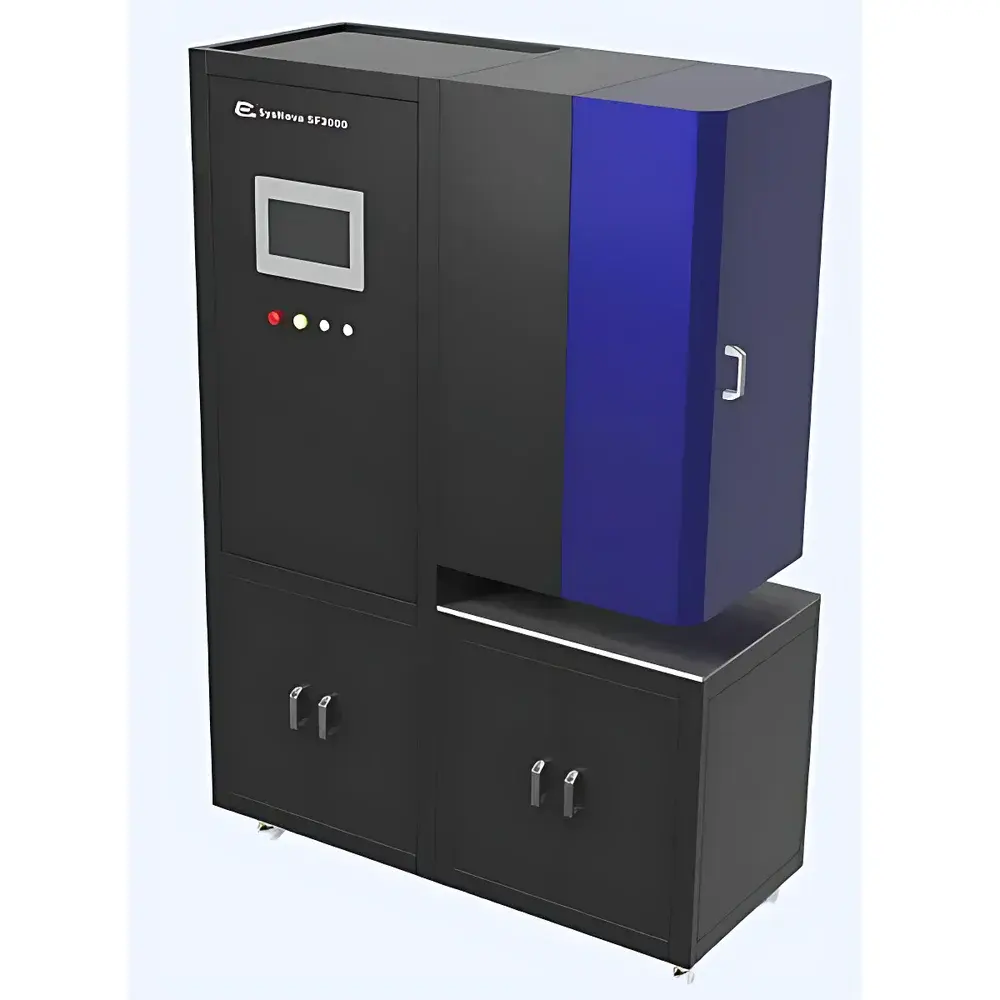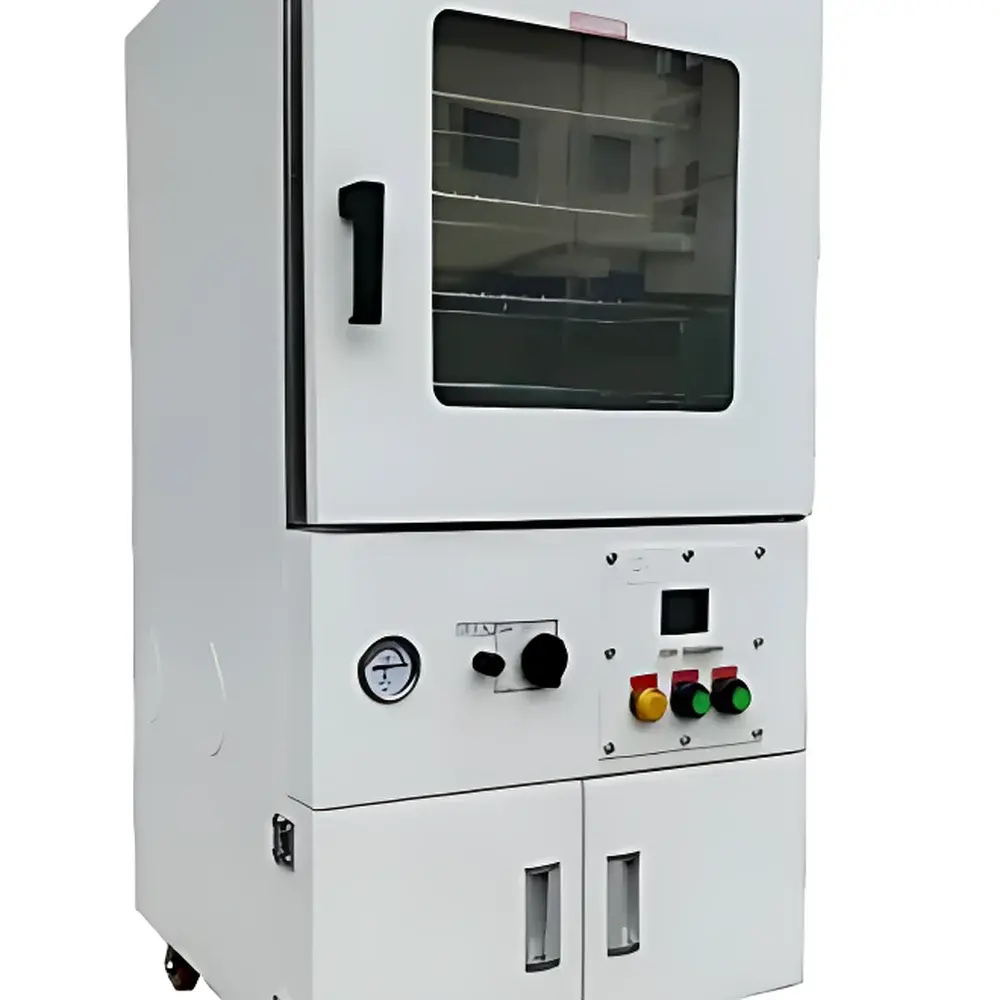
TESTech TTech-FBX-1 Battery Explosion-Proof High-Temperature Chamber for Lithium Battery Safety Testing
| Brand | TESTech |
|---|---|
| Origin | Jiangsu, China |
| Manufacturer Type | Direct Manufacturer |
| Country of Origin | China |
| Model | TTech-FBX-1 |
| Price Range | USD 150–300 (FOB) |
| Chamber Material | 304 Stainless Steel |
| Structural Design | Reinforced with Structural Steel Channels |
| Burst Pressure Resistance | ≥500 kPa |
| Safety Features | Integrated Explosion-Relief Port with Pressure-Actuated Release Mechanism |
| Viewing Window | Tempered Borosilicate Safety Glass Rated for >800 °C and ≥500 kPa Overpressure |
| Internal Dimensions | Customizable per Client Specification |
Overview
The TESTech TTech-FBX-1 Battery Explosion-Proof High-Temperature Chamber is an engineered safety test enclosure designed specifically for thermal abuse evaluation of lithium-ion and lithium-metal battery cells, modules, and small packs under controlled elevated temperature conditions. Unlike standard environmental chambers, the TTech-FBX-1 integrates structural reinforcement, pressure containment, and passive overpressure mitigation to safely contain thermal runaway events—including gas venting, fire propagation, and violent cell rupture—without compromising operator safety or laboratory integrity. Its operational principle relies on robust physical containment combined with deterministic pressure-relief dynamics: when internal pressure exceeds the calibrated threshold (≥500 kPa), the explosion-relief port opens in a controlled, directional manner to vent hot gases and particulates away from personnel and adjacent equipment. This chamber is not a temperature control instrument per se; rather, it serves as a certified containment vessel intended for use with external heating sources (e.g., programmable ovens, thermal plates, or radiant heaters) or integrated heating systems compliant with IEC 62133-2, UN 38.3 Section 5.2, and GB/T 31485–2015 thermal abuse test protocols.
Key Features
- Structural integrity validated for sustained static pressure ≥500 kPa and transient shock loading typical of cylindrical and prismatic cell venting events
- Double-walled 304 stainless steel construction with full weld penetration and post-weld stress relief annealing to prevent hydrogen embrittlement in high-humidity thermal cycling environments
- Modular frame reinforced with ASTM A36 structural steel channels at critical load-bearing junctions, including door hinges and relief-port mounting flanges
- Explosion-relief port engineered with calibrated rupture disc and directional vent ducting to channel effluent vertically upward through a dedicated exhaust manifold compatible with lab fume hood interfaces
- Observation window fabricated from multi-layer borosilicate glass (Schott Pyroceram® equivalent) fused to stainless steel gasketing system, rated for continuous exposure up to 800 °C and mechanical impact resistance per EN 12600 Class P2A
- Customizable internal cavity dimensions (standard base: W600 × D600 × H800 mm; optional extensions up to W1200 × D1200 × H1500 mm) to accommodate pouch, prismatic, and 21700/4680-format cells and small module assemblies
Sample Compatibility & Compliance
The TTech-FBX-1 accommodates single cells (18650, 21700, 4680), stacked pouch cells (up to 10 Ah), and low-voltage modules (<100 V, <5 kWh). It supports test configurations required by international safety standards including IEC 62619 Clause 7.2.3 (thermal abuse), UL 1642 Section 9 (oven test), and GB/T 31485–2015 Section 6.2.3. All mechanical interfaces—including cable feedthroughs, thermocouple ports, and pressure sensor mounts—are designed to maintain containment integrity without requiring field modification. The chamber meets CE machinery directive requirements (2006/42/EC) for Category 3 safety components and is supplied with EU Declaration of Conformity documentation for integration into ISO/IEC 17025-accredited testing laboratories.
Software & Data Management
While the TTech-FBX-1 is a passive containment platform (i.e., no embedded controllers or data loggers), it includes standardized M12 and PG13.5 cable glands compatible with third-party instrumentation: K-type thermocouples (IEC 60584-2 Class 1), piezoresistive pressure transducers (0–1000 kPa range, ±0.5% FS accuracy), and high-speed infrared cameras (≥1000 fps, 3–5 µm spectral band). Optional accessories include a pressure-triggered digital event logger (with timestamped CSV export) and a dual-channel analog output interface for integration into existing SCADA or LabVIEW-based monitoring systems. All hardware interfaces comply with EMC Directive 2014/30/EU and support audit-trail-ready operation under GLP/GMP frameworks when paired with 21 CFR Part 11–compliant data acquisition software.
Applications
- Thermal runaway propagation studies in multi-cell battery arrays
- Validation of cell-level venting behavior and gas composition analysis (when coupled with FTIR or GC-MS sampling lines)
- Fire containment efficacy testing for battery module enclosures and flame-retardant materials
- Development and verification of battery management system (BMS) thermal fault response algorithms
- Pre-certification screening prior to UN 38.3 T.5 oven testing and IEC 62133-2 thermal abuse validation
- Research into electrolyte decomposition kinetics and cathode thermal stability under inert or air atmospheres
FAQ
Does the TTech-FBX-1 include a built-in heating system?
No. It is a containment chamber only. External heating sources must be used per test standard requirements.
Can the explosion-relief port be reused after activation?
No. The rupture disc is a single-use, calibrated component; replacement kits are available under part number FBX-REL-01.
Is the chamber suitable for vacuum or inert-gas purging applications?
Yes. It features dual NPT 1/2″ process ports rated for ≤0.1 MPa positive or negative gauge pressure and compatible with argon/nitrogen purge setups.
What certifications accompany shipment?
Each unit ships with Factory Test Report (pressure hold test at 550 kPa for 5 min), Material Certificates (EN 10204 3.1), and EU Declaration of Conformity for Machinery Directive and PED 2014/68/EU.
How is calibration traceability maintained for pressure and temperature monitoring?
The chamber itself requires no calibration; however, all third-party sensors used within it must be independently calibrated per ISO/IEC 17025 by an accredited provider, with certificates retained for audit purposes.