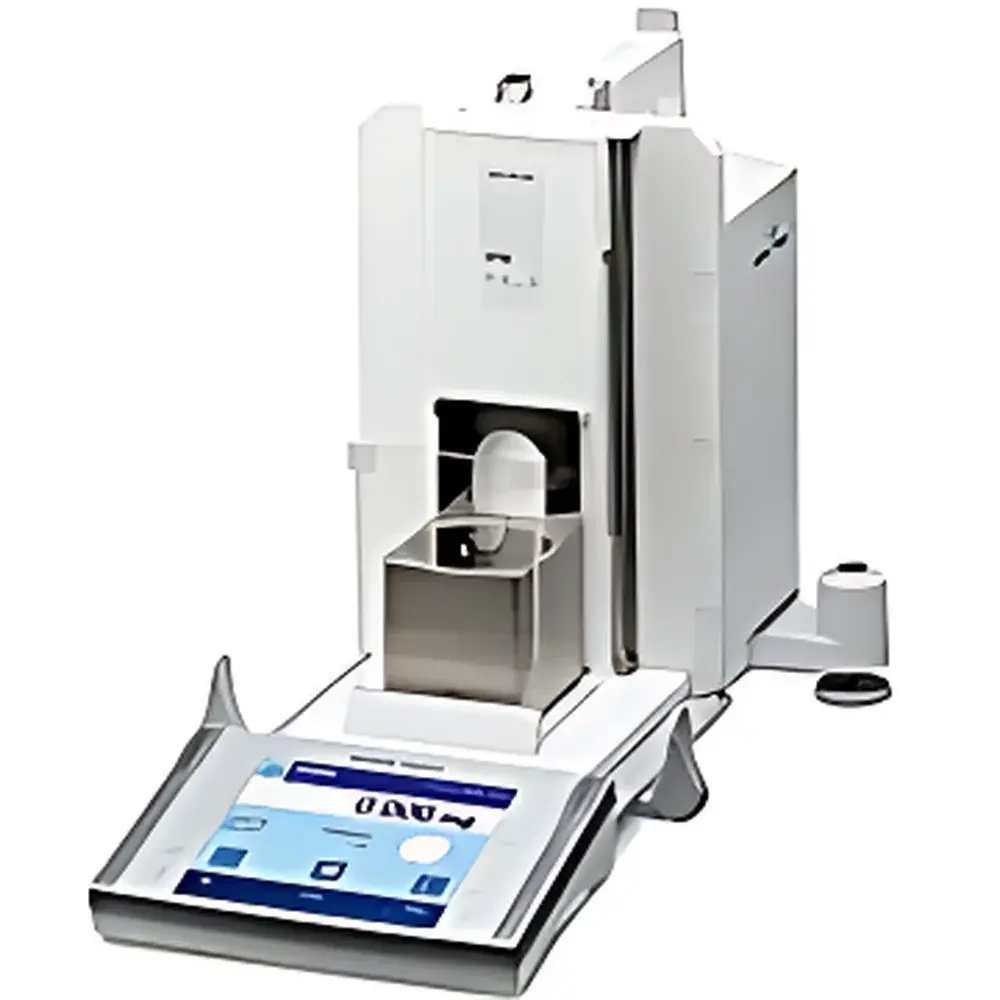
METTLER TOLEDO XP26PC & MCP Series Pipette Calibration Workstations
| Brand | METTLER TOLEDO |
|---|---|
| Origin | Switzerland |
| Product Type | Imported Precision Weighing System for Pipette Performance Verification |
| Model Range | XP26PC (Single-Channel), MCP1-S (Modular Single/Multi-Channel), MCP Workstation |
| Compliance | ISO 8655, JJG 646–2006 |
| Software | Calibry v3.x (FDA 21 CFR Part 11 compliant) |
| Key Specifications | XP26PC — Max Capacity 22 g, Readability 0.001 mg, Standard Uncertainty 0.0015 mg, Minimum Test Volume 1 µL, Draft Shield with Evaporation Trap, Stabilization Time 3.5 s, Dimensions 487 × 263 × 296 mm, Weight 11 kg |
Overview
METTLER TOLEDO’s XP26PC and MCP series pipette calibration workstations are engineered for metrologically traceable, high-reproducibility verification and calibration of single-channel and multi-channel piston-operated pipettes in accordance with international standards. These systems operate on the gravimetric principle—measuring the mass of dispensed water under controlled environmental conditions (temperature, humidity, air pressure, water density)—and convert it to volume using the ISO 8655-defined calculation protocol. Designed for use in accredited calibration laboratories, QC/QA departments, and national metrology institutes, each workstation integrates ultra-micro or micro balance technology with purpose-built fluid handling modules, evaporation mitigation features, and automated data capture to eliminate manual transcription errors and ensure full auditability.
Key Features
- Full compliance with ISO 8655:2022 (Piston-operated volumetric apparatus) and Chinese national verification regulation JJG 646–2006, supporting both routine performance checks and formal calibration certificates.
- XP26PC platform: Features a 0.001 mg readability ultra-micro balance with integrated draft shield and standard evaporation trap—optimized for low-volume testing down to 1 µL with <0.0015 mg standard uncertainty in mass determination.
- MCP1-S modular system: Supports up to 12 independent sample positions with 16 mL vials equipped with optical liquid-level detection; enables parallel testing of multiple pipettes or multi-channel tips without operator intervention.
- Ergonomic, space-efficient architecture: Compact footprint (under 0.13 m² for XP26PC; analyzer + detector units designed for benchtop integration), minimizing lab footprint while maintaining Class I weighing stability.
- Thermal mass compensation and active drift monitoring ensure measurement consistency across ambient temperature fluctuations typical in non-climate-controlled labs.
Sample Compatibility & Compliance
The XP26PC and MCP platforms accommodate all standard conical and cylindrical borosilicate glass or polypropylene weighing vessels used in pipette gravimetry. They support single-channel pipettes from 0.1 µL to 10 mL and multi-channel variants (8-, 12-, or 16-channel) with tip spacing conforming to ANSI/SLAS standards. All hardware and software components meet requirements for GLP and GMP environments: balances are factory-calibrated with traceable weights (NIST/PTB-certified), and the entire system is compatible with ISO/IEC 17025 laboratory accreditation criteria. The MCP workstation configuration supports full traceability chains—including instrument ID, operator login, environmental logs, and raw mass/time-series data—required for regulatory submissions in pharmaceutical manufacturing (e.g., FDA, EMA).
Software & Data Management
Calibry software (v3.x) serves as the central control and reporting engine. It provides real-time visualization of mass stabilization curves, automatic calculation of volume deviation, coefficient of variation (CV), and systematic error per ISO 8655 Annex C. All user actions—including method selection, parameter entry, and result approval—are logged with time-stamped, immutable records satisfying FDA 21 CFR Part 11 electronic record and signature requirements. Audit trails include operator ID, IP address (for networked systems), and change history for any modified calibration parameters. Export formats include PDF reports (with digital signatures), CSV for LIMS integration, and XML for enterprise MES connectivity. Optional IQ/OQ documentation packages are available for validation in regulated facilities.
Applications
- Primary and secondary calibration laboratories performing accredited pipette calibration services (ISO/IEC 17025).
- Pharmaceutical and biotech QC labs conducting routine pipette performance verification prior to assay execution (per USP , EP 2.6.17).
- National metrology institutes and provincial-level measurement centers executing statutory verification per JJG 646–2006.
- Academic core facilities and CROs requiring auditable, high-throughput pipette qualification for GLP-compliant preclinical studies.
- Manufacturers of liquid handling equipment performing design verification and production line testing.
FAQ
Does the XP26PC require external environmental monitoring?
No—the system includes integrated temperature, humidity, and barometric pressure sensors that feed real-time corrections into the volume calculation algorithm.
Can Calibry software generate certificates compliant with ISO/IEC 17025?
Yes—certificates include measurement uncertainty budgets, traceability statements, accreditation body references (where applicable), and digital signatures meeting ILAC MRA requirements.
Is the MCP1-S suitable for ISO 8655 Class A pipette calibration?
Yes—when operated within specified environmental conditions (20 ± 1 °C, RH 45–60 %, stable air currents), its 0.02 mg repeatability and 0.01 mg readability meet the uncertainty targets for Class A verification across all nominal volumes.
What maintenance intervals are recommended for these systems?
Daily cleaning of draft shields and sample trays; quarterly performance verification using certified check weights; annual full recalibration by METTLER TOLEDO service engineers with traceable documentation.
Are firmware updates provided remotely?
Yes—Calibry and embedded controller firmware updates are distributed via secure METTLER TOLEDO Customer Portal with version-controlled release notes and impact assessments.