
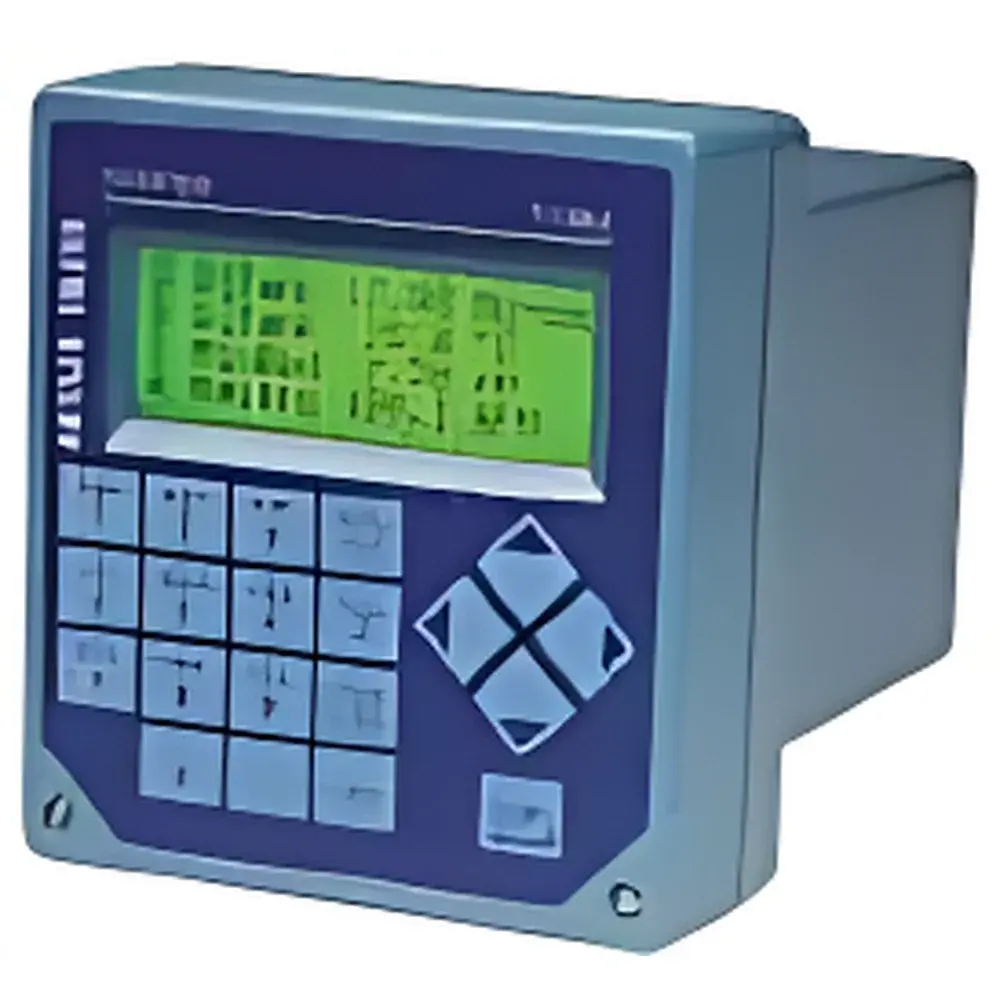
METTLER TOLEDO THORNTON 770MAX Multi-Channel Analytical Transmitter
| Brand | METTLER TOLEDO |
|---|---|
| Origin | Switzerland |
| Model | 770MAX |
| Input Channels | 6 (up to 16 measured parameters) |
| Sensor Types Supported | 8 (e.g., conductivity/resistivity, pH/ORP, dissolved oxygen, ozone, TOC, flow, temperature, pressure, level) |
| Output Options | 4 or 8 × 0/4–20 mA analog outputs |
| Communication | RS232 serial interface |
| Relay Outputs | 4 (optional) |
| Display | Multi-line scrolling LCD with customizable parameter naming |
| Power Supply | Universal 100–240 VAC, 50–60 Hz |
| Enclosure | 1/4 DIN, IP65-rated with sealed rear cover |
| Calibration Support | NIST-traceable verification via optional 1875 Smart Calibrator |
Overview
The METTLER TOLEDO THORNTON 770MAX is a high-integrity multi-channel analytical transmitter engineered for continuous, real-time monitoring of critical water quality parameters in regulated pharmaceutical, biotechnology, and semiconductor ultrapure water (UPW) systems. It operates as a centralized signal conditioning and data aggregation platform—receiving digital and analog inputs from up to six independent smart sensors—and converting raw sensor signals into validated, temperature-compensated engineering units. Unlike conventional transmitters limited to single-parameter operation, the 770MAX implements a distributed intelligence architecture: each Thornton smart sensor embeds non-volatile memory (NVRAM) storing unique calibration coefficients, sensor identification, and historical metadata. Upon connection, the 770MAX auto-detects sensor type, applies appropriate algorithms—including proprietary 4-wire resistivity measurement for ultra-low contamination detection—and delivers traceable, repeatable measurements across 35 configurable engineering units (e.g., µS/cm, MΩ·cm, ppb O₃, mg/L TOC, mL/min flow). Its design conforms to core requirements of USP , EP 2.2.44, and ASTM D5127 for purified water and water-for-injection (WFI) monitoring.
Key Features
- True multi-parameter capability: Simultaneous acquisition from up to six sensor inputs—supporting combinations of conductivity/resistivity, pH/ORP, dissolved oxygen (DO), ozone (O₃), total organic carbon (TOC), volumetric flow, temperature, pressure, and level—with up to 16 derived measurement values per unit.
- Smart sensor interoperability: Automatic recognition and configuration of Thornton’s digital smart sensors via embedded NVRAM; eliminates manual setup errors and ensures metrological continuity across sensor swaps.
- Flexible I/O architecture: Configurable as 4 or 8 isolated 0/4–20 mA analog outputs with HART® compatibility; RS232 serial interface for Modbus RTU or ASCII protocol communication; optional 4-pole SPDT relays for alarm or control actuation.
- Intuitive human-machine interface: Backlit multi-line LCD with scrollable parameter display; user-defined naming for each channel (e.g., “RO Feed Conductivity”, “WFI Loop TOC”) to support SOP-driven operational clarity.
- Plug-and-play hardware design: All sensor, power, and output connections use keyed, screwless spring-clamp terminals; universal AC input (100–240 VAC); compact 1/4 DIN housing with IP65-rated sealed rear cover for cleanroom and wet-area installations.
- Automated commissioning: Self-initializing startup sequence; zero-touch sensor pairing; guided on-device calibration routines with timestamped audit trails.
Sample Compatibility & Compliance
The 770MAX is validated for deployment in Grade A/B/C/D clean utilities per ISO 14644-1 and EU GMP Annex 1. It supports direct integration with Thornton’s FDA 21 CFR Part 11–compliant TOC analyzers (e.g., 3000TOCi), sanitary pH/ORP electrodes (e.g., InPro 3250), and high-accuracy 4-wire conductivity cells (e.g., InLine 774). Its firmware architecture maintains full ALCOA+ data integrity principles: attributable, legible, contemporaneous, original, accurate, complete, consistent, enduring, and available. All measurement events—including calibration verifications—are time-stamped using an internal real-time clock synchronized to system UTC. The device meets electromagnetic compatibility (EMC) requirements per IEC 61326-1 and safety standards per IEC 61010-1. For GxP environments, it supports electronic signature-enabled calibration workflows when paired with the 1875 Smart Calibrator.
Software & Data Management
While the 770MAX operates autonomously without external software, its RS232 port enables seamless integration into SCADA, DCS, or MES platforms via standard protocols. When used with METTLER TOLEDO’s iC software suite or third-party historian systems (e.g., OSIsoft PI, Ignition), it provides full audit trail export including calibration logs, sensor diagnostics, and alarm history. The optional 1875 Smart Calibrator stores up to 20 calibration records—including date/time stamps, operator ID, reference standard IDs, and pass/fail status—in non-volatile memory. These records are exportable as CSV or PDF for regulatory submission and QA review. Firmware updates are performed via secure USB stick with SHA-256 checksum validation to ensure code integrity and version control traceability.
Applications
- Pharmaceutical purified water (PW) and water-for-injection (WFI) distribution loop monitoring, including point-of-use resistivity verification and TOC trending.
- Biotech upstream/downstream process water quality assurance—real-time DO and pH control in bioreactors and buffer preparation systems.
- Semiconductor UPW systems requiring sub-ppt-level contamination detection via 4-wire conductivity and ozone residual monitoring.
- Central utility plant supervision: simultaneous tracking of feedwater conductivity, RO permeate quality, deionized water resistivity, and final polish TOC.
- Environmental compliance reporting: integrated flow-weighted TOC averaging and automated alarm escalation for EPA 40 CFR Part 141 or EU Drinking Water Directive parameters.
FAQ
Does the 770MAX require manual configuration for each sensor type?
No. The transmitter automatically detects and configures Thornton smart sensors upon connection using embedded NVRAM data—including calibration constants, sensor geometry, and temperature compensation profiles.
Can the 770MAX be used in sterile steam applications?
It is not rated for direct exposure to saturated steam. However, it interfaces with Thornton’s steam-compatible sensors (e.g., InPro 4250i pH) via cooled sample lines or bypass loops meeting ASME BPE surface finish and drainability requirements.
Is the 770MAX compliant with FDA 21 CFR Part 11?
The device itself is Part 11–capable when deployed within a validated system architecture that includes electronic signatures, audit trail generation, and role-based access control—functions typically implemented at the supervisory software layer (e.g., iC, DeltaV, or custom MES).
How is calibration traceability maintained?
Using the NIST-traceable 1875 Smart Calibrator, users perform documented verification or adjustment of all channels. Each event generates a timestamped record with operator ID, reference standard certification number, and deviation data—exportable for QA review and regulatory inspection.
What is the maximum distance between the 770MAX and a smart sensor?
For digital smart sensors, the maximum recommended cable length is 100 meters using shielded twisted-pair cable meeting Thornton’s specified impedance and noise immunity requirements. Analog sensor inputs follow standard 4–20 mA loop distance guidelines (typically ≤ 500 m with appropriate wire gauge).
Related Products







