
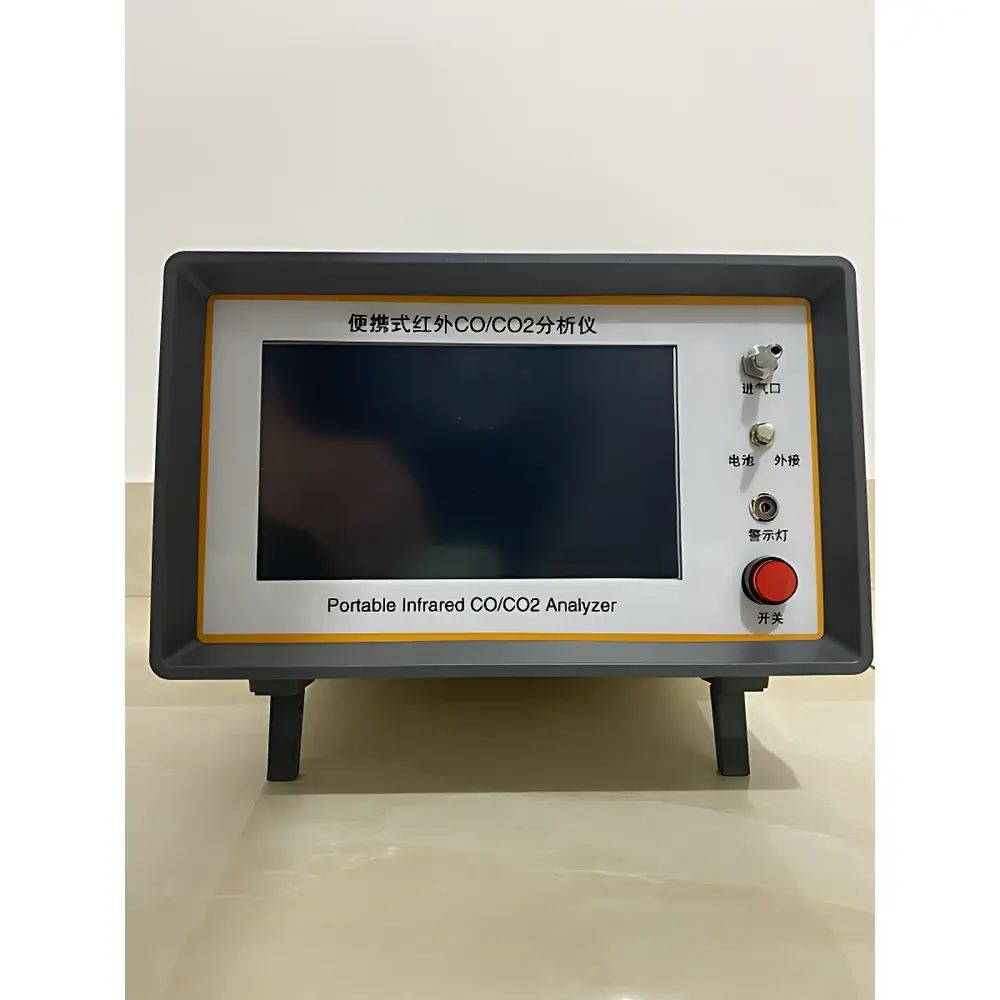
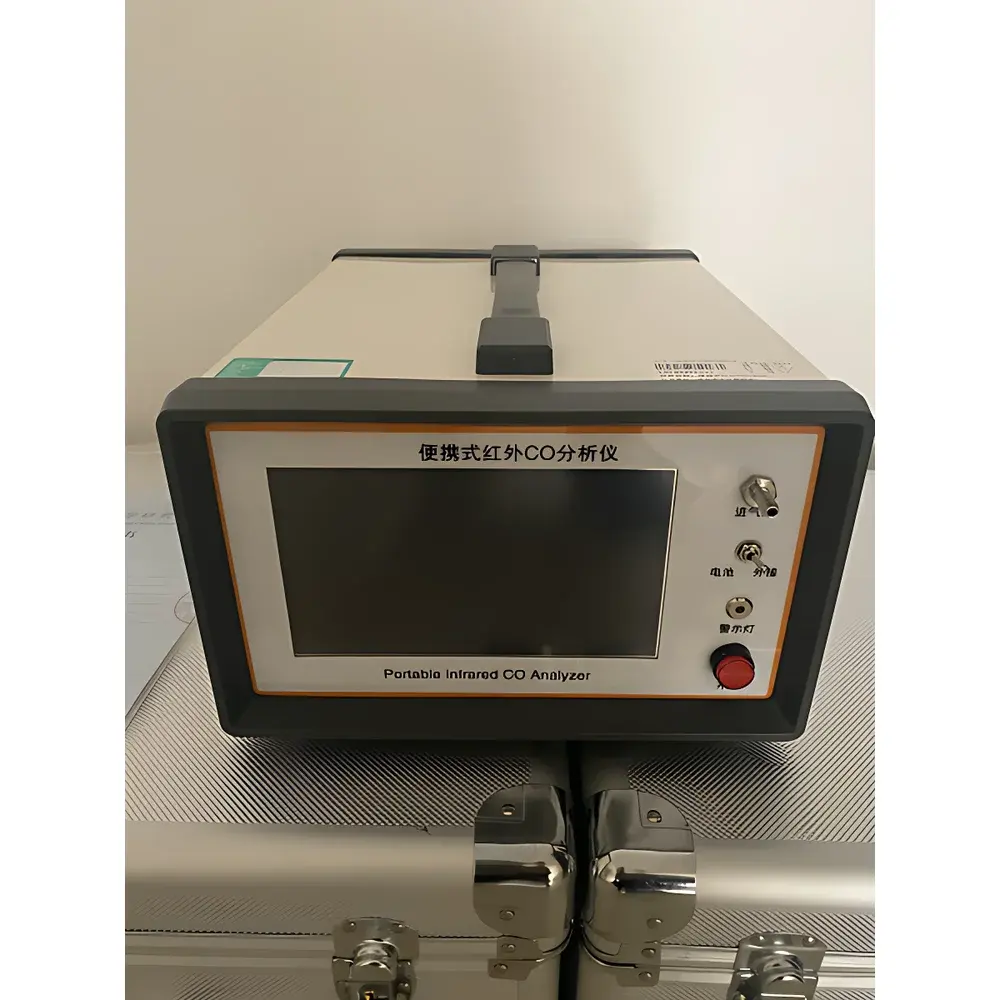
Ailun AL-3020 Portable NDIR Dual-Gas Analyzer for Carbon Monoxide and Carbon Dioxide
| Brand | Ailun |
|---|---|
| Model | AL-3020 |
| Type | Portable Gas Analyzer |
| Detection Principle | Non-Dispersive Infrared (NDIR) |
| Measurement Range | 0–50.0 ppm CO / 0–0.500% CO₂ (or 0–200.0 ppm CO / 0–1.000% CO₂) |
| Resolution | 0.1 ppm CO / 0.001% CO₂ |
| Repeatability | ≤1% F.S. |
| Zero Drift | ≤±2% F.S./h |
| Span Drift | ≤±2% F.S./3h |
| Linearity Error | ≤±2% F.S. |
| Response Time (t₀–t₉₀) | ≤45 s (CO), ≤15 s (CO₂) |
| Warm-up Time | ≤30 min |
| Flow Rate | 0.5–2.0 L/min |
| Data Storage | Up to 10,000 records |
| Interface | RS232 with dedicated data transfer software |
| Operating Temperature | 10–45 °C |
| Temperature-Induced Error | ≤±2% F.S./10 °C |
| CO Interference Tolerance | ≤±0.3% F.S. at 1250 mg/m³ CO |
| Display Units | ppm, mg/m³, % (auto-convertible) |
| Environmental Monitoring | Integrated temperature & humidity sensing |
| Sampling Method | Built-in diaphragm pump (up to 30 m sampling distance) |
| Compliance | GB/T 18204.2–2014, GB/T 9801–1988, JJG 635–2011, HJ 965–2018, GBZ/T 300.37–2017 |
Overview
The Ailun AL-3020 is a portable, dual-channel non-dispersive infrared (NDIR) gas analyzer engineered for simultaneous, real-time quantification of carbon monoxide (CO) and carbon dioxide (CO₂) in ambient air, indoor environments, occupational settings, and environmental monitoring applications. Utilizing two independent NDIR optical modules—each optimized for its target gas’s characteristic absorption bands near 4.6 µm (CO) and 4.26 µm (CO₂)—the instrument delivers high selectivity and immunity to cross-interference under field conditions. Its robust optical design incorporates temperature-stabilized detectors, precision-machined gas cells, and factory-calibrated reference channels to ensure long-term measurement integrity without frequent recalibration. The AL-3020 meets the performance criteria defined for Class II analytical instruments per Chinese national metrological standards (JJG 635–2011), enabling traceable certification by the National Institute of Metrology (NIM) upon request. Designed for operational flexibility, it operates autonomously via internal rechargeable battery and integrates environmental sensors for concurrent temperature and relative humidity measurement—critical parameters for accurate gas concentration normalization per ISO 8573-1 and EPA Method TO-11A.
Key Features
- Simultaneous dual-gas detection: Independent NDIR channels for CO and CO₂ eliminate spectral overlap and enable true co-measurement without sequential valve switching.
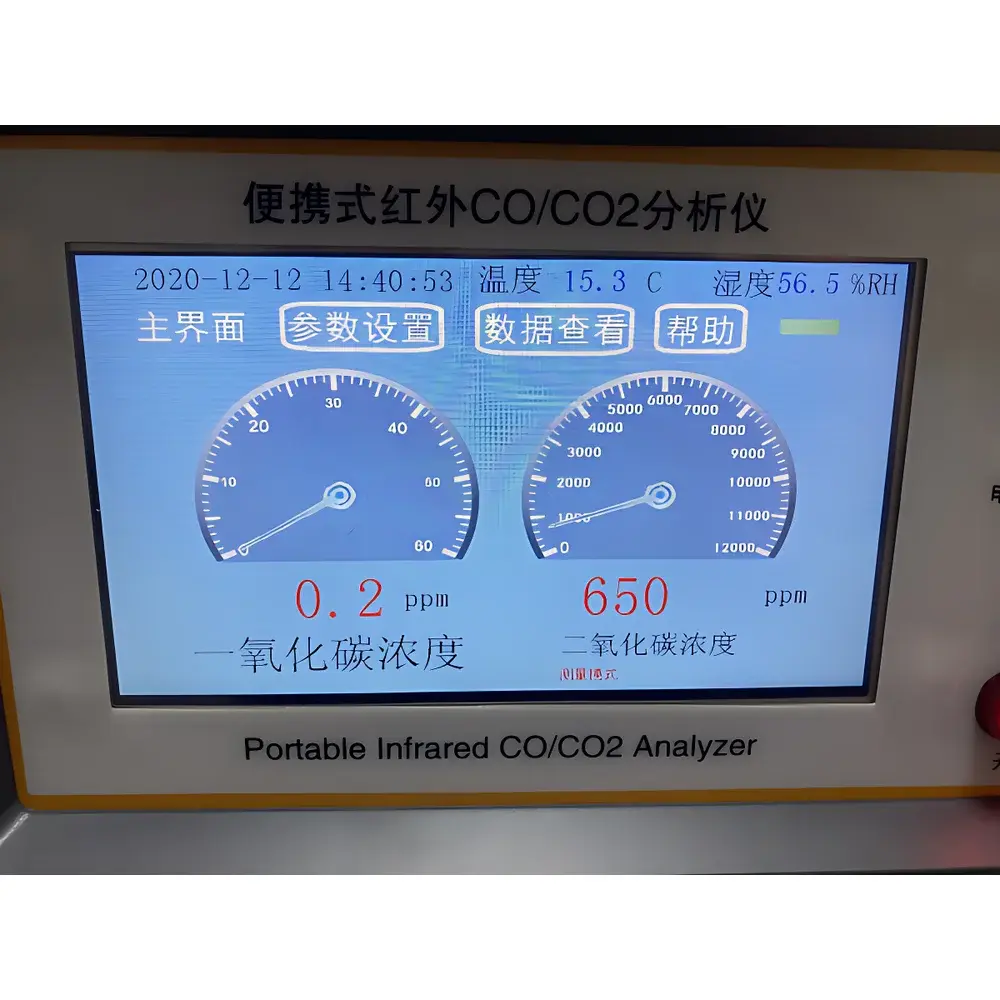
- Integrated environmental sensing: Onboard temperature and humidity sensors support automatic compensation of gas density and partial pressure effects, improving accuracy across variable climatic conditions.
- Active pump-assisted sampling: High-efficiency diaphragm pump enables aspiration from up to 30 meters away, supporting remote or confined-space deployment without external vacuum sources.
- Multi-unit display and conversion: Real-time readout in ppm, mg/m³, and volume % with auto-conversion based on user-selected molecular weight and standard conditions (e.g., 25 °C, 101.325 kPa).
- Intelligent zero calibration: Internal catalytic zero-filter cartridge and motorized 6-port valve enable automated zero-point adjustment—minimizing drift and reducing manual intervention frequency.
- Time-weighted averaging: Configurable calculation and display of hourly, 8-hour TWA (time-weighted average), and daily mean concentrations aligned with OSHA PEL and ACGIH TLV reporting requirements.
- High-resolution color touchscreen interface: 5.0-inch capacitive display with intuitive icon-driven navigation, password-protected configuration access, and on-device data review.
Sample Compatibility & Compliance
The AL-3020 is validated for use with ambient air, indoor workplace air, flue gas dilutions, and ventilation duct samples—provided particulate loading remains below 10 mg/m³ and condensable hydrocarbons are absent. It complies with multiple national and industry-specific regulatory frameworks, including GB/T 18204.2–2014 (Public Health Inspection Methods), HJ 965–2018 (Automatic Ambient CO Monitoring), GBZ/T 300.37–2017 (Workplace Toxic Substance Analysis), and JJG 635–2011 (Metrological Verification Regulations for IR Gas Analyzers). While not certified for explosion-proof operation, its design adheres to IEC 61000-6-2/6-3 EMC immunity and emission limits. All firmware and calibration routines are documented per GLP principles; audit trails for zero/span events and parameter changes are timestamped and stored internally.
Software & Data Management
Data acquisition and post-processing are supported via bundled Windows-compatible software delivered on included USB drive. The application provides real-time graphing, batch export to CSV/Excel, customizable report templates (including compliance headers per GB/T 9801–1988), and automated generation of calibration logs. RS232 serial communication supports integration into SCADA or building management systems (BMS) using Modbus RTU protocol (custom mapping available). Stored measurements include full metadata: date/time stamp, environmental conditions, operator ID (if entered), and instrument status flags (e.g., “zero in progress”, “pump fault”). Firmware updates are performed offline via USB—no internet connection required—ensuring data sovereignty in regulated laboratories.
Applications
- Ambient air quality monitoring networks requiring continuous CO/CO₂ profiling per China’s “Environmental Air Quality Standards” (GB 3095–2012).
- Indoor air quality (IAQ) assessments in schools, hospitals, and office buildings per GB/T 18883–2002.
- Occupational hygiene surveys for CO exposure evaluation against GBZ 2.1–2019 permissible exposure limits.
- Verification of HVAC system performance through CO₂-based demand-controlled ventilation (DCV) audits.
- Field validation of fixed-site analyzers during routine maintenance or after sensor replacement.
- Educational laboratories conducting gas law experiments, combustion efficiency analysis, and environmental science fieldwork.
FAQ
Does the AL-3020 require periodic calibration with certified gas standards?
Yes. While the built-in zero filter and auto-zero function maintain baseline stability, span calibration using traceable NIST-traceable gas mixtures (e.g., 25 ppm CO in N₂, 0.1% CO₂ in air) is recommended every 3–6 months or after exposure to extreme contamination.
Can the measurement range be extended beyond the standard configurations?
Custom ranges are available upon factory configuration—for example, 0–1000 ppm CO with reduced resolution or 0–5% CO₂ for industrial process monitoring. Contact technical support for feasibility assessment and firmware reconfiguration.
Is the instrument suitable for use in high-humidity environments such as greenhouses or boiler rooms?
The integrated humidity sensor and automatic compensation algorithm mitigate moisture-induced signal attenuation. However, prolonged exposure to condensing conditions (>95% RH) may affect optical path integrity; use of optional Nafion™ dryer tubing is advised for sustained operation above dew point.
What data security and audit trail capabilities does the AL-3020 support?
All configuration changes, zero/span actions, and measurement events are logged with UTC timestamps and user identifiers (if assigned). Logs are exportable but not editable—supporting basic GLP traceability. Full 21 CFR Part 11 compliance requires external data management software.
How is battery life affected during continuous pump operation?
At nominal flow (1.0 L/min), the internal Li-ion battery sustains ≥6 hours of continuous measurement. Battery health diagnostics and low-power warnings are displayed in real time; hot-swappable external power options are available via optional DC adapter.
Related Products







