
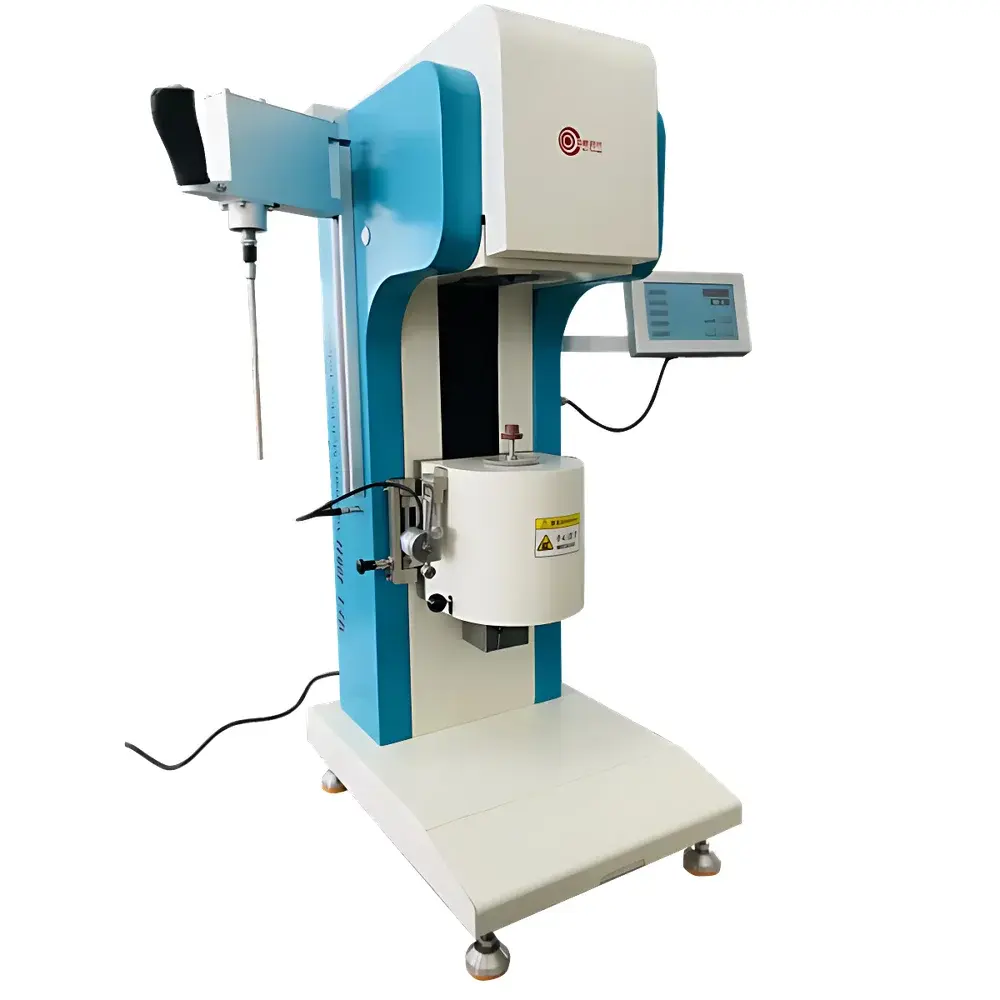
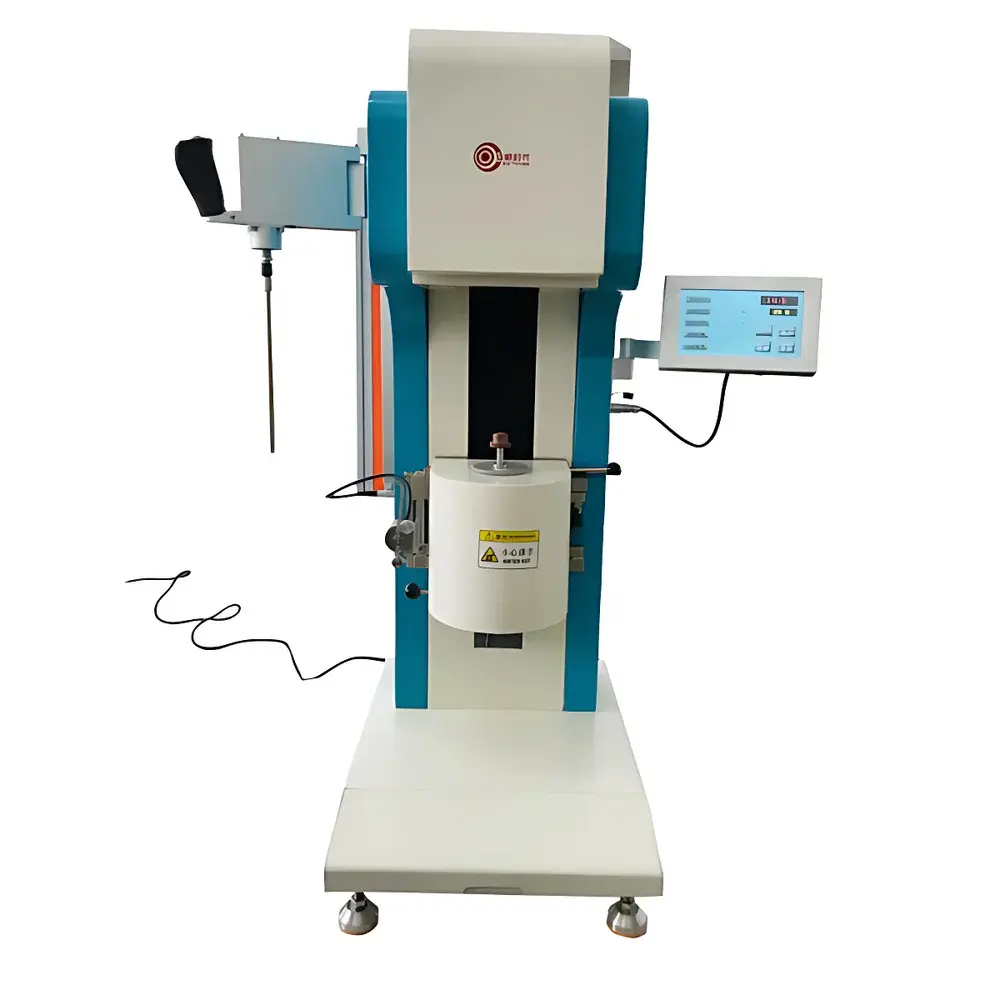
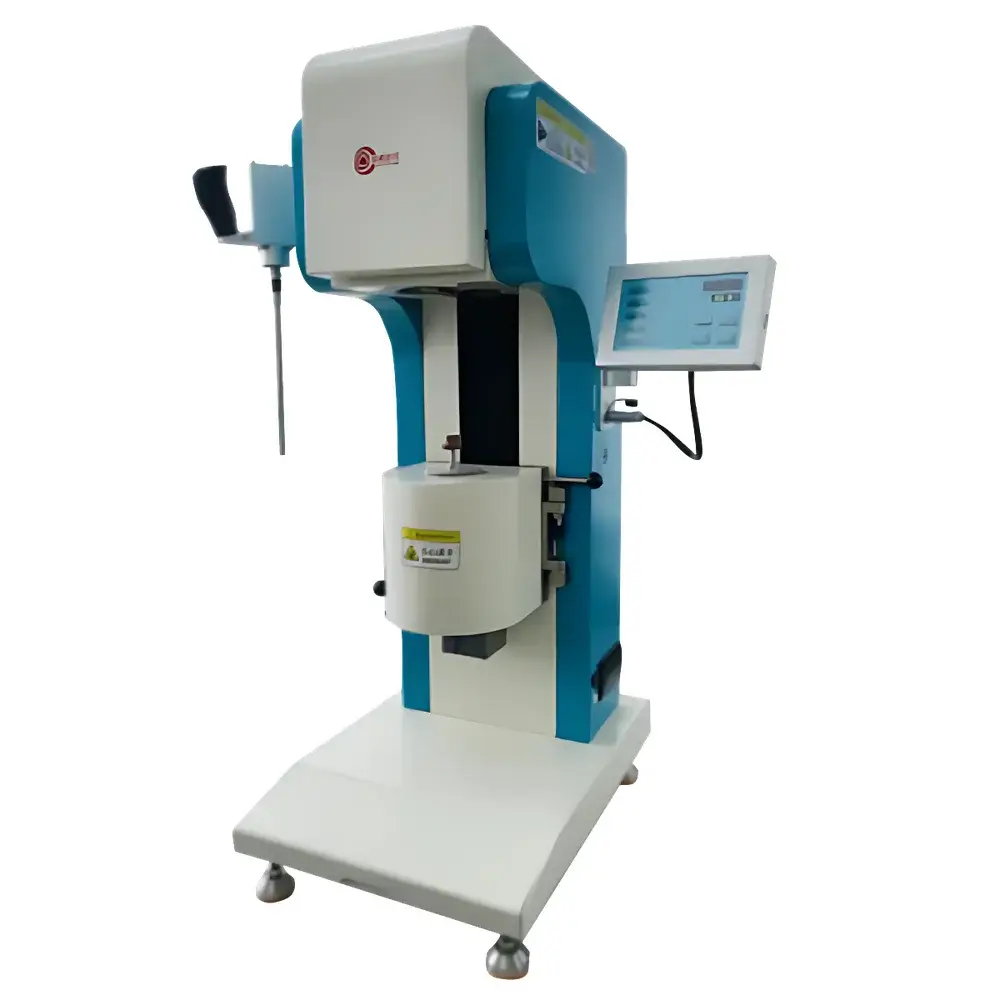
Zhonghangshidai MFI-400H Fully Automated Melt Flow Indexer
| Brand | Zhonghangshidai |
|---|---|
| Origin | Beijing, China |
| Manufacturer Type | Direct Manufacturer |
| Product Origin | Domestic (China) |
| Model | MFI-400H |
| Test Method | Volumetric (Method B per ISO 1133) |
| Type | Standard-Function Melt Flow Indexer |
| Temperature Range | Ambient to 300 °C (extended range: 80–400 °C) |
| Temperature Accuracy | ±0.1 °C |
| Melt Flow Rate Range | 0.1–100 g/10 min |
| Load Selection | Motorized, Programmable via Dual-Thread Lead Screw |
| Displacement Measurement | High-Precision Optical Encoder (ISO 1133 Method B) |
| Compliance | GB/T 3682–2018, ISO 1133:2005, ASTM D1238 |
Overview
The Zhonghangshidai MFI-400H Fully Automated Melt Flow Indexer is an engineered solution for precise, repeatable determination of melt mass-flow rate (MFR) and melt volume-flow rate (MVR) of thermoplastic polymers under standardized thermal and mechanical conditions. Based on the fundamental principle of extrusion rheometry—measuring the mass or volume of polymer melt extruded through a standardized capillary die under controlled temperature and applied load—the MFI-400H delivers metrologically traceable results aligned with international test protocols. It operates in accordance with ISO 1133 (Parts 1 & 2), ASTM D1238, and GB/T 3682–2018, making it suitable for quality assurance in high-stakes production environments including medical-grade nonwovens (e.g., melt-blown PP for surgical masks and protective gowns), automotive composites, packaging resins, and engineering thermoplastics such as polyethylene, polypropylene, ABS, polycarbonate, POM, PA6/66, and fluoropolymers. Its design emphasizes thermal uniformity, mechanical reproducibility, and full automation of load application and cut timing—eliminating operator-induced variability inherent in manual MFI systems.
Key Features
- Fully automated load selection and application via precision dual-thread lead screw driven by synchronized stepper motor—enabling programmable, repeatable placement of standard weights (0.325–9.100 kg) without manual intervention.
- High-stability temperature control system featuring helical heating elements, silicon-controlled rectifier (SCR) pulse modulation, and real-time PID feedback—achieving ±0.1 °C accuracy across the full operating range (ambient to 300 °C; extended to 400 °C).
- Modular, E-frame structural architecture with reinforced rigidity and ergonomic service access—allowing 90° horizontal rotation of the furnace assembly for rapid, safe cleaning of barrel and die components.
- Volumetric measurement capability (ISO 1133 Method B) using a high-resolution optical encoder with sub-millimeter positional resolution (±0.1 mm) and configurable displacement intervals (1–30 mm).
- Automated cutting mechanism with dual-mode operation: programmable auto-cutting with adjustable dwell time, plus manual override via front-panel button—capable of cleanly severing rigid or semi-crystalline melts including filled PP and engineering nylons.
- Integrated touch interface with color TFT display, multilingual UI (English default), voice-guided operation (adjustable volume), and intuitive parameter configuration for test mode, dwell time, cut interval, and load sequence.
- USB-host interface supporting direct data export to USB flash drives—enabling offline archiving, batch reporting, and post-test statistical analysis without network dependency.
Sample Compatibility & Compliance
The MFI-400H accommodates a broad spectrum of thermoplastic materials used in regulated manufacturing sectors. Its calibrated die geometry—including standard capillary (2.095 mm nominal diameter, 8.00 mm length) and optional half-die (1.05 mm, 4.00 mm)—ensures compliance with dimensional tolerances specified in ISO 1133 Annex A and ASTM D1238 Table 1. The instrument’s certified temperature uniformity (≤±0.3 °C axial gradient within the barrel zone) and verified load accuracy meet Class 1 requirements per ISO 1133:2005 Annex C. For pharmaceutical packaging or medical device component suppliers, the system supports audit-ready documentation workflows compatible with GLP and GMP frameworks. While not inherently 21 CFR Part 11 compliant out-of-the-box, its software architecture permits integration with validated electronic lab notebook (ELN) or LIMS platforms requiring electronic signatures and audit trails.
Software & Data Management
The embedded microcontroller-based firmware provides deterministic real-time control over all critical test phases: preheat stabilization, load application, extrudate conditioning, timed cutting, and final calculation. The onboard software calculates MFR (g/10 min) and MVR (cm³/10 min) using user-defined parameters (e.g., piston travel distance, cut interval, material density), applies rounding per ISO conventions (e.g., two decimal places for values <10, one for ≥10), and stores raw displacement/time logs with timestamps. Data export via USB includes CSV-formatted reports containing test ID, date/time, temperature setpoint, applied load, measured displacement, calculated indices, and operator notes. Optional PC-based software (included) enables comparative trend analysis, SPC charting, and PDF report generation with customizable templates—facilitating internal QA reviews and external certification submissions.
Applications
This indexer serves as a primary QC tool in polymer compounding plants verifying batch-to-batch consistency of melt viscosity prior to extrusion or injection molding. In nonwoven fabric manufacturing, it quantifies the processability of melt-blown polypropylene grades used in N95 respirator filtration layers—where narrow MFR distributions directly correlate with fiber fineness and filtration efficiency. Automotive Tier-1 suppliers employ the MFI-400H to screen recycled polyolefin blends for under-hood applications, ensuring thermal stability and flow behavior remain within specification after multiple reprocessing cycles. R&D laboratories utilize its volumetric mode (Method B) to characterize shear-thinning behavior of high-MFR resins (>50 g/10 min) where traditional gravimetric methods suffer from short extrusion windows and weighing uncertainty. The system also supports accelerated aging studies when paired with thermal oxidative degradation protocols per ISO 188.
FAQ
Does the MFI-400H support both gravimetric (Method A) and volumetric (Method B) testing?
Yes—it is fully compliant with ISO 1133 Method A (mass-based) and Method B (volume-based), with automatic switching between modes via software configuration.
What calibration standards are supplied with the instrument?
The system ships with NIST-traceable reference weights (eight total, 0.325–9.100 kg), certified capillary dies (2.095 mm and 1.05 mm), and a calibrated piston assembly—all documented with individual certificates of conformance.
Can the instrument be integrated into a factory MES or SAP QA module?
Yes—via optional RS-232 or Ethernet interface (not standard), the MFI-400H supports Modbus RTU or TCP protocols for seamless data exchange with enterprise manufacturing systems.
Is routine maintenance required beyond daily cleaning?
Yes—quarterly verification of temperature uniformity (using calibrated immersion thermocouples), annual recalibration of the optical encoder, and biannual inspection of die bore geometry are recommended per ISO 1133 Clause 7.3.
What safety certifications does the unit carry?
The MFI-400H complies with IEC 61010-1:2010 for electrical safety and carries CE marking for EMC and Low Voltage Directive conformity. UL/cUL listing is available upon request for North American deployment.





