
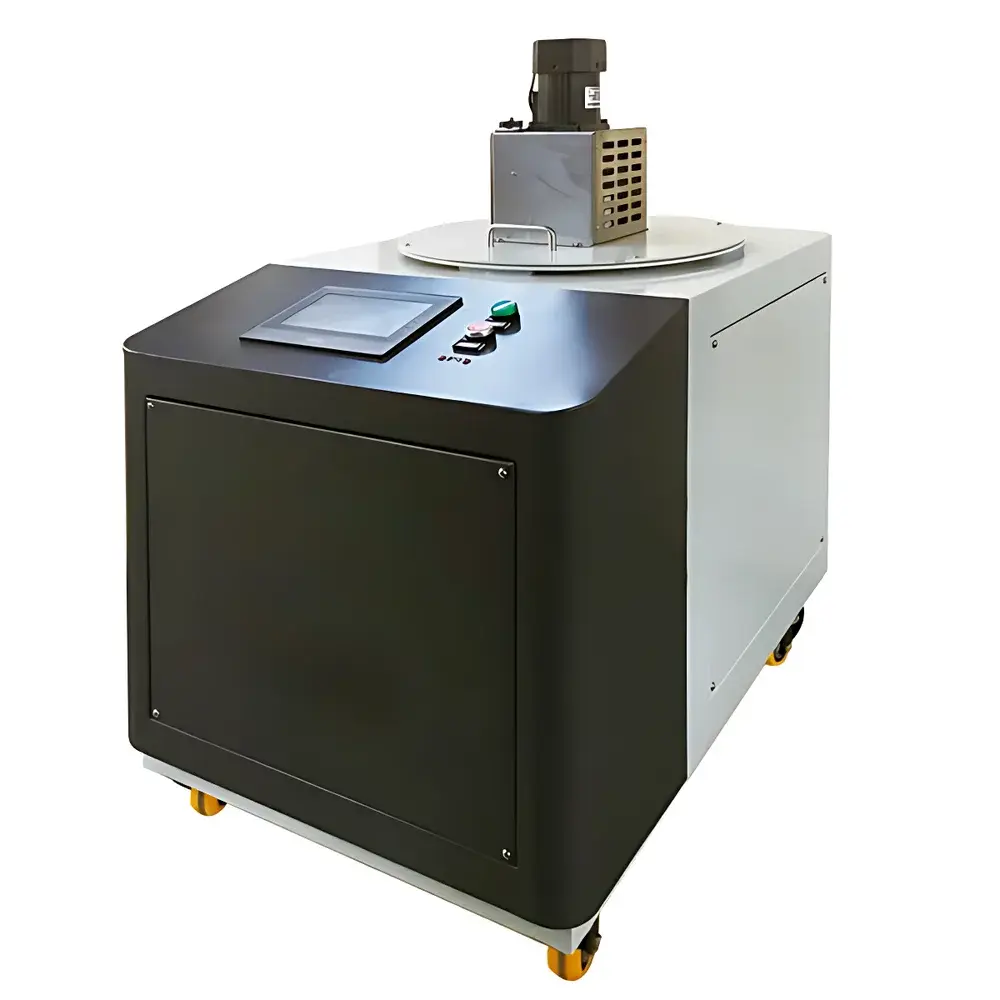
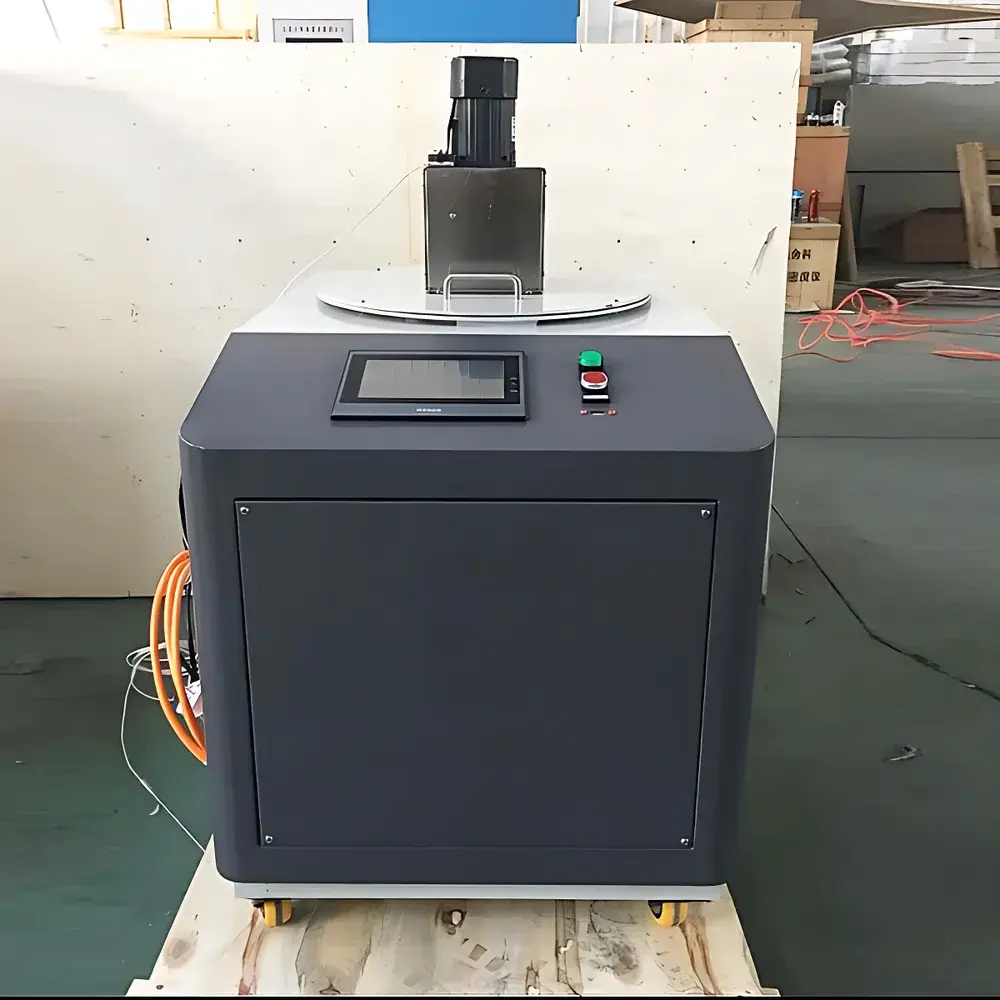
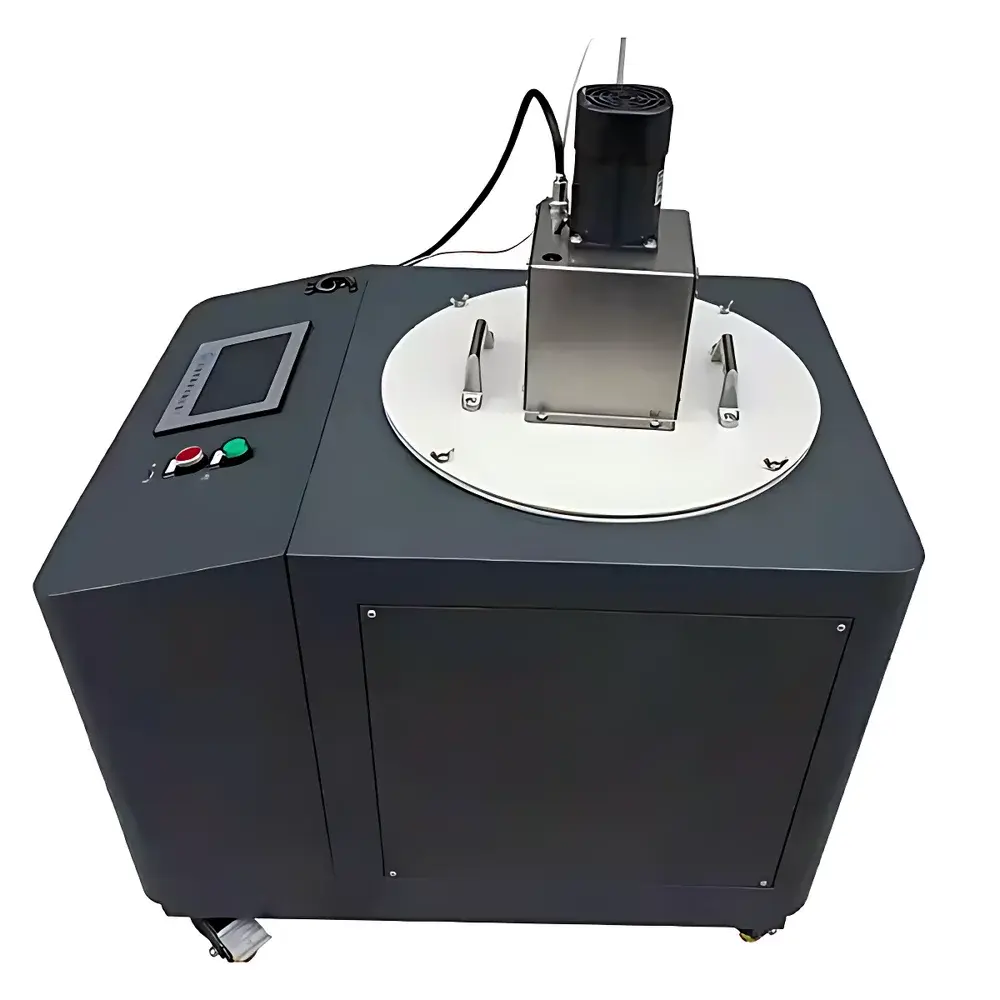
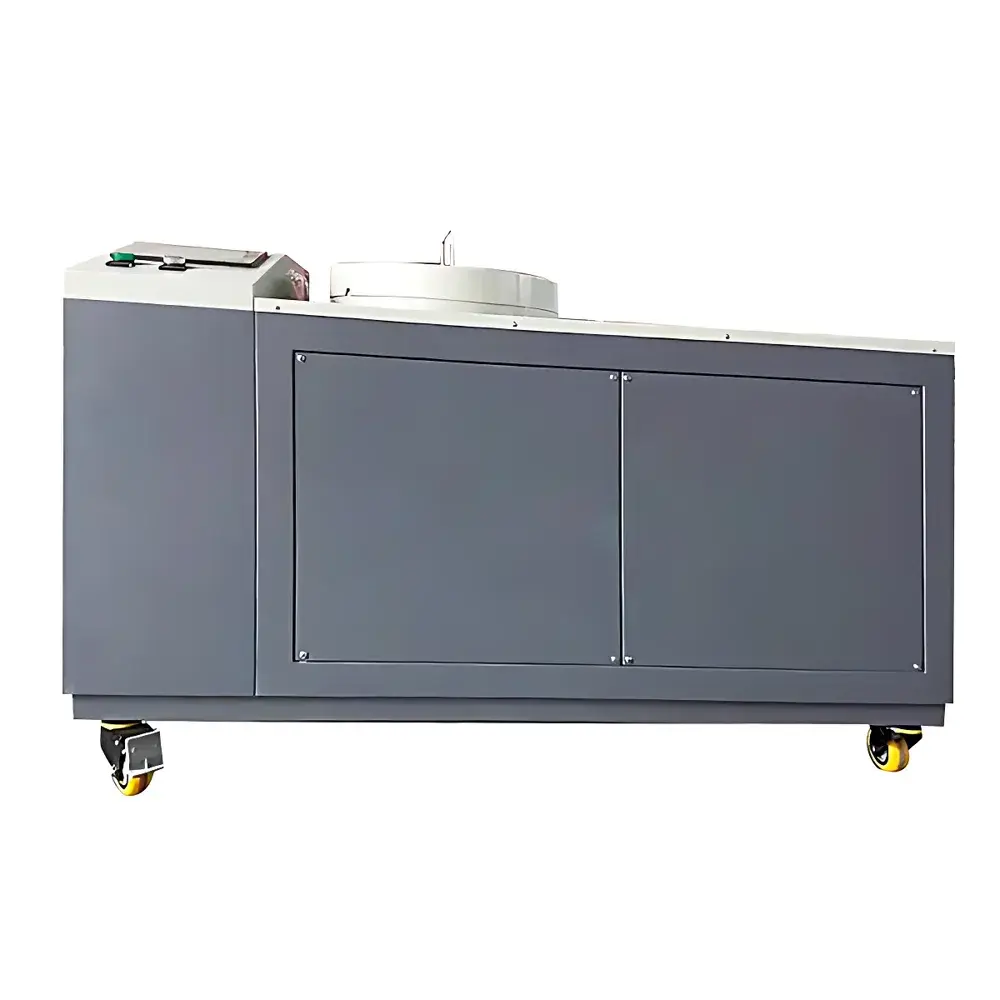
Rongjida HDR-II Concrete Thermal Conductivity Tester
| Brand | Rongjida |
|---|---|
| Origin | Shanghai, China |
| Manufacturer Type | Direct Manufacturer |
| Country of Origin | China |
| Model | HDR-II |
| Price | USD 8,100 (FOB Shanghai) |
| Test Method | Guarded Hot Plate / Steady-State Heat Flow Method |
| Temperature Measurement Range | −20 to +100 °C |
| Temperature Control Range | Ambient +5 to 80 °C |
| Temperature Control Accuracy | ≤ ±0.1 °C |
| Temperature Resolution | 0.01 °C |
| Thermal Conductivity Measurement Range | 0.5–5 W/(m·K) |
| Specimen Dimensions | Ø200 mm × 400 mm (central bore Ø40 mm) |
| Inner Chamber Dimensions | Ø300 mm × 420 mm |
| Overall Dimensions | 890 × 650 × 900 mm |
| Weight | 140 kg |
| Power Supply | 220 V AC, 50 Hz |
| Operating Environment | 0–40 °C, RH ≤ 85% non-condensing |
| Compliance | DL/T 5150–2001, SL 352–2020 |
Overview
The Rongjida HDR-II Concrete Thermal Conductivity Tester is a steady-state, guarded hot plate–based instrument engineered for precise determination of thermal conductivity (λ) in hardened concrete specimens under controlled temperature gradients. It operates on the principle of one-dimensional heat flow through a cylindrical concrete sample sandwiched between a heated upper plate and a cooled lower plate, with auxiliary guard rings minimizing lateral heat loss and ensuring axial thermal flux uniformity. Designed explicitly for compliance with Chinese national hydropower engineering standards—DL/T 5150–2001 and SL 352–2020—the HDR-II delivers traceable, reproducible measurements critical for thermal modeling of dam structures, tunnel linings, nuclear containment barriers, and mass concrete placements where thermal cracking and long-term dimensional stability are design-critical parameters.
Key Features
- Integrated industrial-grade 7-inch resistive touch HMI interface enabling full system control, real-time thermal profile monitoring, and automated calculation of λ according to Fourier’s law (λ = q·δ/ΔT), where q is measured heat flux, δ is specimen thickness, and ΔT is the steady-state temperature difference across the specimen.
- Dual-zone PID-controlled heating and cooling modules ensure stable temperature maintenance within ±0.1 °C over extended test durations (typically 4–12 hours per measurement), supporting high repeatability (CV < 2.5% across replicate specimens).
- High-resolution platinum RTD sensors (Pt100, Class A) embedded in both heating and cooling plates, as well as within specimen contact surfaces, provide 0.01 °C temperature resolution and spatial gradient mapping capability.
- Robust stainless-steel inner chamber (Ø300 × 420 mm) accommodates standard Ø200 × 400 mm cylindrical concrete cores—including those with central Ø40 mm access holes for embedded thermocouple validation or post-test non-destructive evaluation.
- Self-calibrating thermal flux transducers integrated into the hot plate assembly eliminate manual calibration drift and support NIST-traceable verification using certified reference materials (e.g., SRM 1450c Fibrous Glass Board).
Sample Compatibility & Compliance
The HDR-II accepts molded or cored cylindrical concrete specimens conforming to GB/T 50081–2019 and ASTM C42/C42M dimensional requirements. Specimens must be surface-ground flat (≤ 0.1 mm deviation) and moisture-conditioned per testing standard protocols (e.g., sealed curing at 20 °C/95% RH for 28 days prior to drying to desired moisture state). The instrument meets functional equivalence to ISO 8302:1991 (thermal insulation—determination of steady-state thermal resistance) and supports audit-ready documentation aligned with GLP principles. Full compliance with DL/T 5150–2001 Annex D and SL 352–2020 Clause 12.3 ensures acceptance in third-party inspection reports for hydropower, railway, and municipal infrastructure projects in China and ASEAN markets.
Software & Data Management
The embedded firmware logs all sensor readings (temperature, voltage, current, time stamp) at user-selectable intervals (1–60 s) and stores raw datasets in CSV format on internal 8 GB flash memory. Export is supported via USB 2.0 port. While no PC-based software suite is bundled, the device generates structured output files compatible with MATLAB, Python (Pandas), and Excel for post-processing—enabling statistical analysis of thermal anisotropy, moisture–conductivity correlations, and aging effects. Audit trails include operator ID (via login prompt), test start/end timestamps, environmental ambient log, and calibration event history—supporting basic 21 CFR Part 11 readiness when deployed in regulated QA/QC labs operating under documented SOPs.
Applications
- Thermal performance validation of low-heat cementitious systems (e.g., slag-blended, fly ash–modified, or limestone calcined clay cements) used in massive structures.
- Quality assurance of precast concrete elements where thermal mismatch-induced cracking must be predicted during early-age curing.
- Research into phase-change material (PCM)-integrated concrete composites for building envelope thermal buffering.
- Verification of thermal models in finite element simulations (e.g., ANSYS Mechanical, COMSOL Multiphysics) requiring experimentally derived λ values at varying saturation states.
- Supporting sustainability assessments by quantifying embodied thermal inertia in net-zero building designs.
FAQ
What standards does the HDR-II directly implement?
It is configured and validated per DL/T 5150–2001 (Hydropower Engineering) and SL 352–2020 (Water Resources Engineering) test procedures for concrete thermal conductivity.
Can the HDR-II measure wet or saturated specimens?
Yes—provided specimens are fully surface-sealed prior to testing to prevent evaporative cooling; optional vacuum saturation fixtures may be integrated externally.
Is external PC connectivity required for operation?
No—full autonomous operation is enabled via the onboard touchscreen; PC connection is only needed for bulk data export or advanced curve fitting.
What maintenance is recommended for long-term accuracy?
Annual verification using NIST-traceable reference materials and biannual cleaning of guard ring interfaces and thermal contact surfaces with isopropyl alcohol.
Does the system support multi-specimen sequential testing?
Not natively—the HDR-II processes one specimen per test cycle; however, its rapid thermal equilibration (~45 min from ambient to 60 °C) enables up to 4–5 tests per 8-hour shift.






