
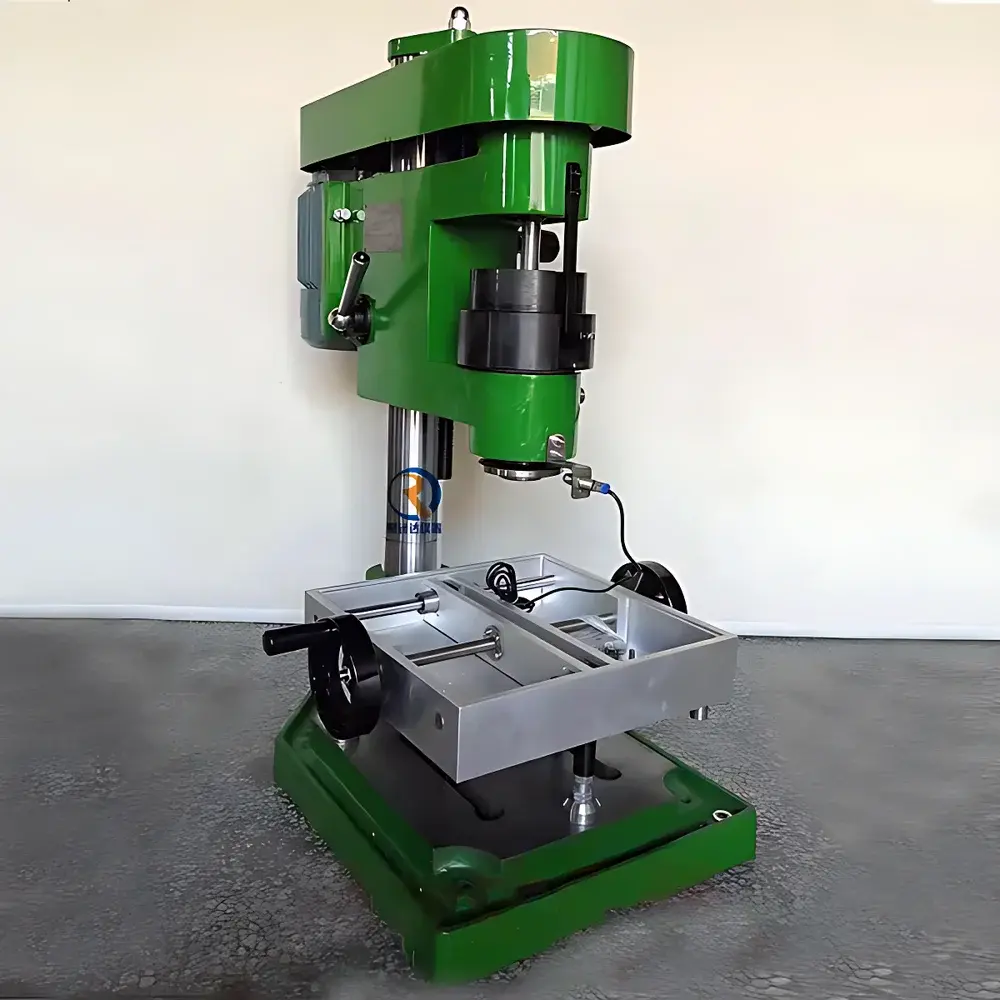
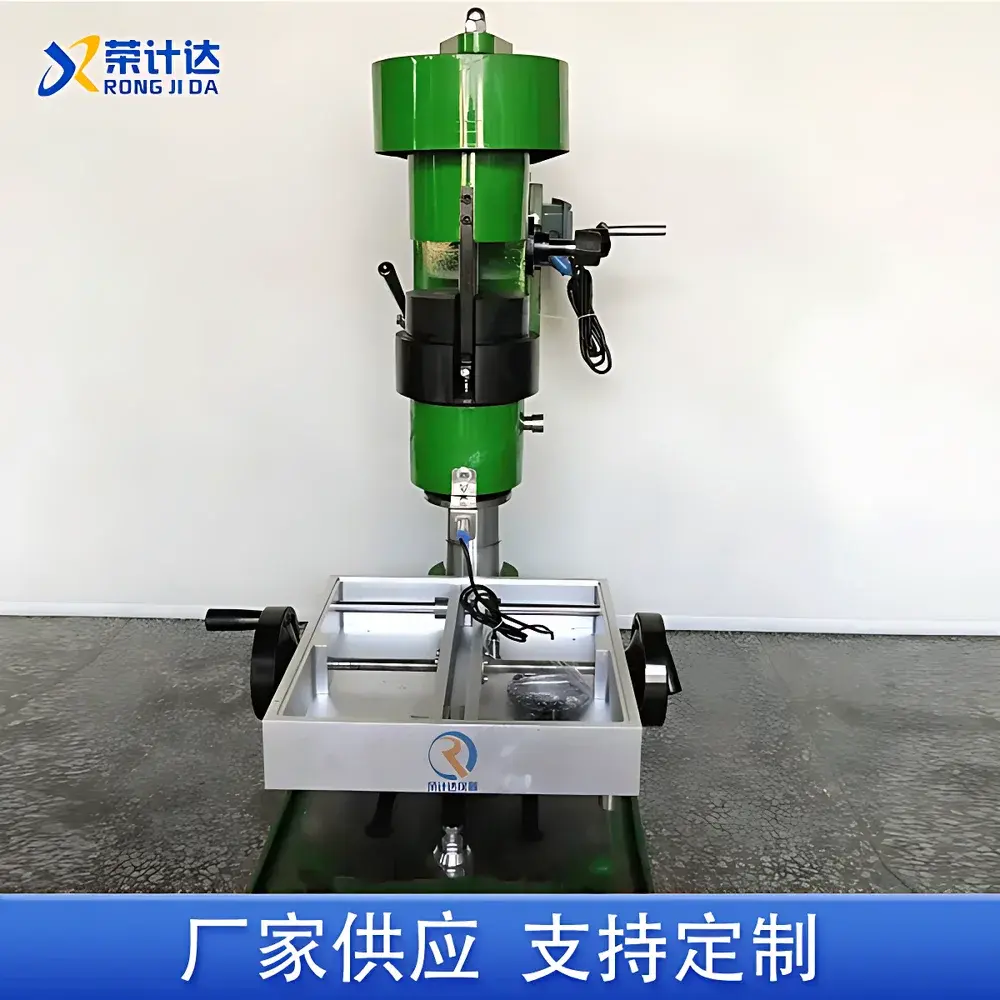
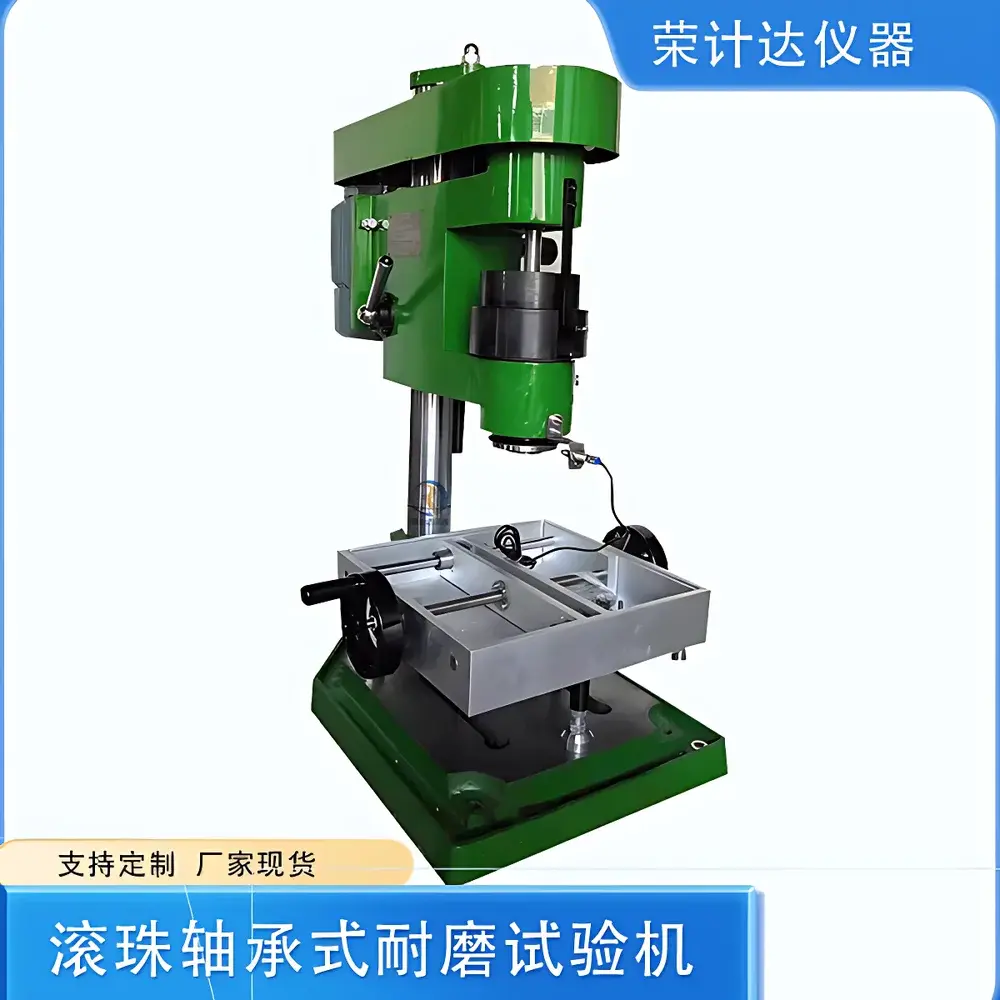
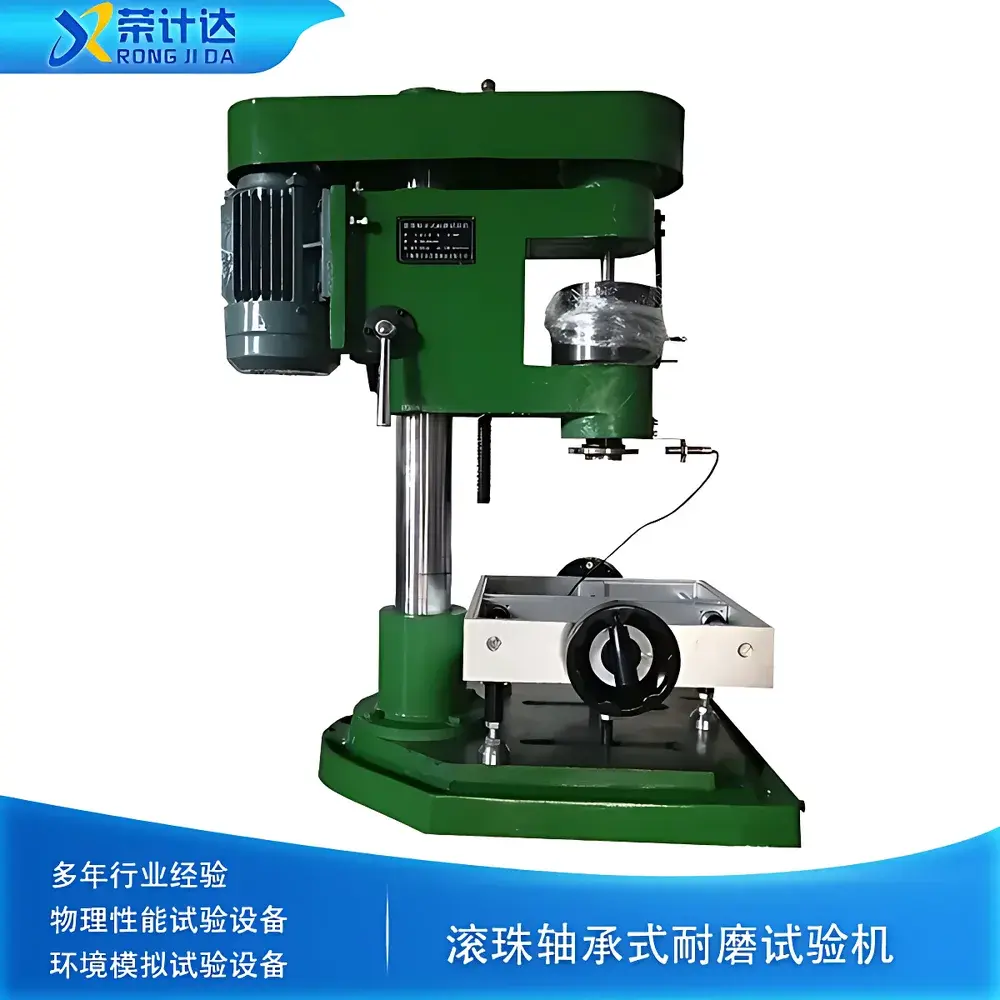
Rongjida NS-2 Ball-Bearing Abrasion Tester
| Brand | Rongjida |
|---|---|
| Origin | Shanghai, China |
| Manufacturer Type | Direct Manufacturer |
| Model | NS-2 |
| Testing Principle | Rotational Abrasion under Fixed Load |
| Abrasive Element | 13 mm × 15.875 mm Precision Ball Bearing |
| Applied Load | 154 ± 2.5 N |
| Rotational Speed | 1000–1050 rpm |
| Abrasive Counterweight Hardness | ≥ HRC 62 |
| Vertical Travel Range | 10 mm |
| Sound Pressure Level | ≤ 75 dB(A) |
| Specimen Size Range | 100 × 100 mm to 300 × 300 mm (minimum contact area ≥ 10,000 mm²) |
| Motor Power | 0.75 kW |
| Dimensions (L×W×H) | 700 × 450 × 800 mm |
| Net Weight | 163 kg |
Overview
The Rongjida NS-2 Ball-Bearing Abrasion Tester is a precision-engineered instrument designed for standardized wear resistance evaluation of rigid construction materials in accordance with GB/T 16925–1997, the Chinese national standard for abrasion testing of concrete and related products. It implements a controlled rotational abrasion methodology wherein a hardened ball-bearing assembly rotates under a fixed normal load against a flat specimen surface, simulating mechanical wear conditions encountered in real-world applications such as pedestrian walkways, vehicular pavements, and industrial flooring. The test principle relies on quantifying material loss—measured as vertical wear depth via calibrated dial indicator—after a defined number of revolutions. This deterministic approach ensures high reproducibility across laboratories and aligns with internationally recognized mechanical wear assessment paradigms used in civil engineering quality control and materials certification.
Key Features
- High-stability mechanical architecture with rigid cast-iron base and vertically guided frame, minimizing lateral deflection during loading and ensuring consistent force application.
- Precision-machined 13 mm × 15.875 mm ball-bearing abrasive head, heat-treated to ≥ HRC 62, delivering uniform contact geometry and predictable wear kinetics.
- Electromechanically regulated rotation system with AC induction motor (0.75 kW), maintaining speed within 1000–1050 rpm tolerance throughout the test cycle.
- Integrated load application mechanism delivering a calibrated 154 ± 2.5 N normal force via calibrated counterweights—traceable to national metrological standards.
- Adjustable specimen fixture accommodating specimens from 100 × 100 mm up to 300 × 300 mm, with fine-tuning horizontal leveling and clamping via micrometer-adjusted pressure screws.
- Dual-mode digital controller supporting programmable stepwise operation: automatic stop-and-record at predefined revolution intervals (e.g., every 1000 rpm), with full data retention upon pause or power interruption.
- Water-cooled abrasion interface enabling continuous lubrication and thermal management of the contact zone—critical for suppressing localized heating-induced phase changes in cementitious matrices.
Sample Compatibility & Compliance
The NS-2 is validated for use with non-metallic, dimensionally stable, planar specimens including but not limited to: vibrated or pressed concrete slabs, fired clay pavers, granite composite tiles, terrazzo panels, and quartz-based engineered stone. All tested specimens must present a minimum exposed surface area of 10,000 mm² and exhibit compressive strength ≥ 20 MPa to prevent substrate deformation under load. The instrument satisfies structural and operational requirements outlined in GB/T 16925–1997 and supports traceable conformity assessments for ISO 9001-certified QA/QC labs. While not inherently compliant with ASTM C779 or EN 1338, its mechanical configuration permits method adaptation under laboratory-developed SOPs subject to inter-laboratory validation per ISO/IEC 17025:2017 Clause 7.2.2.
Software & Data Management
The NS-2 operates via a dedicated microcontroller-based interface with no external PC dependency. All test parameters—including total revolutions, stop-point counts, elapsed time, and manual reset triggers—are stored in non-volatile memory. The controller logs each 1000-revolution interval with timestamped dial indicator readings (resolution: 0.01 mm), enabling direct calculation of wear rate (mm/1000 rev). Audit trails are maintained via physical logbook integration; for GLP/GMP environments, users may supplement with external documentation systems capturing operator ID, calibration certificate numbers, and environmental conditions (temperature/humidity per ISO 29553). Firmware does not support FDA 21 CFR Part 11 electronic signatures, but raw data export is achievable via manual transcription into LIMS-compatible spreadsheets.
Applications
- Quality assurance of precast concrete paving units prior to municipal tender submission.
- Comparative wear performance screening of alternative aggregate blends in concrete formulations.
- R&D evaluation of polymer-modified cementitious overlays intended for high-traffic indoor flooring.
- Third-party verification of manufacturer claims regarding abrasion resistance of ceramic-glazed tiles per GB/T 4100–2015 Annex G.
- Teaching laboratory implementation for civil engineering students studying tribological behavior of construction composites.
FAQ
What is the maximum allowable wear depth before terminating the test?
Per GB/T 16925–1997, testing must cease if measured wear depth exceeds 1.5 mm—this threshold prevents irreversible damage to the bearing housing and maintains measurement linearity.
Is periodic recalibration of the load system required?
Yes. The applied load must be verified annually using a Class M1 deadweight set traceable to CNAS-accredited standards; deviation beyond ±2.5 N invalidates test reports.
Can the NS-2 be used for metallic or elastomeric specimens?
No. Its mechanical design, load range, and bearing geometry are optimized exclusively for rigid, brittle, or quasi-brittle construction materials. Use on ductile or viscoelastic substrates violates test standard assumptions and risks non-representative wear mechanisms.
How often should the ball-bearing abrasive head be replaced?
Replacement is mandatory when measured ball diameter falls below 15.675 mm—verified using certified micrometers at three orthogonal positions. A worn bearing introduces variable contact stress and invalidates compliance with GB/T 16925–1997 Section 5.2.
Does the instrument meet electromagnetic compatibility (EMC) requirements for EU deployment?
The NS-2 lacks CE marking and has not undergone EN 61326-1 testing. Export to EU markets requires third-party EMC assessment and technical file compilation under Directive 2014/30/EU prior to customs clearance.







