
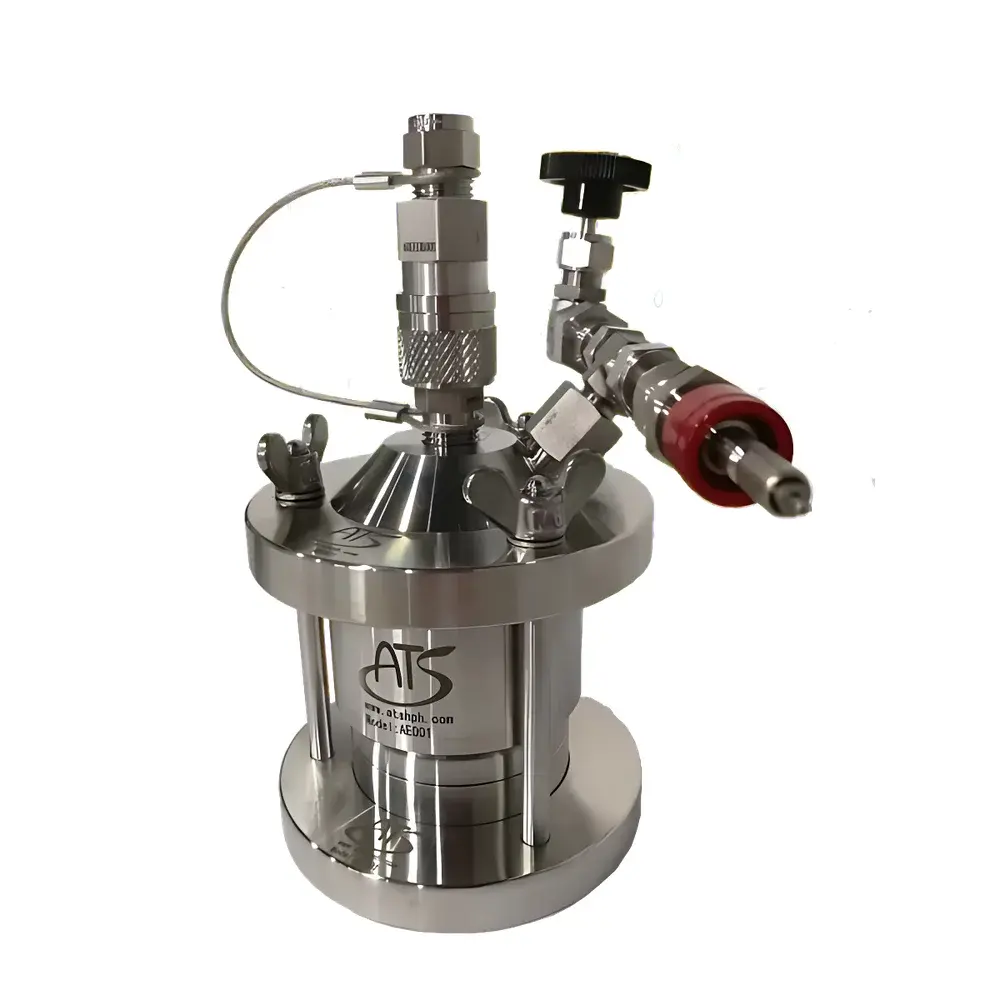
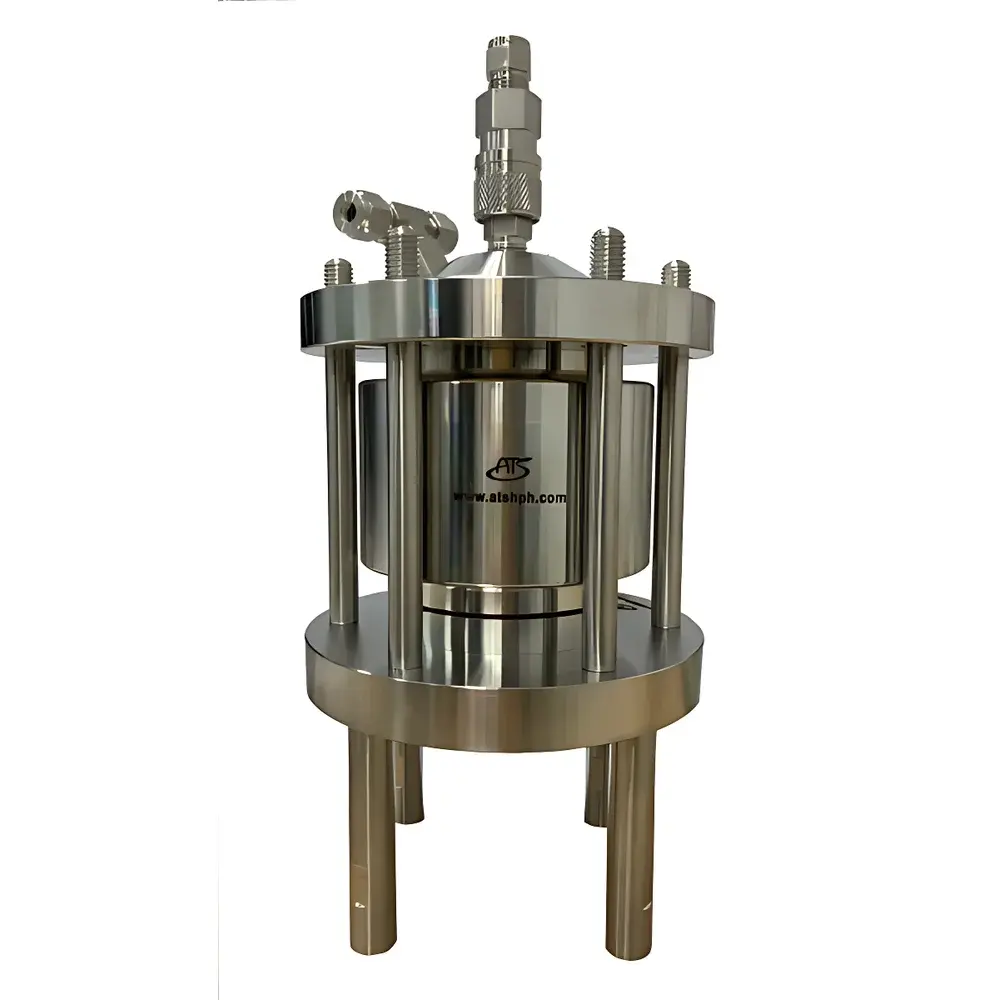
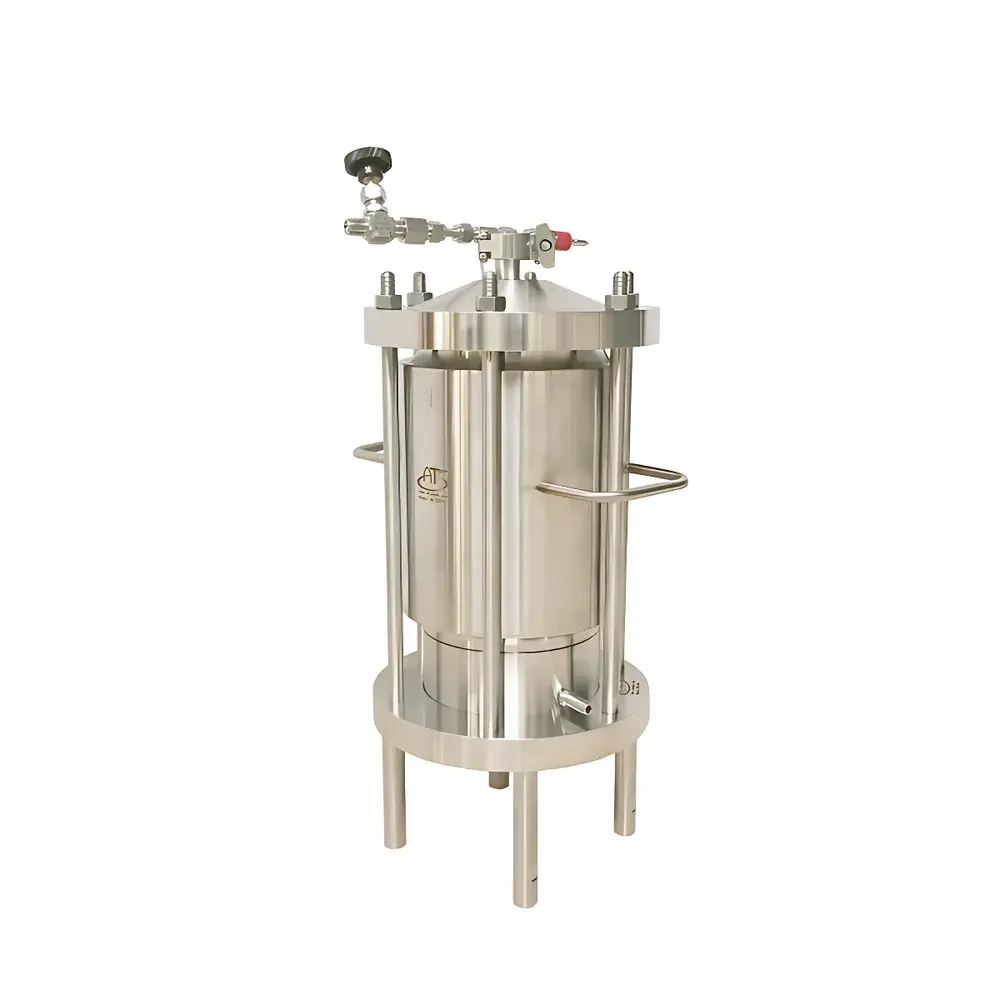
ATS AE001 Pneumatic Liposome Extruder
| Brand | ATS |
|---|---|
| Origin | Jiangsu, China |
| Manufacturer Type | Direct Manufacturer |
| Product Category | Domestic |
| Model | AE001 |
| Price Range | USD 4,200 – 11,200 (FOB) |
| Vesicle Type | Liposomes |
| Sample Volume | 2–800 mL |
| Operating Pressure | 0–1000 psi |
| Final Particle Size | 50–1000 nm |
| Filter Diameter Options | 25 mm / 47 mm / 90 mm |
| Temperature Control Range | 5–80 °C |
| Wetted Materials | 316L Stainless Steel, FDA-Certified Elastomers (O-rings, gaskets), Electropolished Surfaces (Ra ≤ 1.5 µm) |
| Compliance | GMP-Compatible Design, Cleanroom-Ready (ISO Class 5–7) |
Overview
The ATS AE001 Pneumatic Liposome Extruder is an engineered laboratory-scale system designed for the controlled size reduction and unilamellar vesicle formation of lipid-based nanocarriers. It operates on the principle of high-pressure mechanical extrusion: multilamellar liposome suspensions are pneumatically driven—using regulated nitrogen or compressed air—through stacked polycarbonate track-etched membranes with precisely defined pore diameters (typically 50, 80, 100, 200, or 400 nm). This repeated passage induces membrane fusion, fission, and shear-induced remodeling, resulting in highly uniform, predominantly unilamellar liposomes within a narrow hydrodynamic diameter distribution. The device supports both single-pass and recirculation modes, enabling process optimization for diverse lipid compositions—including DSPC/cholesterol/PEG-lipid formulations—and nucleic acid-loaded complexes (e.g., siRNA, mRNA-LNPs). Its modular architecture, temperature-integrated housing, and pressure-regulated actuation ensure reproducible extrusion kinetics critical for preclinical formulation development and early-stage GMP-aligned process definition.
Key Features
- Pneumatically actuated extrusion with digital pressure regulation (0–1000 psi), featuring integrated safety relief valves and real-time pressure monitoring.
- Fully electropolished 316L stainless steel fluid path components (Ra ≤ 1.5 µm), minimizing surface adsorption and facilitating cleaning validation per ISO 14644-1 and EU GMP Annex 1 requirements.
- Dual-configuration capability: standalone single-extruder unit or synchronized dual-extruder setup for parallel processing or gradient extrusion protocols.
- Integrated thermostatic control (5–80 °C) at both inlet and outlet manifolds to maintain thermal stability of temperature-sensitive payloads (e.g., thermolabile mRNAs or proteins).
- FDA-compliant elastomeric seals (O-rings, gaskets) and USP Class VI-certified wetted materials ensuring biocompatibility and extractables/leachables compliance.
- Modular polycarbonate membrane cassettes (25 mm, 47 mm, and 90 mm diameters) supporting rapid filter exchange and scalable process transfer—from discovery (2 mL) to pilot batch (800 mL).
- Designed for cleanroom integration (ISO Class 5–7); all external surfaces meet non-shedding, low-particulate emission criteria.
Sample Compatibility & Compliance
The AE001 accommodates a broad range of lipid formulations—including hydrogenated and unsaturated phospholipids, sterols, and functionalized PEG-lipids—as well as aqueous suspensions containing encapsulated actives (small molecules, peptides, oligonucleotides, and mRNA-LNPs). It is validated for use with high-concentration liposome dispersions (>50 mg/mL total lipid) without clogging or pressure surge. All contact surfaces comply with ASTM F2477 (standard guide for characterization of liposomal drug products) and support analytical method alignment with USP (liposome size distribution) and ICH Q5A(R2) (viral safety considerations for biologicals). The system’s design enables full traceability during qualification (IQ/OQ/PQ), including documented pressure calibration, temperature uniformity mapping, and filter integrity testing (bubble point, diffusion test).
Software & Data Management
While the AE001 operates via analog pneumatic controls for maximum reliability and minimal electromagnetic interference, optional digital pressure logging modules (RS-485 or USB interface) are available for GLP/GMP environments. These modules record timestamped pressure profiles, cycle counts, and temperature setpoints—exportable as CSV files for audit trail generation under FDA 21 CFR Part 11 (electronic records and signatures). Process parameters can be cross-referenced with dynamic light scattering (DLS) or nanoparticle tracking analysis (NTA) data to establish correlation between extrusion pressure, pass number, and final polydispersity index (PDI < 0.15 typical under optimized conditions).
Applications
- Preformulation screening of liposomal drug candidates (e.g., doxorubicin, amphotericin B analogs).
- Manufacturing of clinical-grade mRNA-LNP vaccines requiring tight control over particle size and lamellarity.
- Development of targeted theranostic liposomes incorporating surface ligands (e.g., folate, antibodies).
- Scale-down modeling for tech transfer to industrial extrusion systems (e.g., Avanti Mini-Extruder or high-flow continuous systems).
- Academic research on membrane biophysics, including curvature-dependent protein binding and fusion kinetics.
FAQ
What membrane pore sizes are supported?
Standard polycarbonate track-etched membranes with nominal pore diameters of 50, 80, 100, 200, and 400 nm are compatible; custom pore sizes (e.g., 30 nm or 1 µm) are available upon request.
Can the system be sterilized in place (SIP)?
Yes—the entire fluid path is autoclavable (121 °C, 20 min, saturated steam) or compatible with vaporized hydrogen peroxide (VHP) decontamination protocols used in isolator environments.
Is the AE001 suitable for GMP manufacturing?
It is qualified for use in GMP-compliant pilot production and process characterization studies; formal validation support documentation (URS, DQ/IQ/OQ templates) is provided with purchase.
How is sample temperature maintained during extrusion?
Dual independent Peltier-based cooling/heating blocks regulate inlet and outlet temperatures independently, with ±0.5 °C stability across the full 5–80 °C range.
What maintenance is required between runs?
After each use, disassembly, ultrasonic cleaning in isopropanol/water (1:1), and visual inspection of membrane integrity and seal wear are recommended; full cleaning validation protocols are included in the user manual.



