
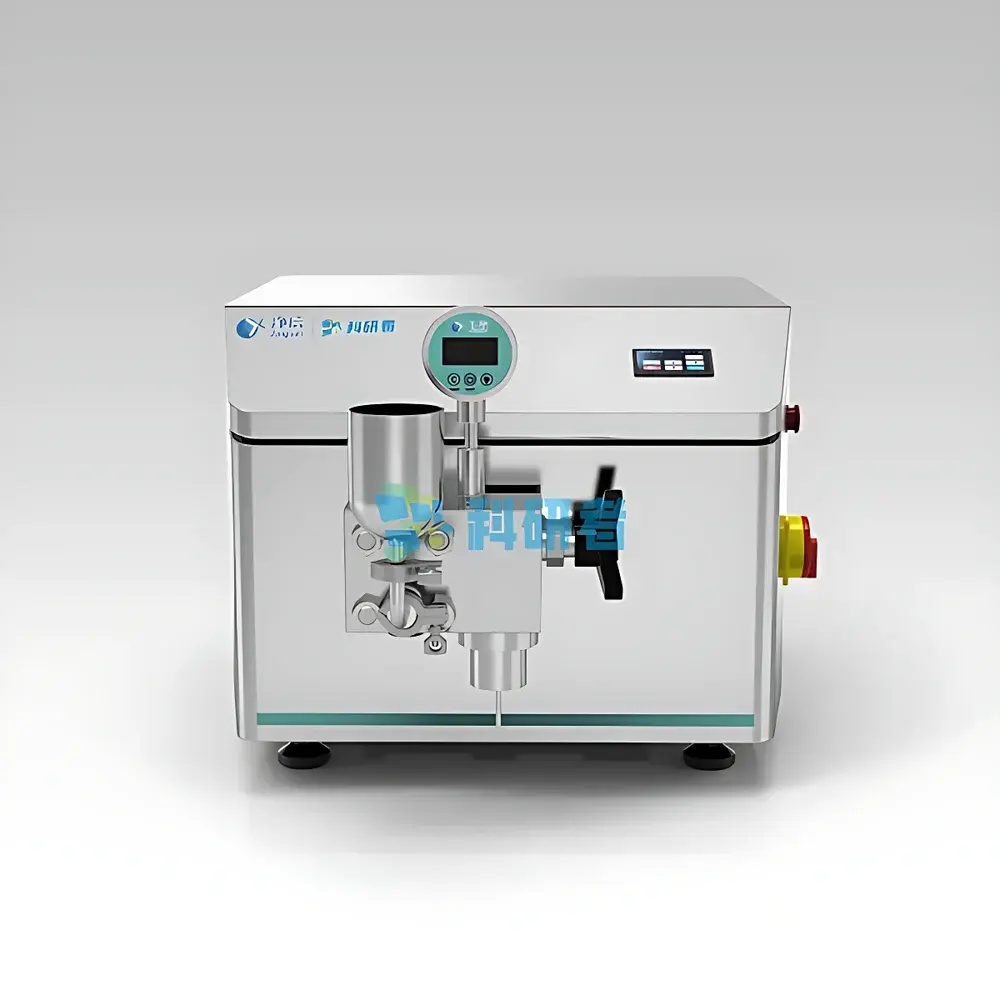
JX-ZLJ Liposome Extruder System for Integration with High-Pressure Homogenizers
| Brand | Shanghai Jingxin |
|---|---|
| Origin | Shanghai, China |
| Manufacturer Type | Direct Manufacturer |
| Country of Origin | China |
| Model | JX-ZLJ |
| Pricing | Upon Request |
| Max Design Pressure | 2000 psi |
| Max Operating Pressure | 1000 psi |
| Final Particle Size Range | 50–1000 nm |
| Maximum Chamber Volume | 10 mL |
| Membrane Diameter | 25 mm |
| Operating Temperature Range | 5–80 °C |
| Temperature Control | Jacketed Thermal Management (Heating/Cooling) |
| Construction Material | SUS 316L Stainless Steel |
| Sterilization Compatibility | Steam & Autoclave (<145 °C) |
| Cleaning Temperature Limit | <90 °C |
| Membrane Change | Tool-Free |
| Residual Sample Volume | <0.3 mL |
Overview
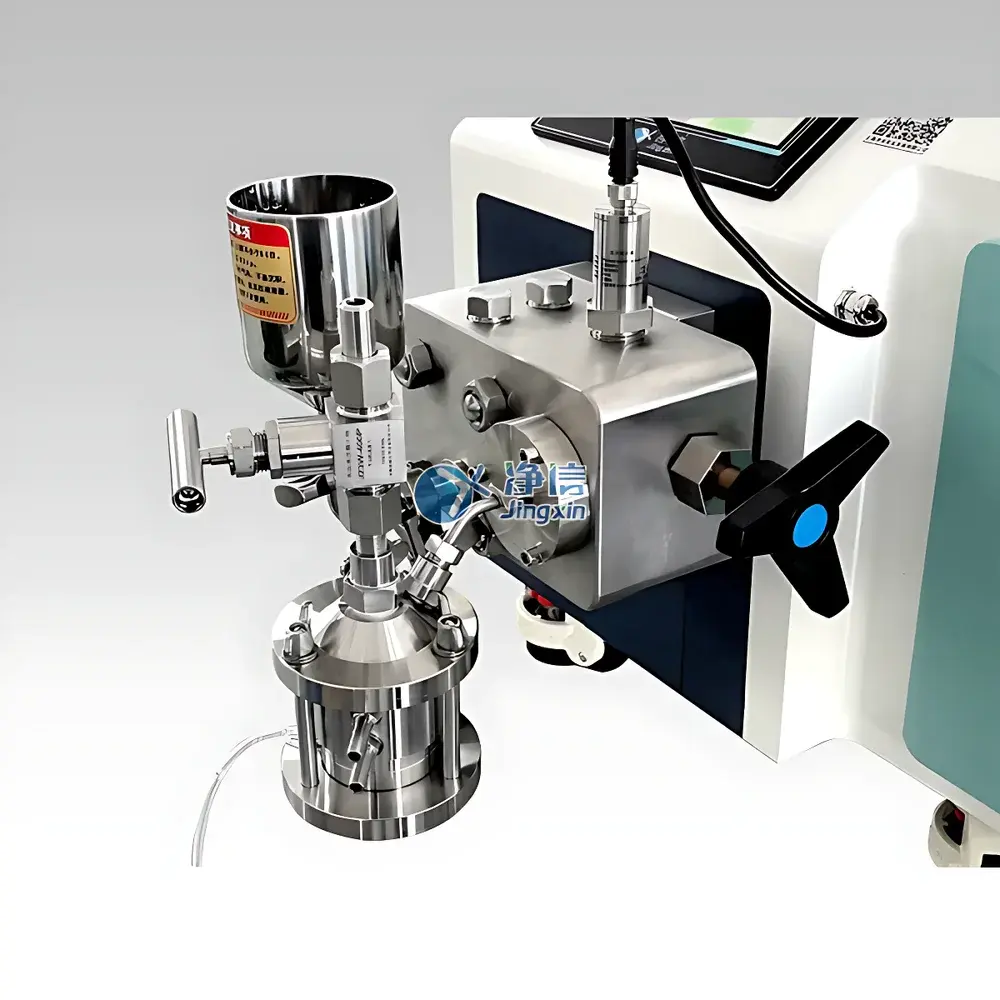
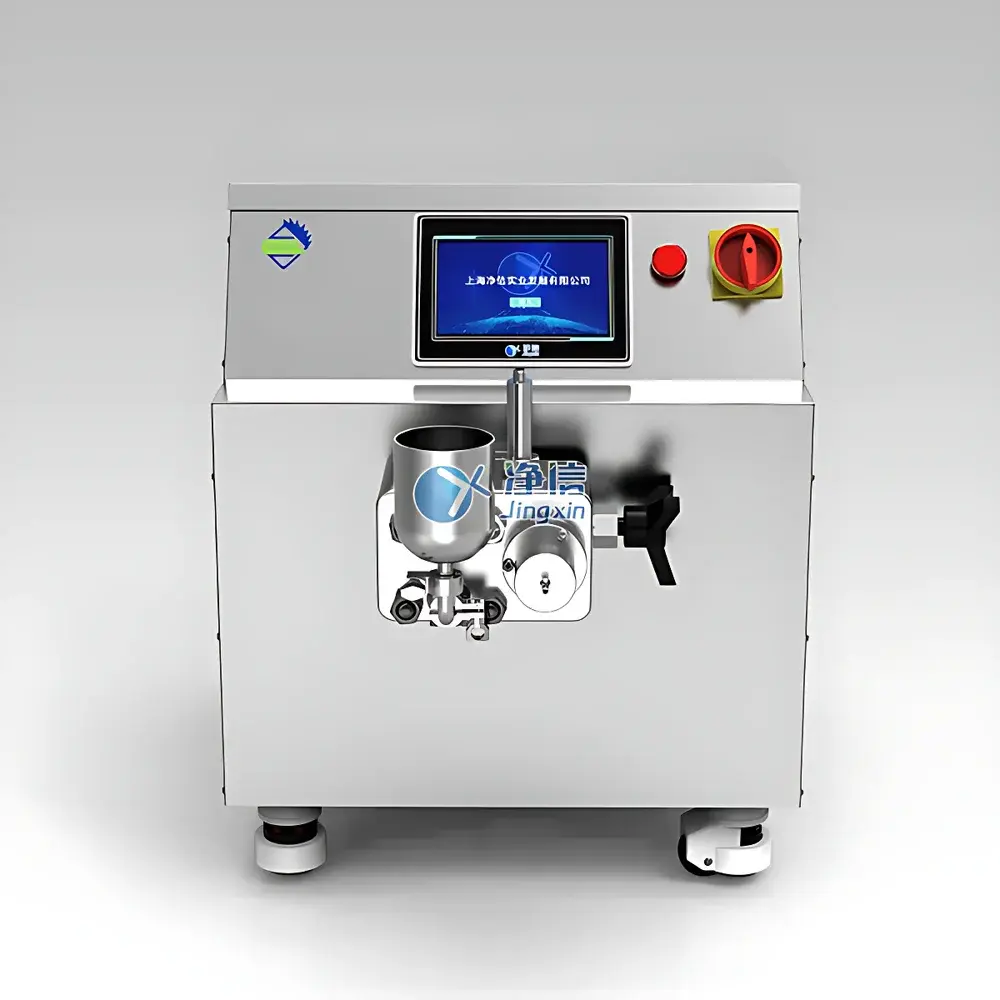
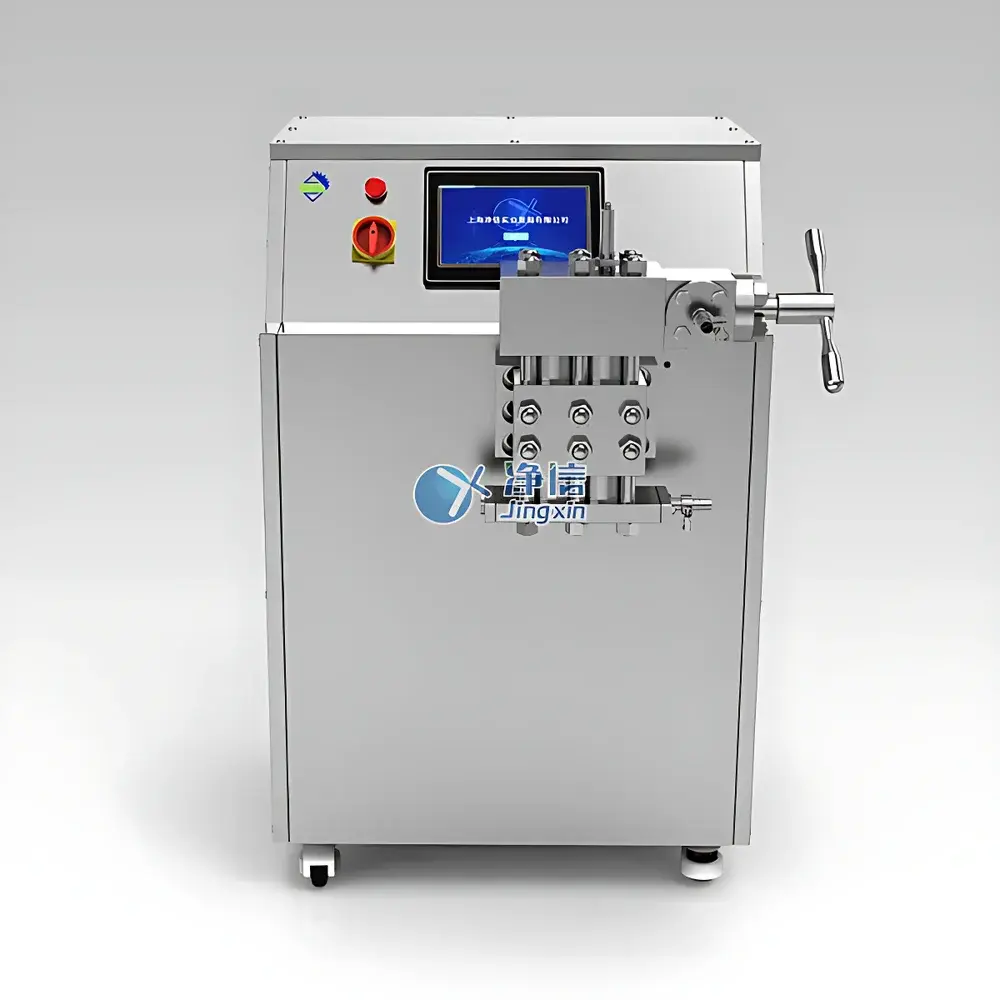
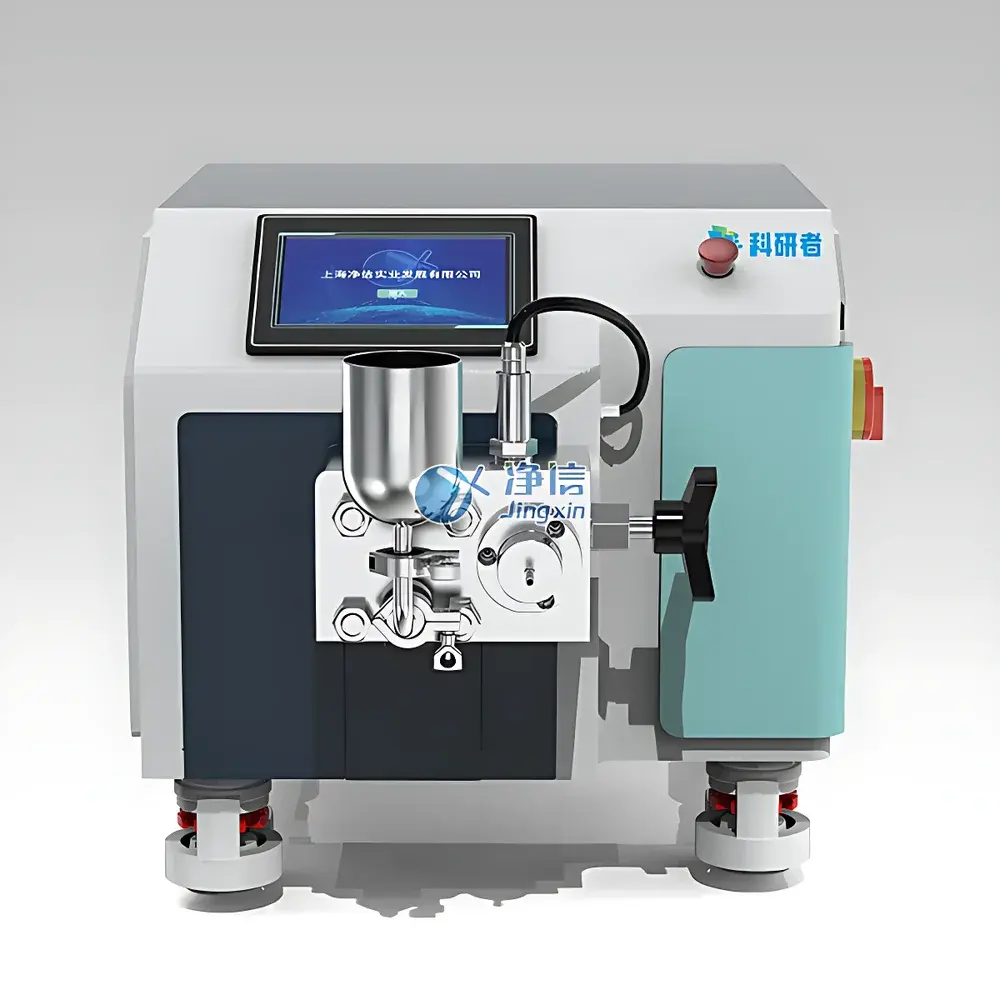
The JX-ZLJ Liposome Extruder System is an engineered solution designed for precise, reproducible size homogenization of lipid-based nanocarriers and other colloidal dispersions. It operates on the principle of controlled extrusion—forcing suspensions under regulated hydraulic pressure through track-etched polycarbonate or regenerated cellulose membranes with defined pore geometries (100–400 nm). When integrated with a high-pressure homogenizer, the system enables a two-stage particle engineering workflow: initial coarse disruption via cavitation, shear, and impact in the homogenizer, followed by deterministic size fractionation and narrow distribution refinement in the extruder chamber. This hybrid approach addresses intrinsic limitations of single-stage processing—particularly polydispersity in liposomal preparations—and supports rigorous process development under GLP/GMP-aligned laboratory conditions. The jacketed thermal management system allows active temperature control (5–80 °C), enabling both thermal sterilization (≥121 °C steam-compatible housing) and cryopreservation of thermolabile biologics during extrusion.
Key Features
- Tool-free membrane exchange mechanism compatible with standard 25 mm diameter track-etched membranes (e.g., Whatman Nuclepore™, Sterlitech™)
- Jacketed stainless steel (SUS 316L) chamber with uniform thermal transfer—supports heating for terminal sterilization or cooling to preserve protein conformation and membrane integrity
- Pressure-regulated operation up to 1000 psi working pressure (2000 psi design limit), calibrated for repeatable extrusion cycles
- Minimal hold-up volume (<0.3 mL) ensures high sample recovery and reduces cross-contamination risk between batches
- GMP-conformant construction: electropolished interior surfaces, zero dead-leg geometry, and autoclavable components validated per ISO 13485 and FDA 21 CFR Part 11 data integrity requirements
- Modular interface for direct coupling with commercial high-pressure homogenizers (e.g., Microfluidics M-110P, Avestin EmulsiFlex-C5), supporting continuous inline processing
Sample Compatibility & Compliance
The JX-ZLJ accommodates aqueous lipid dispersions, microemulsions, polymeric nanoparticles, exosome suspensions, and viscous bioconjugates (up to 15,000 cP at 25 °C). Its chemically inert 316L wetted path resists degradation from organic solvents (e.g., chloroform/methanol mixtures used in thin-film hydration), acidic buffers (pH 3.0–10.5), and chaotropic agents. All materials comply with USP Class VI biological safety standards. The system meets ISO 22442-1 (medical device biological evaluation) and is suitable for use in ISO 5 (Class 100) cleanrooms. Documentation packages include material traceability certificates, surface roughness reports (Ra ≤ 0.4 µm), and sterilization cycle validation templates aligned with EN 285 and ASME BPE-2022.
Software & Data Management
While the JX-ZLJ is manually operated, its pressure and temperature parameters are fully recordable via external digital gauges and data loggers compliant with 21 CFR Part 11. Integration-ready analog outputs (4–20 mA) enable connection to SCADA or LIMS platforms for audit-trail generation. Process parameters—including extrusion cycles, inlet/outlet temperatures, and applied pressure profiles—are logged with time-stamped metadata, supporting regulatory submissions (e.g., IND, DMF) and internal quality audits. Optional third-party software modules provide statistical process control (SPC) charting for particle size trend analysis across batches.
Applications
- Pharmaceutical Development: Preparation of unilamellar liposomes for mRNA encapsulation, siRNA delivery, and vaccine adjuvant formulation; critical for meeting USP <729> light-scattering particle size specifications
- Cosmetic Science: Stabilization of retinoid, coenzyme Q10, and vitamin C nanocarriers; supports ISO 22716-compliant cosmetic product development
- Food Technology: Encapsulation of omega-3 fatty acids, anthocyanins, and probiotics for enhanced bioavailability and shelf-life extension
- Molecular Biology: Reconstitution of proteoliposomes for membrane protein structural studies (cryo-EM sample prep) and synthetic biology chassis engineering
- QC/QA Laboratories: Reference-standard generation for dynamic light scattering (DLS) calibration and nanoparticle tracking analysis (NTA) verification
FAQ
Can the JX-ZLJ be used without integration to a high-pressure homogenizer?
Yes—it functions as a standalone extrusion device for post-hydration size reduction of pre-formed liposomes or vesicles.
What membrane types are validated for use with this system?
Track-etched polycarbonate (PC), mixed cellulose ester (MCE), and regenerated cellulose (RC) membranes with nominal pore sizes from 50 nm to 1000 nm.
Is the chamber volume adjustable?
No—the fixed 10 mL chamber ensures consistent shear history and residence time; smaller volumes are processed using proportional pressure adjustment and multi-pass protocols.
Does the system support sterile filtration validation per ASTM F838-22?
Yes—when paired with certified 0.22 µm sterilizing-grade membranes and validated steam cycles, it meets bacterial retention requirements for aseptic processing.
How is temperature uniformity verified across the extrusion path?
Thermal mapping per ASTM E2251-21 confirms ±0.8 °C variance across the chamber wall and fluid path at steady-state conditions.



