
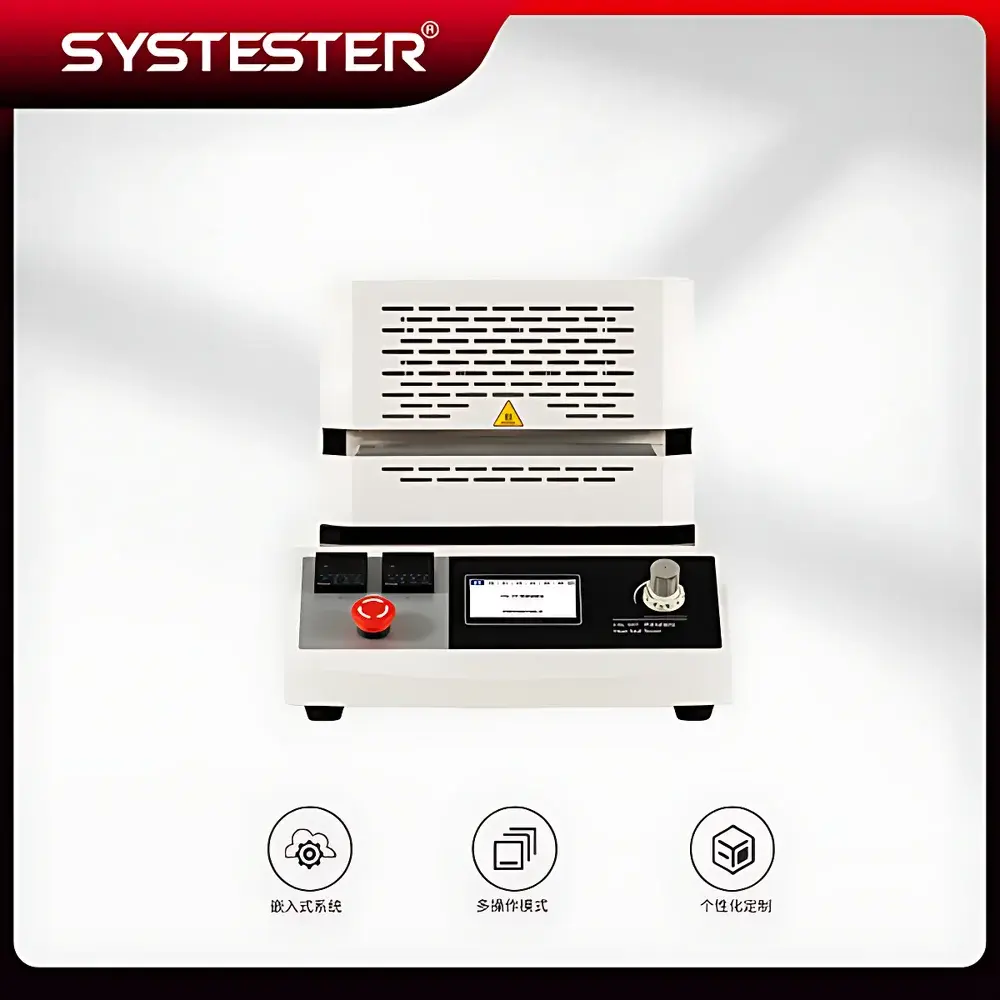
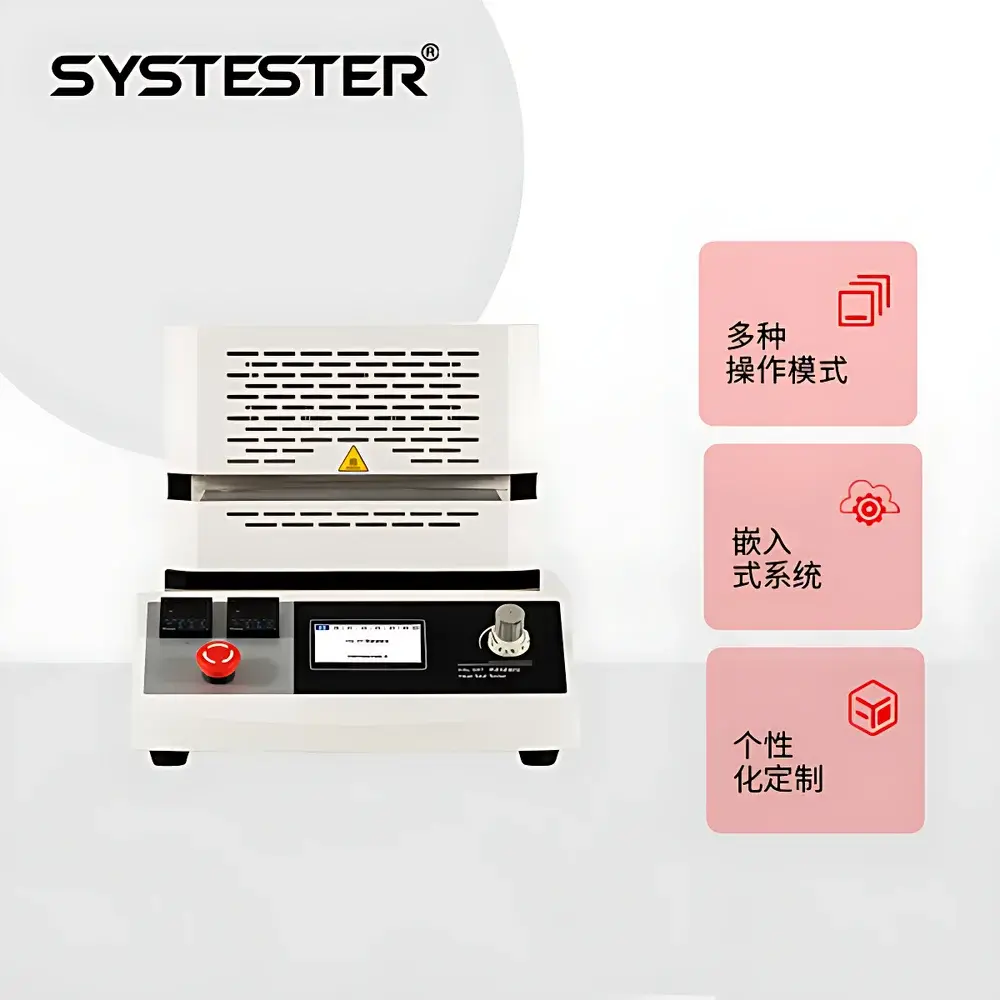
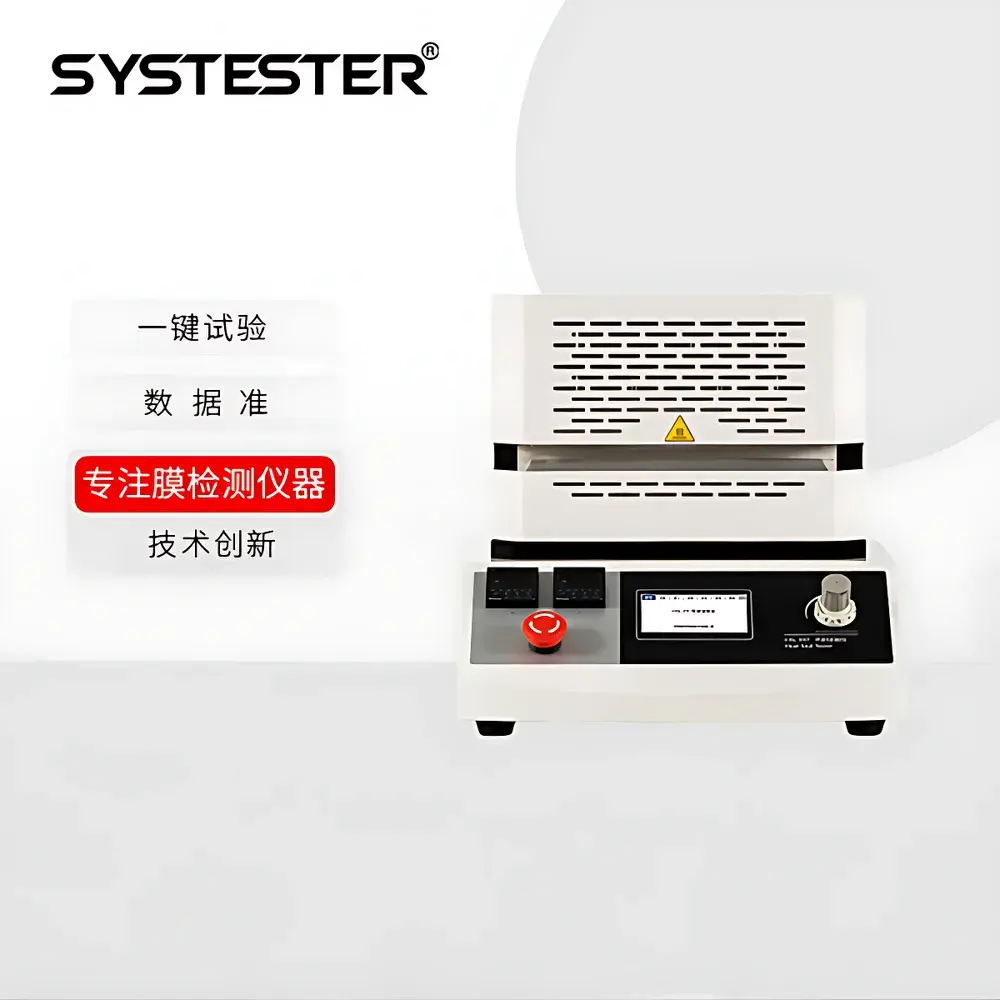
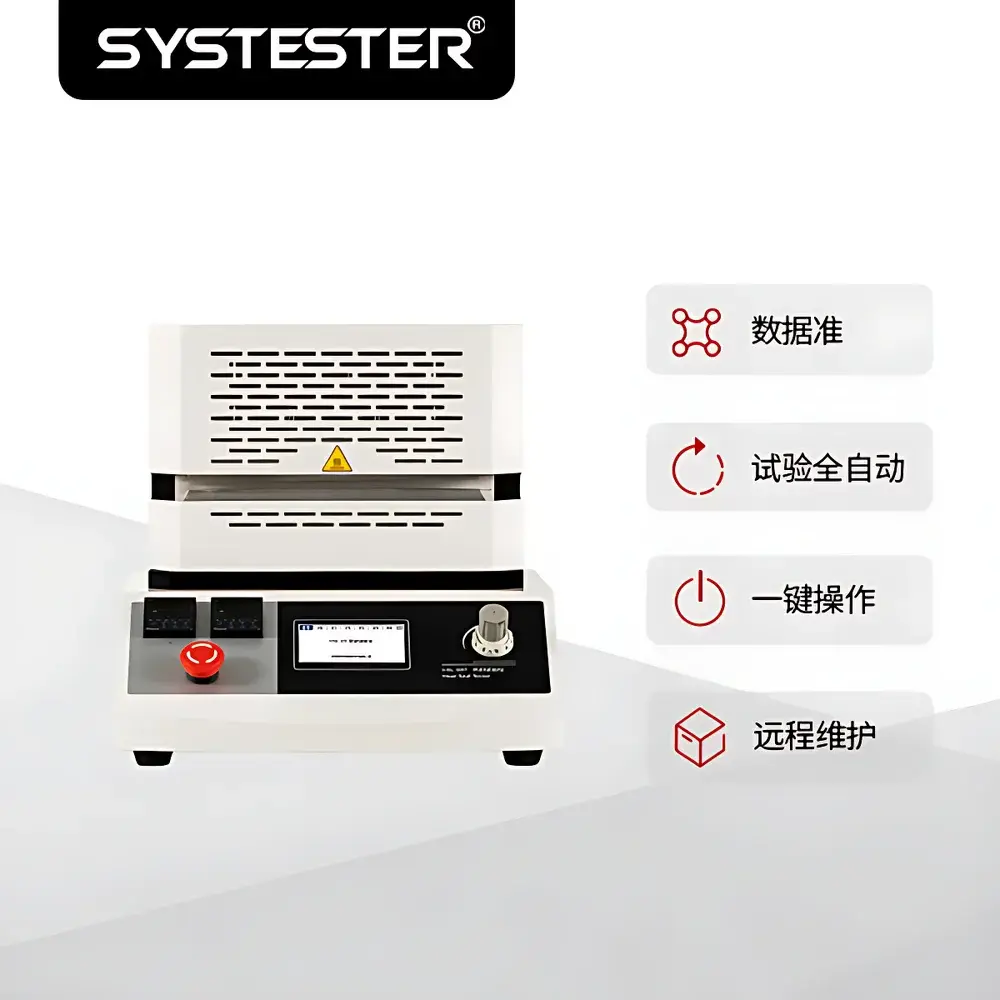
SYSTESTER Jinan Heat Sealing Tester
| Brand | SYSTESTER |
|---|---|
| Origin | Shandong, China |
| Manufacturer Type | Authorized Distributor |
| Country of Origin | China |
| Model | Jinan SYSTESTER Heat Sealing Tester |
| Price Range | USD 4,200 – 7,000 |
| Touchscreen Interface | Industrial TFT LCD |
| UI Design | Zero-navigation-depth flat interface |
| Temperature Control | Dual independent sealing bars |
| Max Operating Temperature | 300 °C |
| Temp Range | RT + 6 °C to 300 °C |
| Temp Accuracy | ±0.2 °C |
| Sealing Time | 0.1–999.9 s |
| Sealing Pressure | 0.05–1.1 MPa |
| Sealing Area | 265 mm × 12 mm (customizable) |
| Sealing Mode | Dual-bar independent control |
| Pneumatic Interface | Ø6 mm |
| Air Supply Requirement | 0.05–1.1 MPa (user-supplied) |
| Dimensions (L×W×H) | 410 × 396 × 416 mm |
| Weight | 33 kg |
| Power | AC 220 V, 50 Hz |
| Safety Features | Emergency stop button, anti-scald housing, fanless design |
| Noise Level | <35 dB(A) |
| Standard Compliance | QB/T 2358 (equivalent to ZBY 28004), ASTM F2029, YBB00212005-2015 |
| Data Output | Integrated thermal printer |
| Communication Interface | Standard RS232/USB |
| Optional Integration | DSM Laboratory Data Management System (sold separately) |
Overview
The SYSTESTER Jinan Heat Sealing Tester is a precision-engineered laboratory instrument designed for quantitative evaluation of heat seal integrity in flexible packaging materials. It operates on the principle of controlled thermal compression—applying precisely regulated temperature, pressure, and dwell time to replicate industrial sealing conditions in a validated, repeatable manner. This enables objective measurement of seal strength, consistency, and failure mode across diverse substrates including polyethylene (PE), polypropylene (PP), polyester (PET), aluminum foil laminates, PVC rigid sheets, and multilayer coextruded films. The device meets the fundamental physical test requirements defined in international packaging standards for seal quality assurance, serving as a critical tool in R&D labs, quality control departments, and contract testing facilities supporting pharmaceutical blister packaging, food pouch development, medical device sterile barrier validation, and consumer goods packaging engineering.
Key Features
- Industrial-grade 7-inch TFT touchscreen with zero-navigation-depth UI architecture—eliminates hierarchical menus and reduces operator training time by up to 60%.
- Dual independent sealing bars with separate PID temperature controllers, enabling comparative testing of asymmetric seal profiles or differential material response under identical process parameters.
- High-stability heating system engineered for continuous operation at 300 °C with ±0.2 °C thermal accuracy—verified per ASTM E220 calibration traceability protocols.
- Fanless thermal management architecture ensures silent operation (<35 dB[A]) and eliminates particulate contamination risk—critical in cleanroom-adjacent QC environments.
- Integrated thermal printer outputs full-test reports with timestamp, parameter set, operator ID (if logged), and pass/fail status per user-defined acceptance criteria.
- Comprehensive safety system: dual-channel emergency stop circuit, insulated sealing head housing, automatic thermal cutoff at 310 °C, and mechanical interlock preventing actuation during door open state.
- Standard RS232 and USB interfaces support direct connection to LIMS or MES platforms; optional DSM Laboratory Data Management System provides 21 CFR Part 11-compliant audit trails, electronic signatures, and role-based access control.
Sample Compatibility & Compliance
The tester accommodates standard film widths up to 265 mm and thicknesses ranging from 20 µm to 500 µm—including metallized, coated, and barrier-laminated structures. Its adjustable pneumatic pressure range (0.05–1.1 MPa) supports both low-force pharmaceutical foil seals and high-pressure industrial composite lamination validation. All operational parameters comply with globally recognized test methodologies: QB/T 2358 (Chinese national standard, technically aligned with ISO 9001-based packaging verification), ASTM F2029 (Standard Test Method for Measuring Heat Seal Strength of Thermoplastic Films and Laminates), and YBB00212005-2015 (Chinese Pharmacopoeia standard for pharmaceutical blister and strip packaging). Device firmware and calibration documentation are structured to support GLP/GMP audits and FDA pre-submission reviews.
Software & Data Management
Built-in firmware supports parameter recall, test sequence programming, and real-time graphical display of thermal ramp profiles. Data export is available in CSV and PDF formats via USB storage or direct serial transmission. When paired with the optional DSM Laboratory Data Management System (sold separately), the instrument integrates into enterprise-scale quality infrastructure: automated data archiving, configurable pass/fail logic engines, trend analysis dashboards, and electronic record retention compliant with 21 CFR Part 11 Annex 11 requirements. All user actions—including parameter modification, report generation, and calibration events—are time-stamped and cryptographically signed within the DSM environment.
Applications
- Optimization of heat seal parameter windows (temperature/time/pressure) during packaging line qualification.
- Comparative evaluation of seal performance across resin grades, additive packages, or surface treatments (e.g., corona vs. plasma activation).
- Accelerated aging studies correlating seal integrity loss with storage conditions (humidity, temperature cycling).
- Root cause analysis of seal failures—distinguishing between adhesive failure, cohesive failure, or thermal degradation modes via peel testing follow-up.
- Regulatory submission support for packaging validation dossiers under ICH Q5C, ISO 11607-1, and USP <1207> guidance documents.
FAQ
What pneumatic supply specifications are required for operation?
A clean, dry, oil-free compressed air source delivering 0.05–1.1 MPa through a standard Ø6 mm push-to-connect fitting is required. An inline filter-regulator-lubricator (FRL) unit is recommended for long-term reliability.
Is the sealing bar width customizable beyond the standard 265 mm × 12 mm configuration?
Yes—custom sealing dies (including stepped, contoured, or multi-zone configurations) are available upon request and subject to mechanical compatibility assessment.
Does the instrument support automated peel strength testing after sealing?
No—the SYSTESTER Jinan Heat Sealing Tester performs only the thermal sealing step. Peel strength must be measured using a separate tensile tester (e.g., ASTM F88-compliant instrument) with appropriate grips and fixtures.
Can test data be exported directly to Excel without DSM software?
Yes—CSV files containing all measured parameters and timestamps can be saved to USB flash drives for offline analysis.
What calibration services are available?
Factory-certified calibration includes NIST-traceable temperature verification (at 100 °C, 200 °C, and 300 °C), pressure transducer validation, and timer accuracy check—performed annually or per internal SOP requirements.





