
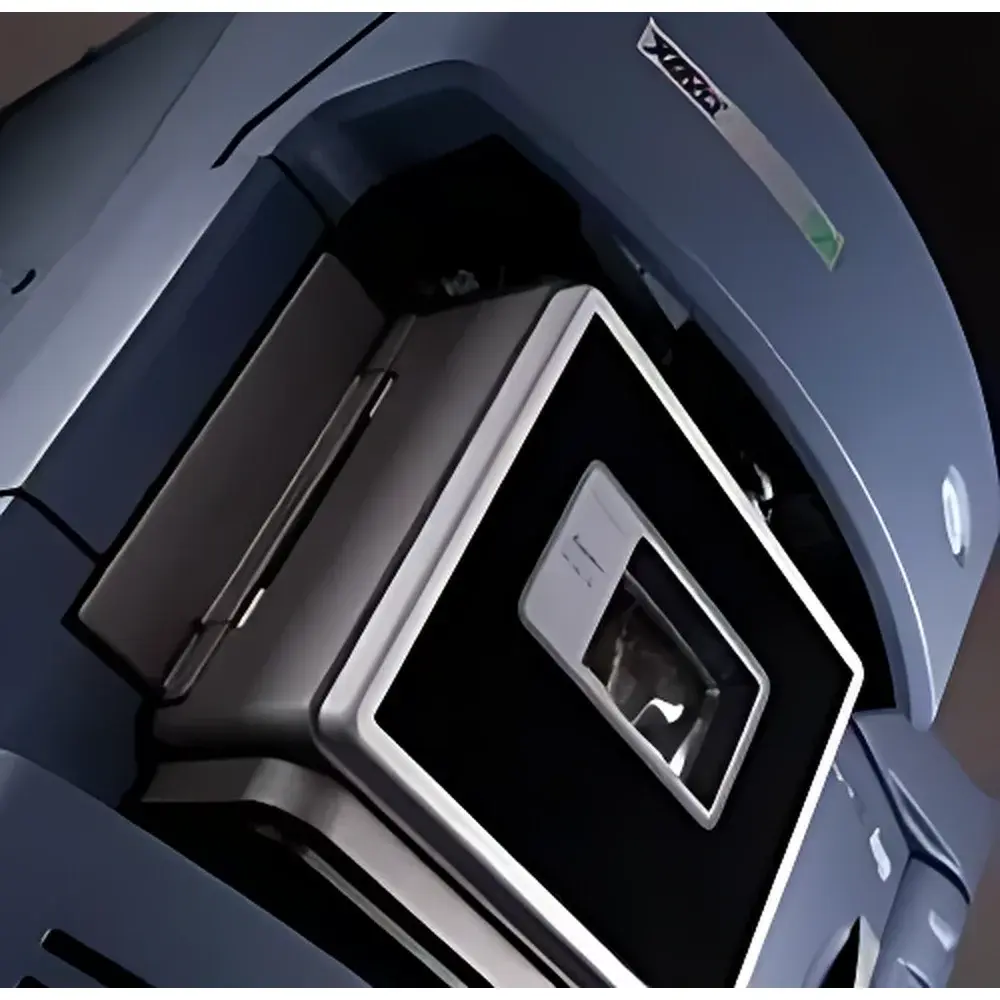
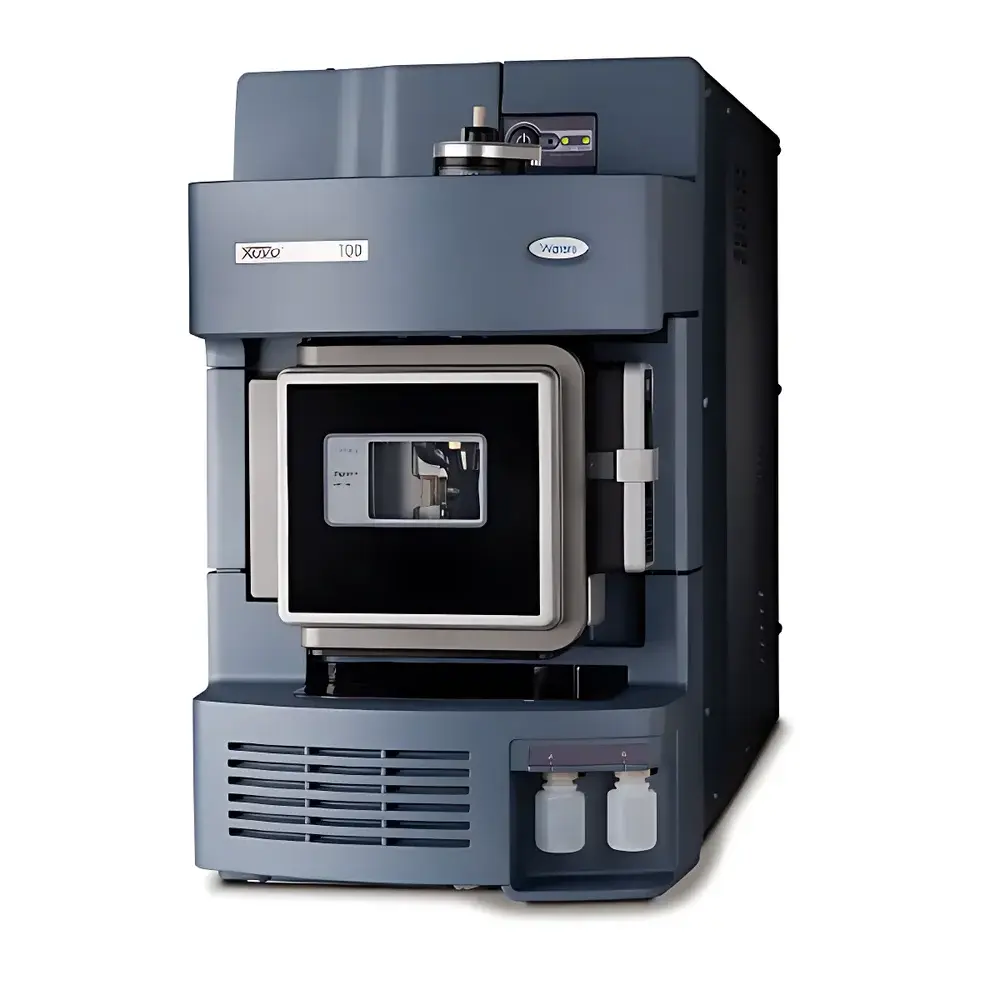
Waters Xevo TQD Triple Quadrupole Mass Spectrometer
| Brand | Waters |
|---|---|
| Origin | USA |
| Instrument Type | Tandem Quadrupole (QqQ) |
| Model | Xevo TQD |
| Ionization Flexibility | Universal Source Architecture Supporting ESI, APCI, ESCi, and Optional Atmospheric Pressure Photoionization (APPI) |
| Chromatographic Compatibility | Optimized for UPLC and HPLC Coupling |
| Data Acquisition Speed | High-speed MRM acquisition supporting sub-3-second UPLC peaks |
| Software Suite | MassLynx v4.2 with IntelliStart, Quanpedia, QCMonitor, TargetLynx, TrendPlot, and RADAR™ Mode |
| Regulatory Compliance Support | 21 CFR Part 11–compliant audit trails, electronic signatures, and GLP/GMP-ready workflow tools |
| Hardware Architecture | Robust RF-only quadrupole design with T-Wave collision cell for enhanced ion transmission and fragmentation efficiency |
Overview
The Waters Xevo TQD is a high-performance triple quadrupole (QqQ) mass spectrometer engineered for routine quantitative analysis in regulated and research laboratories. It operates on the principle of tandem mass spectrometry—where the first quadrupole (Q1) selects a precursor ion, the second (q2) acts as a collision cell for controlled fragmentation via inert gas-induced collision-induced dissociation (CID), and the third (Q3) filters and detects specific product ions. This selective reaction monitoring (SRM) or multiple reaction monitoring (MRM) architecture delivers exceptional specificity, sensitivity, and reproducibility for trace-level quantitation in complex matrices. Designed as an integral component of Waters’ UPLC/MS/MS platforms, the Xevo TQD is optimized to handle narrow chromatographic peaks (2–3 seconds wide) typical of ultra-performance liquid chromatography, ensuring sufficient data points across each peak without sacrificing duty cycle or signal fidelity.
Key Features
- Universal Ion Source Architecture: Supports electrospray ionization (ESI), atmospheric pressure chemical ionization (APCI), electrospray/APCI combined (ESCi), and optional atmospheric pressure photoionization (APPI), enabling broad analyte coverage across polarity and volatility ranges.
- T-Wave Collision Cell: A pressurized, RF-only ion guide that improves ion transmission efficiency and provides consistent, energy-controlled fragmentation—critical for method robustness and inter-laboratory reproducibility.
- IntelliStart Automation: Fully automated system initialization, calibration, and performance verification—reducing operator dependency and minimizing setup time prior to sample analysis.
- Quanpedia Method Builder: Auto-generates MRM transitions, dwell times, and instrument parameters based on compound databases or user-defined inputs, accelerating method development while maintaining regulatory compliance.
- RADAR™ Mode: Simultaneously acquires quantitative (MRM) and qualitative (full-scan or MSE-like) data in a single injection—enabling real-time detection of matrix interferences, metabolites, impurities, and degradation products alongside target analytes.
- QCMonitor Real-Time Quality Control: Continuously evaluates key performance indicators—including retention time shift, peak area drift, and signal-to-noise ratio—and triggers alerts or corrective actions when predefined thresholds are exceeded.
Sample Compatibility & Compliance
The Xevo TQD accommodates diverse sample types—from biological fluids (plasma, urine, tissue homogenates) and environmental extracts to pharmaceutical formulations and food matrices—without requiring hardware modification. Its ion source design minimizes carryover and facilitates rapid cleaning between high- and low-concentration runs. From a regulatory standpoint, the system supports full audit trail functionality, electronic signatures, and secure user access control per FDA 21 CFR Part 11 requirements. Integrated software modules comply with GLP and GMP documentation standards, including version-controlled method storage, raw data integrity assurance, and traceable change logs—all essential for submission-ready analytical reports in clinical, pharmaceutical, and contract research settings.
Software & Data Management
Data acquisition and processing are managed through MassLynx v4.2, a validated, modular software platform. TargetLynx performs automated peak integration, calibration curve fitting (linear, quadratic, weighted), and report generation with configurable pass/fail criteria. TrendPlot enables longitudinal performance assessment—tracking system stability, column lifetime, or assay precision over days, weeks, or months. All raw and processed data are stored in a structured, vendor-neutral format compatible with laboratory information management systems (LIMS) and enterprise data repositories. Backups, archiving, and metadata tagging follow ISO/IEC 17025-aligned data governance protocols.
Applications
The Xevo TQD is routinely deployed in bioanalytical method validation (BMV), pharmacokinetic (PK) and toxicokinetic (TK) studies, residue analysis in agriculture and food safety, environmental contaminant screening (e.g., PFAS, pesticides, endocrine disruptors), and quality control of small-molecule APIs. Its ability to resolve co-eluting isobaric species—combined with programmable polarity switching and dynamic dwell time allocation—makes it especially suited for multiplexed assays involving >100 analytes per run under cGMP conditions.
FAQ
What distinguishes the Xevo TQD from other triple quadrupole systems in terms of ion transmission efficiency?
The T-Wave collision cell uses traveling-wave technology to maintain high ion flux across varying m/z ranges, resulting in improved sensitivity for both low- and high-mass analytes without retuning.
Can the Xevo TQD be upgraded to support high-resolution mass spectrometry?
No—the Xevo TQD is a dedicated unit-mass-accuracy QqQ platform; for accurate mass workflows, Waters recommends the Xevo G2-XS QTof or SELECT SERIES Cyclic IMS platforms.
Is RADAR™ mode compatible with all supported ionization sources?
Yes—RADAR™ operates independently of ionization mode and is fully functional with ESI, APCI, ESCi, and APPI configurations.
How does the system ensure data integrity during unattended overnight runs?
QCMonitor continuously validates peak shape, retention time consistency, and internal standard response; deviations trigger automatic re-injection or notification via email/SNMP trap.
Does MassLynx support automated method transfer between Xevo TQD and newer Xevo TQ-S micro or Xevo TQ Absolute systems?
MRM methods are largely transferable, though dwell time optimization and collision energy tuning may be required due to differences in detector response and collision cell geometry.




