
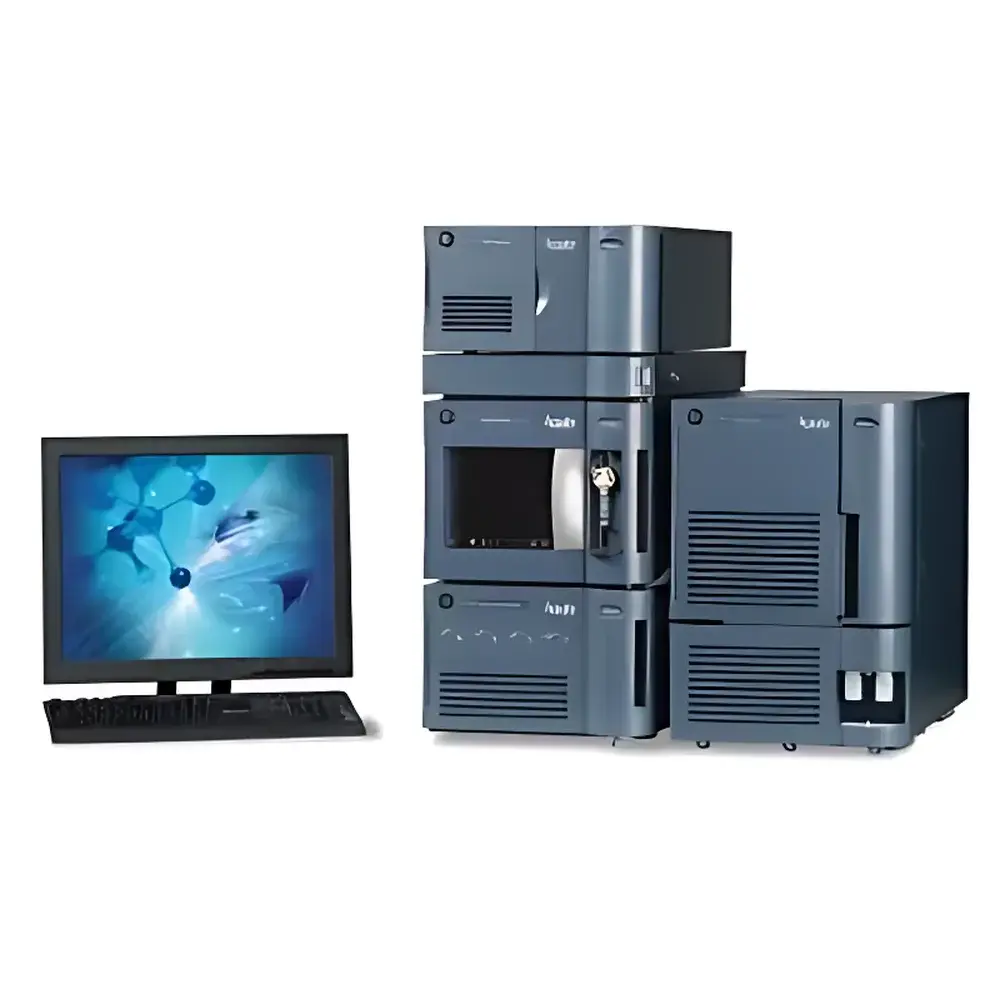
Waters ACQUITY UPLC System
| Brand | Waters |
|---|---|
| Origin | USA |
| Model | ACQUITY UPLC System |
| Instrument Type | Ultra-High Performance Liquid Chromatograph |
| Sample Introduction | Integrated autosampler with flow-through needle design (H-Class), nano/micro-flow capability (M-Class), or high-precision low-dead-volume architecture (I-Class) |
| Pressure Rating | Up to 15,000 psi (103 MPa) |
| Flow Rate Range | 0.001–2.0 mL/min (model-dependent) |
| Column Temperature Control | 5–90 °C |
| UV/Vis Detection Wavelength Range | 190–700 nm (with optional PDA or TUV detectors) |
| Data Acquisition Rate | Up to 100 Hz |
Overview
The Waters ACQUITY UPLC System represents a foundational advancement in liquid chromatography, engineered to overcome the physical and kinetic limitations of conventional HPLC through the integration of sub-2 µm hybrid particle technology, ultra-low dispersion fluidics, and high-pressure precision pumping. Unlike traditional 5 µm particle-based systems, UPLC leverages the van Deemter equation’s optimal linear velocity region—achieving higher resolution, sensitivity, and speed by operating at pressures up to 15,000 psi (103 MPa). This enables significantly reduced analysis times without sacrificing peak capacity or quantitative reproducibility. The system is not merely an incremental upgrade but a redefinition of chromatographic performance boundaries, validated across regulated and discovery environments for its robustness under GLP, GMP, and 21 CFR Part 11-compliant workflows.
Key Features
- Patented BEH (Bridge Ethyl Hybrid) sub-2 µm particle chemistry—delivering enhanced surface area, pH stability (1–12), and mechanical resilience under high-pressure conditions
- Modular platform architecture supporting three core configurations: I-Class (ultra-low volume, high-resolution separations), M-Class (nano-to-microflow LC/MS coupling), and H-Class (quaternary solvent mixing with backward compatibility for legacy HPLC methods)
- Integrated low-dead-volume flow paths (<100 nL from pump to detector) minimizing band broadening and ensuring retention time stability <0.02 min RSD (n=50)
- Temperature-controlled column manager with active pre-heating and post-cooling zones to stabilize retention and improve method transferability
- Autosamplers featuring flow-through needle technology (H-Class) or pressure-assisted injection (I/M-Class) to eliminate carryover and support injection volumes from 0.1 µL to 100 µL
- Real-time pressure monitoring with adaptive backpressure regulation to maintain consistent flow dynamics across gradient elution
Sample Compatibility & Compliance
The ACQUITY UPLC System accommodates diverse sample matrices—including plasma, tissue homogenates, environmental extracts, food digests, and synthetic reaction mixtures—without requiring extensive pre-purification. Its low system volume and high-pressure tolerance allow direct coupling to mass spectrometers (e.g., Xevo TQ-S, Vion IMS QTof) with minimal signal suppression. From a regulatory standpoint, the platform supports full audit trail generation, electronic signatures, and secure user access controls per FDA 21 CFR Part 11 requirements. Method validation documentation aligns with ICH Q2(R2), USP , and ISO/IEC 17025 frameworks. All hardware components are CE-marked and comply with IEC 61010-1 safety standards for laboratory equipment.
Software & Data Management
Controlled via Waters Empower Chromatography Data Software (CDS) or MassLynx MS platform, the ACQUITY UPLC enables seamless method development, execution, and reporting. Empower 3 and Empower 4 offer integrated tools for UPLC method conversion—including automatic scaling of flow rates, gradient times, and injection volumes based on column geometry and particle size. Built-in system suitability testing (SST) modules enforce predefined criteria (e.g., tailing factor ≤2.0, resolution ≥2.0) before sample injection. Raw data files (.raw) are stored in vendor-neutral formats compliant with ASAM OpenData standards, facilitating third-party processing and long-term archival per ISO 16363 digital preservation guidelines.
Applications
- ADME/PK studies: Quantitative bioanalysis of small molecules and metabolites in biological matrices using M-Class nano-LC/MS workflows
- Clinical biomarker discovery: High-throughput profiling of polar and non-polar metabolites in serum or CSF with I-Class UPLC-MS/MS
- Food safety screening: Multi-residue pesticide analysis in complex food matrices with H-Class UPLC-PDA/FLR detection
- Biopharmaceutical characterization: Peptide mapping, glycan profiling, and charge variant analysis using BEH C4 and BEH Amide columns
- Environmental contaminant monitoring: Trace-level detection of PFAS, pharmaceuticals, and endocrine disruptors in wastewater effluents
- Method development & transfer: Accelerated optimization of selectivity, efficiency, and robustness using embedded DOE (Design of Experiments) tools in Empower
FAQ
Can legacy HPLC methods be directly transferred to the ACQUITY UPLC platform?
Yes—Empower software includes automated method translation utilities that scale gradient programs, flow rates, and injection volumes based on column dimensions and particle size. H-Class systems retain quaternary pumping for maximum flexibility during transitional workflows.
What column chemistries are validated for use with ACQUITY UPLC systems?
Waters BEH family (C18, C8, Shield RP18, Phenyl, HILIC, Amide), CORTECS (core-shell) columns, and select third-party sub-2 µm phases certified for >10,000 psi operation.
Is the system compatible with non-Waters mass spectrometers?
Yes—standard LC-MS interfaces (e.g., ESI, APCI) and analog/digital output protocols ensure interoperability with Thermo, Sciex, Agilent, and Bruker instruments.
How does the system ensure data integrity in regulated laboratories?
Full 21 CFR Part 11 compliance is achieved through role-based access control, immutable audit trails, electronic signatures, and periodic system suitability verification logs—all independently verifiable during FDA or EMA inspections.





