
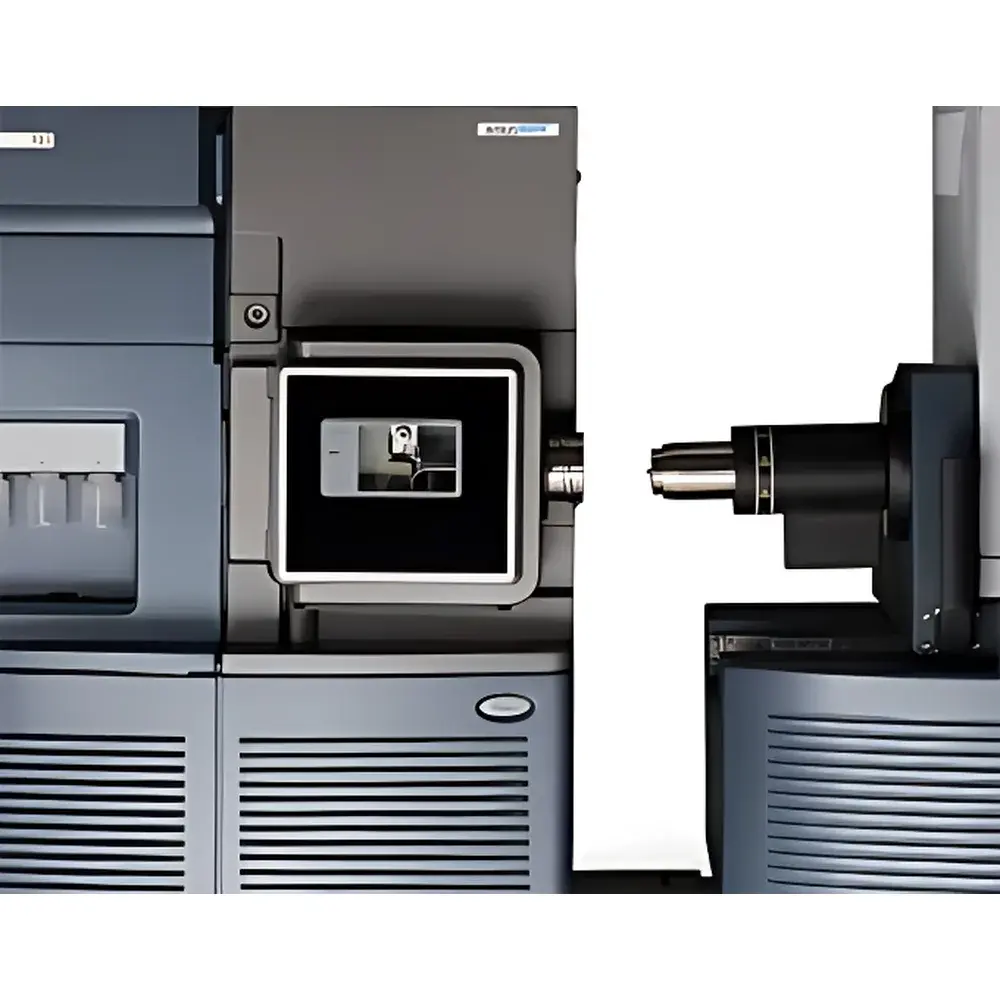
Waters APGC Ion Source for Xevo®, SYNAPT®, and G2-S QTof Mass Spectrometers
| Brand | Waters |
|---|---|
| Origin | USA |
| Model | Atmospheric Pressure Gas Chromatography (APGC) Ion Source |
| Instrument Type | Atmospheric Pressure Chemical Ionization (APCI)-style GC-compatible ion source for triple quadrupole, Q-TOF, and ion mobility–enabled mass spectrometers |
| Compatibility | Xevo TQ-S, Xevo G2-S QTof, SYNAPT G2-Si |
| Vacuum Requirement | None (operates at atmospheric pressure) |
| Switching Time | <2 minutes between UPLC and GC modes |
| Design Principle | Engineered Simplicity™ |
| Regulatory Alignment | Supports 21 CFR Part 11-compliant workflows via MassLynx™ and UNIFI™ software |
Overview
The Waters Atmospheric Pressure Gas Chromatography (APGC) Ion Source is an engineered interface that extends high-performance gas chromatography–mass spectrometry (GC–MS) capability to Waters’ flagship mass spectrometry platforms—including the Xevo TQ-S, Xevo G2-S QTof, and SYNAPT G2-Si systems. Unlike conventional electron ionization (EI) or vacuum-based chemical ionization (CI), APGC operates at ambient pressure using a heated, low-energy corona discharge plasma to generate analyte ions directly from the effluent of a standard GC column. This soft ionization mechanism preserves molecular integrity, yielding abundant quasi-molecular ions ([M+H]⁺, [M−H]⁻, or adducts) with minimal in-source fragmentation—enabling robust quantification, unambiguous identification, and enhanced signal-to-noise ratios for thermally labile, polar, or low-volatility compounds traditionally challenging for EI-GC/MS.
Key Features
- Atmospheric-pressure operation eliminates vacuum pump downtime during GC–UPLC method switching—reducing re-equilibration time to under two minutes.
- Modular, drop-in design compatible with existing Waters ion source mounts; no hardware modification required for integration into Xevo or SYNAPT platforms.
- Engineered Simplicity™ architecture enables intuitive alignment, routine maintenance, and source cleaning without specialized tools or service engineer intervention.
- Thermally stable ionization region (up to 500 °C) supports high-boiling-point analytes and complex matrices without thermal degradation or carbon buildup.
- Optimized gas flow dynamics and plasma geometry deliver consistent ion yield across wide concentration ranges and diverse compound classes—including steroids, lipids, pesticides, pharmaceutical impurities, and environmental contaminants.
- Fully integrated with StepWave™ (Xevo TQ-S), QuanTof™ (G2-S QTof), and T-Wave™ ion mobility (SYNAPT G2-Si) technologies for orthogonal selectivity enhancement.
Sample Compatibility & Compliance
APGC demonstrates broad compatibility with volatile and semi-volatile organic compounds eluting from standard 0.25–0.32 mm ID fused-silica GC columns (e.g., DB-5ms, HP-5, Rxi-5Sil MS). It accommodates split/splitless, PTV, and cold-on-column injection techniques. The source meets ISO/IEC 17025 requirements for method validation when used within GLP/GMP environments. When operated with MassLynx™ v4.2 or UNIFI™ Software, APGC workflows support audit trails, electronic signatures, and 21 CFR Part 11 compliance—including secure data archiving, user access controls, and change history logging.
Software & Data Management
APGC is natively supported in Waters’ MassLynx™ and UNIFI™ software suites. Method setup includes dedicated APGC-specific parameters (corona current, desolvation gas temperature, cone voltage ramping) accessible via guided wizards. All acquired data—including MSE, RADAR™, and HDMS™ acquisitions—are stored in vendor-neutral .raw format with embedded metadata. UNIFI enables automated peak detection, library matching (NIST, Wiley, custom libraries), and quantitative reporting with QC flagging per ICH Q2(R2) guidelines. Batch processing supports retrospective data mining across mixed LC/GC datasets without reacquisition.
Applications
- Ultra-trace quantification of regulated contaminants (e.g., PAHs, PCBs, dioxins) in food and environmental samples using Xevo TQ-S/APGC with StepWave™ ion transmission.
- Comprehensive screening of unknown metabolites and degradation products in stability-indicating studies via MSE acquisition on Xevo G2-S QTof/APGC.
- Structural elucidation of isomeric lipids and glycosylated small molecules leveraging collision cross-section (CCS) values derived from SYNAPT G2-Si/APGC ion mobility separations.
- High-throughput forensic toxicology workflows combining APGC’s reproducibility with RADAR™-driven real-time decision tree acquisition.
- Method transfer between legacy GC–EI systems and modern APGC–MS platforms—maintaining regulatory continuity while improving sensitivity and specificity.
FAQ
Is APGC compatible with all Waters mass spectrometers?
No—APGC is validated exclusively for Xevo TQ-S, Xevo G2-S QTof, and SYNAPT G2-Si platforms equipped with the Universal Source interface. It is not supported on SQ Detector 2 or ZQ systems.
Does APGC require modifications to the GC inlet or column configuration?
No—APGC interfaces directly to standard GC transfer lines using a proprietary heated adapter; no column trimming or inlet reconfiguration is needed.
How does APGC compare to traditional EI in terms of linear dynamic range?
APGC maintains linearity over 4–5 orders of magnitude (depending on analyte and matrix), comparable to EI for most compounds—but with significantly improved low-end sensitivity due to reduced chemical noise and enhanced molecular ion abundance.
Can APGC be used for negative-ion mode analysis?
Yes—APGC supports both positive- and negative-ion modes via polarity-switching capabilities inherent to the source electronics and controlled through MassLynx™ or UNIFI™ methods.
What maintenance intervals are recommended for routine APGC operation?
Source cleaning is recommended every 2–4 weeks for high-throughput labs; weekly visual inspection of the corona needle and cone is advised. Full refurbishment kits (including replacement needles, cones, and insulators) are available as Waters part numbers.





