
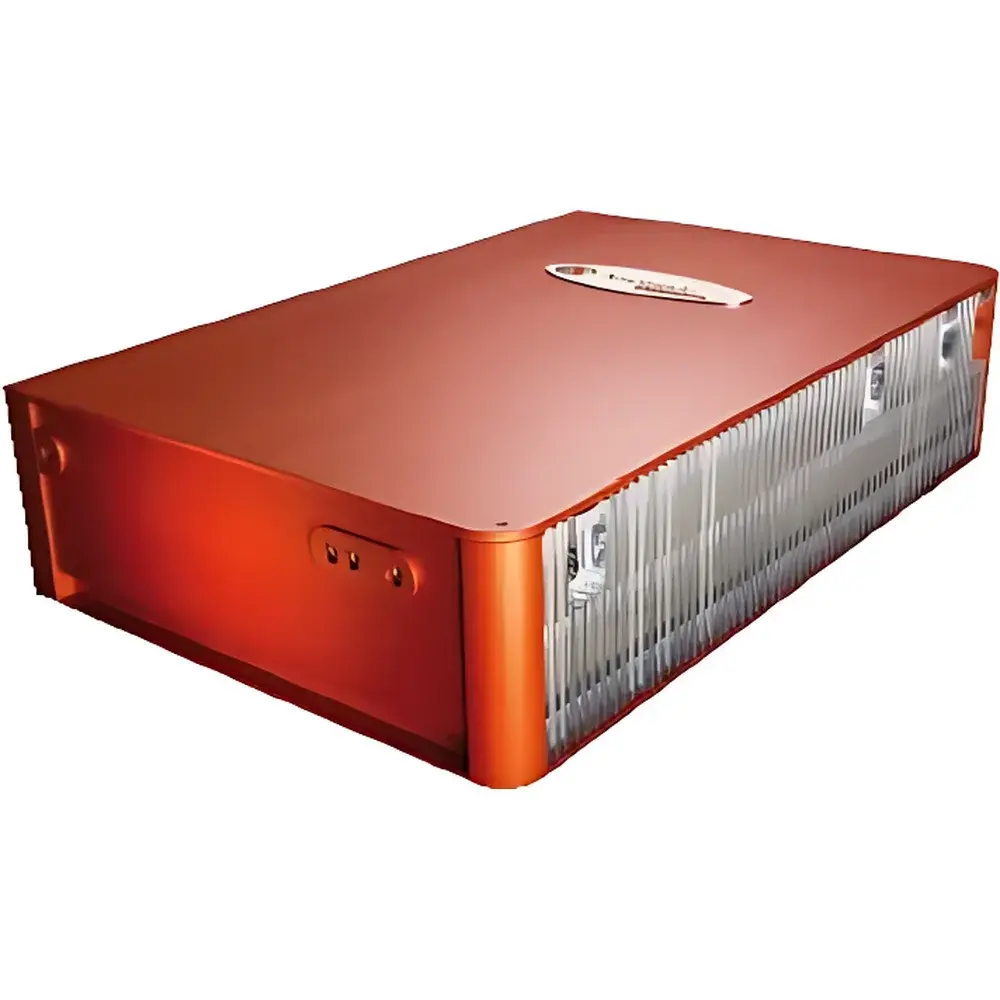
Amplitude MANGO Femtosecond Laser-Based Automatic Optical Parametric Amplifier (OPA)
| Brand | Amplitude |
|---|---|
| Country of Origin | France |
| Model | MANGO |
| Output Wavelength Range | 210 nm – 11,000 nm |
| Tuning Mechanism | Fully Automated Motorized OPA Stages |
| Pulse Duration Options | Standard (MANGO), Short-Pulse (MANGO SP), High-Energy (MANGO HE) |
| Repetition Rate Compatibility | Up to 2 MHz |
| Cooling Method | Air-Cooled |
| Enclosure | Sealed, Dust-Protected Industrial Housing |
| Polarization Maintenance | Single Output Port with Consistent Linear Polarization |
| Compliance | Designed for ISO 13406-1–compliant laser safety integration |
Overview
The Amplitude MANGO is an industrial-grade, fully automated optical parametric amplifier (OPA) engineered for ultrafast science and precision photonics applications. Built upon a robust femtosecond laser pump platform—typically synchronized with Amplitude’s Tangor or taccor oscillator/amplifier systems—the MANGO leverages non-linear crystal-based parametric amplification to generate widely tunable, high-fidelity output pulses across the deep-ultraviolet (210 nm) to mid-infrared (11,000 nm) spectral range. Unlike conventional OPAs requiring manual alignment or discrete stage swapping, the MANGO integrates motorized crystal positioning, dispersion compensation optics, and real-time wavelength calibration into a single sealed, air-cooled enclosure. Its core architecture adheres to strict industrial reliability standards, enabling stable operation in environments where vibration isolation, thermal drift control, and long-term repeatability are critical—such as cleanroom-based microfabrication labs or regulated biomedical imaging facilities.
Key Features
- Fully automated wavelength tuning from 210 nm to 11,000 nm via integrated motorized OPA stages and software-controlled crystal angle/phase-matching selection
- Three operational configurations: MANGO (standard broadband performance), MANGO SP (sub-30 fs pulse capability with full dispersion management for time-resolved spectroscopy), and MANGO HE (optimized for >100 µJ pump energy handling while preserving spectral bandwidth)
- Single-output-port design maintaining consistent linear polarization state across the entire tuning range—eliminating need for external polarization rotators or compensators
- Air-cooled, dust-sealed industrial housing rated for continuous 24/7 operation in ambient lab conditions (15–30 °C, <70% RH non-condensing)
- Native synchronization interface for pump lasers operating at repetition rates up to 2 MHz, supporting both burst-mode and CW-pumped parametric gain regimes
- Embedded firmware with factory-calibrated wavelength lookup tables traceable to NIST-traceable spectroradiometric references
Sample Compatibility & Compliance
The MANGO OPA is designed for use with commercially available Ti:sapphire, Yb-based, or Er:fiber femtosecond laser systems meeting ANSI Z136.1 and IEC 60825-1 Class 4 laser safety requirements. Its output beam profile, divergence, and pointing stability comply with ISO 11146-1/2 for beam propagation characterization. The system supports integration into ISO/IEC 17025-accredited laboratories through optional audit-ready logging (timestamped wavelength, energy, and pulse duration metadata). While not a medical device itself, MANGO-derived wavelengths are routinely deployed in preclinical ophthalmic imaging setups compliant with ISO 15004-2 for ocular laser safety. All mechanical and electrical interfaces conform to CE marking directives (2014/30/EU EMC, 2014/35/EU LVD) and RoHS 2011/65/EU material restrictions.
Software & Data Management
Control is executed via Amplitude’s proprietary OPA Control Suite—a Windows-based application supporting both local touchscreen and remote TCP/IP command protocols (SCPI-compliant syntax). The software provides real-time spectral monitoring using integrated USB-powered CCD spectrometers (optional), automatic recalibration routines triggered by temperature drift thresholds, and export of measurement logs in HDF5 format for MATLAB, Python (h5py), or LabVIEW interoperability. Audit trails include user ID, timestamp, parameter set hash, and hardware serial numbers—enabling compliance with FDA 21 CFR Part 11 requirements when deployed in GxP-regulated environments. Firmware updates are delivered via signed binary packages with SHA-256 verification.
Applications
- Multi-photon microscopy: Triple-photon excitation in deep-tissue neural imaging using 1300–1700 nm MANGO HE output
- Ultrafast spectroscopy: Sub-50 fs pump-probe studies in transient absorption and coherent anti-Stokes Raman scattering (CARS)
- Terahertz generation: Optical rectification in DAST or GaP crystals pumped by tunable near-IR MANGO output
- Industrial micromachining: Selective ablation of transparent dielectrics (e.g., fused silica, sapphire) using deep-UV (<250 nm) harmonics generated via MANGO-driven SHG/THG stages
- Gas-phase photochemistry: Resonant excitation of rovibrational transitions in atmospheric sensing platforms
FAQ
What pump laser specifications are required to drive the MANGO OPA?
The MANGO requires a femtosecond pump source with central wavelength between 780–1040 nm, pulse duration ≤150 fs, and average power ≥1 W (for MANGO/MANGO SP) or ≥5 W (for MANGO HE). Repetition rate must be stable within ±0.1% over 8 hours.
Can the MANGO be integrated into a vacuum chamber environment?
No—the MANGO is designed exclusively for ambient-pressure operation. Its air-cooling system and sealed but non-hermetic housing do not support vacuum compatibility. For UHV applications, custom feedthrough-integrated variants require direct engineering consultation with Amplitude.
Is spectral calibration traceable to national metrology institutes?
Yes—factory calibration uses NIST-traceable tungsten-halogen and deuterium lamp references, with uncertainty budgets documented per ISO/IEC 17025 Annex A. End-user recalibration kits are available upon request.
Does the system support third-party automation via LabVIEW or Python?
Yes—full SCPI command set documentation and Python API wrappers (amplitude_opa_sdk) are provided under commercial license. LabVIEW VIs are included in the standard delivery package.
What maintenance schedule is recommended for long-term reliability?
No routine optical alignment is required. Annual verification of wavelength accuracy and pulse energy linearity is recommended using the included calibration target set and certified photodiode sensor. Fan filter replacement every 12 months ensures optimal thermal management.




