
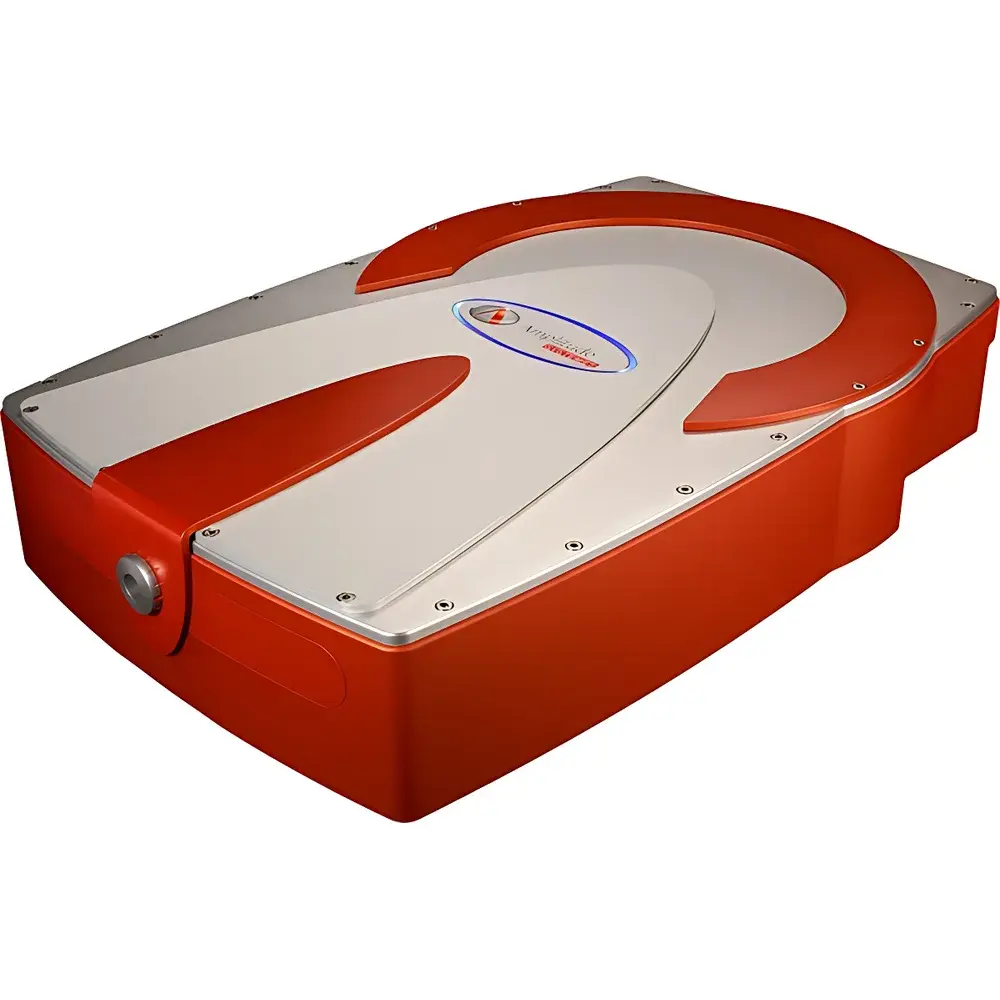
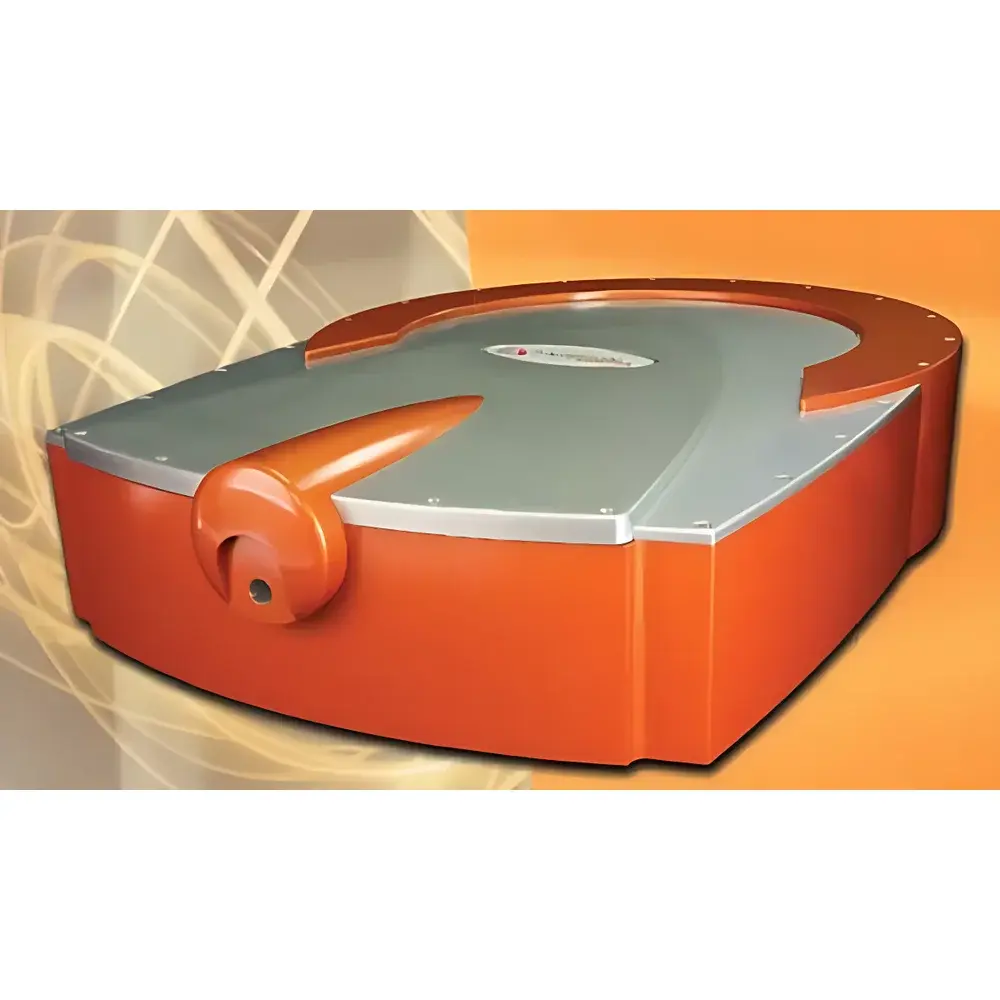
Amplitude Systems Satsuma High-Repetition-Rate High-Power Femtosecond Fiber Laser
| Brand | Amplitude Systems |
|---|---|
| Origin | France |
| Model | Fiber Lasers_Satsuma |
| Cooling | Air-cooled |
| Output Type | Ultrafast Femtosecond Fiber Laser |
| Pulse Energy | Up to 150 µJ |
| Repetition Rate | High (Configurable, up to MHz range) |
| Pulse Width | <500 fs (standard), optional <100 fs configurations |
| Optional Wavelengths | Fundamental IR (1030–1080 nm), SHG (515–540 nm), UV (343–360 nm), Deep UV (~257 nm) |
| Burst Mode | FemtoBurst™ (adjustable pulse count, inter-pulse spacing 25–100 ns) |
| Triggering | FemtoTrig™ (single-pulse selection on demand) |
| Synchronization | SuperSync Control for sub-nanosecond timing with high-speed scanners and external systems |
| Industrial Grade | 7×24 operation certified |
| Compliance | CE, RoHS, IEC 60825-1 (Laser Safety Class 4) |
| Software Interface | Ethernet + USB + TTL I/O |
| Footprint | Compact, benchtop-integrated design |
Overview
The Amplitude Systems Satsuma is a high-repetition-rate, high-average-power femtosecond fiber laser engineered for industrial precision machining, biomedical instrumentation, and advanced scientific research. Operating on a robust all-fiber architecture, the Satsuma delivers ultrashort pulses (<500 fs, optionally <100 fs) with exceptional temporal stability and spatial beam quality (M² < 1.2). Its core principle relies on mode-locked ytterbium-doped fiber oscillator-amplifier technology, followed by nonlinear pulse compression and optional harmonic generation stages. Unlike bulk solid-state lasers, the fiber-integrated design ensures superior thermal management, long-term pointing stability, and immunity to misalignment—critical for integration into automated production lines or multi-user laboratory environments. With air-cooling only and a footprint under 400 × 300 × 150 mm, the Satsuma achieves up to 20 W average power while maintaining pulse energies up to 150 µJ—enabling high-throughput ablation with minimal heat-affected zones (HAZ) in transparent, metallic, and polymeric materials.
Key Features
- FemtoBurst™ Burst Mode: Programmable pulse trains with user-defined burst count (1–100+ pulses), intra-burst repetition rates from 10 MHz to 40 MHz, and inter-pulse delays tunable between 25 ns and 100 ns—optimized for controlled material removal in glass cutting, OLED repair, and thin-film scribing.
- FemtoTrig™ On-Demand Triggering: Hardware-level TTL/CMOS-compatible single-pulse selection with jitter < 50 ps, enabling precise synchronization with motion stages, galvanometric scanners, or time-resolved detection systems.
- SuperSync Control: Sub-100 ps timing resolution between laser output and external devices (e.g., pump-probe delay stages, gated ICCD cameras), supporting ultrafast spectroscopy, multi-photon microscopy, and THz generation setups requiring deterministic phase locking.
- Wavelength Flexibility: Integrated or add-on harmonic generation modules provide stable, collinear outputs at 515–540 nm (SHG), 343–360 nm (THG), and ~257 nm (FHG), compliant with ISO 11146 beam parameter measurement standards.
- Industrial Reliability: Designed for continuous 7×24 operation in cleanroom and factory-floor environments; qualified per IEC 60068-2 environmental stress tests and equipped with real-time power monitoring, temperature logging, and remote diagnostics via Ethernet (TCP/IP) and RS-232.
Sample Compatibility & Compliance
The Satsuma supports processing of optically transparent materials (fused silica, sapphire, LiNbO₃), semiconductors (Si, GaAs, SiC), polymers (PI, PET, PMMA), and biological tissues without thermal cracking or delamination. Its pulse energy and repetition rate parameters are optimized to meet ASTM F2792 (Standard Practice for Laser-Based Additive Manufacturing) and ISO 13697 (Laser Beam Parameters — Measurement Techniques) requirements. For medical device manufacturing and ophthalmic applications, the system complies with FDA 21 CFR Part 11 (electronic records/signatures) when used with validated control software, and meets EN 60601-2-22 (Medical Electrical Equipment — Laser Equipment) when configured with appropriate interlocks and beam delivery safety enclosures. All optical outputs conform to IEC 60825-1:2014 Class 4 laser safety specifications, with integrated key-switched emission control and emergency stop interfaces.
Software & Data Management
The Satsuma is operated via Amplitude’s proprietary LaserControl Suite, a Windows-based application supporting full remote configuration of burst parameters, trigger modes, harmonic selection, and power stabilization algorithms. The software implements audit-trail logging in accordance with GLP/GMP guidelines, recording timestamped events including power fluctuations, temperature excursions, and user-access history. Data export is supported in CSV, HDF5, and MATLAB-compatible formats. API access (C/C++, Python SDK) enables integration into custom automation frameworks (e.g., LabVIEW, TwinCAT, Beckhoff PLCs) and MES/SCADA systems. Firmware updates are delivered via secure HTTPS with SHA-256 signature verification, ensuring traceability and integrity in regulated environments.
Applications
- Microelectronics: Maskless lithography, via drilling in PCBs and IC substrates, selective ablation of copper/polyimide layers, and flat-panel display (FPD) repair (OLED, LCD).
- Ophthalmology & Medical Devices: Femtosecond LASIK flap creation, corneal lenticule extraction (SMILE), and stent micromachining with sub-µm edge roughness (Ra < 50 nm).
- Scientific Research: Pump-probe spectroscopy, coherent anti-Stokes Raman scattering (CARS), terahertz time-domain spectroscopy (THz-TDS), and optogenetic stimulation using two-photon excitation at 1030 nm or SHG wavelengths.
- Advanced Manufacturing: Glass welding, transparent material cutting (GLASS module), and surface texturing of biocompatible implants with controlled wettability and cell adhesion profiles.
FAQ
What is the typical pulse duration and how is it measured?
The standard Satsuma configuration delivers pulses <500 fs FWHM, measured via autocorrelation using a second-harmonic-generation crystal and balanced photodiode detection, traceable to NIST-calibrated reference sources.
Can the Satsuma be integrated into a cleanroom environment?
Yes—the laser is rated IP20, operates without water cooling or external chillers, and features sealed optical paths and low outgassing materials compliant with SEMI F57-0201 standards.
Is FDA 510(k) clearance available for medical applications?
The Satsuma platform itself is not a medical device; however, Amplitude provides technical documentation and test reports supporting OEM integration into FDA-submitted Class II/III systems, including laser safety analysis and electromagnetic compatibility (EMC) test data per IEC 61326-1.
What maintenance is required for long-term operation?
No routine optical alignment or consumable replacement is required; recommended preventive maintenance includes quarterly calibration of internal power sensors and annual firmware validation—documented in the included Maintenance Logbook per ISO 17025 guidelines.
How does FemtoBurst™ improve processing efficiency compared to conventional CW or modulated lasers?
By concentrating energy into tightly spaced sub-nanosecond bursts, FemtoBurst™ enhances nonlinear absorption in dielectrics while suppressing plasma shielding effects—resulting in up to 3× higher material removal rate and 50% reduction in recast layer thickness versus single-pulse regimes at equivalent average power.





