
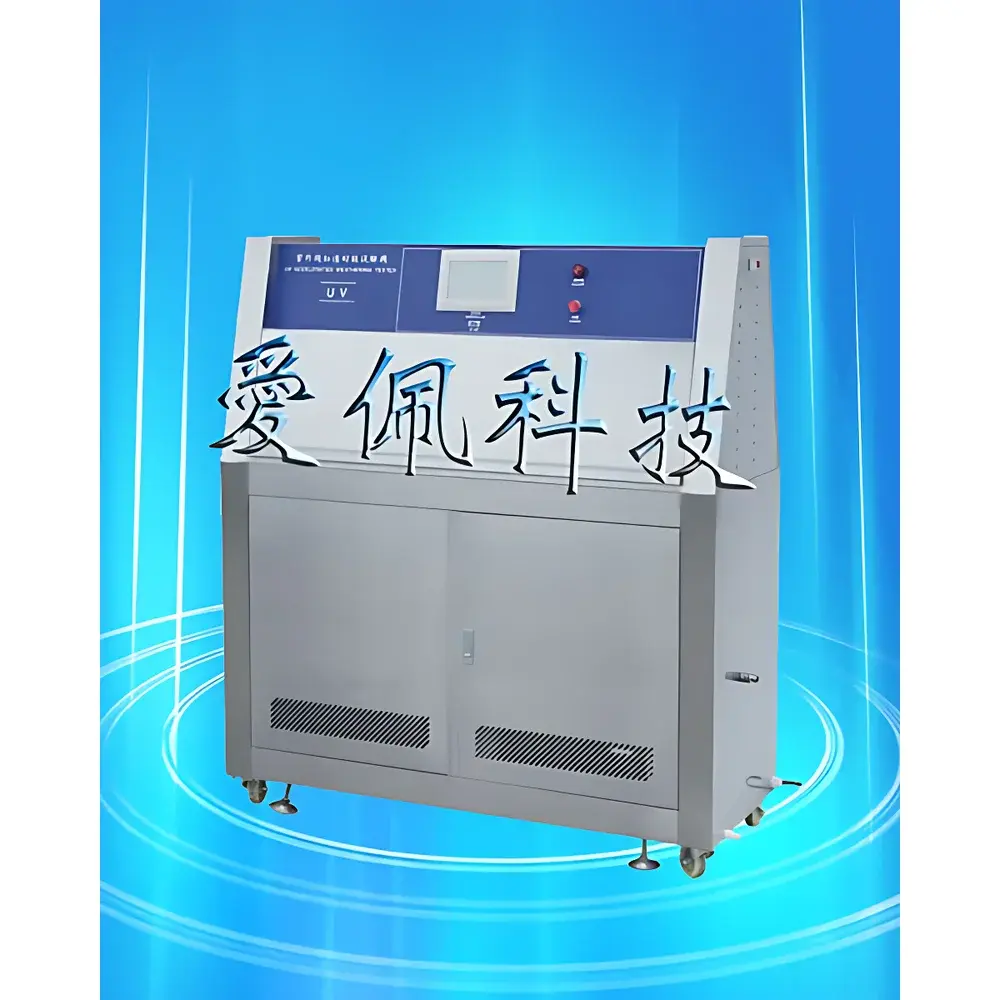
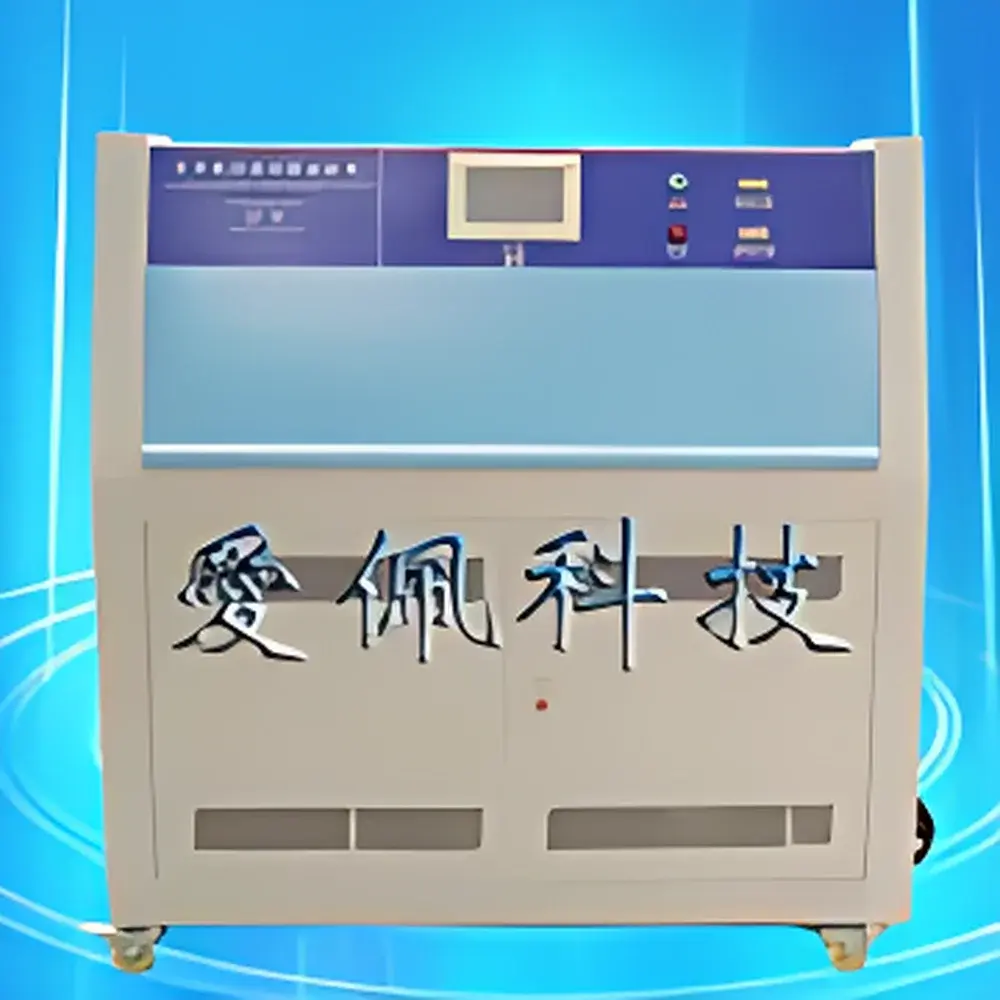
Apkji 3AP-UV Fluorescent UV Aging Test Chamber
| Brand | Apkji |
|---|---|
| Origin | Guangdong, China |
| Manufacturer Type | Manufacturer |
| Country of Origin | Domestic (China) |
| Model | 3AP-UV |
| Pricing | Upon Request |
| UV Lamps | 8 × 40W imported UVA-340 or UVB-313 fluorescent tubes (4 operational + 4 spares) |
| Irradiance Control | Adjustable |
| UV Temperature Range | 50–75 °C |
| Condensation Temperature Range | 40–60 °C |
| Test Capacity | 48 specimens |
| Water Supply | Deionized or distilled water, 18 L/day |
| Dimensions (W×H×D) | 137 × 135 × 53 cm |
| Weight | 136 kg |
| Power Supply | 1φ3W AC220V ±10%, 50/60 Hz, max. 2.2 kW |
| Standards Compliance | ASTM G154, ASTM D4587, ASTM D4799, ISO 4892, SAE J2020, GB/T 16422.3 |
Overview
The Apkji 3AP-UV Fluorescent UV Aging Test Chamber is an engineered environmental test system designed to replicate the photochemical degradation effects of solar ultraviolet radiation under controlled laboratory conditions. Based on the principles of fluorescent UV irradiation accelerated aging, the chamber employs calibrated UVA-340 or UVB-313 lamps to simulate critical spectral regions of terrestrial sunlight—UVA-340 closely matching the solar cutoff at 295 nm, while UVB-313 extends into shorter, more aggressive wavelengths for severe stress testing. Unlike broad-spectrum xenon arc or carbon arc methods, this system isolates UV-driven mechanisms including polymer chain scission, chromophore degradation, and surface oxidation—enabling repeatable, high-reproducibility assessment of material durability over accelerated timeframes. A typical 72-hour exposure in the 3AP-UV corresponds to several months of natural outdoor exposure in mid-latitude temperate climates, making it indispensable for R&D validation, formulation screening, and quality assurance workflows.
Key Features
- Eight 40W imported fluorescent UV lamps (four installed + four spares), configurable as UVA-340 (peak 340 nm) or UVB-313 (peak 313 nm) per application requirements;
- Precisely regulated UV irradiance with real-time monitoring capability (optional CR-10 calibration radiometer integration);
- Independent control of UV exposure, condensation, and optional water spray cycles to emulate diurnal moisture dynamics;
- Stable UV temperature range of 50–75 °C and condensation temperature range of 40–60 °C, maintained via PID-controlled heating and humidity management;
- Standardized specimen capacity for 48 samples using universal clamping fixtures (custom fixture design available upon request);
- Robust stainless-steel interior construction with quartz-filtered lamp housings to ensure spectral stability and minimize thermal load distortion;
- Compliance-ready architecture supporting audit trails and parameter logging when paired with optional recorder modules.
Sample Compatibility & Compliance
The 3AP-UV accommodates flat or low-profile specimens up to standard ISO/ASTM dimensions—including plastic sheets, coated metals, automotive trim, architectural coatings, and textile laminates. Specimen mounting follows ISO 4892-3 and ASTM G154 Annex A1 guidelines to ensure uniform irradiance distribution and edge-effect minimization. The system is validated against internationally recognized accelerated weathering standards: ASTM G154 (standard practice for fluorescent UV-condensation exposures), ASTM D4587 (coating-specific UV testing), ASTM D4799 (wood and wood-based composites), SAE J2020 (automotive exterior materials), and GB/T 16422.3 (Chinese national standard for plastics). Its operational parameters meet GLP-aligned documentation requirements when used with optional data recording systems, facilitating regulatory submissions under FDA 21 CFR Part 11–compliant environments where electronic records are mandated.
Software & Data Management
While the base 3AP-UV operates via intuitive mechanical controls and analog instrumentation, optional digital recorder modules enable continuous acquisition of irradiance (W/m²), chamber temperature, condensation duration, and cycle sequencing. Data export is supported in CSV format for post-processing in MATLAB, JMP, or industry-standard LIMS platforms. All optional recorders include timestamped event logging, user-access level controls, and password-protected configuration settings—aligning with ISO/IEC 17025 traceability expectations and internal QA protocols requiring revision-controlled test method execution.
Applications
- Evaluation of photostability in polymer formulations (e.g., polyolefins, PVC, ABS, polycarbonate);
- Accelerated qualification of UV-stabilized coatings, inks, and adhesives for architectural and industrial use;
- Comparative lifetime modeling of automotive interior/exterior components exposed to solar loading;
- Validation of UV-resistant packaging films and medical device housings under IEC 60601-1 environmental clauses;
- Supporting ASTM D4329 compliance for plastic pipe and conduit materials subject to long-term outdoor service;
- Root-cause analysis of field failures linked to UV-induced embrittlement, chalking, or gloss loss.
FAQ
What UV lamp types are supported, and how do they differ in spectral output?
The system accepts both UVA-340 and UVB-313 fluorescent lamps. UVA-340 replicates the solar UV spectrum down to 295 nm and is recommended for general-purpose weathering simulation. UVB-313 emits significant energy below 300 nm and is used for aggressive, high-stress testing—particularly for materials highly sensitive to short-wavelength UV.
Is condensation cycling mandatory, or can UV-only exposure be performed?
Condensation is independently controllable and may be deactivated to run pure UV irradiation cycles. However, combined UV/condensation sequences better simulate real-world dew formation and are required by ASTM G154 Cycle 1 and ISO 4892-3 Method A.
What water quality is required for the condensation and spray functions?
Deionized or distilled water with conductivity ≤5 µS/cm is mandatory to prevent mineral deposition on lamps and specimen surfaces, which would otherwise compromise irradiance uniformity and test repeatability.
Can the 3AP-UV be integrated into a centralized lab automation network?
Yes—via optional RS-485 or Ethernet-enabled recorder modules, the unit supports Modbus RTU/TCP communication for integration with SCADA or MES platforms, enabling remote monitoring and automated report generation.
Does Apkji provide calibration certificates traceable to NIST or CNAS standards?
Calibration services—including lamp spectral output verification and temperature sensor validation—are available through Apkji’s certified metrology partners, with documentation traceable to national standards bodies upon request.



