
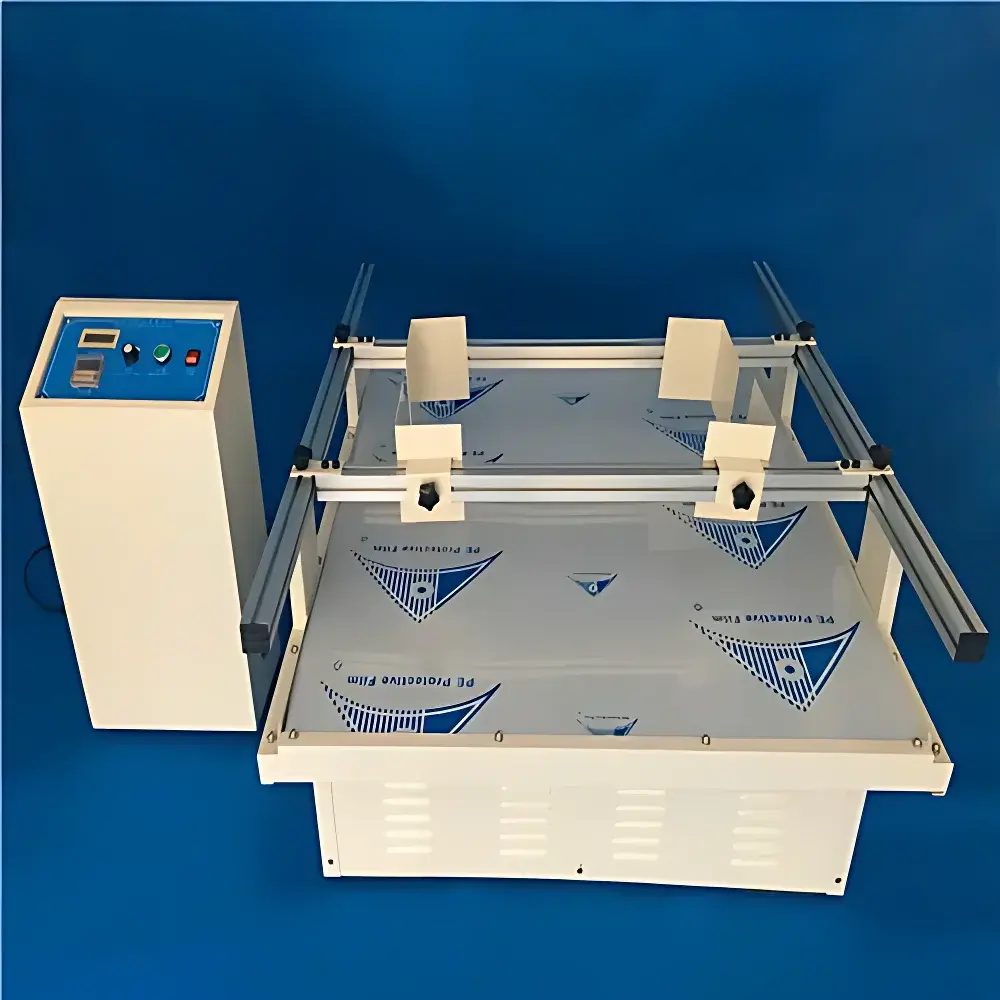
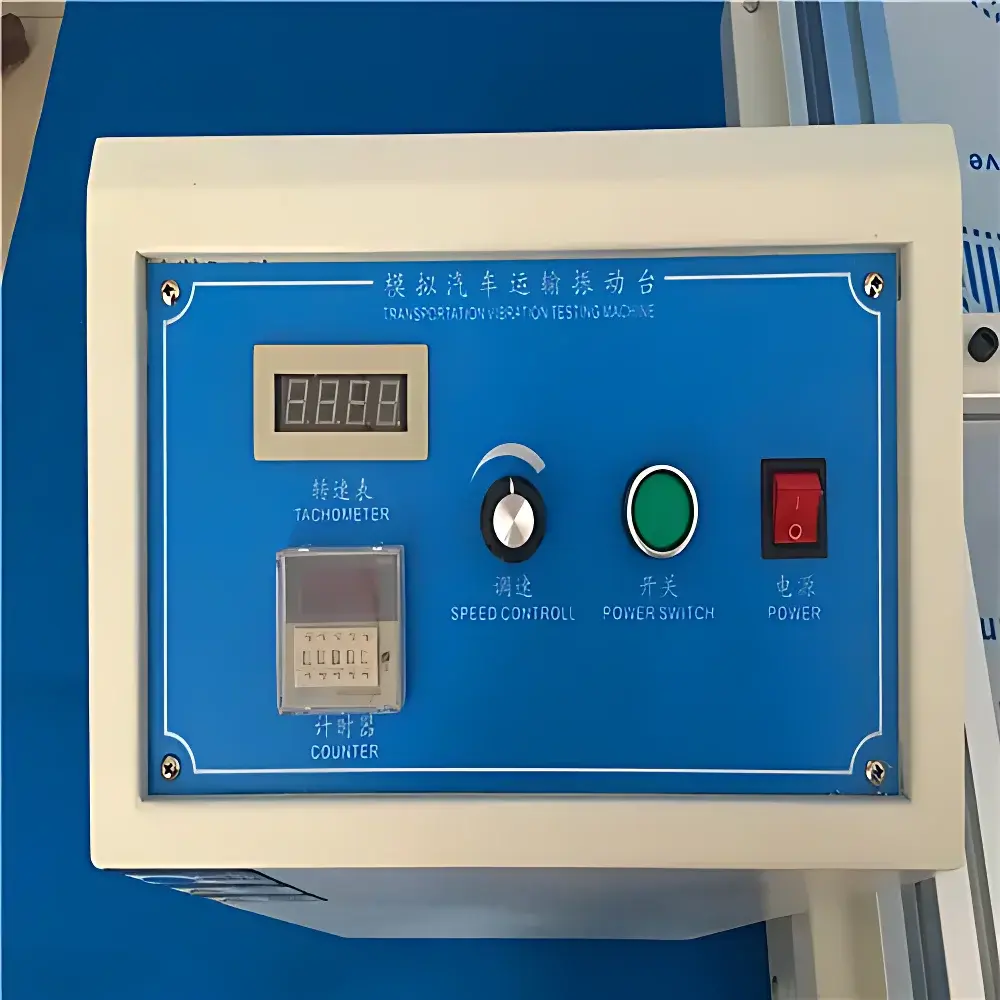
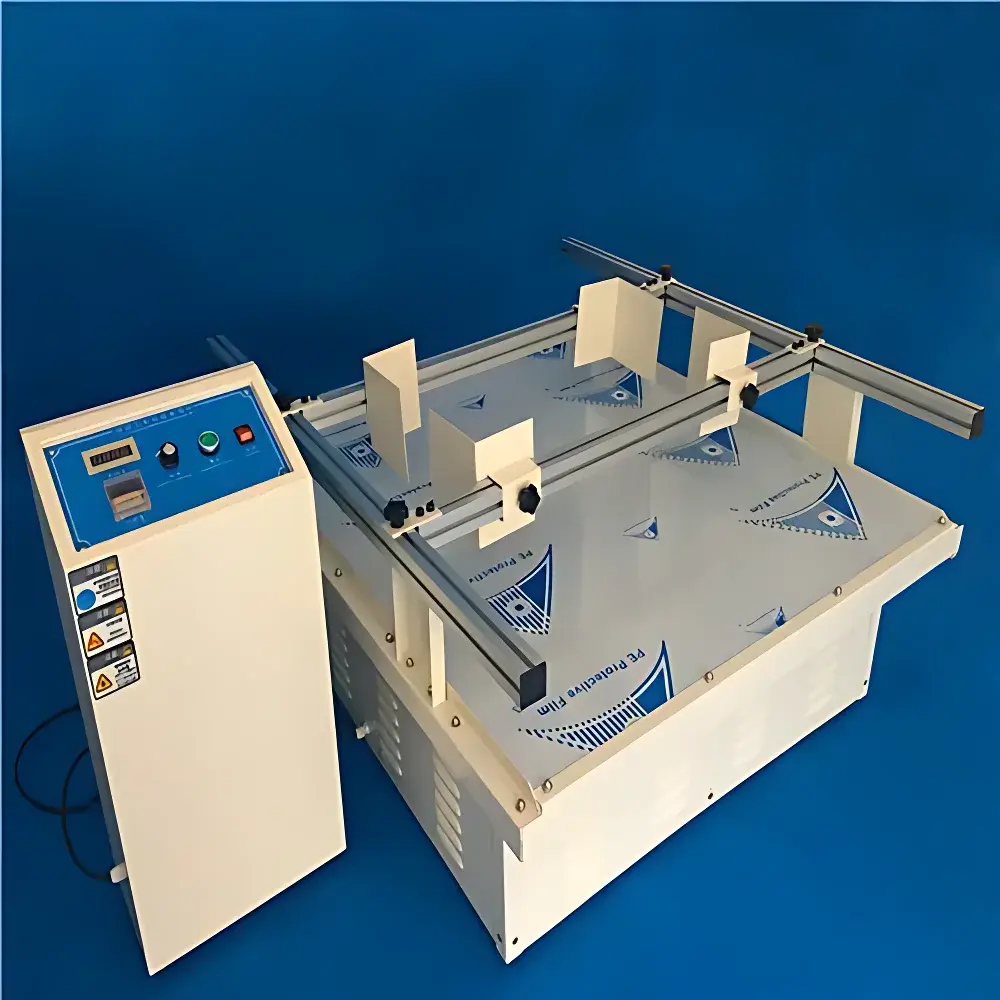
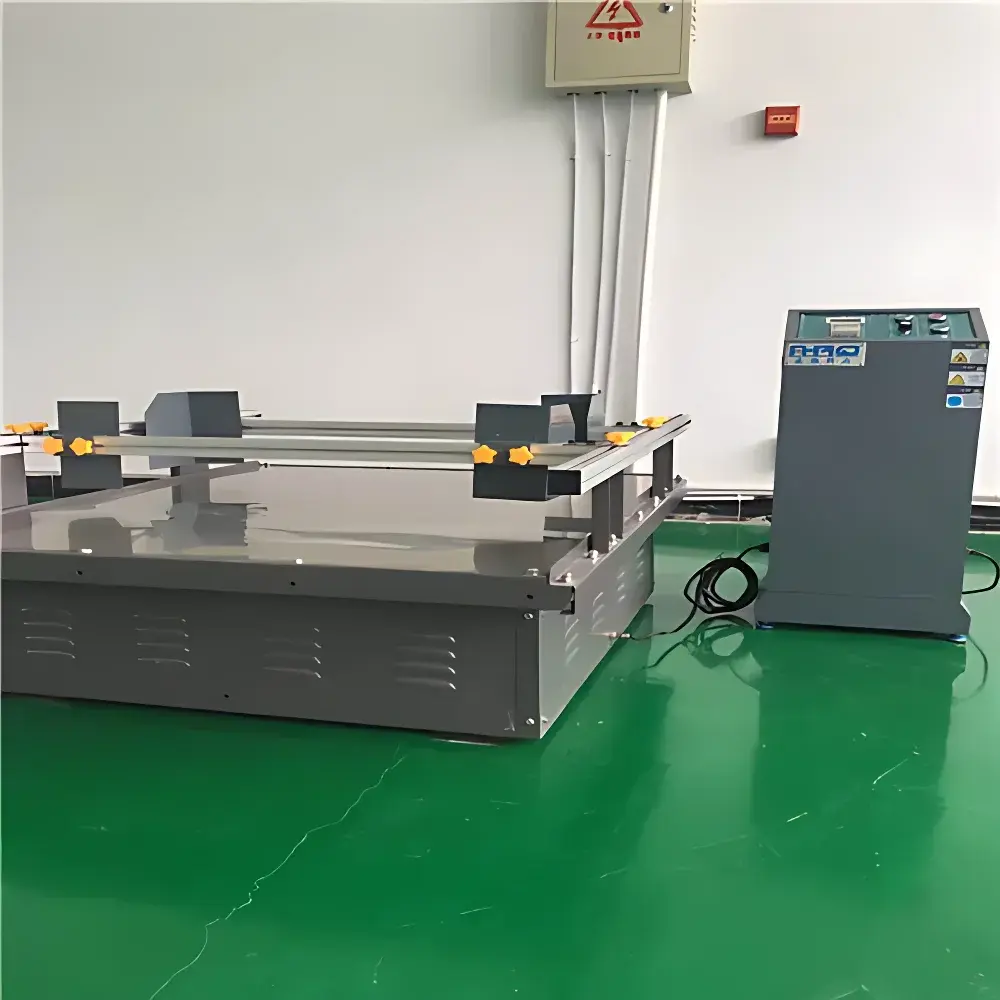
APKJ AP-ZD Automotive Simulated Transportation Vibration Test System
| Brand | APKJ |
|---|---|
| Origin | Guangdong, China |
| Manufacturer Type | Direct Manufacturer |
| Country of Origin | China |
| Model | AP-ZD |
| Pricing | Upon Request |
| Load Capacity | 100 kg |
| Frequency Range | 100–300 rpm |
| Amplitude | 25.4 mm |
| Vibration Mode | Orbital (Reciprocating) Motion |
| Simulated Vehicle Speed | 25–40 km/h |
| Test Table Dimensions | 1300 × 1200 mm |
| Overall Dimensions (L×W×H) | 1355 × 1270 × 670 mm |
| Power Consumption | 1 HP (746 W) |
| Net Weight | 125 kg |
| Operating Environment | 5–40 °C, ≤85% RH |
| Speed Control | DC Motor Speed Regulation or AC Variable-Frequency Drive |
| Power Supply | 220 V, 50 Hz |
Overview
The APKJ AP-ZD Automotive Simulated Transportation Vibration Test System is an engineered solution for replicating real-world vehicular transport dynamics in laboratory and quality assurance environments. Based on established ASTM D999, ISTA 3A, and EN 15308 transport simulation standards, the system employs orbital (commonly termed “galloping” or “reciprocating”) vibration generated via precision-machined eccentric shafts. As the eccentric bearing rotates, it induces a smooth, closed-loop elliptical motion path—simultaneously vertical and horizontal—across the entire test table surface. This kinematic profile closely emulates the combined vertical bounce, lateral sway, and longitudinal surge experienced by packaged goods during over-the-road trucking, rail freight, or marine container transit. Unlike linear shakers, the AP-ZD’s orbital motion subjects samples to multi-axis excitation without requiring complex servo-control architecture, delivering high reproducibility and mechanical robustness for routine durability and packaging integrity validation.
Key Features
- Orbital vibration mechanism compliant with ASTM D999 Method B and ISTA Procedure 3A for simulated road transport;
- Digital frequency display with ±1 rpm resolution for precise speed setting and repeatability verification;
- Heavy-duty C-channel steel base frame integrated with vibration-damping rubber mounts—enabling floor-level installation without anchor bolts or structural reinforcement;
- Linear guide rail sample mounting system for rapid, repeatable positioning and secure clamping of irregularly shaped or heavy-duty automotive components (up to 100 kg);
- DC motor drive with analog tachometric feedback, ensuring stable rotational speed under variable load conditions and minimal torque ripple;
- Quiet synchronous belt transmission—eliminates gear noise and backlash while maintaining long-term timing accuracy and low maintenance intervals;
- Adjustable eccentric phase and rotational speed linkage enables direct correlation between RPM and simulated vehicle velocity (25–40 km/h), supporting standardized test protocol execution.
Sample Compatibility & Compliance
The AP-ZD accommodates a broad range of transportation-critical specimens—including automotive ECUs, brake calipers, infotainment modules, HVAC housings, and assembled subassemblies—as well as consumer electronics, furniture packages, ceramic ware, and telecom enclosures. Its 1300 × 1200 mm rigid aluminum test deck supports both single-unit and palletized configurations. All mechanical and electrical subsystems conform to IEC 61000-6-2 (immunity) and IEC 61000-6-4 (emission) requirements. The system is routinely deployed in ISO/IEC 17025-accredited laboratories performing transport validation per OEM-specific standards (e.g., Ford PV-1209, GMW 14872, VW 80101). While not inherently 21 CFR Part 11-compliant, its analog control architecture permits integration into validated workflows where electronic audit trails are managed externally via LIMS or MES platforms.
Software & Data Management
The AP-ZD operates via hardware-integrated analog control—no embedded firmware or proprietary software is required. Frequency setpoint, runtime duration, and operational status are monitored through front-panel LED indicators and a calibrated digital tachometer. For traceable test documentation, users may pair the system with external data loggers (e.g., NI CompactDAQ or Keysight 34972A) to record real-time RPM, current draw, and thermal behavior. Calibration certificates for the tachometer and load verification weights (traceable to NIM, China) are provided with each unit. APKJ maintains full calibration documentation archives for five years post-delivery, supporting GLP and internal QA audits.
Applications
- Pre-shipment validation of automotive component packaging systems against vibration-induced damage (e.g., connector fretting, solder joint fatigue, foam compression set);
- Accelerated life testing of dash-mounted displays, ADAS sensors, and wiring harnesses under representative transport spectra;
- Verification of fixture rigidity and mounting interface integrity for engine bay components subjected to sustained low-frequency oscillation;
- ISTA-certified packaging development for Tier-1 suppliers preparing for OEM logistics qualification;
- Root cause analysis of field returns linked to transit-related mechanical degradation;
- QC release testing for export-bound finished goods across EU, NAFTA, and ASEAN distribution channels.
FAQ
Does the AP-ZD meet ISTA 3A certification requirements?
Yes—the orbital motion profile, amplitude (25.4 mm), and adjustable speed range (100–300 rpm) satisfy all mechanical parameters defined in ISTA Procedure 3A Section 5.2 for parcel carrier simulation.
Can the system be integrated into an automated test cell?
It features dry-contact relay outputs for start/stop signaling and analog 0–10 V speed reference input—enabling seamless integration with PLC-based test orchestration systems.
What maintenance is required for long-term reliability?
Biannual inspection of belt tension, eccentric bearing lubrication (NLGI #2 grease), and guide rail alignment is recommended. No scheduled motor servicing is required within the first 10,000 operating hours.
Is technical training included with purchase?
Yes—APKJ provides on-site or remote operator training covering safe operation, routine calibration checks, basic troubleshooting, and test report documentation per ISO/IEC 17025 Annex A.2.
Are spare parts stocked internationally?
Critical spares—including eccentric shaft assemblies, DC motor brushes, and digital tachometer modules—are held in regional warehouses across Germany, Singapore, and Mexico, with standard lead time of 5 business days.



