
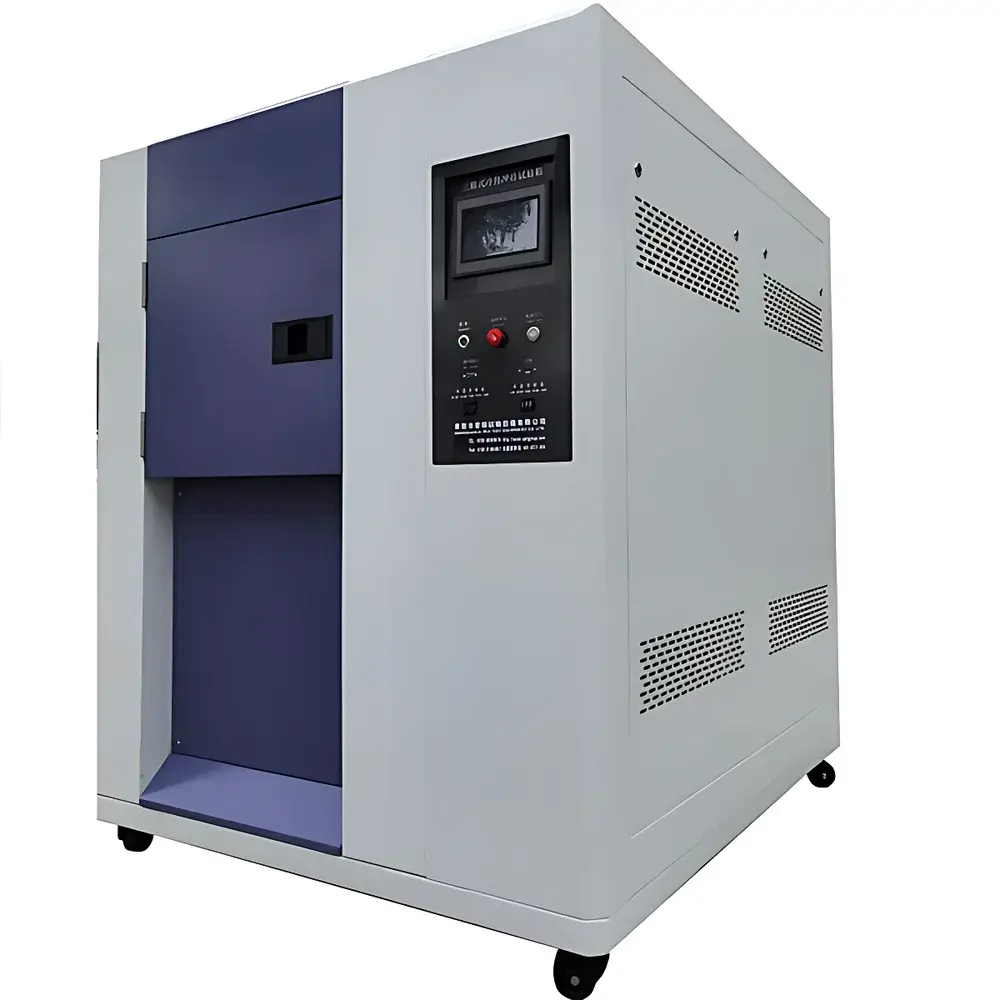
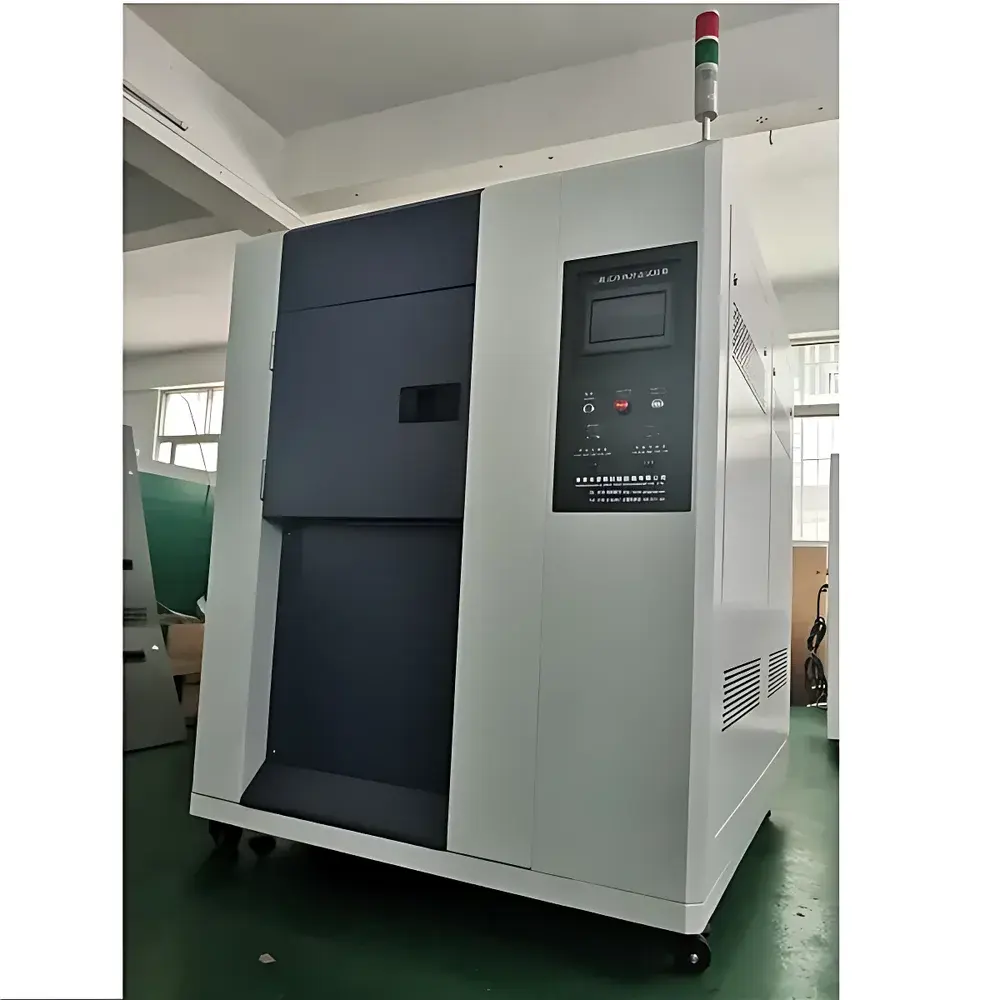
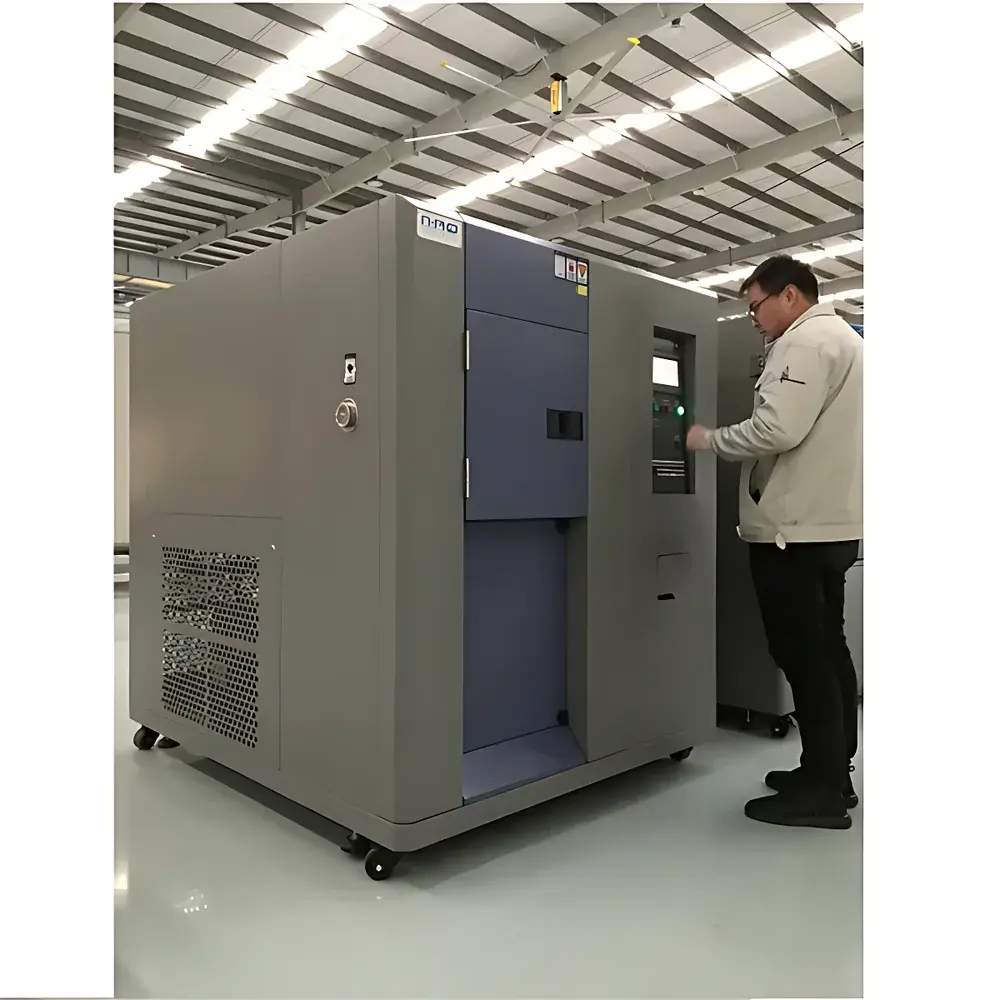
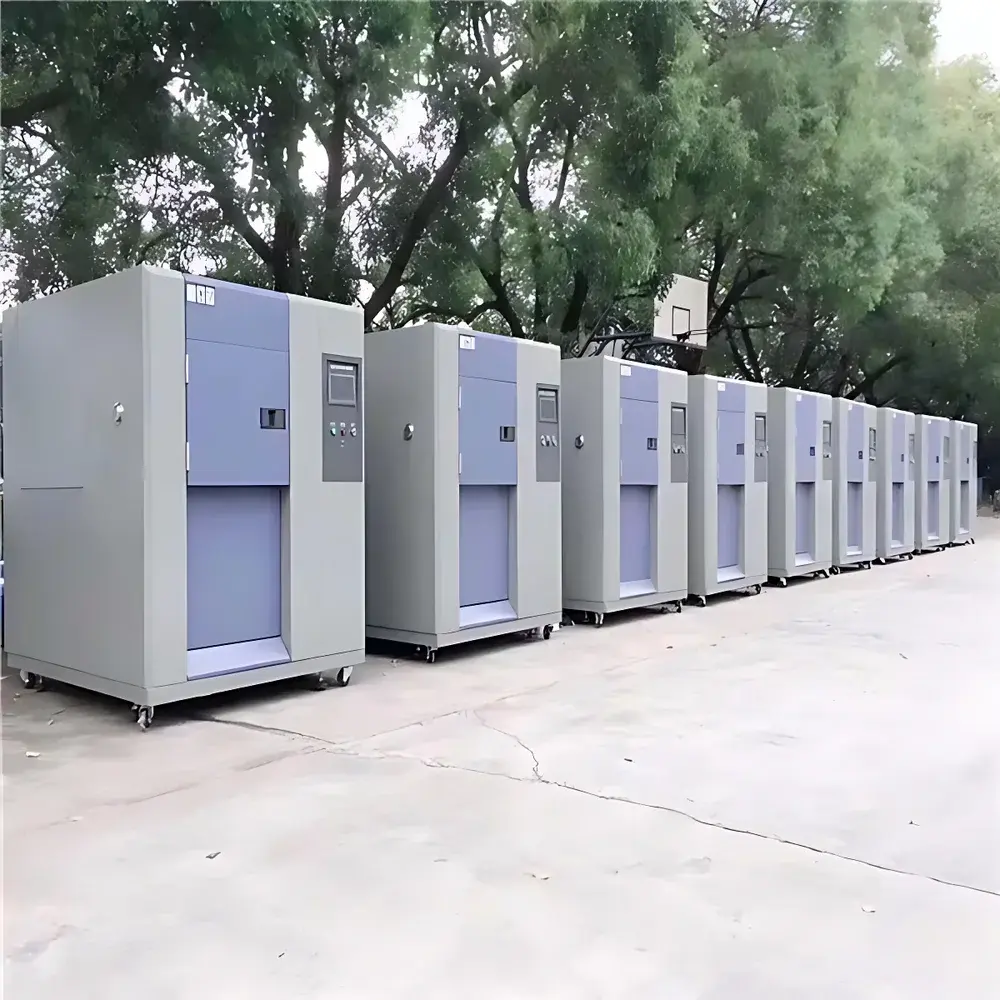
APKJ AP-CJ-10B Three-Zone Thermal Shock Test Chamber
| Brand | APKJ |
|---|---|
| Origin | Guangdong, China |
| Manufacturer Type | OEM Manufacturer |
| Model | AP-CJ-10B |
| Price Range | USD 7,000–14,000 (FOB) |
| High-Temperature Range | +150 °C |
| Low-Temperature Range | −60 °C |
| Thermal Shock Range | −60 °C to +150 °C |
| Temperature Stability | ±2 °C |
| Heating Rate | 3.0 °C/min |
| Cooling Rate | 1.0 °C/min |
| Control Interface | 5.7″ TFT Color Touchscreen LCD |
| Refrigeration System | Dual-Stage Cascade Compressor (Water-Cooled) |
| Shock Mode | Air-Path Switching Between Hot/Cold Chambers |
| Test Zone Configuration | Static Sample Placement |
| Max Cycle Count | 9999 |
| Max Dwell Time per Zone | 999 h |
| Defrost Mode | Automatic & Manual |
| Safety Protections | Over-Temp, Over-Current, Compressor High-Pressure, Phase Failure, Water Flow Monitoring |
Overview
The APKJ AP-CJ-10B Three-Zone Thermal Shock Test Chamber is an engineered environmental reliability testing system designed for accelerated evaluation of material and component integrity under extreme, rapid temperature transitions. Operating on the principle of air-path switching between thermally isolated high-temperature (+150 °C), low-temperature (−60 °C), and test chambers, it subjects static samples to controlled thermal shock without mechanical movement or cryogenic fluid assistance—eliminating hazards associated with liquid nitrogen (LN₂) or carbon dioxide (CO₂) handling. This architecture ensures repeatable, traceable, and operator-safe thermal stress profiling in accordance with industry-standard protocols for electronic assemblies, automotive ECUs, polymer housings, PCB laminates, and semiconductor packaging. The chamber’s dual-stage cascade refrigeration system delivers stable cooling performance at water-cooled efficiency, while its PID-driven temperature regulation achieves ±2 °C stability across the full operational envelope.
Key Features
- Three-zone physical separation: independent hot zone, cold zone, and static test chamber—enabling precise, contamination-free thermal transfer via pneumatic air-valve switching
- 5.7-inch TFT color touchscreen controller with intuitive HMI, real-time curve plotting, alarm history logging, and multi-language support (English default)
- Dual-stage cascade compression refrigeration with water-cooled condensers—optimized for reliability, low noise (<65 dB(A)), and energy efficiency in continuous-duty operation
- High-uniformity positive-pressure airflow design ensures ≤±1.5 °C spatial uniformity within the test chamber at steady state (per IEC 60068-3-5)
- Programmable thermal cycling: up to 9999 cycles, dwell times configurable from 1 min to 999 h per zone, start condition selectable (hot-first or cold-first)
- Automated defrost management with adaptive timing—reducing downtime and extending evaporator service life
- Comprehensive safety architecture: includes over-temperature cutoff, compressor high-pressure shutdown, phase failure detection, water flow interlock, and door-open safety lockout
- Modular refrigeration unit design facilitates field replacement of compressors, condensers, or expansion valves without system evacuation
Sample Compatibility & Compliance
The AP-CJ-10B accommodates samples up to 300 mm × 300 mm × 300 mm (W×D×H) with external cabling access via sealed test ports. Its static test configuration meets JEDEC JESD22-A104 (Temperature Cycling), MIL-STD-810H Method 503.5 (Temperature Shock), and IEC 60068-2-14 (Change of Temperature) requirements. The absence of LN₂ dependency aligns with OSHA 1910.1200 (Hazard Communication) and EU REACH Annex XIV restrictions on pressurized cryogen handling. All control firmware supports audit-ready event logging—including cycle count, dwell deviation, alarm triggers, and manual interventions—facilitating GLP/GMP-compliant documentation per FDA 21 CFR Part 11 when integrated with validated data acquisition systems.
Software & Data Management
The embedded controller records timestamped temperature profiles for each zone and the test chamber at user-defined intervals (1–60 s). Data exports directly to USB storage in CSV format for post-processing in MATLAB, Python Pandas, or JMP. Optional Ethernet connectivity enables remote monitoring via Modbus TCP or SNMP, supporting integration into centralized MES/QMS platforms (e.g., LabVantage, TrackWise). Firmware updates are performed offline via SD card, preserving calibration integrity. All logged events—including power interruptions, door openings, and defrost initiations—are time-stamped and retained for ≥12 months, satisfying ISO/IEC 17025 Clause 7.7.1 data retention expectations.
Applications
This chamber serves critical qualification workflows across aerospace electronics (DO-160 Section 4.3), automotive functional safety (ISO 26262 hardware validation), medical device sterilization packaging (ISO 11607-2), and advanced battery module testing (UN 38.3 T4). It is widely deployed for evaluating solder joint fatigue in BGA packages, delamination resistance in multilayer ceramic capacitors, seal integrity of hermetic MEMS enclosures, and coefficient-of-thermal-expansion (CTE) mismatch effects in chip-scale packages. Its non-cryogenic operation reduces total cost of ownership by eliminating consumables, training overhead, and ventilation infrastructure required for LN₂-based systems.
FAQ
Does the AP-CJ-10B require liquid nitrogen or other cryogenic media?
No. It operates exclusively with mechanical refrigeration and requires no external cryogens.
What is the maximum allowable sample weight and dimensional envelope?
The standard test chamber accommodates loads up to 25 kg with internal dimensions of 300 × 300 × 300 mm (W×D×H); custom configurations are available upon request.
Is the system compliant with FDA 21 CFR Part 11 for electronic records?
The base controller provides ALCOA+ traceability; full Part 11 compliance requires optional 21 CFR Part 11 add-on software with electronic signatures and audit trail encryption.
Can the unit be integrated into a factory-wide SCADA or LIMS environment?
Yes—via Modbus TCP (standard) or optional OPC UA gateway for seamless interoperability with Siemens Desigo, Rockwell FactoryTalk, or Thermo Fisher SampleManager.
What maintenance intervals are recommended for long-term reliability?
Compressor oil analysis every 2,000 operating hours; refrigerant leak check annually; air filter replacement quarterly; full system calibration biannually per ISO/IEC 17025 guidelines.



