
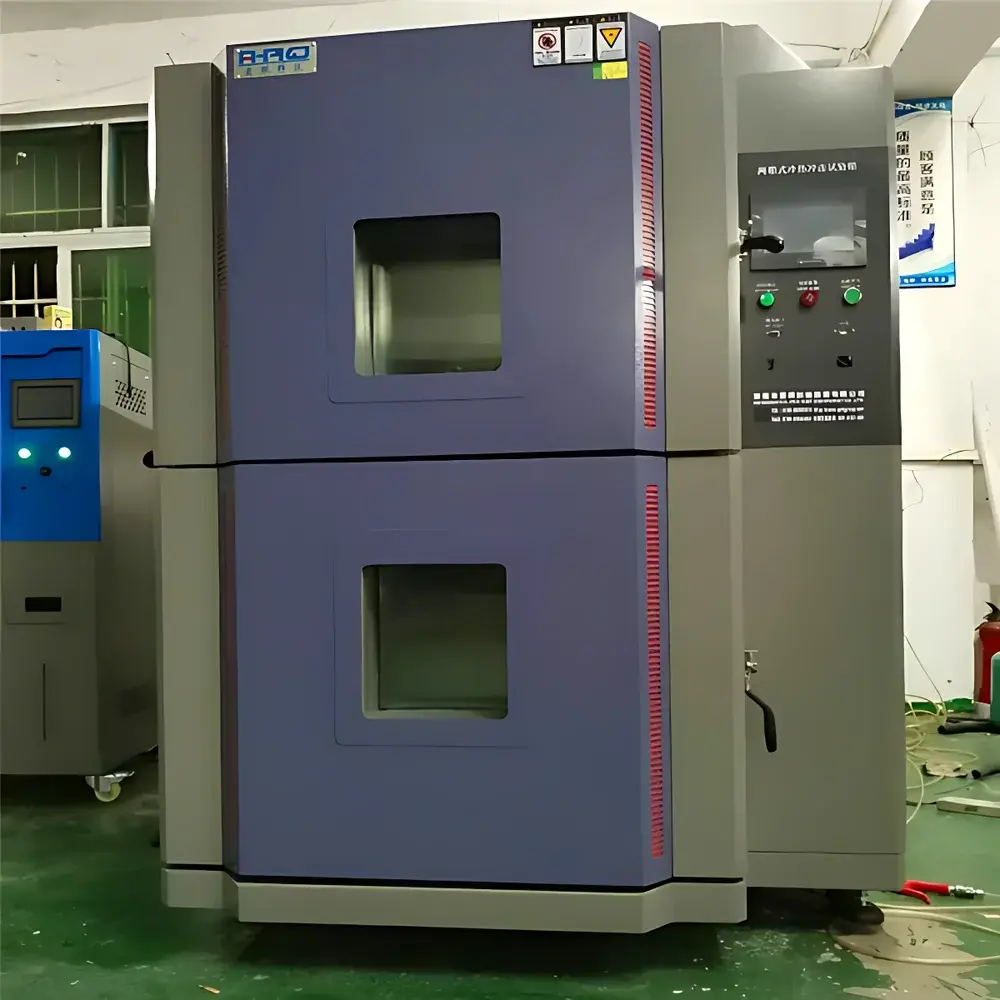
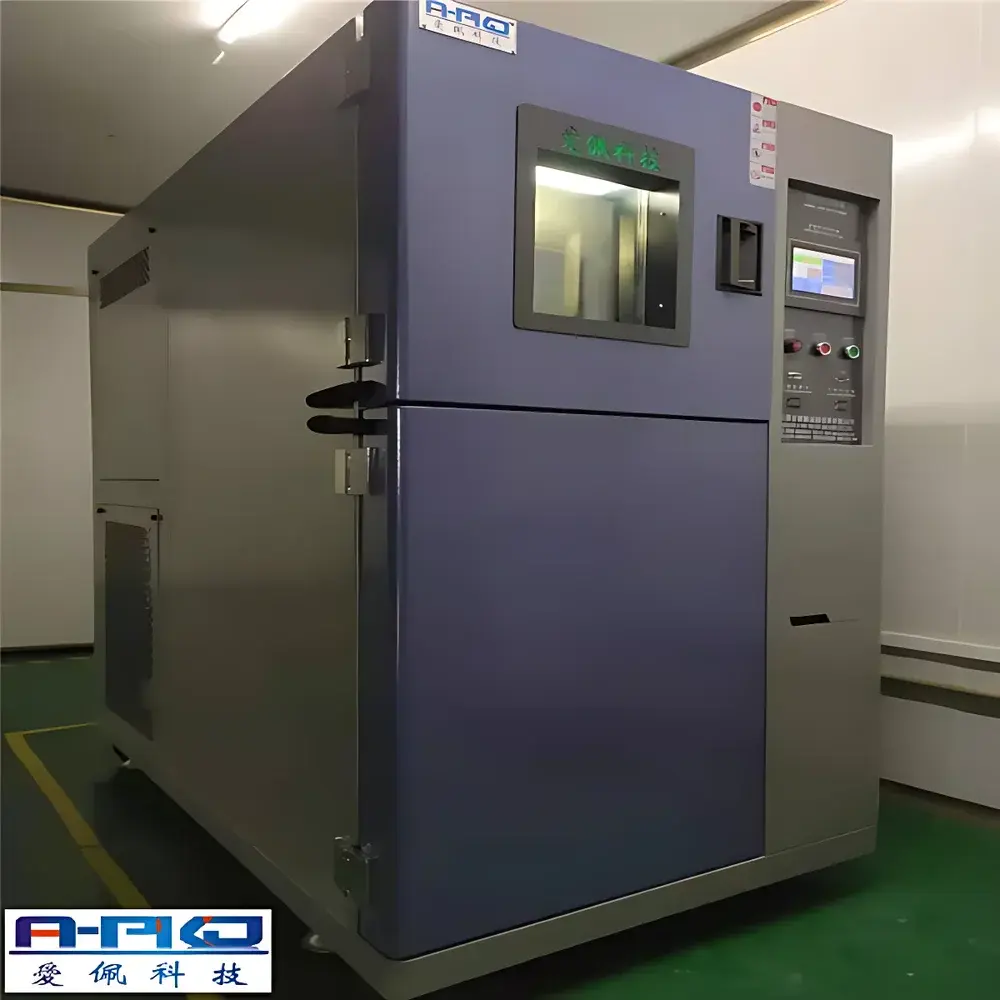
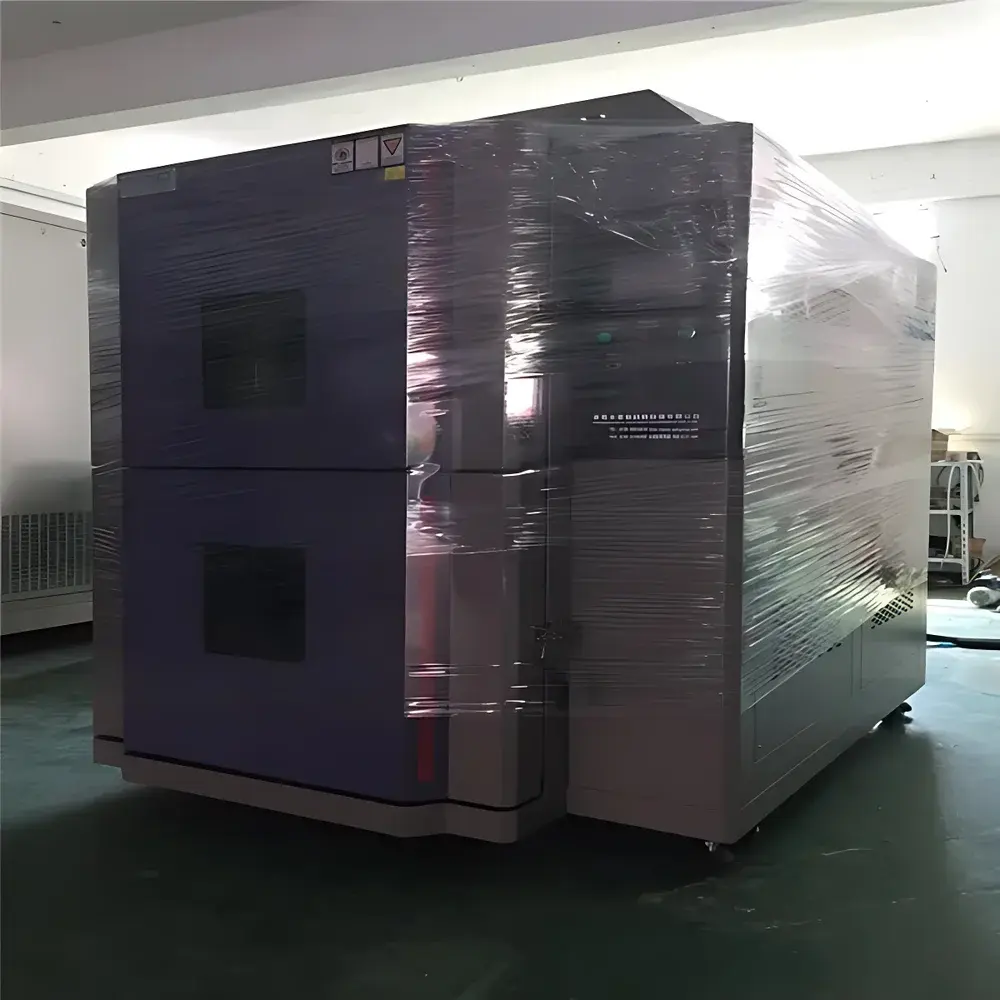
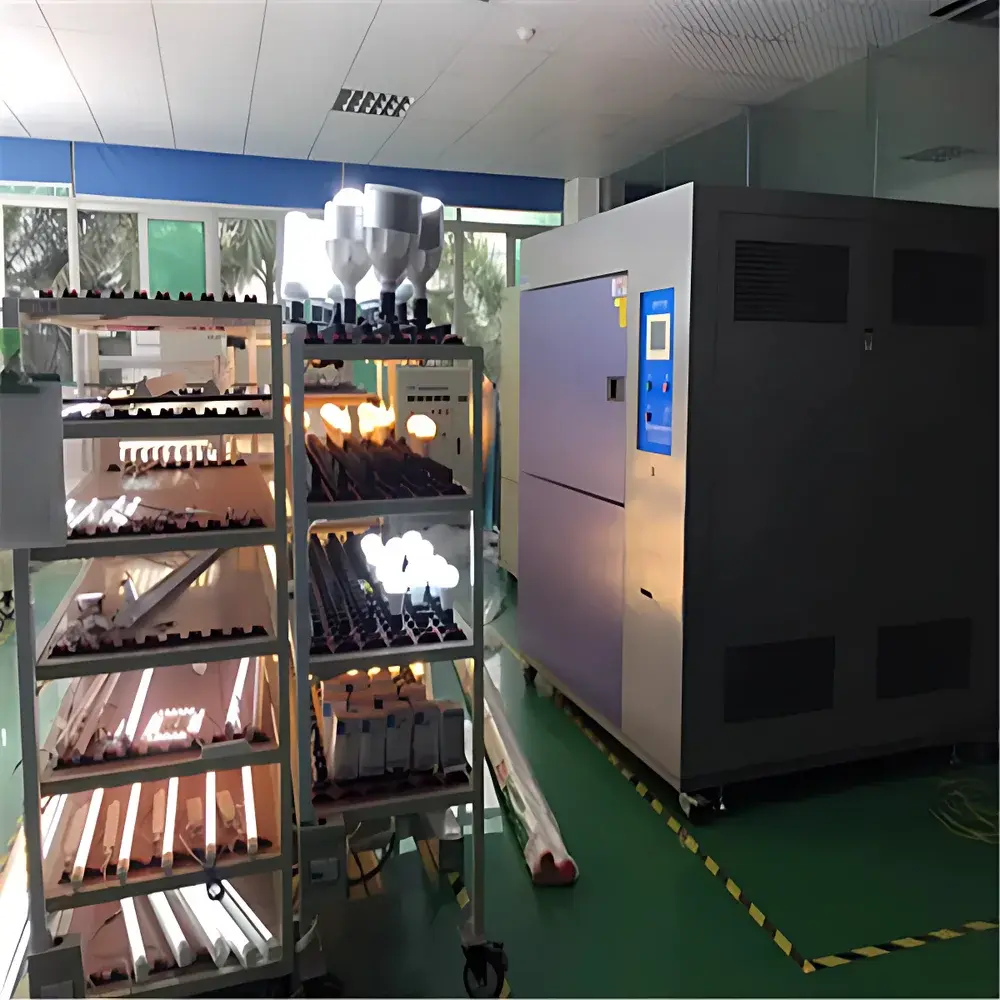
Apktech 2AP-CJ-27 Dual-Chamber Pneumatic Thermal Shock Test Chamber
| Brand | Apktech |
|---|---|
| Origin | Guangdong, China |
| Manufacturer Type | OEM/ODM Manufacturer |
| Country of Origin | China |
| Model | 2AP-CJ-27 |
| High-Temperature Range | +150 °C |
| Low-Temperature Range | −65 °C |
| Thermal Shock Range | −65 °C to +150 °C |
| Temperature Stability | ±2 °C |
| Heating Rate | 3–5 min (to reach setpoint from ambient) |
| Cooling Rate | 30 min (to reach −65 °C from ambient) |
Overview
The Apktech 2AP-CJ-27 Dual-Chamber Pneumatic Thermal Shock Test Chamber is engineered for accelerated reliability assessment of electronic components, aerospace materials, automotive subsystems, and polymer-based assemblies subjected to extreme thermal transients. It implements a two-zone, pneumatically actuated transfer mechanism—comprising independent high-temperature (+150 °C) and low-temperature (−65 °C) chambers—to subject test specimens to rapid, repeatable thermal shocks without manual intervention. The system operates on the principle of controlled thermal inertia disruption: by physically moving samples between thermally isolated zones via compressed air-driven lift carriage, it achieves shock transition times ≤10 seconds and temperature recovery within ≤5 minutes—meeting critical timing requirements defined in MIL-STD-810H Method 503.5, JIS Z 2342, and IEC 60068-2-14. Its dual-refrigeration architecture employs a cascade (two-stage) HFC-based refrigeration system with imported Tecumseh compressors, enabling stable ultra-low operation while complying with global environmental regulations on ozone-depleting substances.
Key Features
- Dual-chamber configuration with fully stainless-steel construction (SUS304 interior and exterior) for corrosion resistance and long-term thermal integrity.
- Pneumatic sample transfer mechanism with fail-safe position sensing and emergency stop interlocks—ensuring operator safety and test repeatability per ISO 13857.
- Imported Japanese color LCD touchscreen controller supporting both English and Chinese UI, with embedded real-time curve plotting and non-volatile data logging (no paper required).
- Cascade refrigeration system using eco-friendly HFC-404A/HFC-23 refrigerant blend; optimized for rapid cooling to −65 °C with minimal thermal lag and high energy efficiency.
- Temperature uniformity maintained at ±1 °C across working volume (30 × 35 × 30 cm), validated per ASTM E2207 and IEC 60068-3-5.
- Compliance-ready design: supports audit trails, user-level access control, and configurable alarm thresholds aligned with GLP/GMP documentation workflows.
Sample Compatibility & Compliance
The 2AP-CJ-27 accommodates test specimens up to 15 kg and dimensions of 30 cm (H) × 35 cm (W) × 30 cm (D). It is routinely deployed for qualification testing of PCBAs, solder joints, MEMS sensors, battery modules, and elastomeric seals under thermal cycling stress. The chamber satisfies mandatory environmental test protocols including GJB 150.5A–2012 (China’s military standard for temperature shock), MIL-STD-810H Method 503.5, JEDEC JESD22-A106B, and ISO 16750-4 for automotive electronics. All thermal profiles are traceable to NIST-traceable reference sensors, and system calibration certificates conform to ISO/IEC 17025 requirements.
Software & Data Management
The integrated microcomputer controller provides local data acquisition at 1-second intervals, storing ≥10,000 hours of timestamped temperature readings per test cycle. Export formats include CSV and PDF reports with embedded trend curves, pass/fail status flags, and deviation alerts. Optional Ethernet or RS-485 interfaces enable integration into centralized lab management systems (LIMS) and support remote monitoring via secure HTTPS endpoints. Audit trail functionality meets FDA 21 CFR Part 11 requirements for electronic records and signatures when paired with user authentication modules.
Applications
- Failure mode analysis of solder interconnects and die attach integrity under repeated thermal expansion mismatch.
- Evaluation of coating adhesion and delamination risk in multi-material laminates exposed to cyclic thermal gradients.
- Qualification of avionics enclosures per DO-160 Section 4.9 (temperature shock).
- Accelerated aging studies of lithium-ion battery cells to assess capacity fade and internal resistance drift.
- Validation of hermetic seal integrity in medical device housings per ISO 11607-1.
- Process development support for reflow soldering profile optimization and cold plate thermal interface material screening.
FAQ
What standards does the 2AP-CJ-27 comply with for thermal shock testing?
It meets GJB 150.5A–2012, MIL-STD-810H Method 503.5, JIS Z 2342, IEC 60068-2-14, and ISO 16750-4.
Is the chamber suitable for testing sealed electronic assemblies?
Yes—the stainless-steel chamber and inert gas-compatible design allow safe testing of hermetically sealed units without condensation ingress risk.
Can temperature profiles be customized and saved?
Yes—up to 100 programmable test sequences can be stored locally, each supporting ramp-soak-shock cycles with variable dwell times and rate limits.
What maintenance intervals are recommended?
Refrigeration oil and filter replacement every 12 months; annual verification of sensor calibration and pneumatic actuator response time.
Is remote diagnostics supported?
Standard Ethernet connectivity enables firmware updates, log retrieval, and diagnostic code reading via secure web interface or third-party SCADA platforms.



