
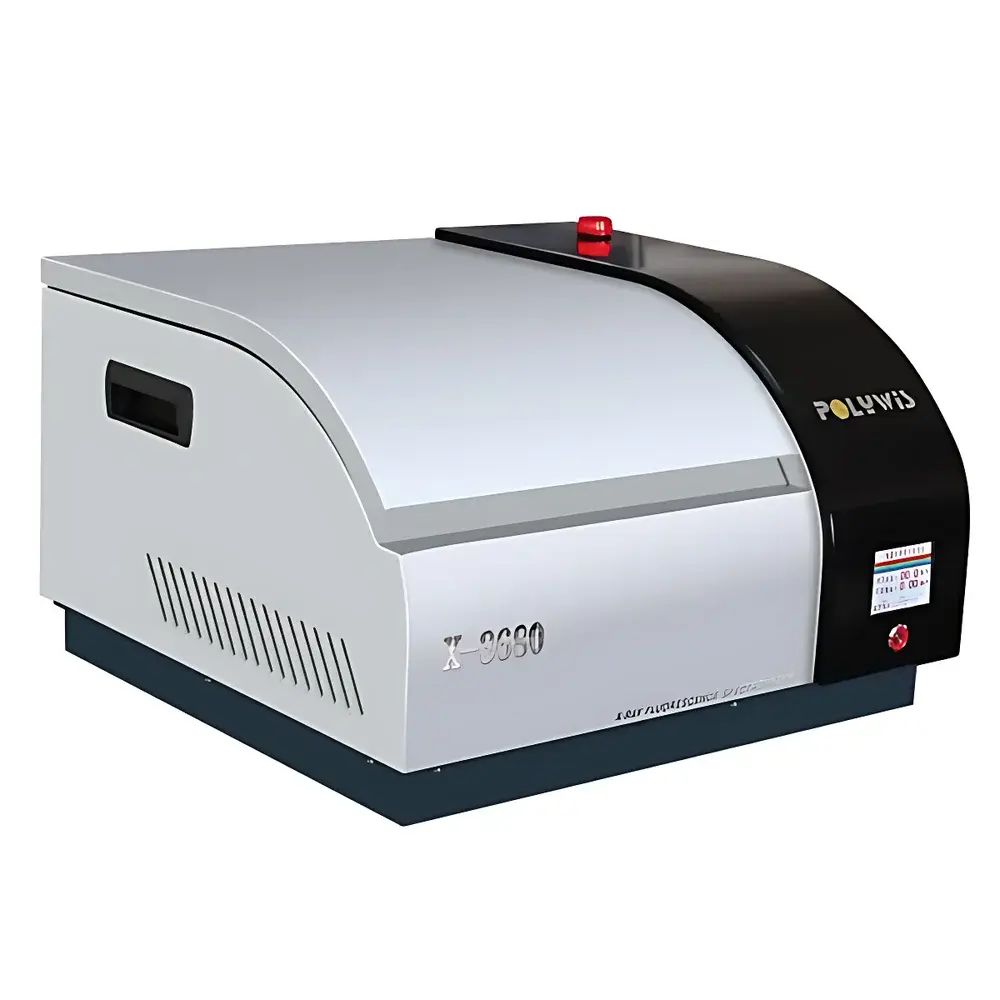
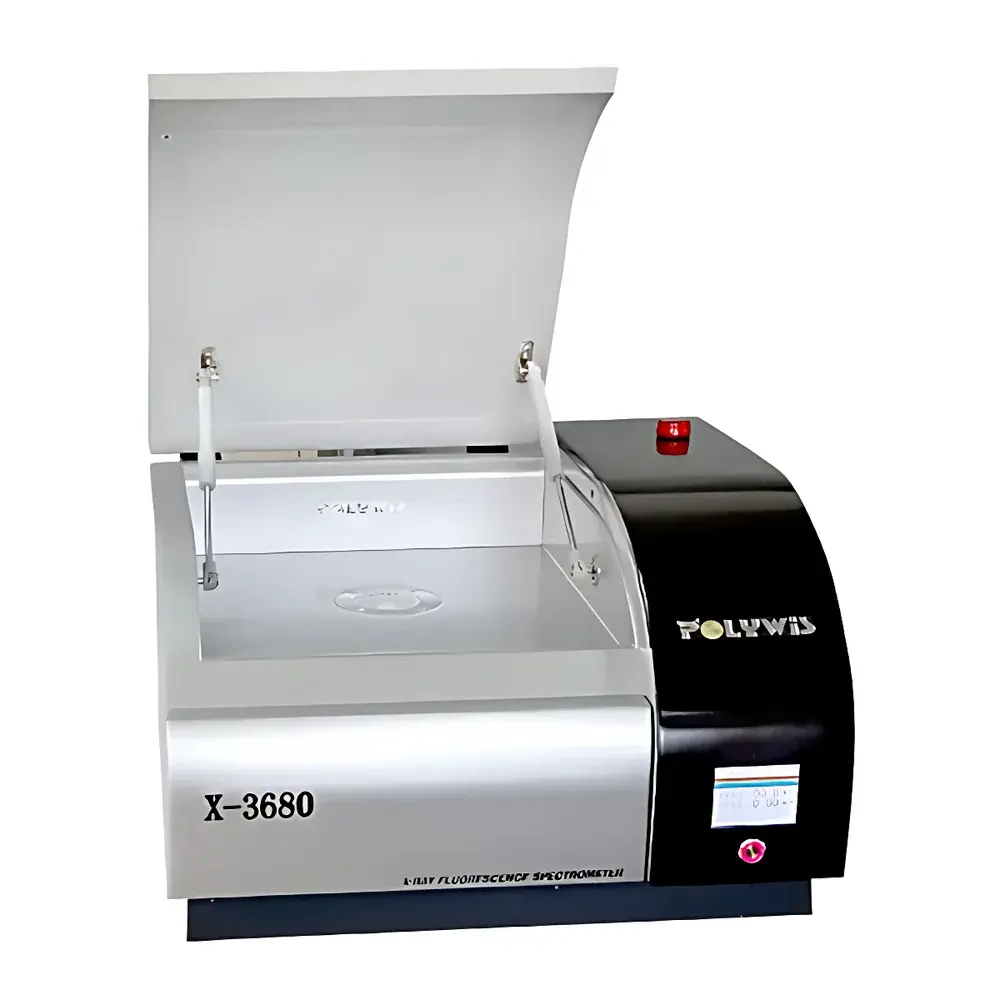
VKTR X-3680 Energy-Dispersive X-Ray Fluorescence (ED-XRF) Spectrometer for Metallurgical Analysis
| Brand | VKTR |
|---|---|
| Origin | Tianjin, China |
| Manufacturer Type | Original Equipment Manufacturer (OEM) |
| Country of Origin | China |
| Model | X-3680 |
| Pricing | Available Upon Request |
Overview
The VKTR X-3680 is a high-performance energy-dispersive X-ray fluorescence (ED-XRF) spectrometer engineered specifically for quantitative and qualitative elemental analysis in metallurgical laboratories, foundries, scrap sorting facilities, and quality control departments. It operates on the fundamental principle of X-ray fluorescence: when a sample is irradiated with high-energy X-rays from a high-power X-ray tube, inner-shell electrons are ejected from constituent atoms; subsequent electron transitions emit characteristic secondary X-rays whose energies are element-specific. The X-3680 captures and resolves these emissions using a state-of-the-art Amptek X-123 digital detector system, enabling simultaneous multi-element detection across the full periodic range from aluminum (Al, Z=13) to uranium (U, Z=92). Designed for industrial robustness and analytical rigor, the instrument delivers sub-ppm detection limits, certified resolution performance at the Mn Kα line (≤158 eV at 5.89 keV), and compliance with GB/T 18043–2013 — the Chinese national standard for precious metal content determination in jewelry and alloys. Its non-destructive, no-sample-preparation workflow supports rapid screening (as fast as 3.5 seconds per measurement) and long-term stability under continuous operation.
Key Features
- High-resolution detection: Amptek X-123 fully digital detector with 6 mm² active area, 500 µm silicon depletion depth, and 25 µm Be window; measured Mn Kα resolution of 153–158 eV at 5.9 keV (FWHM)
- Dual cooling architecture: Integrated air–water hybrid thermal management system maintains stable X-ray tube operating temperature, extending source lifetime and ensuring signal reproducibility over extended duty cycles
- Triple radiation safety design: Motorized photoelectric shutter cuts high voltage automatically upon sample chamber opening; interlocked chamber lid with multi-layer lead–copper shielding; real-time dose monitoring ensures operator exposure remains below 0.1 µSv/h at 5 cm distance
- Integrated sample imaging & positioning: High-resolution CMOS camera with live feed and software-based ROI (region-of-interest) selection enables precise targeting of heterogeneous samples, coatings, or inclusions
- Modular excitation optics: Automated filter and collimator changer (up to 8 positions) allows dynamic optimization of excitation conditions for light elements (e.g., Al, Si, P) or trace heavy metals (e.g., Pb, Cd, Hg)
- Open software platform: Fully programmable analysis environment supporting custom method development, third-party algorithm integration, and automated calibration routines including simultaneous Ag/Cu peak alignment for drift correction
- Multi-layer coating analysis: Capable of quantifying up to five consecutive layers on diverse substrates (e.g., Ni/Cu/Fe, Zn/Al/Mg), with matrix-matched standards and fundamental parameter modeling
Sample Compatibility & Compliance
The X-3680 accommodates solid, powdered, and liquid samples without digestion or pelletization. Maximum closed-chamber dimensions are 335 × 345 × 83 mm; open-chamber mode permits analysis of oversized billets, ingots, or rolled sheets. All measurements adhere to metrological traceability requirements outlined in ISO/IEC 17025:2017. Instrument validation includes routine verification against NIST SRM reference materials (e.g., SRM 2711a, SRM 1274) and fulfills technical criteria specified in GB/T 18043–2013 for resolution, precision, and linearity. Optional firmware modules support RoHS-compliant hazardous substance screening (Pb, Cd, Hg, Cr⁶⁺, Br) per IEC 62321-5:2013 and EU Directive 2011/65/EU.
Software & Data Management
VKTR’s proprietary SpectraSuite™ software provides a GLP-compliant interface with full audit trail functionality (user login, method versioning, raw spectrum archiving, result modification history). Quantitative analysis leverages a hybrid algorithm suite combining fundamental parameter (FP) modeling, empirical alpha-coefficient correction, and multivariate regression — a methodology validated for complex alloy matrices such as stainless steels, aluminum alloys, and copper-based superalloys. Data export supports CSV, XML, and ASTM E1359–17 formats. Software architecture complies with FDA 21 CFR Part 11 requirements for electronic records and signatures when configured with role-based access control and digital certificate authentication.
Applications
- Grade identification and positive material identification (PMI) of ferrous and non-ferrous alloys in incoming inspection and heat-treatment verification
- Trace impurity monitoring (e.g., Sn, As, Sb, Bi) in high-purity copper cathodes and aluminum ingots per ASTM B117 and GB/T 11066
- Coating thickness and composition analysis of electroplated, hot-dip galvanized, and PVD-deposited layers on automotive and aerospace components
- Slag and flux composition mapping in blast furnace and electric arc furnace operations
- Recycled metal sorting via rapid elemental fingerprinting to enforce contractual specifications and regulatory thresholds
- Research-grade phase segregation studies using sequential micro-spot analysis across weld zones or cast microstructures
FAQ
Does the X-3680 require daily calibration?
No — the instrument features automatic Ag/Cu dual-peak alignment and thermal drift compensation algorithms that maintain calibration stability for ≥8 hours under continuous operation. Daily verification with a single check standard is recommended.
Can it analyze light elements below sodium (Na)?
Yes — with helium purge or vacuum chamber option (available as accessory), detection of Mg, Al, Si, and P is achievable with optimized excitation and detector geometry.
Is remote diagnostics and firmware updates supported?
Yes — SpectraSuite™ includes secure SSH-enabled remote maintenance mode with encrypted log transfer and over-the-air firmware patching capability.
What electrical and environmental requirements must be met for installation?
A stable 220 V ±5 %, 50 Hz supply with dedicated 16 A circuit is required. Ambient conditions must be maintained between 18–28 °C and ≤70 % RH; vibration isolation table recommended for high-precision applications.
How is data integrity ensured during long-term deployment in production environments?
All spectral acquisitions, processing parameters, and final reports are time-stamped, digitally signed, and stored in an immutable SQLite database with optional network backup to NAS or cloud storage compliant with ISO 27001 policies.





