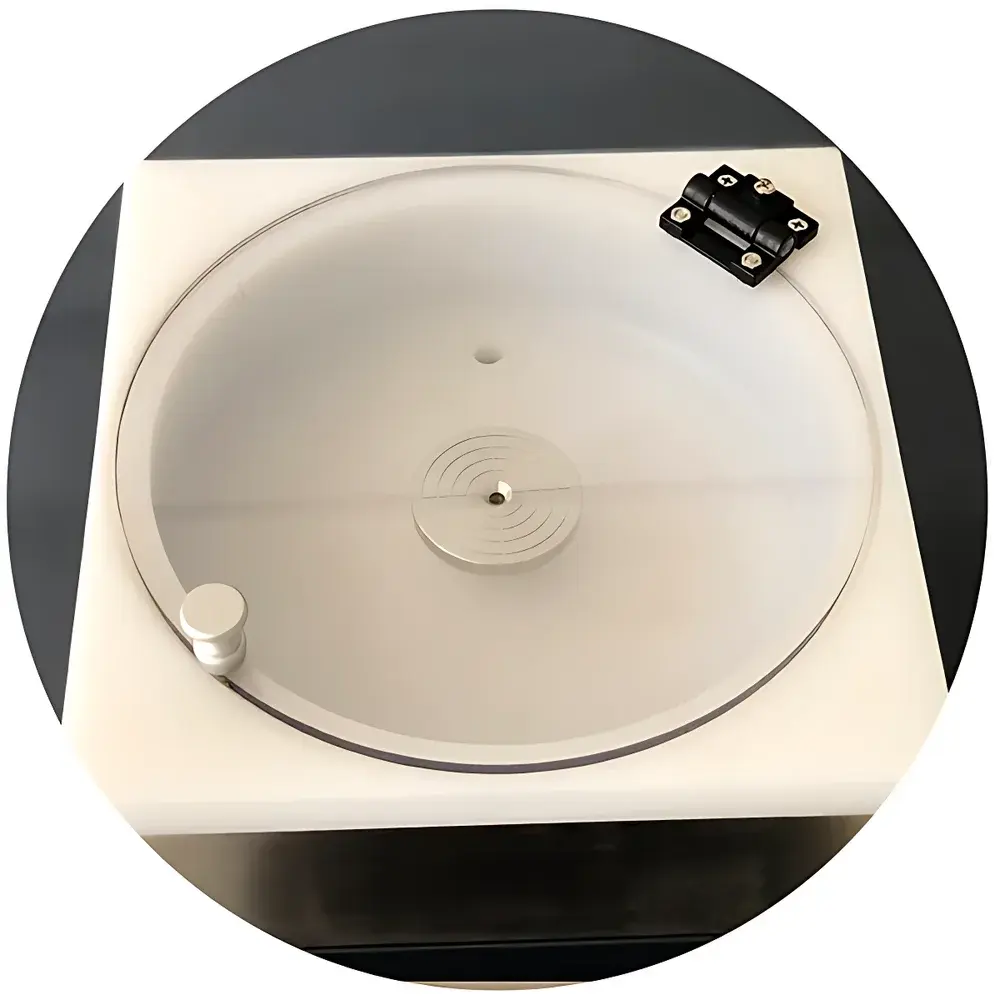
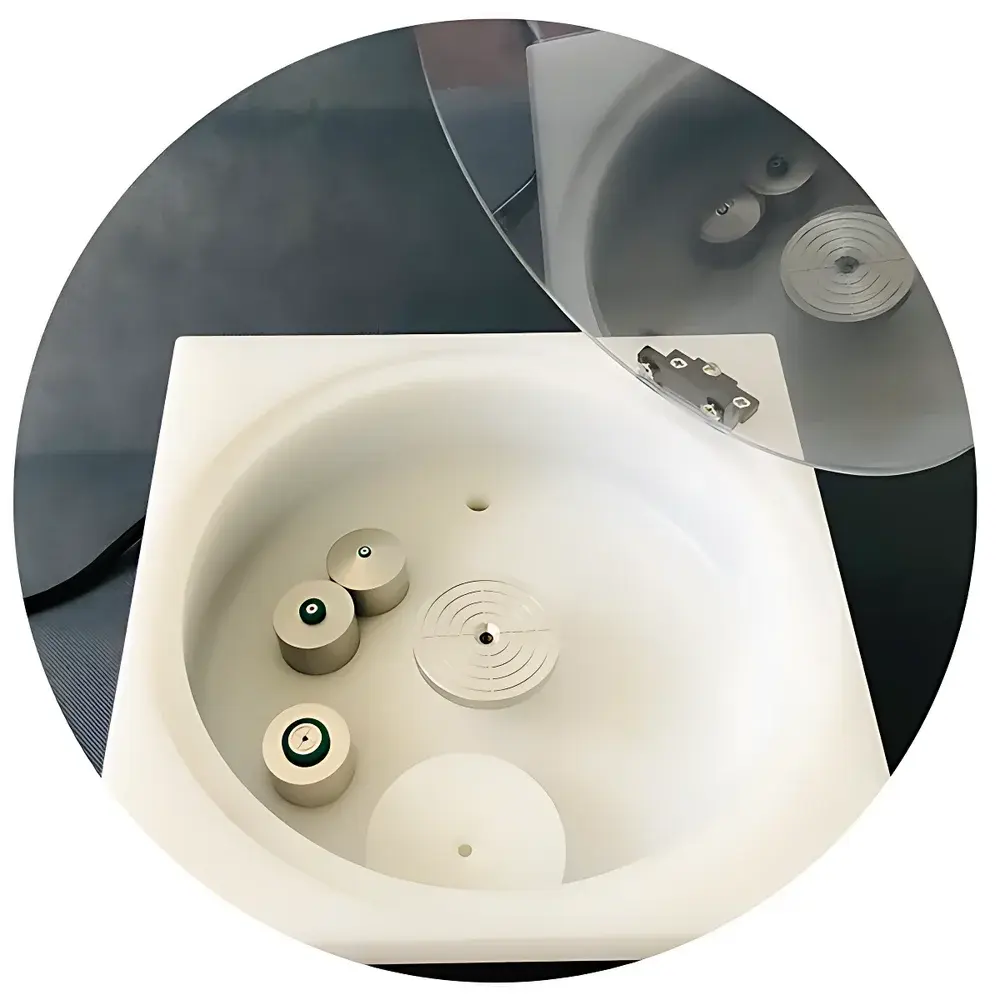
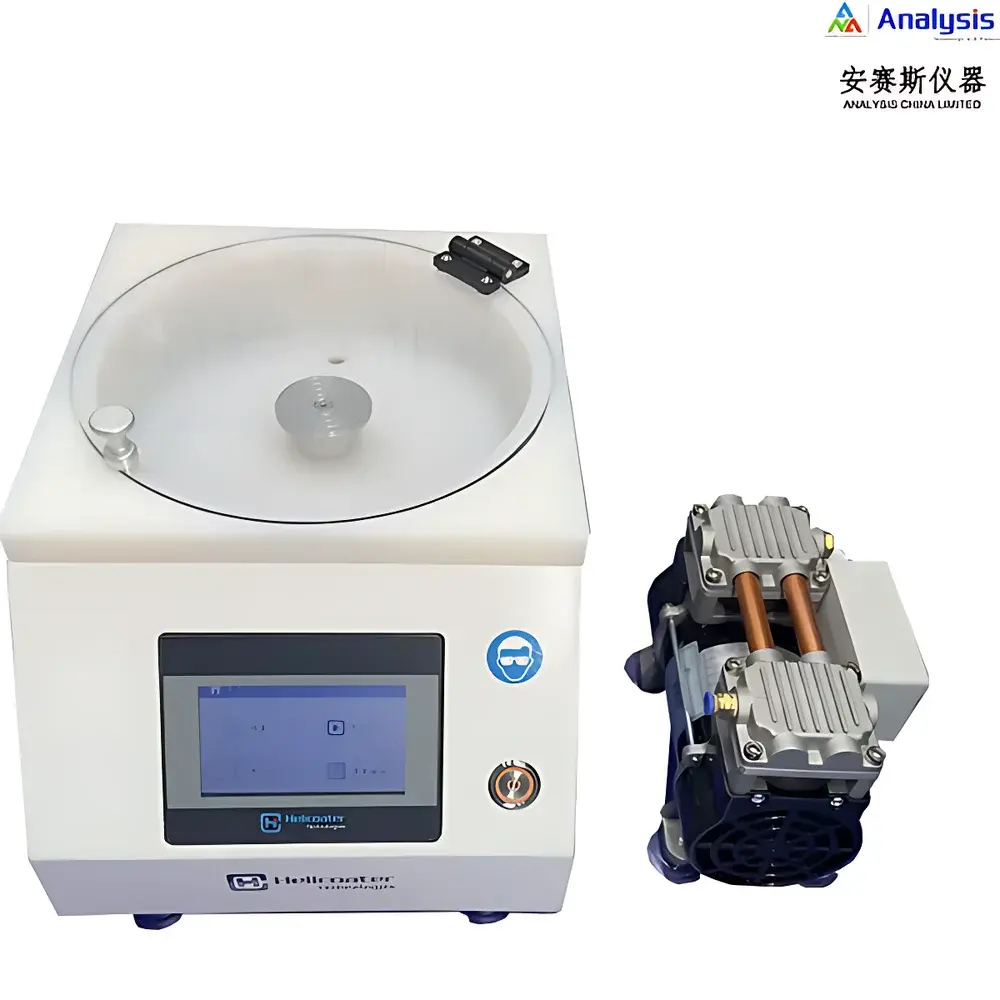
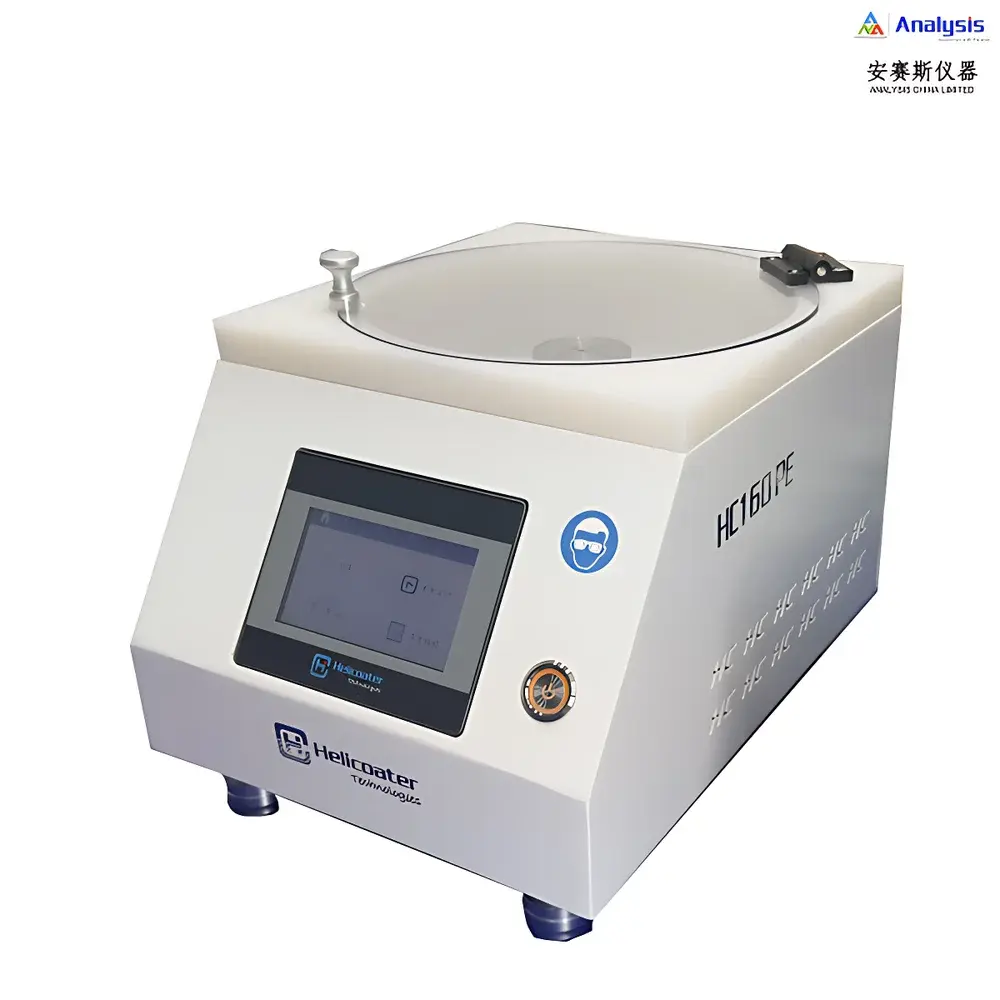
ANALYSIS HC160SE Programmable Spin Coater
| Brand | ANALYSIS |
|---|---|
| Origin | Beijing, China |
| Model | HC160SE |
| Rotation Speed | 100–12,000 rpm |
| Speed Resolution & Accuracy | ±1 rpm |
| Max Acceleration | 30,000 rpm/s |
| Maximum Substrate Diameter | 160 mm (6″ wafer) |
| Chamber Diameter | 220 mm |
| Programmable Steps | 100 programs × 10 steps each |
| Input Voltage | AC 100–230 V |
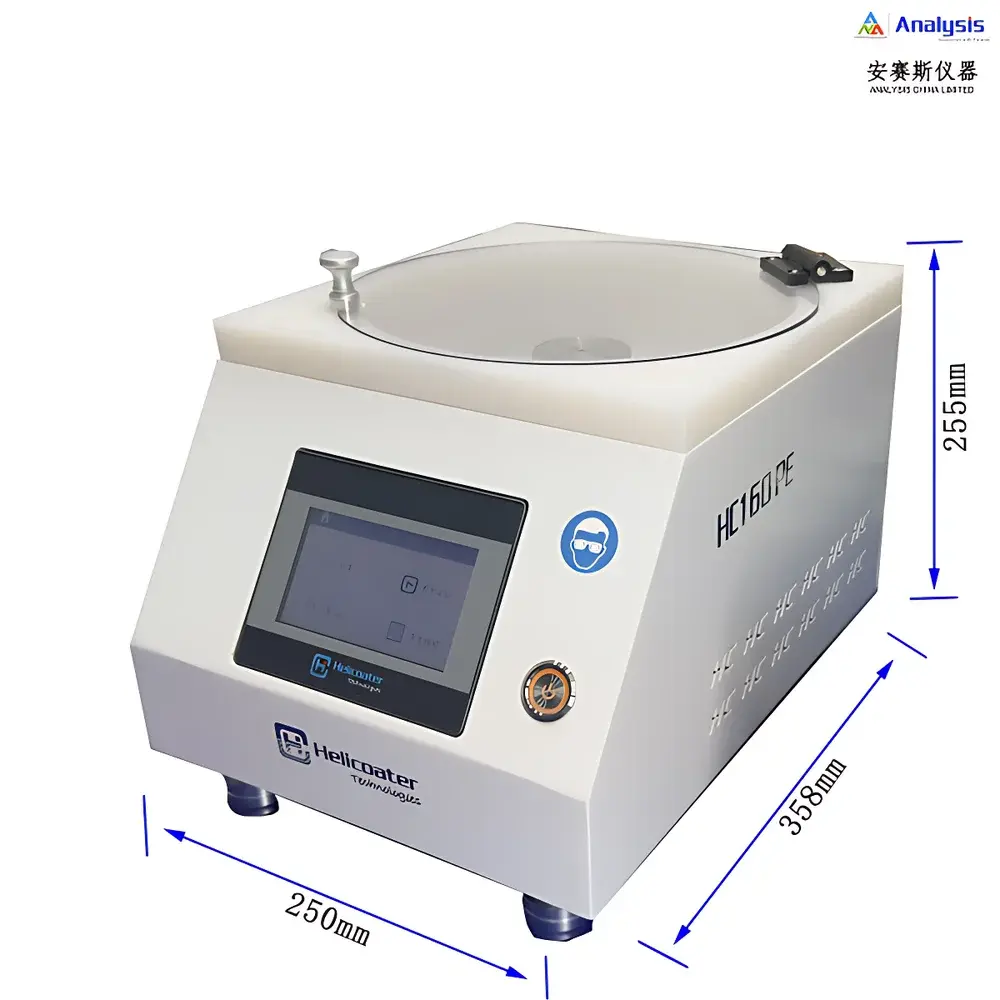
| Dimensions (L×W×H) | 358 × 250 × 255 mm |
| Chamber Material | HDPE |
| Housing Material | Stainless Steel (SUS) |
| Lid | Solvent-resistant polycarbonate (PC) |
| Safety Interlocks | Vacuum interlock + lid switch interlock |
Overview
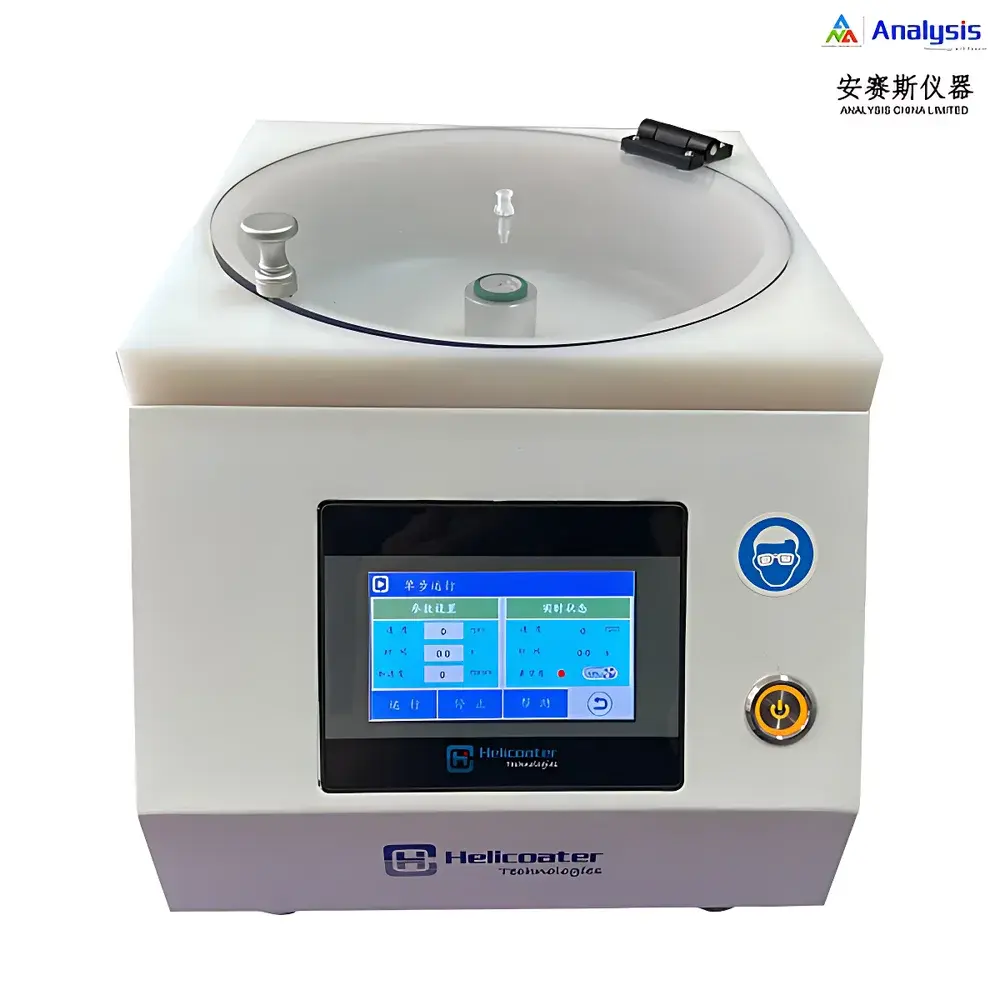
The ANALYSIS HC160SE Programmable Spin Coater is an engineered solution for precise, repeatable thin-film deposition via rotational coating—principally leveraging centrifugal force to distribute liquid photoresists, polymer solutions, sol-gels, or functional nanomaterial dispersions uniformly across planar substrates. Designed specifically for semiconductor process development and academic microfabrication labs, the HC160SE operates on a robust DC brushless motor coupled with industrial-grade PLC control architecture, ensuring high torque delivery, thermal stability, and long-term operational consistency under repeated solvent exposure. Its core function centers on controlled angular acceleration, sustained rotation, and programmable dwell timing—parameters directly governing film thickness uniformity, edge bead profile, and solvent evaporation kinetics. The system accommodates substrates from 5 mm square fragments up to full 160 mm (6-inch) wafers, making it suitable for R&D-scale photolithography, perovskite solar cell fabrication, graphene oxide coating, and MEMS packaging prototyping—all within a compact footprint compatible with standard glovebox transition chambers.
Key Features
- High-resolution speed control: Adjustable rotation range of 100–12,000 rpm with ±1 rpm accuracy and 1 rpm resolution—critical for reproducible thickness tuning in sub-100 nm film regimes.
- Programmable multi-step protocols: Supports up to 100 user-defined recipes, each containing 10 sequential steps (acceleration, spin speed, duration, deceleration), enabling complex ramp-and-hold profiles for gradient films or bilayer resist stacks.
- Industrial-grade drive system: Brushless DC motor with integrated encoder feedback ensures minimal speed drift during extended runs and resistance to solvent-induced degradation.
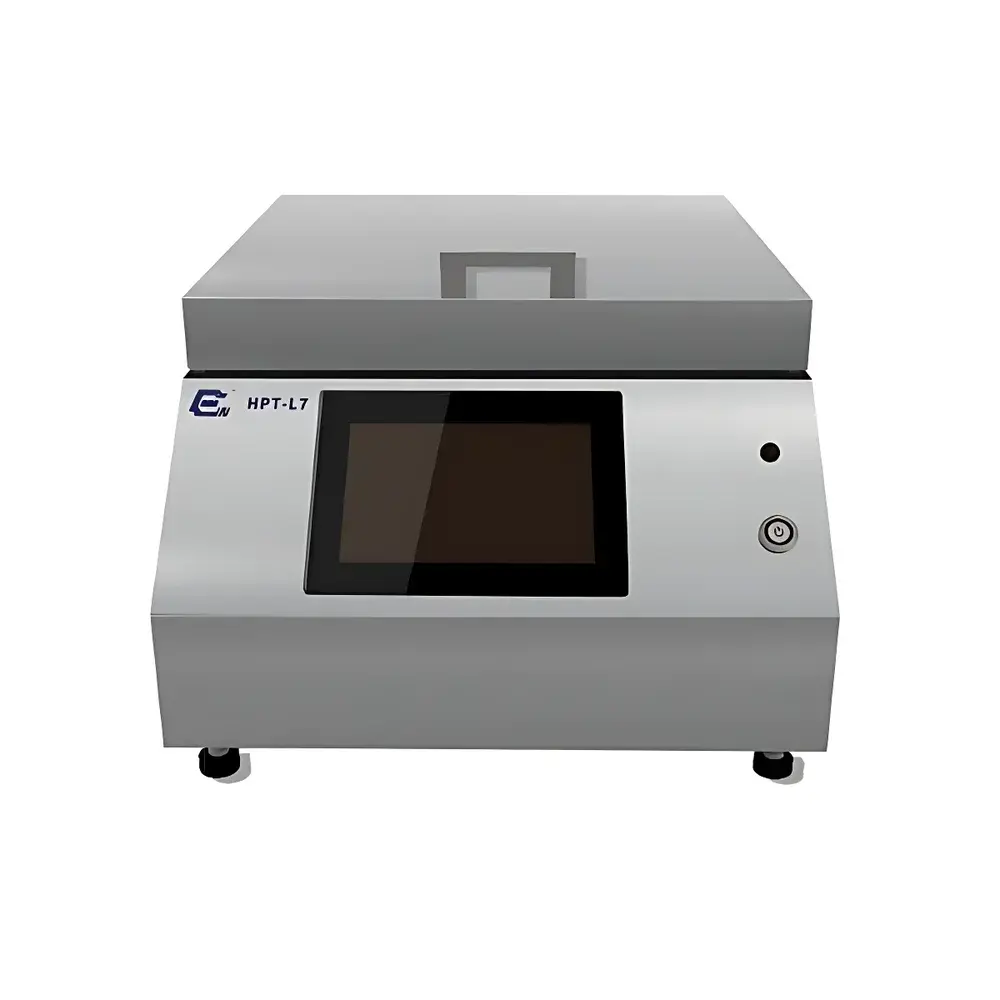
- Intuitive HMI interface: 4.3-inch full-color TFT touchscreen with bilingual (English/Chinese) OS navigation, real-time parameter monitoring, and on-device recipe editing without external PC dependency.
- Glovebox-compatible mechanical design: Compact chassis (358 × 250 × 255 mm) and optional split-body configuration allow seamless integration into inert-atmosphere environments—essential for air-sensitive perovskites or lithium-based battery electrode processing.
- Enhanced safety architecture: Dual redundant interlocks—vacuum pressure sensing and lid-position detection—automatically halt rotation and disable motor power if chamber integrity is compromised.
- Chemically resistant construction: HDPE inner chamber, stainless steel (SUS304) structural housing, and solvent-rated polycarbonate transparent lid ensure compatibility with acetone, PGMEA, IPA, chlorobenzene, DMF, and other common microelectronic processing solvents.
Sample Compatibility & Compliance
The HC160SE accepts rigid, flat substrates including silicon, glass, quartz, sapphire, stainless steel, and flexible polyimide or PET foils—provided surface flatness remains within ±5 µm over the active area. It supports both manual pipette dispensing and optional automated dispense module integration (via standardized 1/4″ NPT port), facilitating GLP-aligned workflow documentation when paired with traceable liquid handlers. While not certified to ISO 9001 or SEMI S2/S8 out-of-the-box, its hardware architecture complies with fundamental electrical safety (IEC 61000-6-2/6-4) and electromagnetic compatibility requirements for laboratory instrumentation. Users implementing the HC160SE in regulated environments (e.g., ISO Class 5 cleanrooms or GMP pilot lines) may configure audit trails, user access levels, and electronic signature logs via optional software extensions aligned with FDA 21 CFR Part 11 principles.
Software & Data Management
The embedded firmware enables local storage of all executed programs—including timestamped run logs with actual vs. setpoint rpm, acceleration rate, and total cycle time. Export functionality supports CSV-formatted data dumps via USB 2.0 port for post-processing in MATLAB, Python (Pandas), or JMP. Optional PC-based remote control software provides TCP/IP connectivity for centralized lab instrument management, batch scheduling, and integration into MES platforms. All firmware updates are delivered as signed binaries to prevent unauthorized modification—a prerequisite for laboratories maintaining validated analytical workflows.
Applications
- Semiconductor R&D: Photoresist spin-coating for maskless lithography, hard-baked resist characterization, and lift-off process optimization.
- Optoelectronics: Uniform deposition of PEDOT:PSS, spiro-OMeTAD, or NiOx hole transport layers in OLED and perovskite PV device fabrication.
- Nanomaterials science: Controlled assembly of colloidal quantum dots, MXene suspensions, or 2D material inks onto conductive substrates.
- MEMS/NEMS prototyping: Polyimide passivation layer formation, SU-8 structural layer patterning, and sacrificial layer spin-casting.
- Academic teaching labs: Hands-on instruction in fluid dynamics, thin-film rheology, and surface wetting phenomena governed by Weber and Capillary numbers.
FAQ
What substrate sizes does the HC160SE support?
It handles substrates from 5 mm × 5 mm up to 160 mm diameter wafers (6-inch), including irregular shapes with adequate vacuum chuck contact.
Is vacuum chuck pressure adjustable?
Yes—the integrated vacuum regulator allows fine-tuning between 0.05–0.08 MPa to accommodate warped or ultra-thin substrates without breakage.
Can the HC160SE be integrated into automated wafer handling systems?
Standard models feature RS-232 and digital I/O ports for synchronization with robotic end-effectors; custom OEM variants support SECS/GEM protocol implementation.
Does the system meet cleanroom classification requirements?
The HC160SE itself generates no particulate shedding and is rated for ISO Class 5 environments when operated with HEPA-filtered exhaust ducting and static-dissipative flooring.
How is calibration verified and maintained?
Speed calibration is traceable to NIST-certified tachometers; users receive a factory calibration certificate with annual recalibration recommended using an optical stroboscope or laser tachometer.