
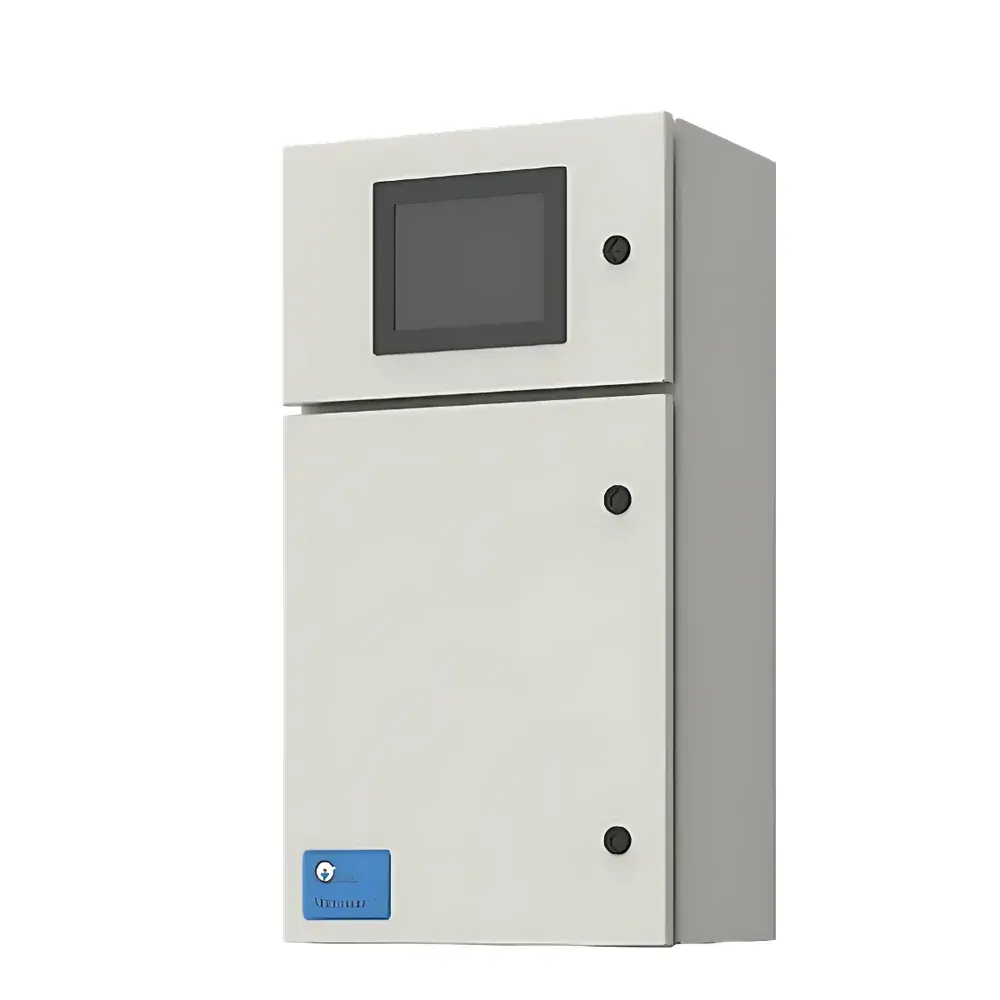
Micromac C Online Water Quality Analyzer by SYSTEA
| Brand | SYSTEA |
|---|---|
| Origin | Zhejiang, China (Distributed) |
| Model | SYSTEA Micromac C |
| Measurement Principles | Colorimetric Spectrophotometry (UV-Vis) |
| Analytes | Nitrate-N, Nitrite-N, Ammonia-N, Orthophosphate, Silicate, Sulfate, Total Phosphorus, Total Nitrogen |
| Detection Method | Batch-type Flow-Through Cell with LED-based Photometric Detection |
| Operating Modes | Manual, Cyclic, Triggered, Continuous |
| Communication Interfaces | RS232, RS485, 4–20 mA analog output |
| Optional | Ethernet interface, Pre-treatment module, Dual-waste separation (toxic/non-toxic), Leak detection sensor, Reagent level monitoring |
| Compliance Support | Designed for continuous unattended operation in GLP-aligned environmental monitoring labs |
Overview
The SYSTEA Micromac C Online Water Quality Analyzer is a fully automated, multi-parameter photometric analyzer engineered for continuous, real-time monitoring of key nutrient and anion species in diverse aqueous matrices. Utilizing stable LED-based colorimetric detection across the visible and near-UV spectrum (typically 400–850 nm), the system implements standardized wet-chemistry protocols—including cadmium reduction for nitrate, diazotization for nitrite, indophenol blue for ammonia, molybdenum blue for orthophosphate, and heteropoly blue for silicate—to deliver trace-level quantification with high reproducibility. Its modular flow-cell architecture supports sequential or parallel analysis of up to 12 distinct parameter combinations (e.g., NH₃-N + NO₃⁻-N + NO₂⁻-N + PO₄³⁻), making it suitable for compliance-driven applications such as wastewater discharge reporting, drinking water safety verification, and eutrophication trend analysis in surface waters.
Key Features
- Intelligent range management: Automatic range switching between low-, medium-, and high-concentration modes; auto-dilution capability for out-of-range samples without operator intervention
- Real-time process visualization: Dynamic absorbance curve display synchronized with reagent addition, mixing, reaction timing, and photometric reading—enabling immediate troubleshooting and method validation
- Comprehensive system diagnostics: On-screen status indicators for measurement cycle phase (calibration, sample aspiration, digestion, detection), peristaltic pump rotation, solenoid valve actuation, Peltier-controlled cell temperature (±0.2 °C), and ambient thermal drift compensation
- Flexible operational logic: Four configurable run modes—manual initiation, time-scheduled cyclic analysis (1 min to 24 h intervals), external trigger (TTL or contact closure), and true continuous flow-through monitoring with sub-minute sampling resolution
- Calibration robustness: Support for 2-point linear, multi-point non-linear (up to 5 standards), and bracketing calibration routines; optional on-board standard verification using certified reference materials
- Remote operability: Full bidirectional communication via Modbus RTU (RS485), ASCII protocol (RS232), or 4–20 mA analog output; optional Ethernet module enables secure HTTP/HTTPS API access, firmware updates, and remote configuration push
Sample Compatibility & Compliance
The Micromac C accommodates raw, filtered, or pre-treated samples from seawater, freshwater, municipal wastewater effluent, industrial process streams, and potable water distribution systems. Integrated optional pre-treatment modules support automatic filtration (10–100 µm), pH adjustment, UV oxidation (for total phosphorus/nitrogen conversion), and suspended solids removal. All wetted components are chemically inert (PTFE, PFA, borosilicate glass, ceramic valves), ensuring long-term stability in saline or acidic environments. The analyzer meets mechanical and electrical safety requirements per IEC 61000-6-2/6-4 and is designed to support audit-ready data workflows aligned with ISO/IEC 17025:2017 Clause 7.7 (result reporting), US EPA guidance for automated nutrient analyzers (EPA 365.4, 353.2), and EU WFD (2000/60/EC) monitoring specifications.
Software & Data Management
Embedded firmware provides local data logging (≥10,000 records with timestamps, QC flags, and error codes) and supports CSV export via USB or network transfer. SYSTEA’s optional AquaLink™ software suite enables centralized fleet monitoring, alarm rule definition (e.g., rate-of-change thresholds, consecutive failures), electronic signature-enabled calibration logs, and 21 CFR Part 11-compliant audit trails when deployed with validated authentication and role-based access control. All measurements include metadata: reagent batch IDs, temperature-compensated absorbance values, pathlength-corrected concentration outputs, and uncertainty estimates derived from calibration curve residuals.
Applications
- Regulatory compliance monitoring at WWTP influent/effluent points per EN 1485, ISO 15681-1, or local discharge permits
- Nutrient loading assessment in river basins and coastal zones under EU Marine Strategy Framework Directive
- Early-warning detection of nitrification/denitrification imbalances in activated sludge bioreactors
- Source water quality trending for drinking water utilities implementing multiple barrier protection strategies
- Research-grade longitudinal studies requiring high-frequency nutrient speciation in estuarine or groundwater systems
FAQ
What sample throughput can be expected for a 6-parameter configuration?
Typical cycle time ranges from 12–22 minutes depending on required digestion steps (e.g., persulfate oxidation for total N/P adds ~10 min); continuous mode achieves one full analysis every 15 minutes.
Is the system compliant with cybersecurity standards for OT networks?
Yes—when equipped with the Ethernet option, it supports TLS 1.2 encryption, configurable firewall rules, and segregated VLAN assignment; firmware signing prevents unauthorized code execution.
How is reagent consumption monitored and reported?
Integrated optical level sensors in each reagent reservoir provide real-time volume estimation; low-reagent alerts include predictive depletion warnings based on historical usage rates and scheduled maintenance intervals.
Can the analyzer operate during power interruptions?
It features non-volatile memory retention and automatic cold-start recovery: upon power restoration, it initiates controlled cooling of the reaction block, executes a full system flush, verifies optical baseline stability, and resumes scheduled analysis without manual reset.
What waste handling options are available for hazardous reagents?
The dual-waste manifold directs acidified or heavy-metal-containing streams (e.g., cadmium reduction waste) to a dedicated toxic waste container, while benign wash solutions are routed separately—reducing downstream neutralization costs and regulatory reporting burden.
Related Products







