
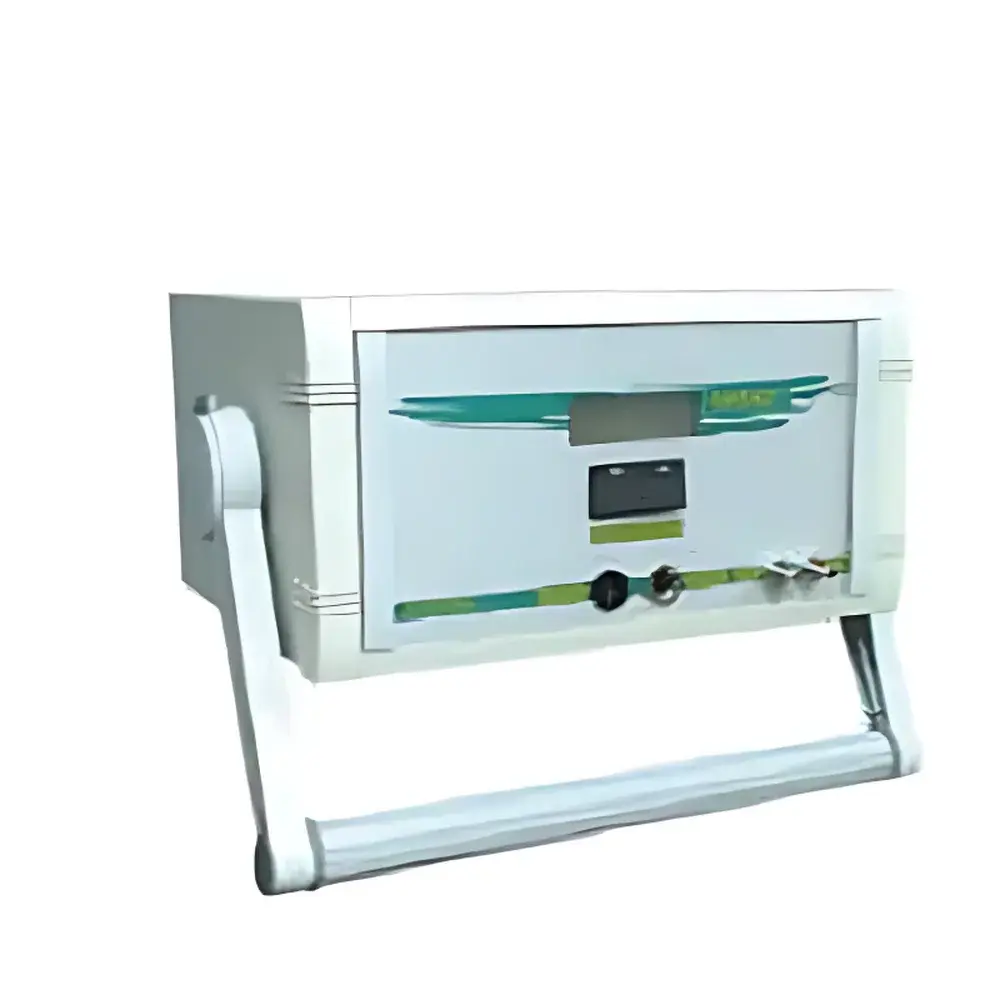
SARAD RTM 1688-2 Portable Radon and Thoron Monitor
| Brand | SARAD |
|---|---|
| Origin | Germany |
| Model | RTM 1688-2 |
| Sampling Method | Active sampling |
| Measurement Range | 0–10 MBq/m³ |
| Detection Limit | Not specified (contextually implied as sub-10 Bq/m³ in slow mode) |
| Response Time | 95% in 12 min (fast mode) |
| Flow Rate | 0.30 L/min |
| Detector Type | Integrated semiconductor alpha spectrometer with electrostatic collection chamber |
| Sensitivity | 3 cpm/(Bq/m³) (fast mode) / 7 cpm/(Bq/m³) (slow mode) |
| Chamber Volume | ~250 mL |
| Humidity Independence | Yes, no desiccant required |
| Data Storage | 2047 measurement records |
| Compliance | Designed for ISO 11665 series, ICRP recommendations, and EPA/WHO radon assessment protocols |
Overview
The SARAD RTM 1688-2 is a field-deployable, dual-isotope alpha spectrometric monitor engineered for simultaneous, real-time quantification of radon-222 (²²²Rn) and thoron-220 (²²⁰Rn) in air, soil gas, and water-derived headspace samples. Unlike passive diffusion-based detectors or scintillation cells, the RTM 1688-2 employs an actively sampled, high-voltage electrostatic collection chamber (~250 mL) coupled with a passivated implanted planar silicon (PIPS) alpha detector. Radon and thoron progeny generated within the chamber are accelerated by a controlled electric field onto the detector surface, enabling isotope-specific energy discrimination via pulse-height analysis. This principle ensures unambiguous separation of ²¹⁸Po (6.00 MeV), ²¹⁴Po (7.69 MeV), and ²¹²Po (8.78 MeV) alpha emissions—critical for accurate, interference-free Rn-222 and Rn-220 concentration derivation without cross-isotope bias. The instrument operates independently of ambient humidity, eliminating the need for drying tubes or hygroscopic filters—a known source of measurement drift in conventional electret or ionization chamber systems.
Key Features
- Simultaneous dual-isotope detection: Real-time differentiation and quantification of ²²²Rn and ²²⁰Rn using alpha energy spectrum deconvolution
- Active sampling architecture: Integrated diaphragm pump delivers stable 0.30 L/min flow; supports direct soil gas extraction (via probe) and water-headspace analysis (with degassing module)
- Two operational modes: Fast mode (12-min 95% response, 3 cpm/(Bq/m³)) for rapid screening; Slow mode (enhanced Po-214 integration, 7 cpm/(Bq/m³)) for low-concentration (<20 Bq/m³) compliance-grade measurements
- Humidity-immune design: Electrostatic collection remains stable across 10–95% RH; no calibration drift due to moisture absorption
- Onboard data management: Stores up to 2047 timestamped measurement sequences, each containing full alpha spectra and derived activity concentrations
- Field-optimized interface: Single-button operation, backlit LCD, and direct thermal printer connectivity for immediate hard-copy reporting during site audits or regulatory inspections
- Self-diagnostic capability: Continuous monitoring of chamber voltage, pump performance, and detector baseline stability
Sample Compatibility & Compliance
The RTM 1688-2 accommodates diverse sampling matrices without hardware modification: ambient air (indoor/outdoor), soil gas (via stainless-steel probe and flexible tubing), and aqueous samples (using headspace equilibration vials). Its measurement methodology aligns with ISO 11665-2:2021 (radon in air – part 2: integrated measurement methods) and ISO 11665-4:2019 (radon in water – part 4: active sampling methods). For occupational and public health applications, it satisfies requirements outlined in WHO Handbook on Indoor Radon (2009), EPA Protocol for Radon and Thoron Measurement (EPA 402-R-12-001), and EU Council Directive 2013/59/Euratom Annex VIII. All spectral acquisition and decay correction algorithms are traceable to NIST SRM 4353A (radon-in-air standard), and raw spectral files support third-party reanalysis per GLP audit requirements.
Software & Data Management
Data export is supported via USB-C connection to SARAD’s proprietary WinRado software (Windows 10/11 compatible), which provides spectral visualization, multi-sequence comparative analysis, and automated report generation compliant with ISO/IEC 17025 documentation standards. Each stored measurement includes full alpha pulse-height histogram (1024-channel), acquisition start/end timestamps, environmental temperature/pressure logs (via optional external sensor), and uncertainty propagation per GUM (JCGM 100:2008). Audit trails record all user-initiated configuration changes, ensuring full 21 CFR Part 11 readiness when paired with electronic signature modules. Raw .SRA files retain unprocessed detector output for independent validation—essential for regulatory dispute resolution or inter-laboratory comparison studies.
Applications
- Indoor radon mapping in residential and school buildings per national action levels (e.g., 300 Bq/m³ in EU, 148 Bq/m³ in US)
- Soil gas radon surveys for geological fault-line characterization and uranium exploration
- Thoron interference correction in high-thoron-risk regions (e.g., granite-rich bedrock areas)
- Validation of radon mitigation system efficacy pre- and post-installation
- Long-term trend monitoring in radon-prone workplaces (mines, caves, basements) under OSHA or ILO guidelines
- Research-grade progeny equilibrium studies requiring time-resolved alpha spectroscopy
FAQ
Does the RTM 1688-2 require calibration against a radon reference source?
Yes—annual calibration using a NIST-traceable ²²²Rn standard (e.g., SARAD RC-222) is recommended per ISO/IEC 17025 clause 6.6. Calibration certificates include energy resolution verification, chamber efficiency mapping, and background subtraction validation.
Can the instrument distinguish between radon and thoron in mixed-field environments?
Yes—via discrete alpha peak identification: ²¹⁸Po (6.00 MeV) and ²¹⁴Po (7.69 MeV) for ²²²Rn; ²¹²Po (8.78 MeV) for ²²⁰Rn. Spectral deconvolution uses least-squares fitting with constrained half-life priors (3.1 min for ²¹²Po vs. 26.8 min for ²¹⁴Po).
Is the 250 mL chamber volume a limitation for low-activity measurements?
No—the optimized electrostatic field and PIPS detector geometry yield higher effective sensitivity per unit volume than larger-flow ionization chambers; the compact design also minimizes wall losses and enhances progeny collection efficiency.
How does the instrument handle statistical uncertainty at low concentrations?
Uncertainty is calculated per measurement sequence using Poisson statistics and propagated through decay-corrected net peak area integration. At 10 Bq/m³, 4-hour sampling achieves ≤25% relative standard deviation (1σ), consistent with ISO 11665-1:2013 precision thresholds.
Is firmware update capability available in the field?
Yes—updates are delivered via signed .BIN files through WinRado; all updates preserve existing calibration coefficients and comply with IEC 62304 Class B software safety requirements.
Related Products







