
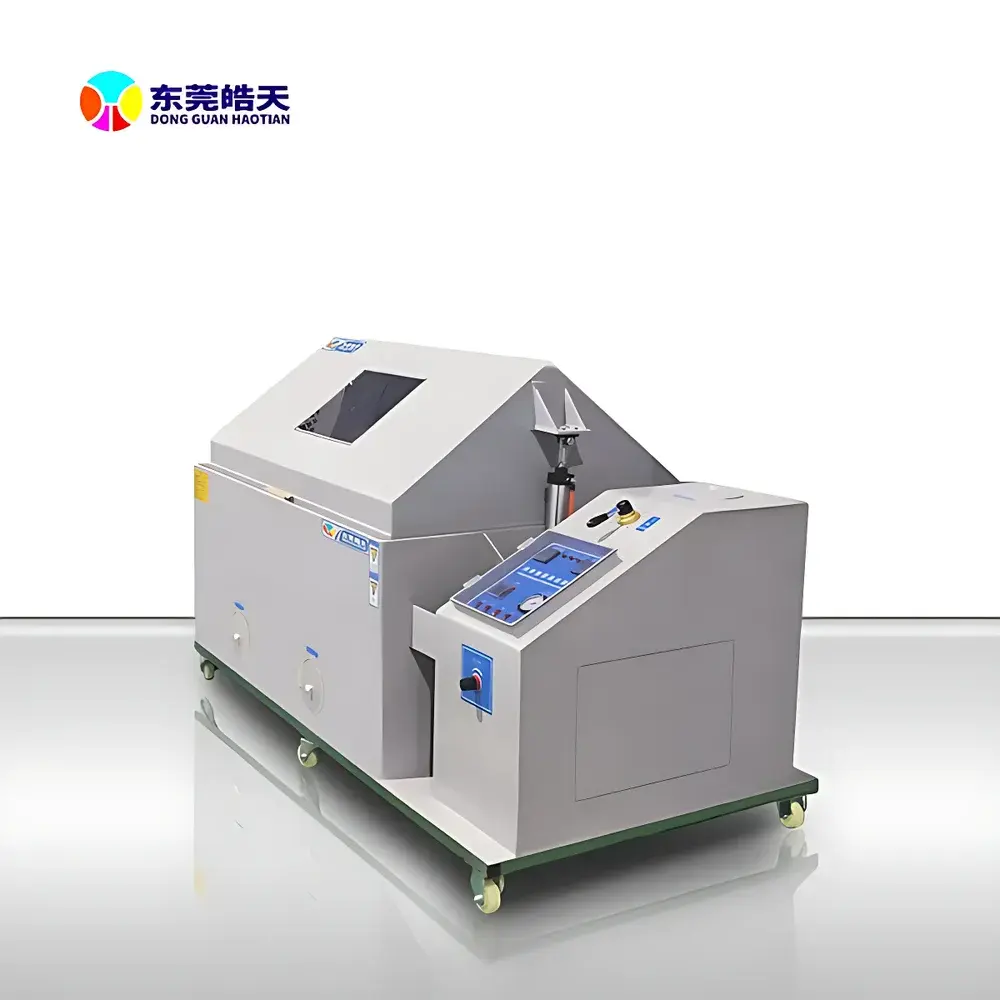
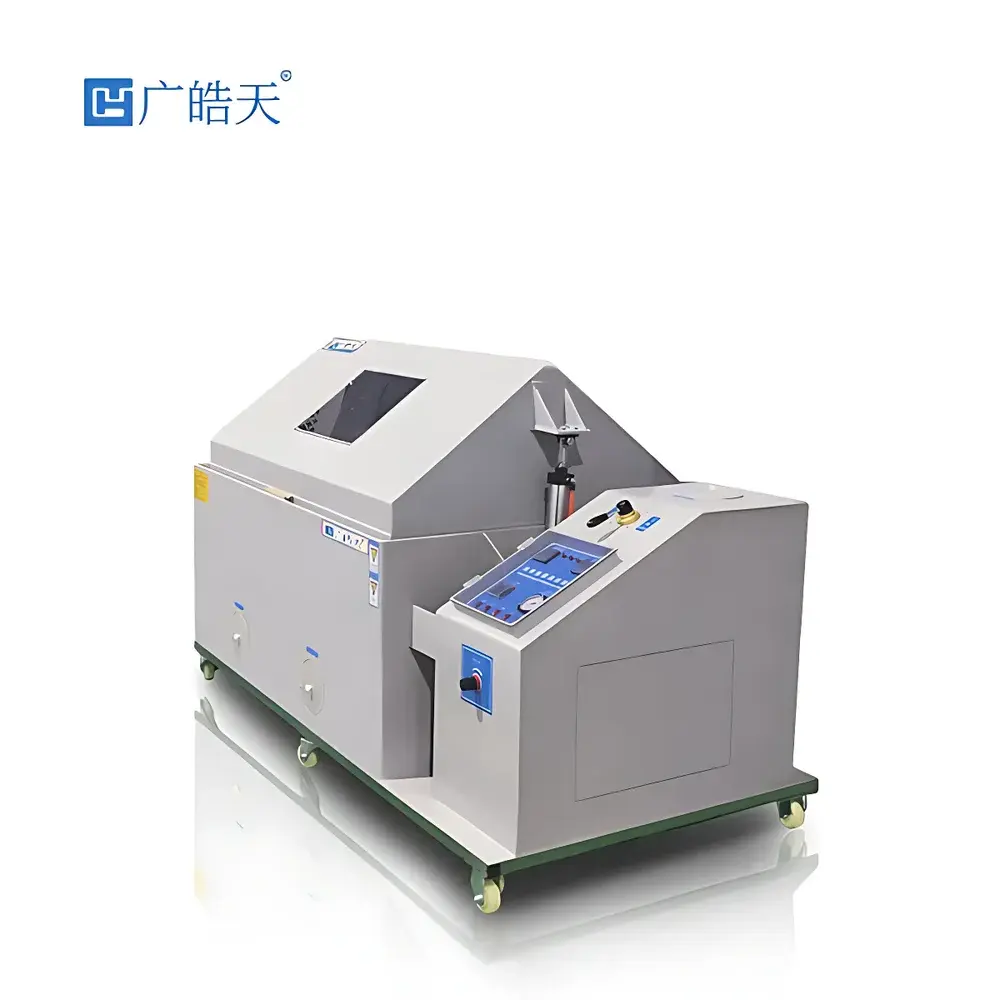
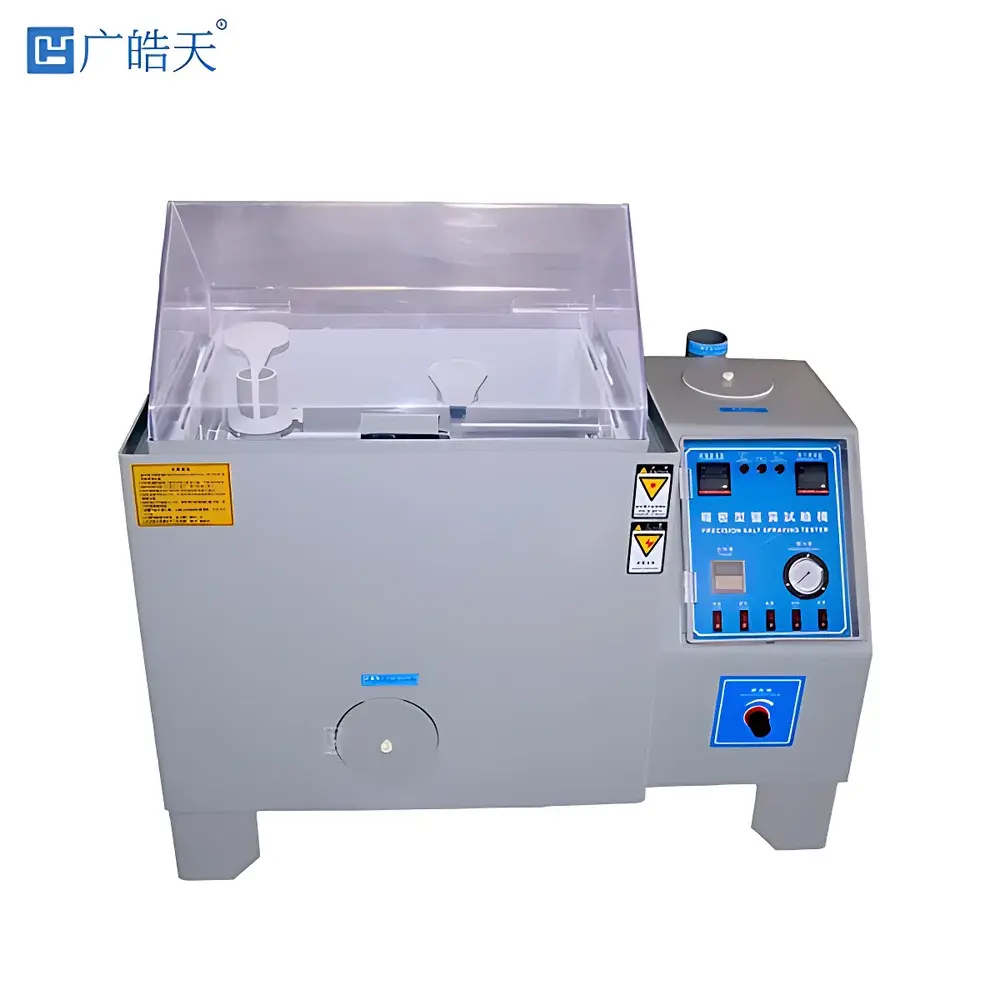
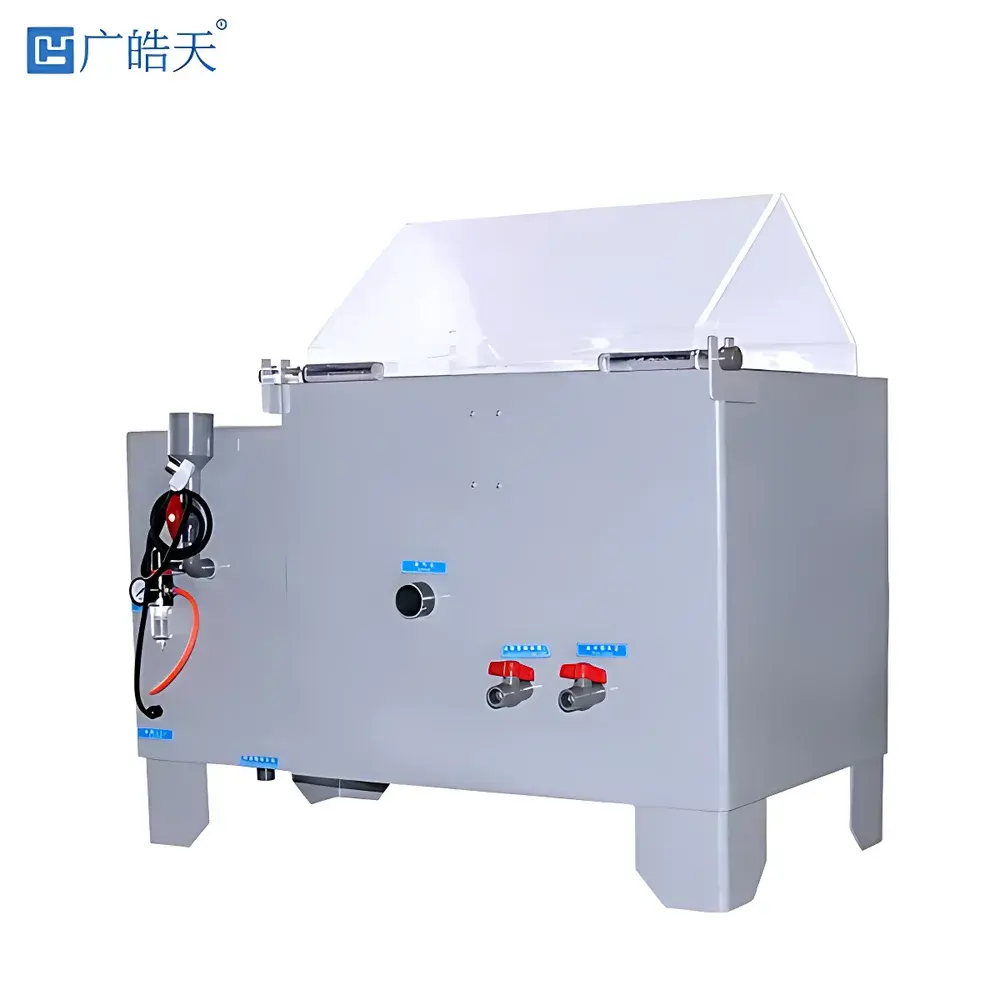
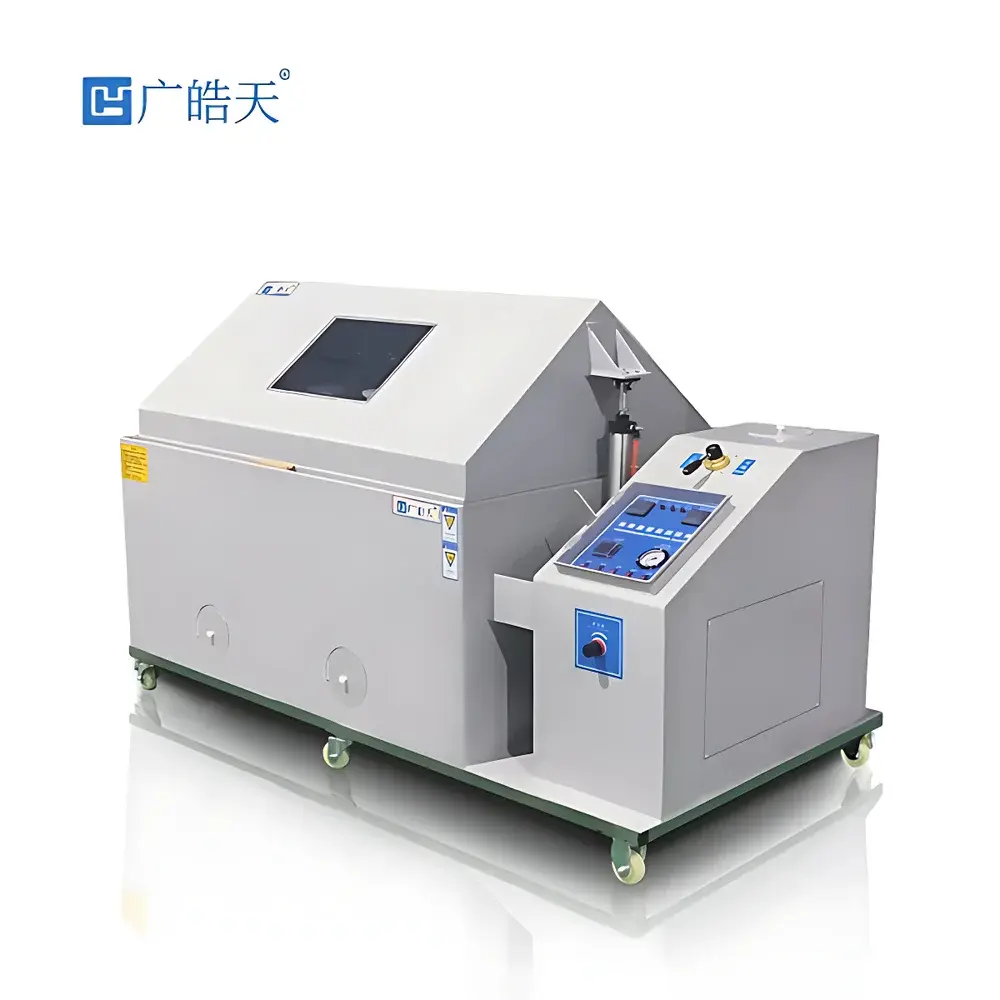
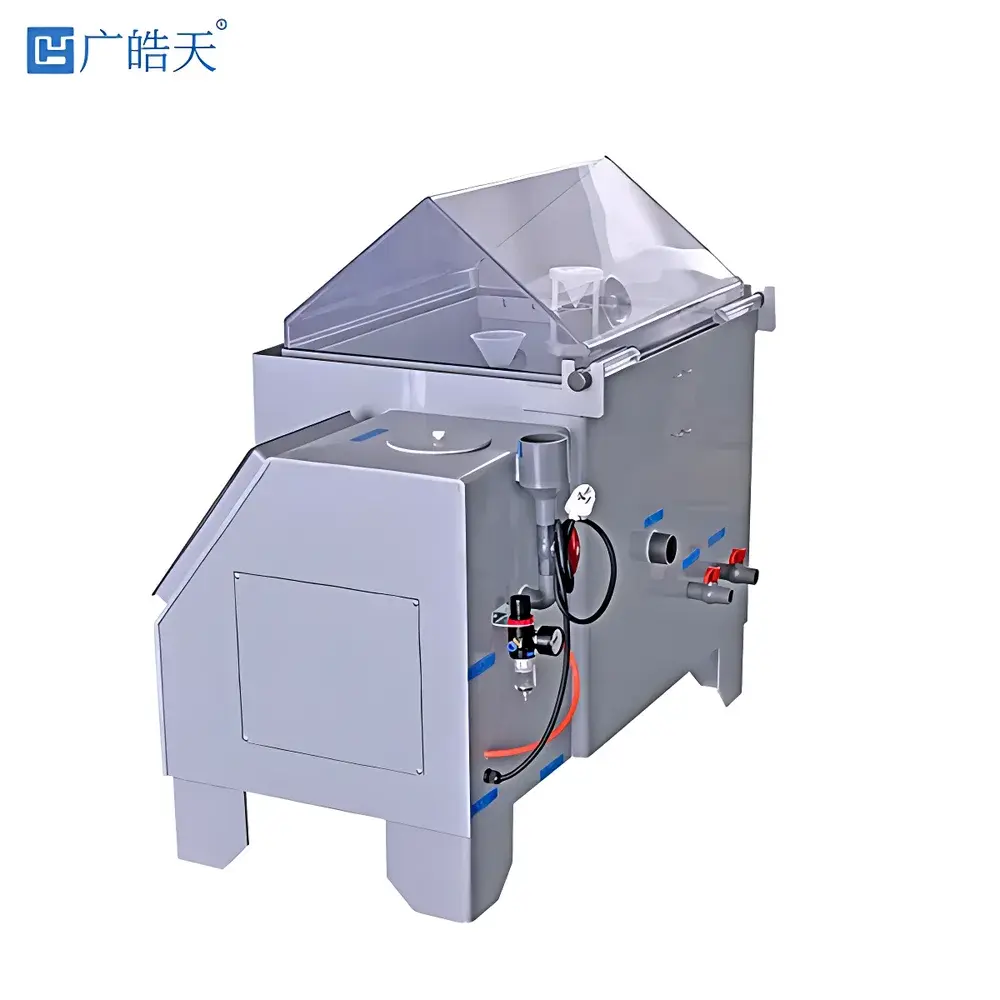
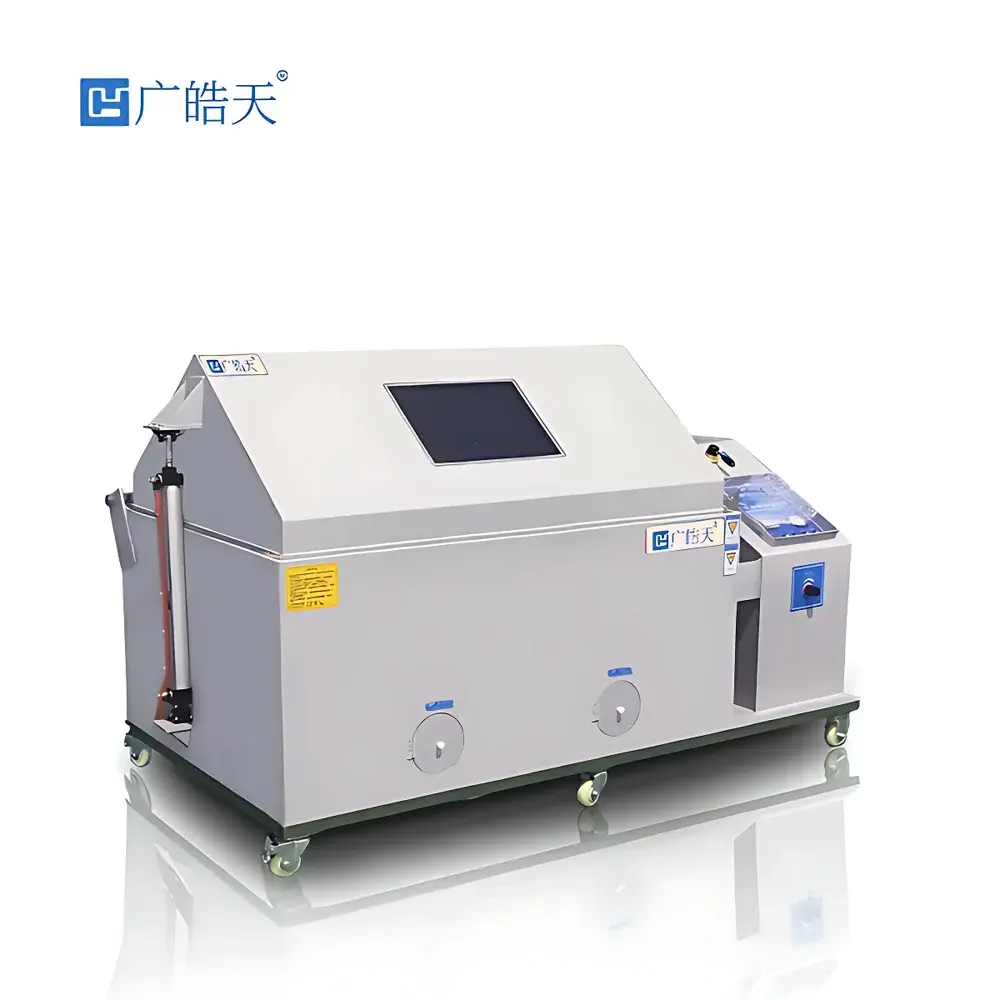
Hao Tianxin PP-SH-90 Salt Spray Test Chamber
| Brand | Hao Tianxin |
|---|---|
| Origin | Guangdong, China |
| Manufacturer Type | Manufacturer |
| Model | PP-SH-90 |
| Spraying Mode | Continuous |
| Spray Volume | 1–2 mL/h |
| Nozzle Pressure | 0.7 bar |
| Fog Removal Mode | Continuous |
| Salt Spray Deposition Rate | 1–2 mL / 2000 cm²·h |
| Temperature Range | Ambient to 55°C |
Overview
The Hao Tianxin PP-SH-90 Salt Spray Test Chamber is an engineered environmental test system designed for accelerated corrosion evaluation of metallic components, coated surfaces, and electroplated finishes under controlled saline atmospheric conditions. It operates on the principle of atomizing a standardized salt solution—typically 5% NaCl (pH 6.5–7.2) for Neutral Salt Spray (NSS), or acidified variants such as Acetic Acid Salt Spray (AASS) and Copper-Accelerated Acetic Acid Salt Spray (CASS)—into a fine, uniform mist using compressed air-driven tower-type nozzles. This artificial saline fog environment replicates and intensifies natural marine or industrial coastal exposure, enabling rapid assessment of material degradation mechanisms including pitting, crevice corrosion, and coating delamination. With a chamber temperature range from ambient to 55°C and precise control over deposition rate (1–2 mL/2000 cm²·h), the PP-SH-90 supports standardized testing durations ranging from 24 hours to several weeks—reducing qualification timelines from years in field exposure to days in laboratory simulation.
Key Features
- Monolithic epoxy fiberglass-reinforced polymer (FRP) chamber construction—lightweight, non-porous, chemically inert, and fully weld-sealed to prevent leakage or corrosion-induced structural compromise.
- Tower-type spray system with quartz glass nozzles, integrated salt solution filtration, and adjustable deposition rate—ensuring consistent, non-crystallizing雾 generation without clogging.
- Transparent polycarbonate lid with 110–112° angled design—prevents condensate dripping onto specimens while enabling real-time visual monitoring of test progression and spray distribution.
- Water-sealed lid-to-chamber interface—eliminates salt fog leakage and maintains strict environmental containment per ISO 9227 requirements.
- High-accuracy PID temperature controller (±0.1°C stability) with selectable brands (Fuji, RKC, Honeywell) and dual-stage overheat protection—both electronic and mechanical—for heater safety and thermal uniformity.
- Modular electrical architecture with circuit breakers on all power lines, front-access service panels, and lockable side doors—designed for routine maintenance, calibration, and GLP-compliant audit readiness.
Sample Compatibility & Compliance
The PP-SH-90 accommodates flat, cylindrical, or irregularly shaped specimens up to standard rack dimensions (e.g., 600 × 450 × 400 mm internal volume), supporting both horizontal and angled mounting configurations. It is validated for compliance with internationally recognized corrosion test standards including ASTM B117, ISO 9227, JIS Z2371, GB/T 2423.17, and CNS 11187. The chamber’s stable temperature regulation, calibrated spray deposition rate, and traceable operational parameters meet baseline requirements for ISO/IEC 17025-accredited laboratories. While not inherently 21 CFR Part 11 compliant (as it lacks user-level electronic signature and audit trail functionality), its mechanical controls and analog/digital hybrid instrumentation support paper-based GLP documentation workflows when paired with external logbooks and calibration records.
Software & Data Management
The PP-SH-90 utilizes embedded digital PID controllers with local display and manual setpoint adjustment—no proprietary software or PC connectivity is included. All operational parameters (temperature, spray duration, cycle timing) are recorded manually or via external data loggers compatible with RS-485 or 4–20 mA analog outputs (optional add-on). For regulated environments requiring electronic records, integration with third-party SCADA or LIMS platforms is achievable through configurable relay outputs and timer-triggered dry-contact signals. Calibration certificates for temperature sensors and pressure regulators are supplied with each unit, and annual verification against NIST-traceable references is recommended to maintain measurement integrity across extended service life.
Applications
- Quality assurance of automotive fasteners, chassis components, and trim parts subjected to road-salt exposure.
- Evaluation of passivation efficacy on stainless steel surgical instruments per ASTM A967.
- Validation of anti-corrosion performance for aerospace aluminum alloys (e.g., 2024-T3, 7075-T6) following MIL-STD-810H Method 509.6.
- Comparative testing of paint systems, galvanized coatings, and chromate conversion layers on consumer electronics housings.
- R&D screening of novel corrosion inhibitors and self-healing polymer coatings under accelerated NSS/AASS protocols.
- Supplier qualification audits where conformance to OEM-specific salt fog specifications (e.g., Ford CETP, GMW14872) must be demonstrated.
FAQ
What salt solutions can be used in the PP-SH-90?
The chamber supports Neutral Salt Spray (5% NaCl, pH 6.5–7.2), Acetic Acid Salt Spray (5% NaCl + glacial acetic acid, pH 3.1–3.3), and Copper-Accelerated Acetic Acid Salt Spray (5% NaCl + CuCl₂·2H₂O, pH 3.1–3.3), provided appropriate chemical handling and post-test neutralization procedures are followed.
Is the PP-SH-90 suitable for cyclic corrosion testing (CCT)?
No—the PP-SH-90 is configured for static salt spray or timed intermittent spraying only. It does not include humidity control, drying cycles, or programmable multi-phase sequencing required for ISO 11997 or SAE J2334 CCT protocols.
How often should the salt solution reservoir be cleaned?
The reservoir and filtration system require cleaning after every 100 hours of cumulative operation or before switching between NSS, AASS, and CASS solutions to prevent cross-contamination and crystallization buildup.
Does the unit include a built-in exhaust neutralization system?
No—exhaust ducting must be connected to an external scrubber or alkaline neutralization tank meeting local environmental discharge regulations; this is the responsibility of the end-user facility.
Can test parameters be logged automatically?
Not natively—the controller provides real-time display but no onboard memory or USB/SD export. Automated logging requires integration with external data acquisition hardware or PLC-based supervision systems.



