
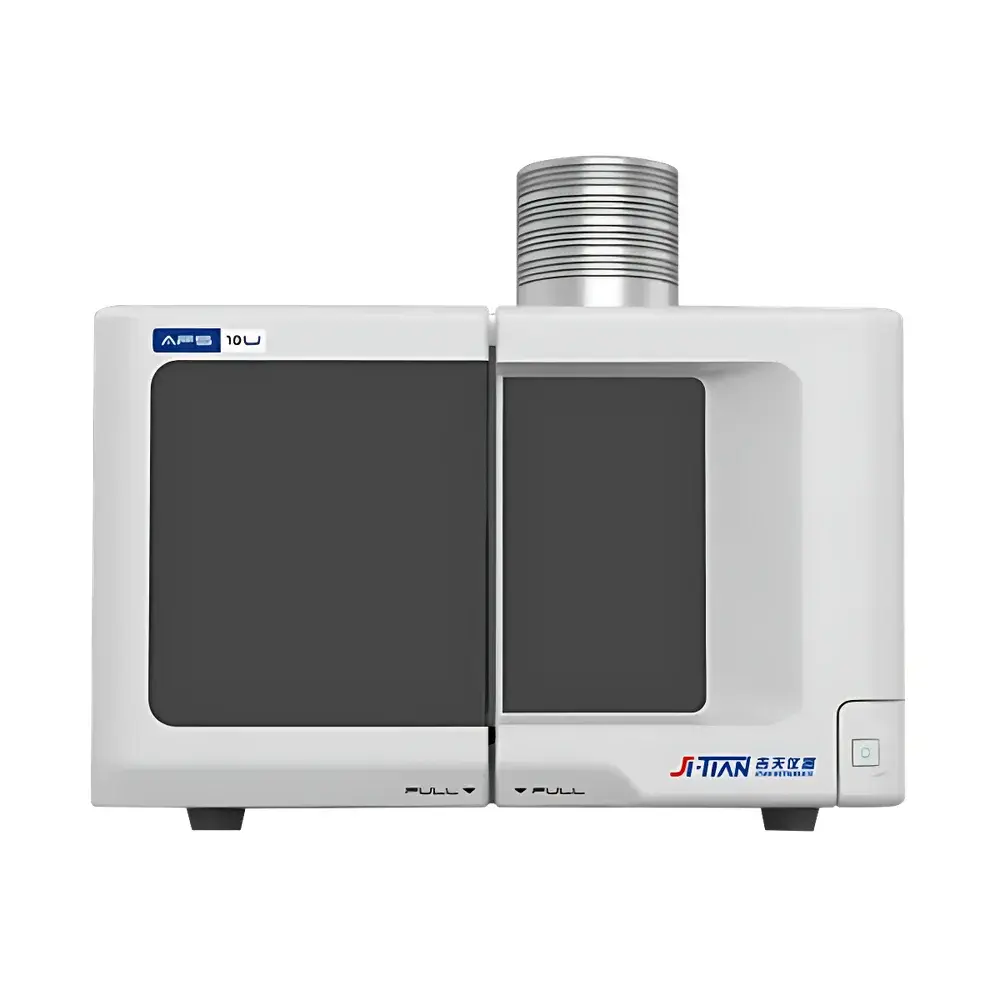
FPI AFS-10U Atomic Fluorescence Spectrometer
| Brand | FPI (Focus Photonics Inc.) |
|---|---|
| Origin | Beijing, China |
| Manufacturer Type | Direct Manufacturer |
| Country of Origin | China |
| Model | AFS-10U |
| Pricing | Upon Request |
Overview
The FPI AFS-10U Atomic Fluorescence Spectrometer is a benchtop hydride generation–atomic fluorescence (HG-AFS) instrument engineered for trace-level quantification of hydride-forming elements—including arsenic (As), mercury (Hg), selenium (Se), antimony (Sb), bismuth (Bi), tellurium (Te), cadmium (Cd), and lead (Pb)—in liquid samples. Based on the principle of atomic fluorescence spectroscopy, the system atomizes analyte species via sodium borohydride–acid reduction in a continuous-flow or intermittent hydride generation module, followed by excitation using high-intensity hollow cathode lamps (HCLs) and detection of element-specific fluorescence emission at characteristic wavelengths. Designed with field-deployable ergonomics in mind, the AFS-10U features a compact footprint (≤ 650 × 500 × 450 mm) and integrated power management, enabling stable operation in mobile laboratories, environmental monitoring vehicles, or remote sampling stations without external vibration isolation or climate control.
Key Features
- Intermittent six-roller peristaltic pump with monolithic compression block design—ensures precise reagent metering, reduced carryover, and enhanced hydride generation efficiency across multi-element sequential analysis.
- Drift compensation via software-based soft calibration—dynamically adjusts baseline and sensitivity during extended runs using internal reference signals, improving day-to-day reproducibility without manual recalibration.
- Intelligent lamp management system—supports dual-channel automatic HCL ignition, cumulative lamp usage tracking, and optional plug-and-play lamp alignment modules for rapid method setup.
- Integrated pneumatic module with pressure-regulated gas flow control—minimizes argon consumption while maintaining consistent carrier gas velocity for optimal atomization transport efficiency.
- Night-mode wake-up protocol—enables scheduled preheating and system readiness prior to user arrival; includes automated warm-up sequence execution upon activation.
- Modular architecture with reserved RS-485/RS-232 serial interface—facilitates future upgrade to speciation-capable configuration for As(III)/As(V), methylmercury/inorganic Hg, or Se(IV)/Se(VI) analysis via coupling with HPLC separation.
Sample Compatibility & Compliance
The AFS-10U accepts aqueous samples within pH 1–3 following standard digestion protocols (e.g., EPA Method 200.9, GB/T 5750.6–2023). It accommodates sample volumes from 0.5 mL to 10 mL and supports direct analysis of filtered environmental waters, acid-digested soils/sediments, microwave-digested biological tissues, and diluted food extracts. The instrument complies with ISO/IEC 17025:2017 requirements for analytical competence and supports GLP/GMP-aligned workflows through configurable audit trails, role-based access control (RBAC), electronic signature support, and full data integrity logging per FDA 21 CFR Part 11 guidelines when operated with validated software configurations.
Software & Data Management
The proprietary AFS Control Suite provides a modular, wizard-driven interface with customizable UI themes and contextual help. Key software capabilities include real-time signal visualization, multi-point calibration curve fitting (linear, quadratic, or weighted regression), QC sample flagging with LIMS-compatible export (CSV, XML), and automated report generation compliant with CNAS and CMA accreditation templates. All method parameters, raw spectra, peak integration logs, and user activity records are timestamped and stored in an encrypted local database with optional network backup. Audit trail functionality captures operator ID, action timestamp, parameter changes, and result modifications—fully traceable for regulatory review.
Applications
The AFS-10U delivers reliable sub-ng/L detection limits for regulated contaminants in diverse matrices: routine surveillance of As and Hg in municipal drinking water per WHO and GB 5749–2022; speciation-ready screening of rice, seafood, and infant formula for inorganic arsenic content; compliance testing of industrial effluents under China’s GB 8978–1996 and EU WFD 2000/60/EC; geochemical prospecting of As-enriched aquifers; quality control of pharmaceutical excipients and herbal medicines per ChP 2020 heavy metal limits; and academic research into bioaccumulation pathways of Se isotopes in agricultural soils and feedstuffs.
FAQ
What hydride-forming elements can be measured with the AFS-10U?
Arsenic, mercury, selenium, antimony, bismuth, tellurium, cadmium, and lead—subject to method validation and appropriate sample preparation.
Is the instrument suitable for field deployment?
Yes—the compact chassis, low power draw (< 300 W), and shock-resistant optical path enable stable operation in vehicle-mounted or temporary lab environments.
Can the AFS-10U be upgraded for elemental speciation?
Yes—via optional HPLC-AFS coupling using the factory-installed serial port and dedicated speciation firmware module.
Does the software support 21 CFR Part 11 compliance?
When deployed with enabled audit trail, electronic signatures, and secure user authentication, the system meets core technical requirements for Part 11 adherence.
What maintenance routines are recommended for long-term stability?
Quarterly quartz tube inspection, biannual pump tubing replacement, annual HCL output verification, and daily rinsing of the reaction manifold with dilute nitric acid solution.





