
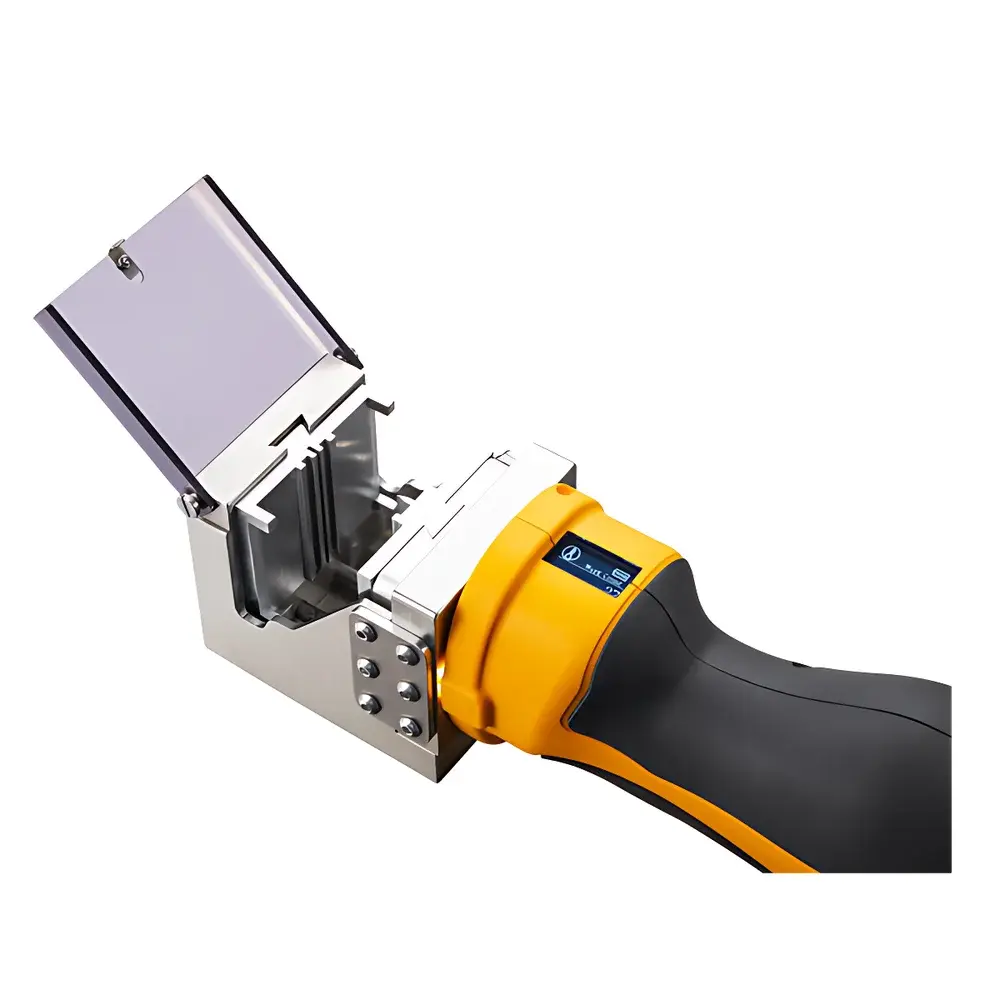
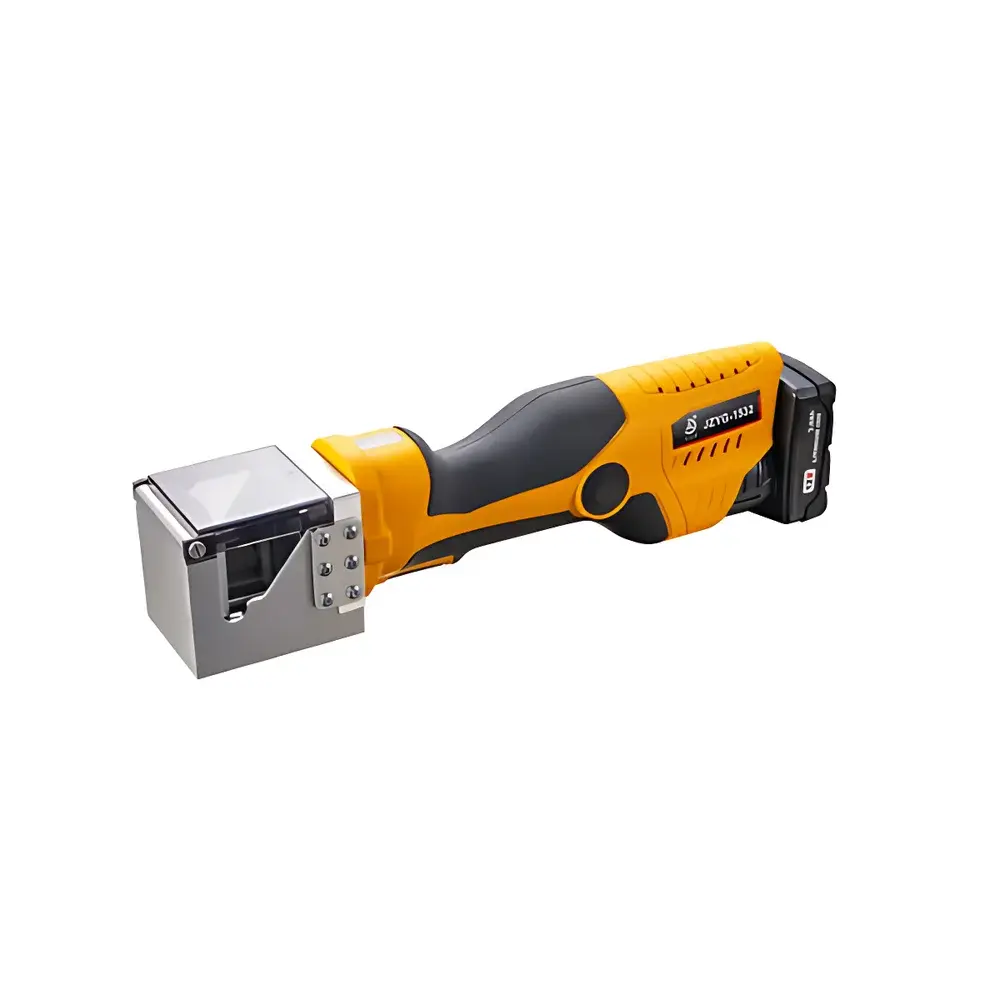
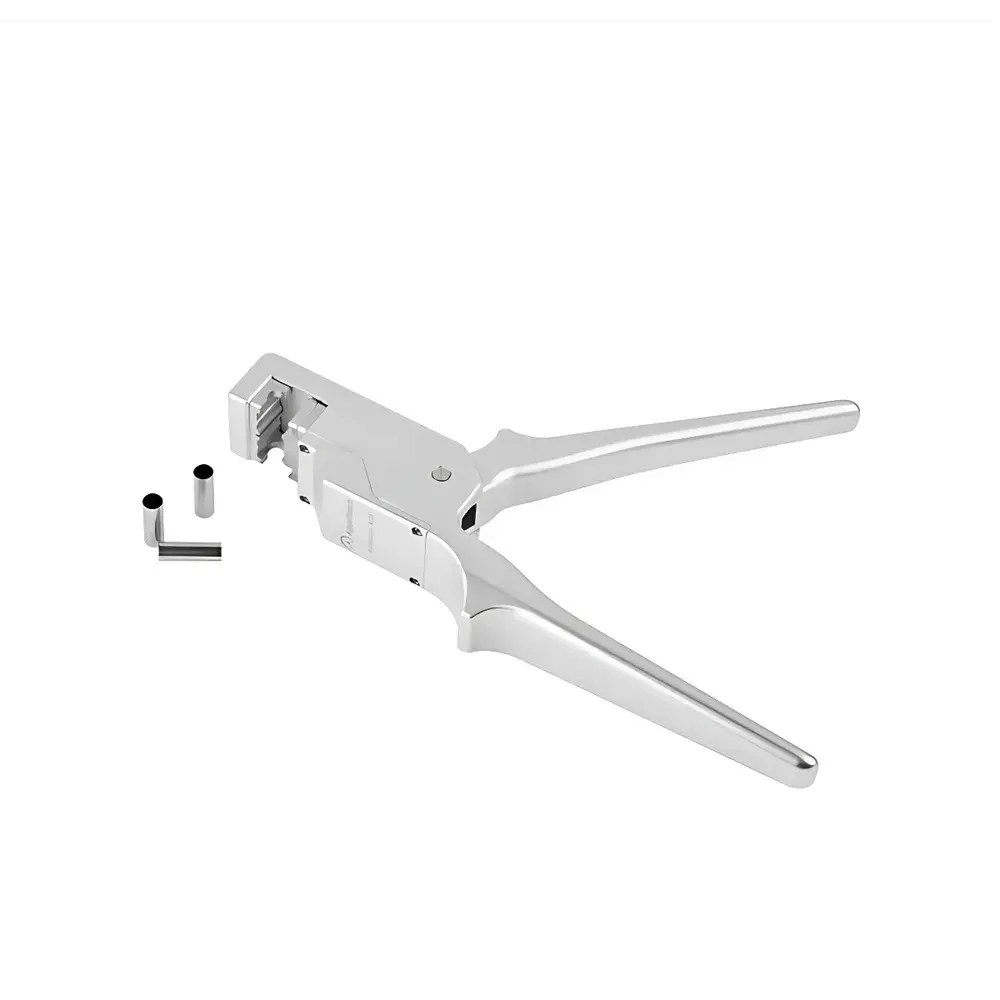
Applitech AbioCutter™ Series Aseptic Tube Disconnecting Pliers
| Brand | Applitech |
|---|---|
| Origin | Guangdong, China |
| Manufacturer Type | OEM/ODM Manufacturer |
| Country of Origin | China |
| Model | AbioCutter™ Series Aseptic Tube Disconnecting Pliers |
| Pricing | Upon Request |
| Design Variant | ACS-A100 (Standard Duty) & ACS-M100 (Compact Duty) |
| Tube Compatibility | ACS-A100: 1/4"–3/4" (6.4–19.1 mm) ID TPE/silicone tubing |
| ACS-M100 | 1/8"×1/4" (3.2×6.4 mm) flat-profile TPE tubing |
| Power Source | Rechargeable Lithium-Ion Battery |
| Operational Cycles per Charge | >100 cycles |
| Blade Material | Corrosion-Resistant Hardened Steel with Surface Passivation |
| Blade Mounting | Interchangeable Tongue-and-Groove (Dovetail) Interface |
| Safety Mechanism | Manual Mechanical Pressure Relief Lever |
| Compliance | Designed for ISO 13485-certified manufacturing environments |
Overview
The Applitech AbioCutter™ Series Aseptic Tube Disconnecting Pliers are engineered for controlled, repeatable, and contamination-free separation of single-use fluidic tubing in biopharmaceutical manufacturing, cell therapy processing, and upstream/downstream development labs. Unlike conventional manual cutting or heat-based disconnection methods—which risk particulate generation, thermal degradation of polymers, or microbiological breach—the AbioCutter™ employs a precision-machined mechanical shearing mechanism to sever pre-installed metallic aseptic disconnect rings (e.g., CPC, Sartorius, or Pall-style stainless steel or aluminum crimp rings) while maintaining sterile barrier integrity at the cut interface. The device operates on a deterministic force-displacement principle: calibrated jaw closure applies uniform radial compression until ring fracture occurs, followed by immediate mechanical release—eliminating residual stress on adjacent tubing and preventing delamination or micro-tearing of elastomeric walls. This physical disconnection method is fully compatible with gamma-irradiated or EtO-sterilized single-use assemblies and does not introduce volatile organic compounds (VOCs), electrical arcs, or localized thermal gradients that could compromise extractables/leachables profiles.
Key Features
- Two-tiered platform architecture: ACS-A100 for standard-diameter tubing (1/4″–3/4″) and ACS-M100 optimized for narrow-profile, flat-tubing configurations (1/8″×1/4″) commonly used in sampling and feed lines;
- Ergonomic, balanced hand-held form factor with non-slip textured grip and center-of-mass alignment—reducing operator fatigue during high-frequency use in cleanroom gloveboxes or biosafety cabinets;
- Dovetail-interlocked replaceable blade assembly enabling rapid field replacement without tools or recalibration; each blade set is serialized and traceable to material lot and surface passivation batch;
- Integrated lithium-ion battery pack rated for ≥100 full-cycle disconnect operations per charge (tested per IEC 62133); battery status indicator LED with low-power warning threshold;
- Fail-safe mechanical pressure relief lever: manually activated to instantly unload jaw force if abnormal resistance is encountered—preventing over-compression damage to tubing or ring deformation;
- Surface-finished components compliant with ISO 10993-5 cytotoxicity testing and USP extractables screening protocols; no lubricants or polymer gaskets in contact zones.
Sample Compatibility & Compliance
The AbioCutter™ Series supports validated disconnection of silicone, thermoplastic elastomer (TPE), and polyolefin-based tubing conforming to ASTM D2000 and ISO 8536-4 specifications. It accommodates both circular and flattened cross-section geometries when paired with corresponding ring types (e.g., CPC’s “Flat-Flex” or Sartorius’ “Flex-Tube” systems). All models are designed for integration into processes governed by FDA 21 CFR Part 11 (when paired with optional audit-trail-capable logging accessories), EU Annex 1 (2022 revision), and ISPE Baseline Guide Volume 4 (Single-Use Systems). Device qualification documentation—including Installation Qualification (IQ), Operational Qualification (OQ), and Performance Qualification (PQ) templates—is supplied upon request to support GMP regulatory submissions.
Software & Data Management
While the core AbioCutter™ units operate as standalone electromechanical tools, optional Bluetooth-enabled firmware modules (ACS-BLE-Kit) allow connection to Applitech’s AsepticLog™ desktop application for cycle logging, timestamped event capture, operator ID assignment, and export to CSV or PDF formats. All logged data include torque signature metadata (peak load, time-to-fracture, release timing), supporting root-cause analysis during deviation investigations. The system adheres to ALCOA+ principles (Attributable, Legible, Contemporaneous, Original, Accurate, Complete, Consistent, Enduring, Available) and supports electronic signature workflows aligned with 21 CFR Part 11 Annex A requirements.
Applications
- Aseptic transfer between bioreactor harvest lines and downstream purification skids;
- Disconnection of feed lines from single-use bioreactor bags during fed-batch transitions;
- Sampling line isolation for sterility testing or metabolite analysis without compromising primary containment;
- Decoupling of mixing/blending bags from filling manifolds in ATMP (Advanced Therapy Medicinal Product) manufacturing;
- Emergency line isolation during pressure excursion events in closed-system processing trains;
- Validation studies requiring documented, reproducible disconnection force profiles across multiple operators and shifts.
FAQ
Can the AbioCutter™ be used with non-metallic disconnect rings?
No. The device is specifically engineered for mechanically fracturing metallic aseptic disconnect rings (stainless steel or anodized aluminum) installed per manufacturer specifications. Non-metallic rings lack the required yield strength and fracture consistency for reliable operation.
Is sterilization of the tool required between uses?
The AbioCutter™ itself is not a sterile item and is intended for use outside the sterile field. Operators must wear appropriate PPE (e.g., sterile gloves) and perform surface disinfection (e.g., 70% IPA wipe-down) before handling within Grade C/D environments per EU GMP Annex 1.
Does blade wear affect disconnection reliability?
Yes—blades are consumables with a defined service life (typically 500–800 cycles depending on ring hardness and frequency of use). Each blade includes a laser-etched serial number and comes with a Certificate of Conformance detailing hardness (HRC 58–62), surface roughness (Ra ≤ 0.4 µm), and passivation verification (ASTM A967).



